17 min readupdated
Tattoo by placement
Neck tattoo — Wrocław
The neck and the nape are one name and two entirely different levels of difficulty. The nape is flat, stable and partly hidden by hair and a collar — it belongs among the easier surfaces we have. The sides of the neck and the area near the throat are the opposite: thin skin, a dense mesh of nerves, constant movement and full visibility.
What both share is this: a neck never rests. It turns, it bends and it works with every swallow, and it stays uncovered all year round — we rate sun exposure here at 5 out of 5, the highest on the price list. The epidermis renews in about 20 days, so touch-ups fall on 25% of pieces. This is a demanding placement, and that is how we write about it.
- 8/10
- Pain
- 14–28 days
- Healing
- 25% of pieces
- Touch-up rate
- 1–4 h
- Typical session
The first touch-up after healing is included in the price.
over 200 tattoos done5 on Google (43 reviews)
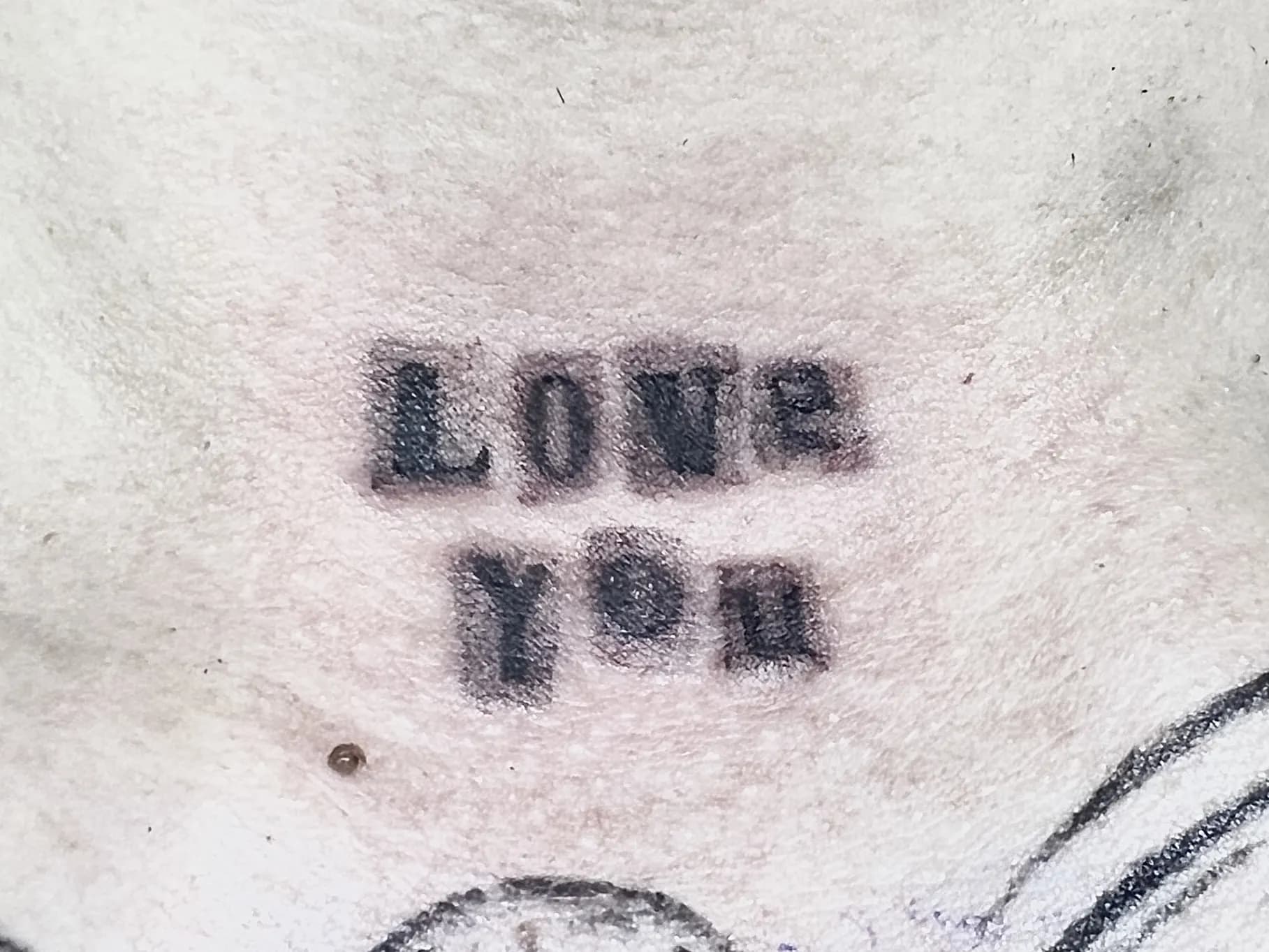
Our work: neck
01Anatomy
The nape is a plateau, the sides of the neck are steep ground
- low
- Skin thickness
- very high
- Nerve endings
- high
- Bone proximity
The nape, the back of the neck, has the trapezius muscle beneath it along with the processes of the cervical vertebrae. The skin there is thicker than at the front, the surface relatively flat and the movement smaller — you bend a nape one way, but you do not rotate it as you do the sides. From a tattooing point of view it is predictable ground.
The sides of the neck are another matter. We rate skin thickness there at 2 out of 5 and nerve ending density at 5 out of 5 — as high as the hand. Beneath the thin layer run large vessels and the sternocleidomastoid muscle, which tenses with every turn of the head. The skin there slides over its base instead of lying still on it.
The area near the throat is the hardest fragment of the whole region: the skin is thinnest and most mobile there, and the swallowing reflex means the surface does not stay still even for a few seconds. On work reaching that low we speak plainly about the limits and settle the scope at the consultation rather than mid-session.
The border with the shoulder and the collarbone is a natural break, and it is often exactly where we end a composition — below it an entirely different base begins.
02Pain
Eight out of ten, and movement you cannot switch off
- 8/10
- Pain
- very high
- Nerve endings
- yes
- Movement zone
The neck scores 8 out of 10 — less than the hand and the ribs, but distinctly more than the chest. What accounts for it is above all nerve ending density at 5 out of 5 combined with thin skin.
The sensation differs from the hand, though. It is not about sharpness but about the fact that most people have a protective reflex here. A needle working a few centimetres from the throat sets off a tension that has little to do with pain itself — and that tension is usually harder to bear than the physical sensation.
The nape is distinctly gentler and many people describe it as comparable to a shoulder blade. If you want a tattoo in this area but are wary of the sensation, the nape is the answer.
We plan sessions short, from one to four hours. Not because of the size of the project, but because holding the head in one position for a long stretch is tiring in itself, and a tense nape makes it harder to work evenly. On larger designs we split the work more often than anywhere else.
03Composition
A design that has to look right with the head turned
- along the limb
- Design flow
- yes
- Movement zone
The neck is a cylinder that additionally rotates — and that sets it apart from an upper arm, where the wrapping is static. A design that looks right with the head straight can settle quite differently with the head turned, and it is in that position that other people most often see it.
So we check a design for the sides of the neck in three settings: head straight, turned left and turned right. It is the only placement where we do that as a matter of routine.
The natural direction is vertical — designs run from the jaw downwards, towards the collarbone, use the anatomy instead of fighting it. Horizontal motifs running around the neck look striking but are considerably harder: the circumference of a neck changes with every turn, and a line closed into a ring reveals every distortion.
The nape follows different rules and is closer to a panel. The surface there is flat and symmetrical about the spine, so symmetrical motifs sit well — ornament, a rosette, a design spreading outwards from the axis. It is also the only fragment of this region where finer detail can be placed with a sensible outlook on durability.
04Healing
Two to four weeks under constant friction
- 14–28 days
- Healing
- ~20 days
- Epidermis turnover
- high
- Friction
The epidermis on the neck renews in about 20 days — faster than on an upper arm or a back, slower than on a hand. Full healing takes two to four weeks.
We rate friction at 4 out of 5 and it is the main challenge here. A shirt collar, a scarf, hair, a shoulder bag strap and the back of a chair all make contact with the neck many times a day. Add sweat, because a neck perspires faster than most placements.
Hair deserves separate attention. With longer hair falling onto the nape, fresh work is covered and rubbed practically all the time, and that is the most common cause of uneven healing we see in this area.
- Tie your hair up for the whole healing period if the work is on the nape — that is a condition, not a suggestion.
- Collarless shirts, or very loose collars, for the first week; a collar rubs exactly along the edge of most designs.
- No scarf, polo neck or hood resting on the nape until it has fully healed.
- Put perfume and cologne aside in this area — alcohol on fresh work stings and dries it out.
- Move your bag to the other shoulder; the strap usually runs across the side of the neck or the collarbone.
05Longevity
Twenty-five percent touch-ups and sun all year round
- 25% of pieces
- Touch-up rate
- very high
- Sun exposure
- ~20 days
- Epidermis turnover
Touch-ups affect about 25% of neck pieces — the fourth highest figure on the price list, after the foot, the hand and the head. That is neither accidental nor a question of execution, but the sum of three unfavourable factors occurring at once.
The first is the rate of skin renewal: 20 days against 28 on the forearm. The second is friction at 4 out of 5. The third, the most underrated, is the sun — we rate exposure on the neck at 5 out of 5, the same as the forearm. A neck is uncovered practically always, winter included, and with the head tilted it turns straight into the light.
The consequence is simple and worth knowing before you decide: a neck tattoo requires upkeep. Factor 50 on exposed work all year round is not excessive here; it is the real difference between a design that reads after five years and a faded one.
The nape does better in this respect than the sides, because with longer hair it is partly shielded from the sun. It is one of the reasons we more often propose the nape for work meant to last a decade.
06Risks
Mobile skin and a decision that cannot be undone
- high
- Blowout risk
- low
- Skin thickness
- yes
- Movement zone
We rate blowout risk on the neck at 4 out of 5. With skin thickness at 2 out of 5 the depth margin is narrow, and the skin additionally slides over its base with every turn of the head — so it is not enough to hit the right layer, the surface has to be kept stable too. That is why work on the sides of the neck goes more slowly than anywhere else.
The second risk concerns detail and follows directly from the movement zone. A design made of very thin lines placed close together loses separation faster than on still placements, because skin that constantly stretches and returns spreads pigment more. So on a neck we design with wider gaps than the sketch appears to need.
The third risk is not technical. Coverability on the neck is 2 out of 5: a shirt collar hides the lower part, but the rest is always visible — at an interview, in a photograph, in every professional situation. It is a decision from the same category as a hand tattoo and we discuss it at the consultation just as openly.
On work reaching the throat there is an execution limit too: the skin there is thinnest and most mobile, so not every design can be realised in a way we would stand behind years later. We settle the scope before the session, so the conversation does not have to happen during it.
07Styles
A strong line on the sides, detail on the nape
- low
- Skin thickness
- along the limb
- Design flow
The split in difficulty translates directly into the choice of technique, and this is one of the few placements where different parts of the same area call for different approaches.
On the sides of the neck, designs with a clear, decisive line hold up: ornament, geometry with wide gaps, plant motifs with a strong outline, blackwork. All have the margin needed to survive skin stretching and a faster epidermal turnover.
The nape allows considerably more freedom. A flat, stable surface also takes fine line, small ornament and more delicate detail — with the proviso that sun and friction from hair still act, so very thin linework requires a conscious acceptance of more frequent refreshing.
Lettering is a common choice here and works well on one condition: it has to be larger than it seems to need to be. A piece of text legible for ten years on a forearm merges faster on a neck — the same principle as with the hand, in a gentler version.
Colour holds worse than black on a neck, chiefly because of sun exposure. On colour work we assume more frequent topping up and say so before the session.
08Everyday life
Almost always visible — with one exception
- low
- Coverability
- very high
- Sun exposure
Coverability on the neck is 2 out of 5, the same as the forearm. A shirt collar hides the lower part and the area near the collarbone, but the sides of the neck and everything above the collar line stay visible in every situation.
The exception is the nape with longer hair. Hair covers it practically completely, and you reveal it when you tie it up. That makes the nape one of the more interesting placements on the body: the work can be large and visible while remaining under your control — no change of clothing needed, only a change of hairstyle.
With short hair that advantage disappears and the nape becomes as visible as the rest of the neck. Worth taking into account if you are considering a change in hair length in the coming years.
In daily life a healed neck tattoo interferes with nothing except one thing: it demands consistency with sunscreen. At exposure of 5 out of 5 this is the only placement, alongside the forearm and the head, where sun cream genuinely decides how the work looks years later.
09First tattoo
The nape can be a good first choice, the neck is not
- 8/10
- Pain
- 25% of pieces
- Touch-up rate
- low
- Coverability
This is a rare case where one placement name leads to two opposite answers, so we separate them clearly.
The nape is acceptable for a first tattoo, provided the project is of moderate size. A sensation comparable to a shoulder blade, a short session, a stable surface, and with longer hair you keep control over visibility. The only difficulty is aftercare under hair.
The sides of the neck we do not propose for a first tattoo. Everything comes together at once: 8 out of 10 for pain with a strong reflexive component, 25% touch-ups, a narrow technical margin and full visibility. None of those factors is disqualifying on its own, but together they form the worst possible set for a start.
There is one more thing we say plainly: a tattoo on a visible part of the neck tends to be read as a statement rather than merely an ornament. We do not judge that and we talk nobody out of it — we simply point out that it is worth making the decision after one or two earlier pieces, once you know how your own tattoo looks when healed.
10Nearby placements
The neck between the head and the shoulder
- very high
- Sun exposure
- 25% of pieces
- Touch-up rate
The neck joins two areas with extremely different properties and sits exactly in the middle of that transition.
The head is its closest counterpart in terms of conditions: also 5 out of 5 for sun exposure, also thin skin over bone, and an even higher touch-up rate — 30% against 25%. Pieces crossing from the nape onto the back of the skull are natural and we plan them together, because they share all the same constraints.
The shoulder and chest lead downwards and are an entirely different league: pain drops from 8 to 3 or 7, friction and sun exposure fall markedly, and the skin thickens. Compositions running from the neck onto the collarbone and shoulder are very common; the natural border is the line of the collarbone and that is usually where we stop, or deliberately cross it.
If you like the neck area but the numbers put you off, a nape piece running down onto the shoulder blade is the middle path: you keep the location, and most of the surface lands on a base with far better durability.
11Price
A shorter session does not mean cheaper work
- 1–4 h
- Typical session
- 25% of pieces
- Touch-up rate
Sessions on the neck are short — one to four hours — and it is easy to draw the wrong conclusion, that work in this area comes cheap. In practice something else counts.
On the sides of the neck the pace of work is among the slowest we have. Thin skin, a narrow depth margin and a mobile surface mean the same number of square centimetres genuinely takes more time than on an upper arm. A short session therefore means less surface covered, not cheaper work.
The second component is long-term and matters more here than elsewhere. At 25% touch-ups, one piece in four comes back for a top-up, and at sun exposure of 5 out of 5 refreshing after some years is a realistic scenario rather than an exception. Worth counting as part of the cost rather than as a surprise.
The nape behaves far more gently in this respect and pricing there resembles a shoulder blade. At a first conversation we always separate these two areas, because mixing them in one quote leads to misunderstandings. We give a binding figure after a free consultation.
Nearby placements
- headThe closest counterpart in conditions: also 5 out of 5 for sun exposure, thin skin over bone and even more touch-ups (30% against 25%). Pieces from the nape onto the back of the skull we plan together.
- chestThe natural descent from the neck across the collarbone. An entirely different league of difficulty — thicker skin, less friction and far lower sun exposure. The border is the line of the collarbone.
- backA nape piece running down onto the shoulder blade is a good middle path: you keep the location, and most of the surface lands on a base with 8% touch-ups instead of 25%.
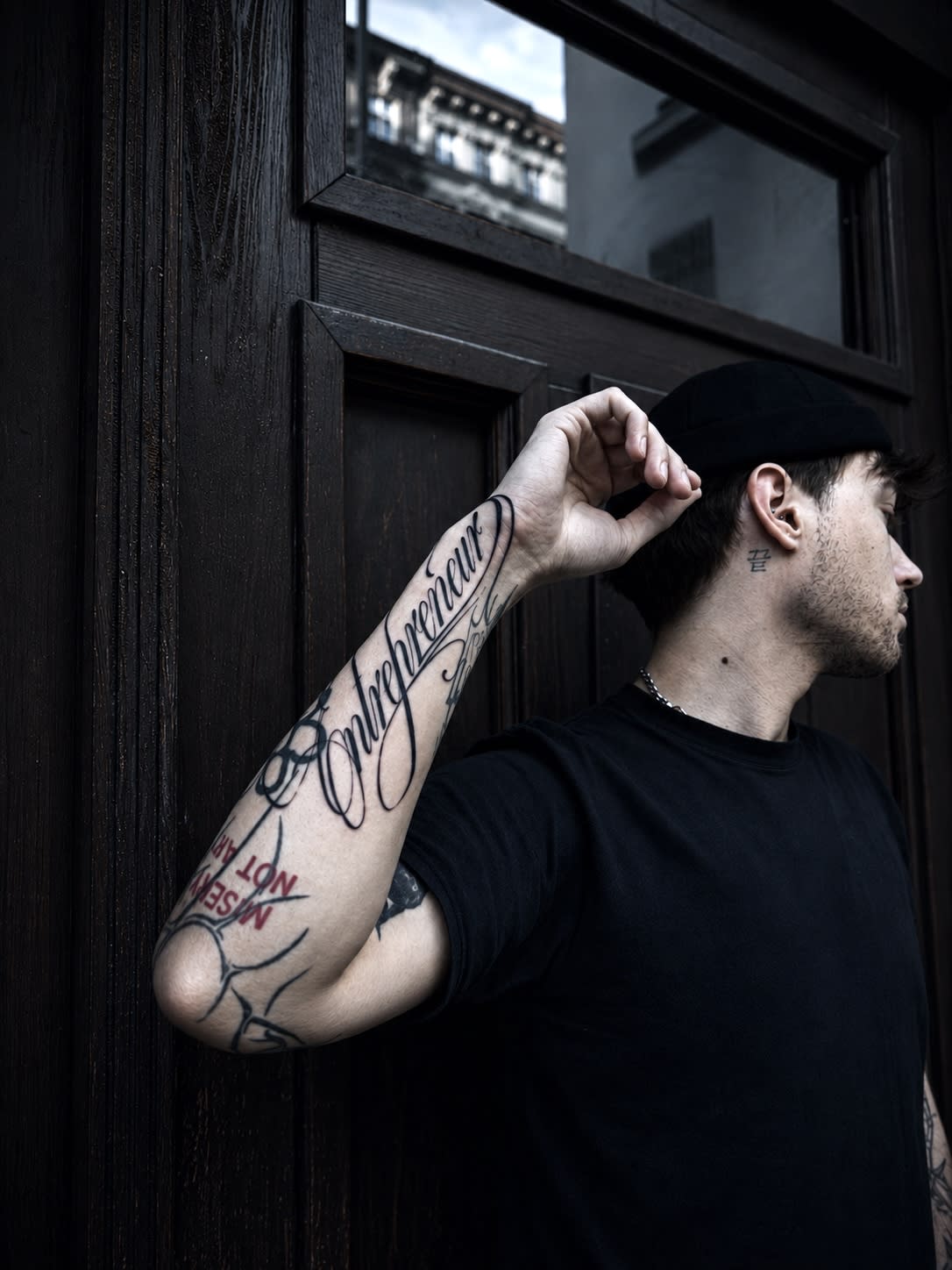
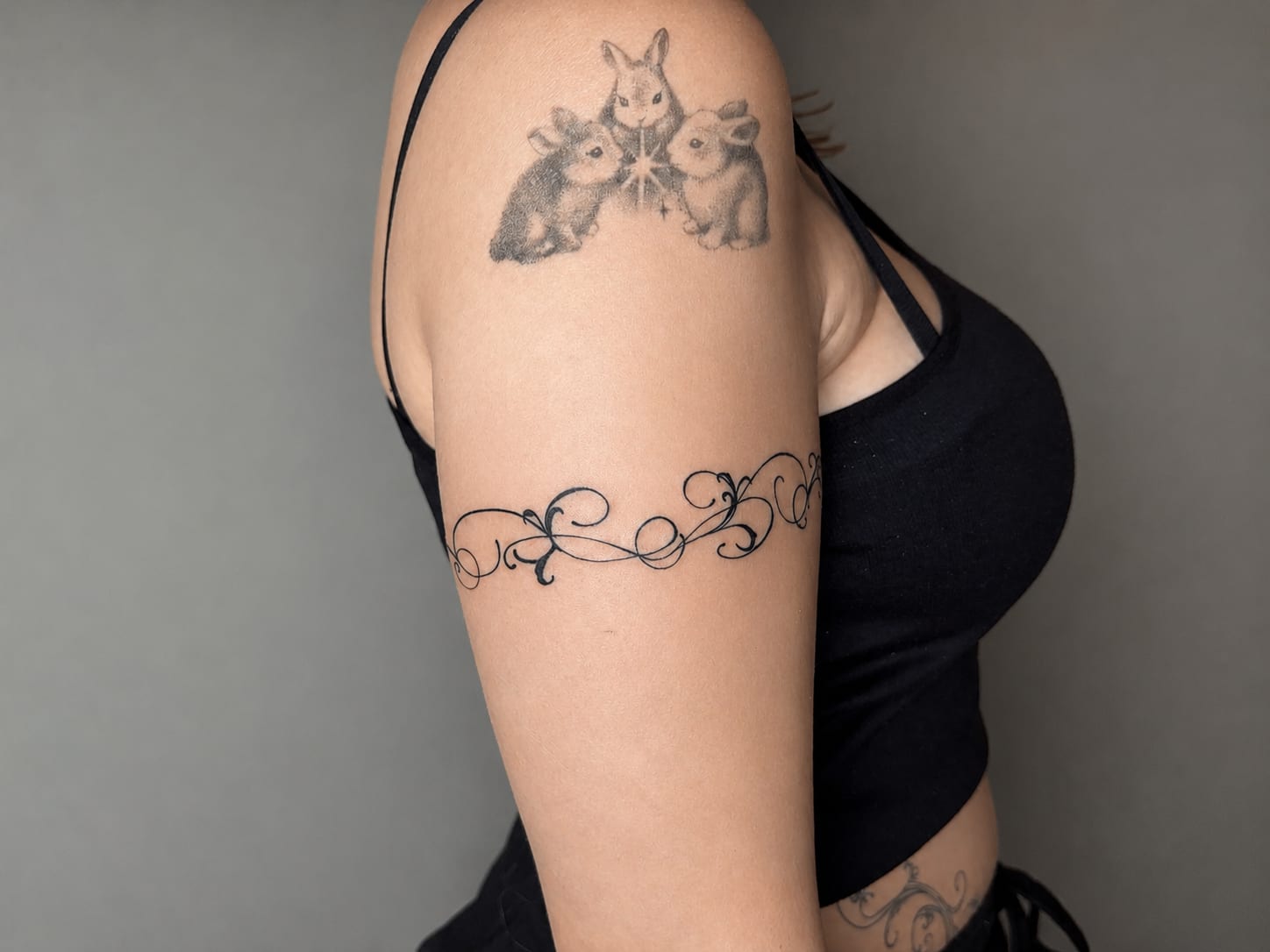
Styles that look great in this spot


Frequently asked questions
Yes — on the Parvata Tattoo scale the neck scores 8 out of 10, less than the hand and the ribs but distinctly more than the chest. What accounts for it is nerve ending density at 5 on a five-point scale, as high as the hand, combined with skin only 2 out of 5 thick. The sensation is of a different kind from the hand, though: it is not about sharpness, but about the fact that in most people a needle working a few centimetres from the throat sets off a protective reflex, and that tension is often harder to bear than the pain itself. The nape is distinctly gentler and many people compare it to a shoulder blade. We plan sessions short, one to four hours, because holding the head still is tiring in itself.
They are practically two different placements sharing one name. The nape has the trapezius muscle beneath it, thicker skin and a relatively flat surface, and the movement there is smaller, since you do not rotate a nape the way you do the sides of the neck — from a tattooing point of view it is predictable ground and among the easier surfaces we have. The sides of the neck are the opposite: skin thickness 2 out of 5, nerve endings 5 out of 5, large vessels just beneath the surface and a muscle that tenses with every turn of the head, so the skin slides over its base instead of lying still. That is why Parvata Tattoo separates these areas from the first conversation — including in the quote.
Faster than most placements, and three factors combine to cause it. The epidermis on the neck renews in about 20 days against 28 on the forearm. We rate friction at 4 on a five-point scale — a collar, a scarf, hair, a bag strap and the back of a chair all make contact with this area many times a day. The most underrated is the third factor: sun exposure here is 5 out of 5, the same as the forearm, because a neck is uncovered practically always, winter included, and with the head tilted it turns straight into the light. The result is touch-ups on about 25% of pieces. Factor 50 all year round is not excessive but a real difference after five years.
Only partly. We rate neck coverability at 2 on a five-point scale, the same as the forearm — a shirt collar hides the lower part and the area near the collarbone, but the sides of the neck and everything above the collar line stay visible in every situation, professional ones included. The exception is the nape with longer hair: hair covers it practically completely, and you reveal it when you tie it up. That makes the nape one of the more interesting placements on the body, because the work can be large and visible while remaining under your control with no change of clothing. With short hair that advantage disappears, so a planned change of hairstyle is worth taking into account.
On the sides of the neck, those with a clear, decisive line: ornament, geometry with wide gaps, plant motifs with a strong outline and blackwork. All have the margin needed to survive skin stretching and a faster epidermal turnover. The nape allows considerably more freedom — a flat, stable surface also takes fine line and finer detail, with the proviso that sun and friction from hair still act. Lettering is a common choice here and works on one condition: it has to be larger than it seems to need to be, because text legible for a decade on a forearm merges faster on a neck. Colour holds worse than black, chiefly because of sun exposure.
The nape yes, the sides of the neck no — and it is a rare case where one placement name leads to two opposite answers. The nape is acceptable for a project of moderate size: a sensation comparable to a shoulder blade, a short session, a stable surface, and with longer hair you keep control over visibility. The sides of the neck Parvata Tattoo does not propose for a first tattoo, because everything comes together at once: 8 out of 10 for pain with a strong reflexive component, 25% touch-ups, a narrow technical margin and full visibility. None of those factors disqualifies on its own, but together they form the hardest possible set for a start.
More about the studio
Have an idea for a tattoo in this spot?
Book a free, no-obligation consultation — we will match an artist and design the motif for your body.