



Cover-up — a second life for your tattoo
We cover old or unloved tattoos with a new design. See before-and-after transformations straight from our studio.
Tattoo styles
Fine line means tattoos built from the thinnest lines: subtle designs like a pen sketch or discreet jewellery. We design them so the delicate line stays legible for years.
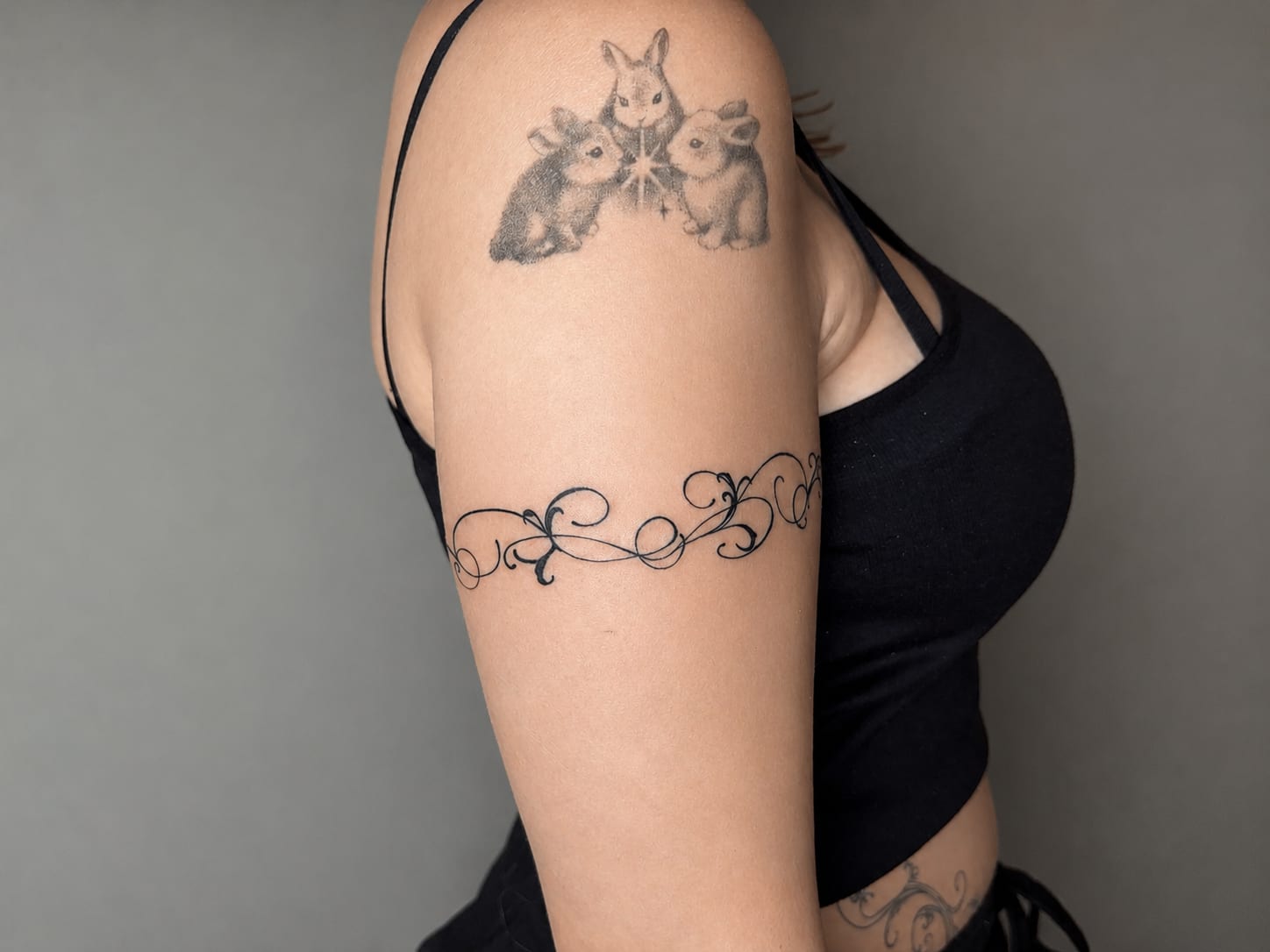
A fine line tattoo is built from the thinnest lines possible — slender, almost hair-thin strokes that look on skin like a freehand sketch, a pen illustration or a thin chain. Instead of overwhelming, such work underlines the anatomy and acts like permanent, discreet jewellery.
It is also a technique with no margin for error: the line is usually run with a single needle, with no corrections and no room for a trembling hand. At our studio in Wrocław fine line is one of the core specialisations — we design pieces that are delicate to the eye, but planned to last for years.
On this page you will find everything that helps you decide wisely: where fine line comes from, which motifs it carries most often, which placements serve a thin stroke longest, how the session and pricing work, and how to care for delicate work so it still looks freshly healed years later. Whatever is missing here, we will fill in at a free consultation.
Fine line is not „a regular tattoo, just with a thinner needle” — it is a separate approach to the craft. The artist works with the thinnest needles (usually a single 1RL), running slender, fluid lines with no breaks in the outline and no heavy fills.
There is no room for corrections in this technique: every movement has to be confident and precise. That is why the designs resemble pen drawings, botanical illustrations or subtle geometry.
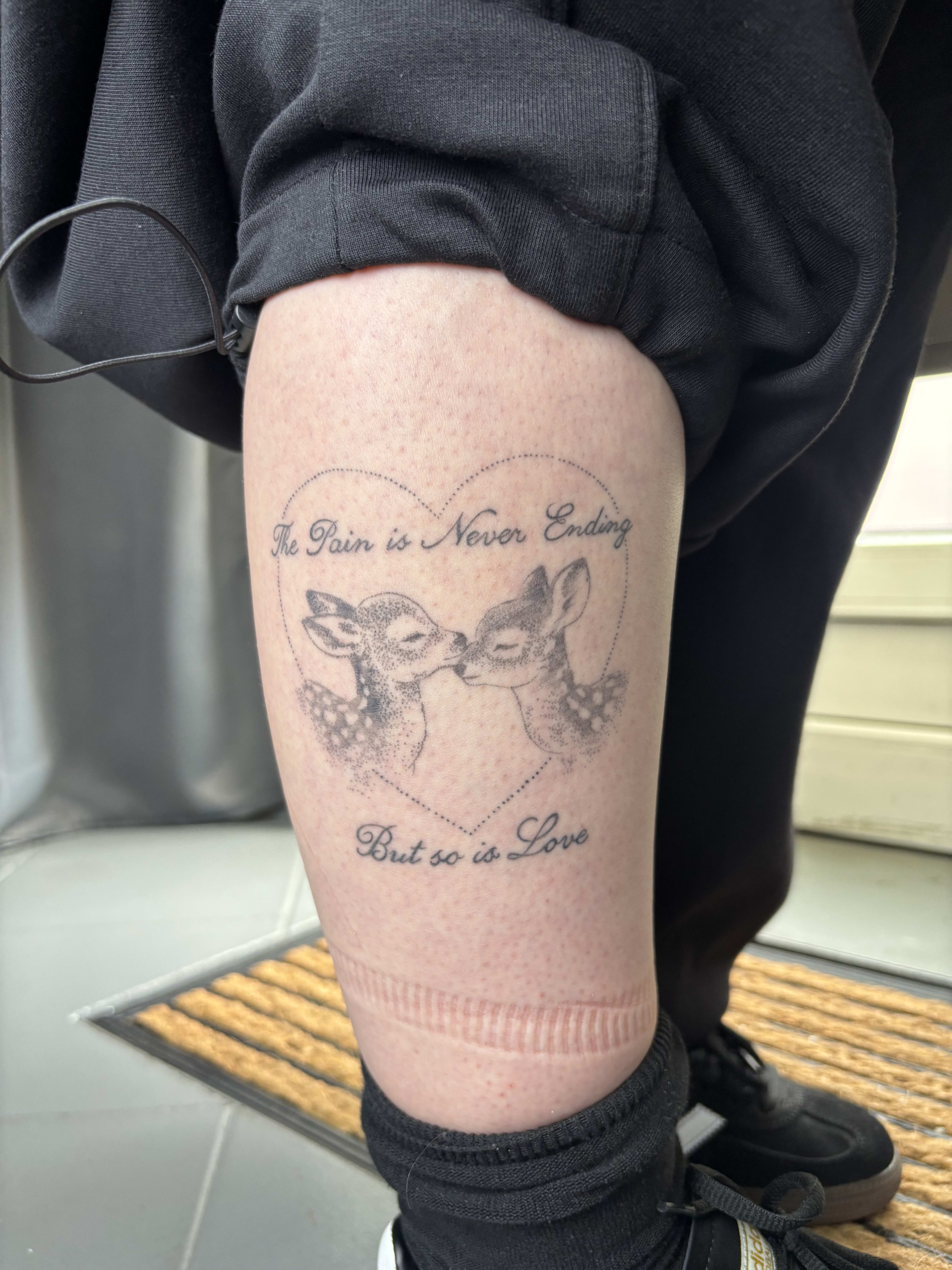
There used to be a myth that only thick-outline tattoos last. Technique and equipment have come a long way since — well-executed fine line keeps its legibility for years. What does the style offer in practice?

In fine line everything is decided within fractions of a millimetre: a line set too shallow will fade, too deep — it will blur over time. That is why experience with a thin needle and an understanding of how skin takes ink are key — with us, fine line is done by artists who specialise in exactly this.
If you are thinking about a subtle, minimalist design, send your idea through the form — we will talk through the motif, placement and size, free of charge.
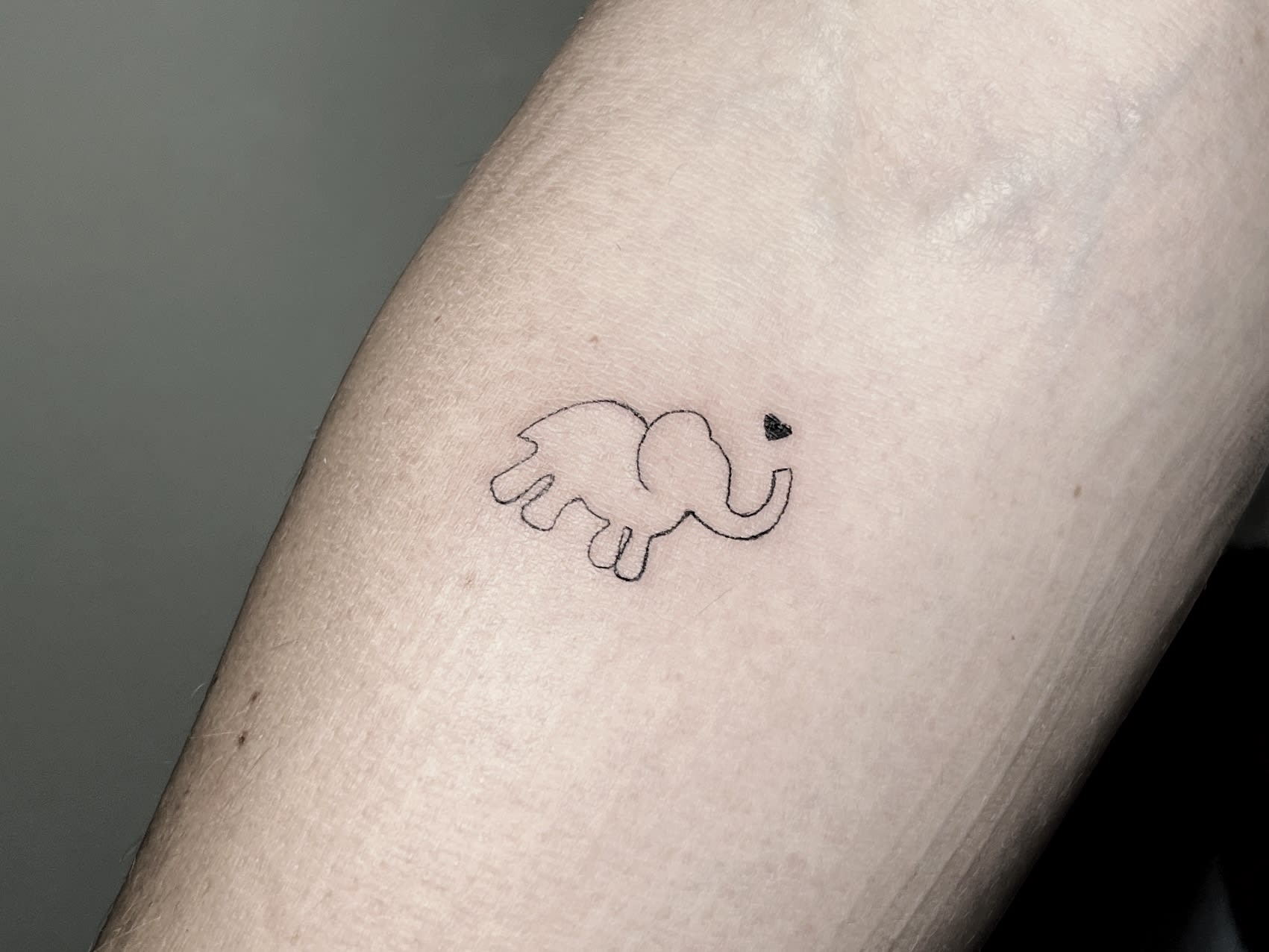
Fine line in its current form grew out of the Californian scene — the black-and-grey single-needle school, where artists began working with one needle instead of standard groupings, achieving lines thinner than ever before. A niche technique became one of the most searched styles in the world within a decade.
A cultural shift helped: the tattoo stopped being only a full-forearm statement and became a form of personal, discreet jewellery. Technology caught up with the aesthetic — modern rotary machines, precise needles and better pigments turned well-made fine line from a lottery into a craft with a predictable, lasting result.
Today fine line is a full specialisation — one of our core ones. It demands a different machine control, pace and design philosophy than classic styles, which is why it belongs in the hands of an artist who does it daily.

The queen of fine line is botany: single sprigs, wildflowers, lavender or fern flowing along the forearm look like delicate engravings — a current we develop further on our Botanical style page.
The second big family is lettering and dates: the thin stroke pairs beautifully with small typography, from handwritten dedications to elegant quotes — see our Lettering page for the full breakdown. Then come tiny animals and pet portraits in a few strokes, minimalist symbols, mountain and wave outlines, star maps, and jewellery-like compositions wrapping around the wrist or collarbone.
The common trait is brevity: fine line tells one thought at a time. At the consultation we help pick the framing and scale at which your motif stays readable today and a decade from now.
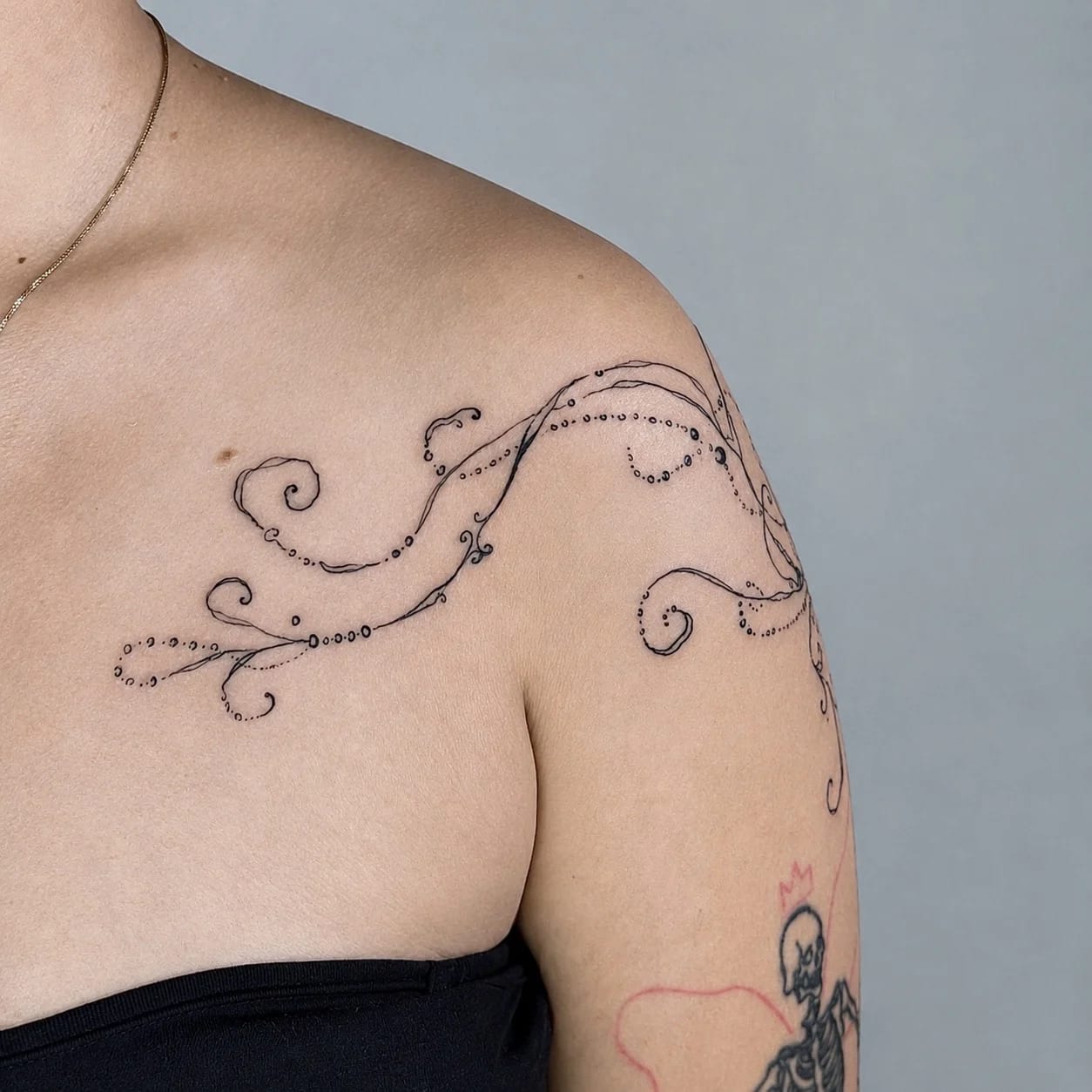
Placement matters more in fine line than in any other style. The thin stroke does best where the skin is stable and rarely abraded: the forearm, upper arm, collarbone, calf or above the ankle — our first recommendations for longevity.
Heavily used areas — inner fingers, palms, feet — are a higher-risk zone: the skin regenerates so fast there that delicate pigment can visibly fade within the first year. We do not refuse such pieces, but we always warn honestly about consequences and more frequent touch-ups.
Mobility matters too: a line on the ribs or stomach works with the skin at every breath and bend, so the design must anticipate it. At the consultation we fit the design to the exact spot and show how it behaves in motion — before the needle ever touches the skin.
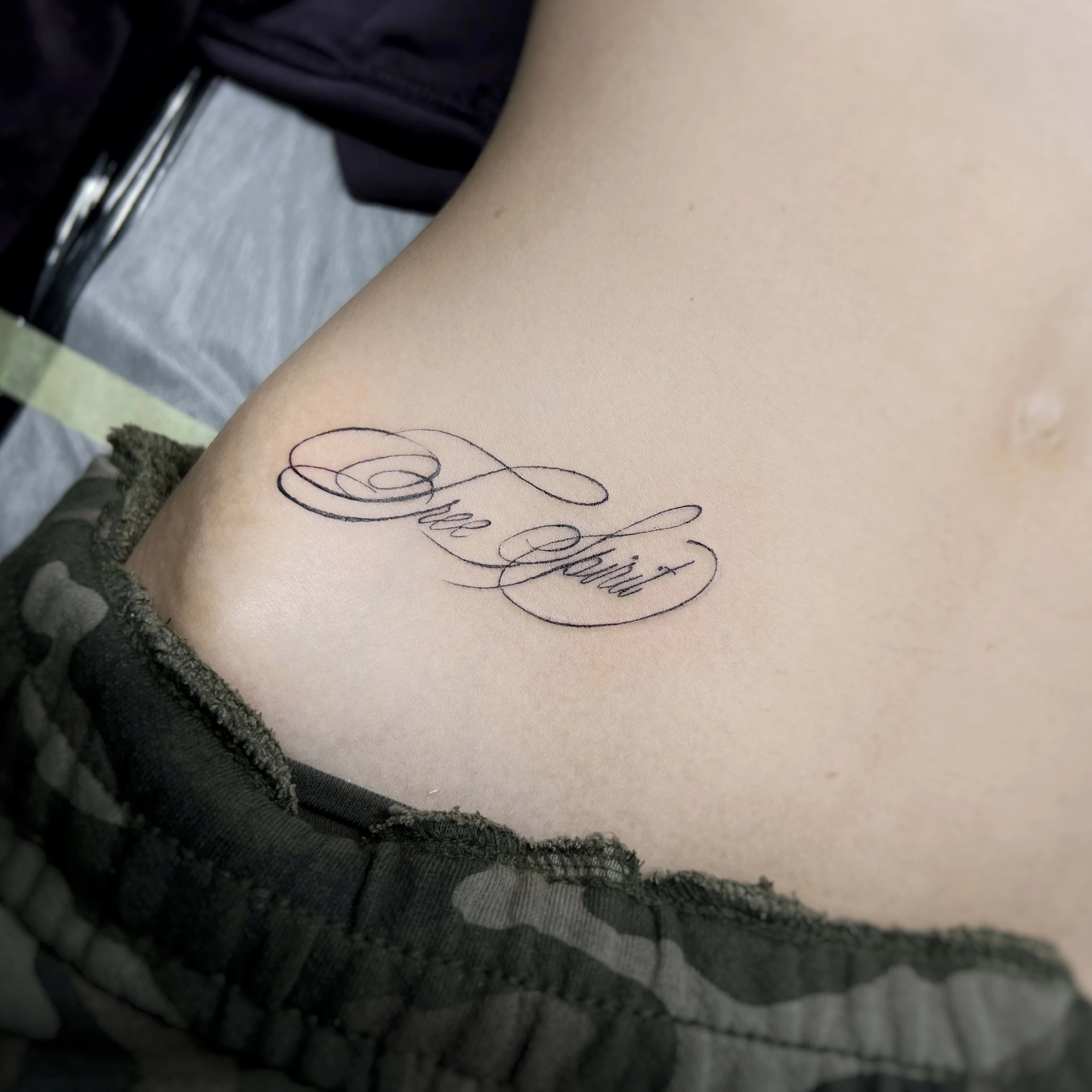
A fine-line session is usually shorter and calmer than classic styles: a single needle (1RL) puts less ink under the skin, there are no large fills, and most pieces close in one visit of one to three hours.
Most clients describe the pain as mild — more of a scratch than classic tattooing, which is why it is such a common first-tattoo choice. The ribs, sternum and ankle stay the most sensitive spots.
The paradox: the lighter the session for you, the harder it is for the artist — with a single needle there are no corrections, and every hand tremor stays on the skin. That is why we work slowly and fully focused. Afterwards you get a second-skin dressing and aftercare instructions; healing is usually quicker and gentler than with larger work.

The first two weeks are standard: lukewarm water and mild soap, a thin layer of cream, no peeling and no soaking. Fine line heals fast, but that is no reason to drop the discipline — a thin stroke does not forgive early neglect.
Long-term, sunscreen is what matters most. UV works on every tattoo, but a hair-thin line has no margin: where a thick outline merely softens, a fine stroke can genuinely lose legibility. SPF 50 on healed work on sunny days is a mandatory ritual, and regular moisturising keeps the micro-pigment stable.
Years later, a light line refresh is a short, inexpensive visit — and well-kept fine line often never needs one. Answers to the most common healing questions are in our FAQ; rough ranges in the Pricing.
Let us defuse a common misunderstanding first: a small tattoo does not mean symbolically cheap. Every piece — even a few-centimetre line — requires a fully prepared sterile station, single-use equipment, a design and the artist's time; that is what a studio's minimum rate honestly covers.
Above the minimum, the quote grows with detail, not with size alone: a seemingly tiny motif full of micro-elements can demand more focused work than a bigger, simpler pattern. With fine line you pay above all for the precision of a single needle. Placement matters too — thin, mobile skin on the ribs or wrist requires a slower pace than the forearm.
Rough ranges are in our Pricing. Simplest of all: send your idea and dimensions through the form — we will reply with a specific, no-obligation quote.

The first story is the first tattoo: a short session, mild discomfort, quick healing and a discreet form make fine line the natural gateway — a way to test how your skin and mind react without committing half an arm.
The second story is work and conventions: people whose profession demands a neutral image choose fine line because it is invisible under a shirt and fully personal after hours. The third story is collectors of small meanings — people who build a private constellation over the years: a date, a pet outline, a sprig from a journey.
If you recognise yourself in any of these — the consultation is free and non-binding. And if in none, but you simply love a thin line, that is entirely enough.

Myth one: „fine line disappears after a year”. No — badly done fine line disappears after a year. A line set at the right depth, in the right place and protected from the sun holds for years; it softens gently but does not cease to exist. Execution errors simply show harder in this technique — hence the bad press.
Myth two: „it is a regular tattoo, just thinner — anyone can do it”. Single-needle work demands different pressure, pace and angle; without that experience the line goes too shallow (it fades) or too deep (it blows out). With fine line, „who will do it” matters more than „for how much”.
Myth three: „fine line is a feminine style”. Half of our thin-line work is done on male forearms: architectural outlines, minimalist symbols, small typography, dog portraits. A delicate form has no gender — just a different dynamic than a thick outline.

A thin line is a great soloist, but it plays just as well in an ensemble. The most common duet is fine line with fine dotwork: stippled shading adds depth and softness without taking away the lightness — that is how our botanical engravings and pet portraits are made.
The second favourite pairing is fine line with a watercolour accent: a delicate patch of colour behind the black stroke gives the effect of a brush-tinted sketch — more on that approach on our Colour style page. A thin stroke can also be the skeleton of larger wholes: a minimalist constellation of small motifs can grow over time into a coherent forearm composition, as long as it is planned with room and a shared direction from the start.
If you already have tattoos and wonder whether delicate work will get lost next to them — bring photos to the consultation. We will design the line to complement the existing pieces instead of competing with them.

Choose fine line for delicate lines, minimalism and subtle detail — it works beautifully on the forearm and ankle.
Fine line alone won't cover an old tattoo — a cover-up needs denser black or a larger format.
Well-executed fine line holds for years — the key is an even single-pass line set at the right depth. Here it is done by artists who specialise in exactly this precision, so the lines don't bleed in the skin. Every tattoo naturally softens a little with age, which is why very delicate fine line gets refreshed after years with one short session.
Flat spots with little friction work best: forearm, upper arm, shoulder blade, collarbone, calf. We advise against fine line on hard-working, high-friction areas — fingers, palms, feet — because a thin line blurs there fastest. At the consultation we'll suggest a placement that keeps the detail for years.
Yes, but there is a readability limit — details that are too small and lines too dense merge with time. We'll suggest a size at which the design stays sharp after healing, instead of promising a miniature that disappears within a year. An honest talk about size is part of our consultation.
Fine line is among the gentler techniques — a thin needle and shorter work for small designs. Sensation depends mostly on the placement, not the style itself. Delicate motifs usually mean a short session.
A small motif is often a single short session; larger, elaborate linework takes more time. We price individually after seeing the design — it depends on size, detail and placement. Indicative ranges are in our price list.
Fill in the booking form and describe your idea, attaching inspirations. We'll get back to you, match you with a fine line specialist and set up a free, no-obligation consultation at our studio at ul. Poświęcka 17/40 in Wrocław.
On the surface usually 7–10 days — faster than bigger pieces, because a single needle disturbs the skin less. Full rebuilding of the deeper layers takes the standard 3–4 weeks, and only then do we judge the lines' final look. Until then the usual rules apply: no soaking, no sun, keep it moisturised.
Of course — inspirations help a lot. We don't copy other artists' work one-to-one, but we'll use them to prepare an original design in the same spirit, fitted to your body and drawn so the thin line survives the years.
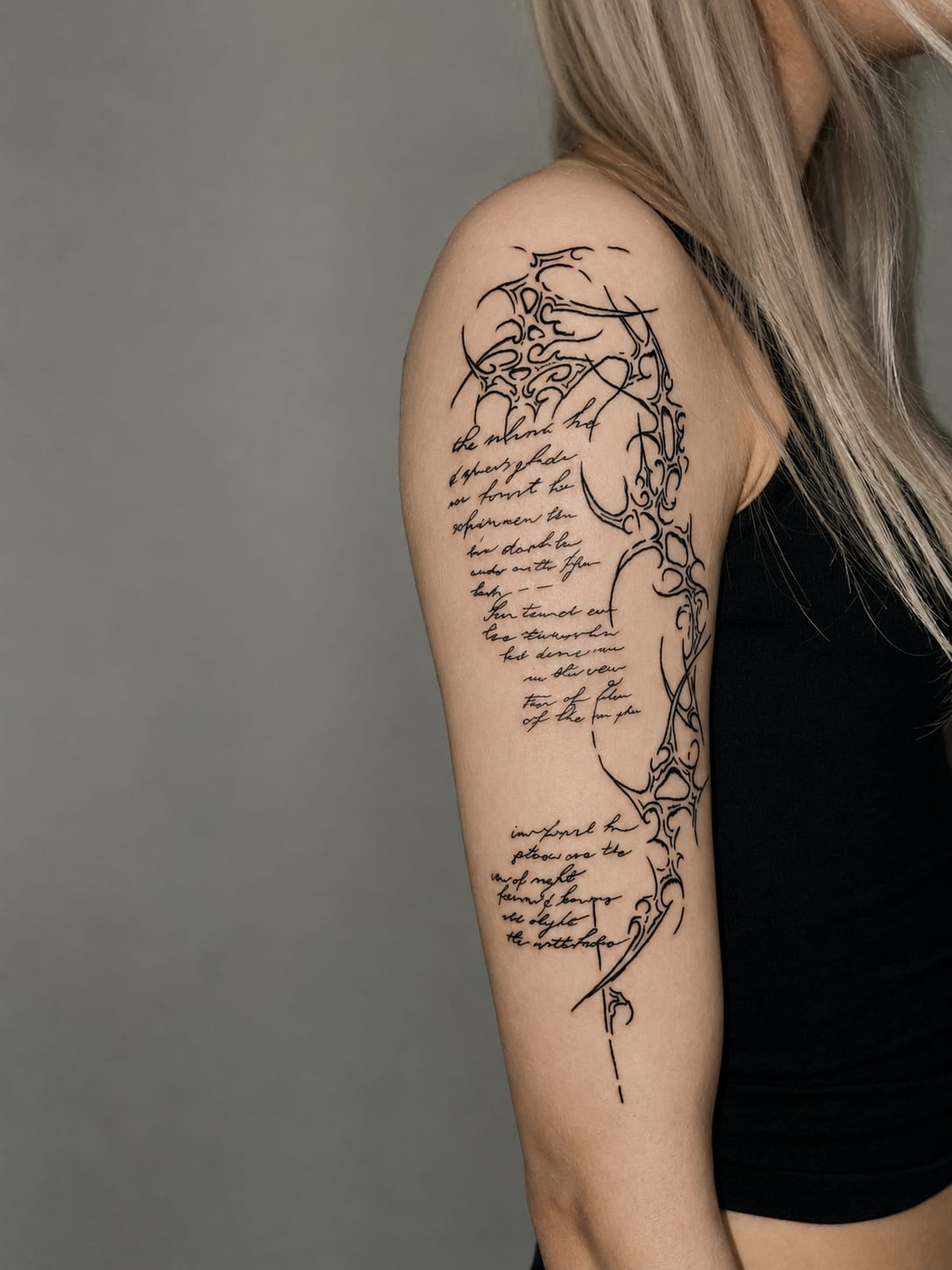
Ciphers of organic calligraphy
Dominika Doroszkiewicz • Technokracja • Tattoo Artist
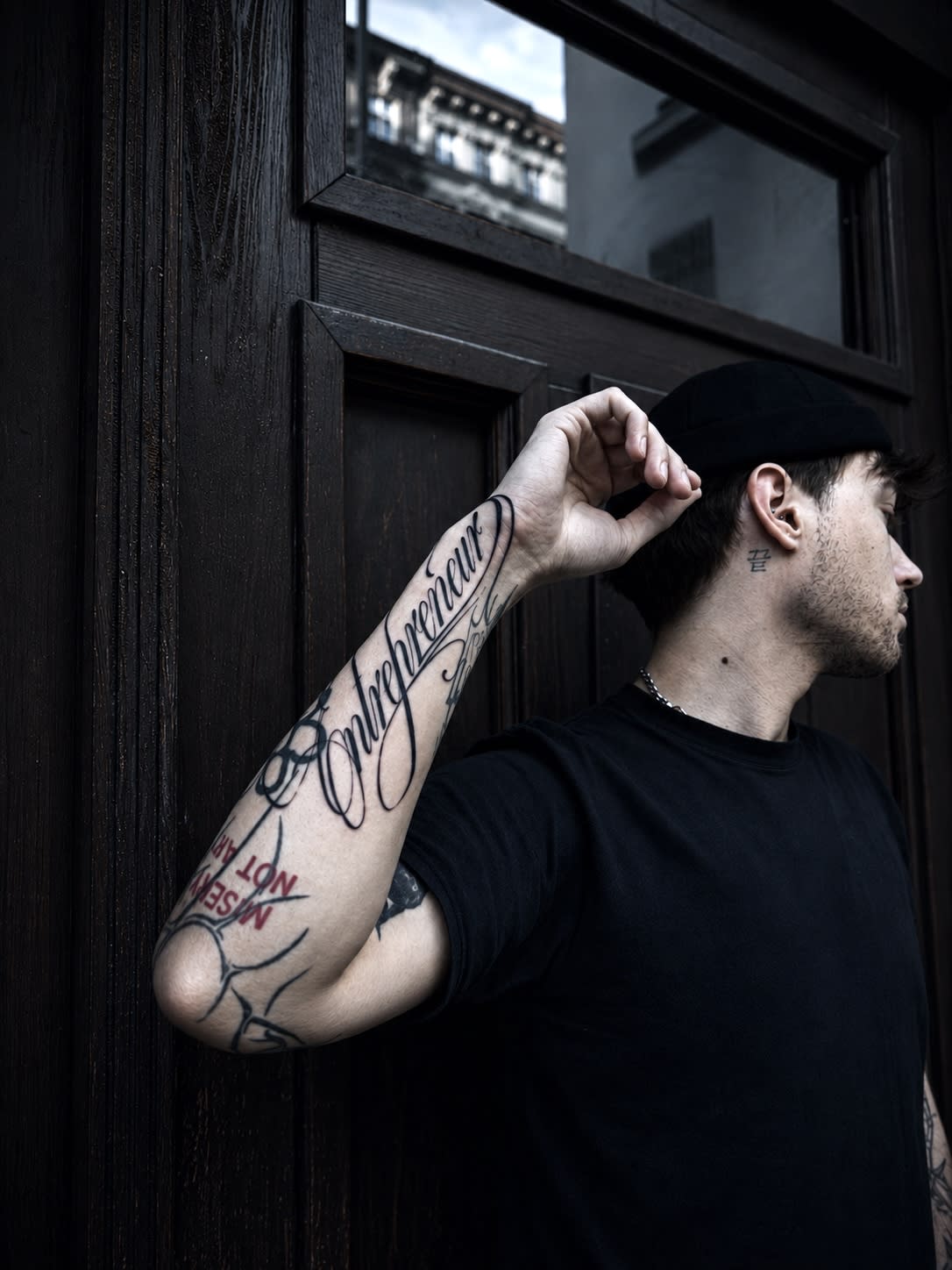
Forearm Script
Justyna Góra • Tattoo Artist • Permanent Makeup
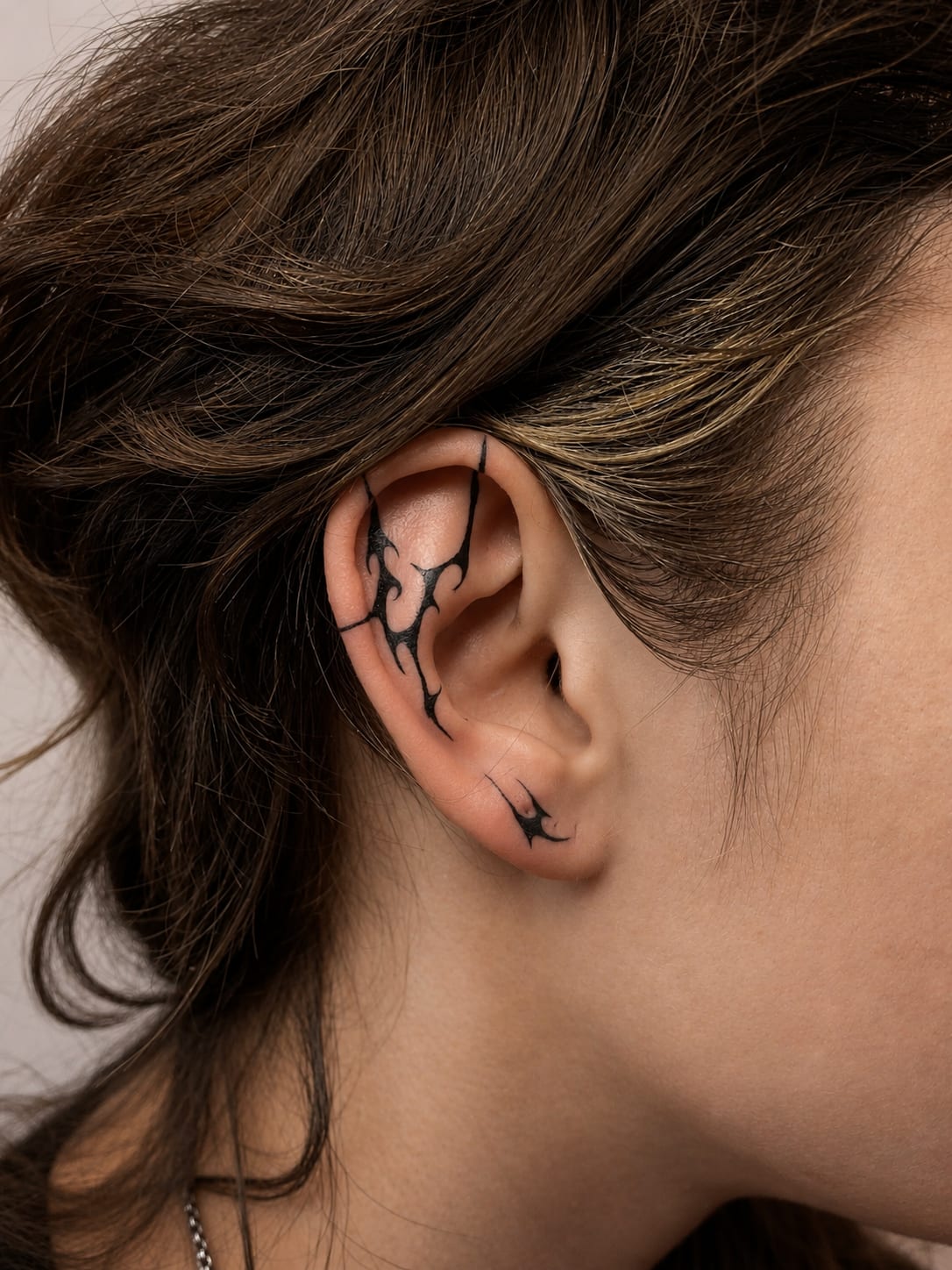
Sharp ear contours
Dominika Doroszkiewicz • Technokracja • Tattoo Artist
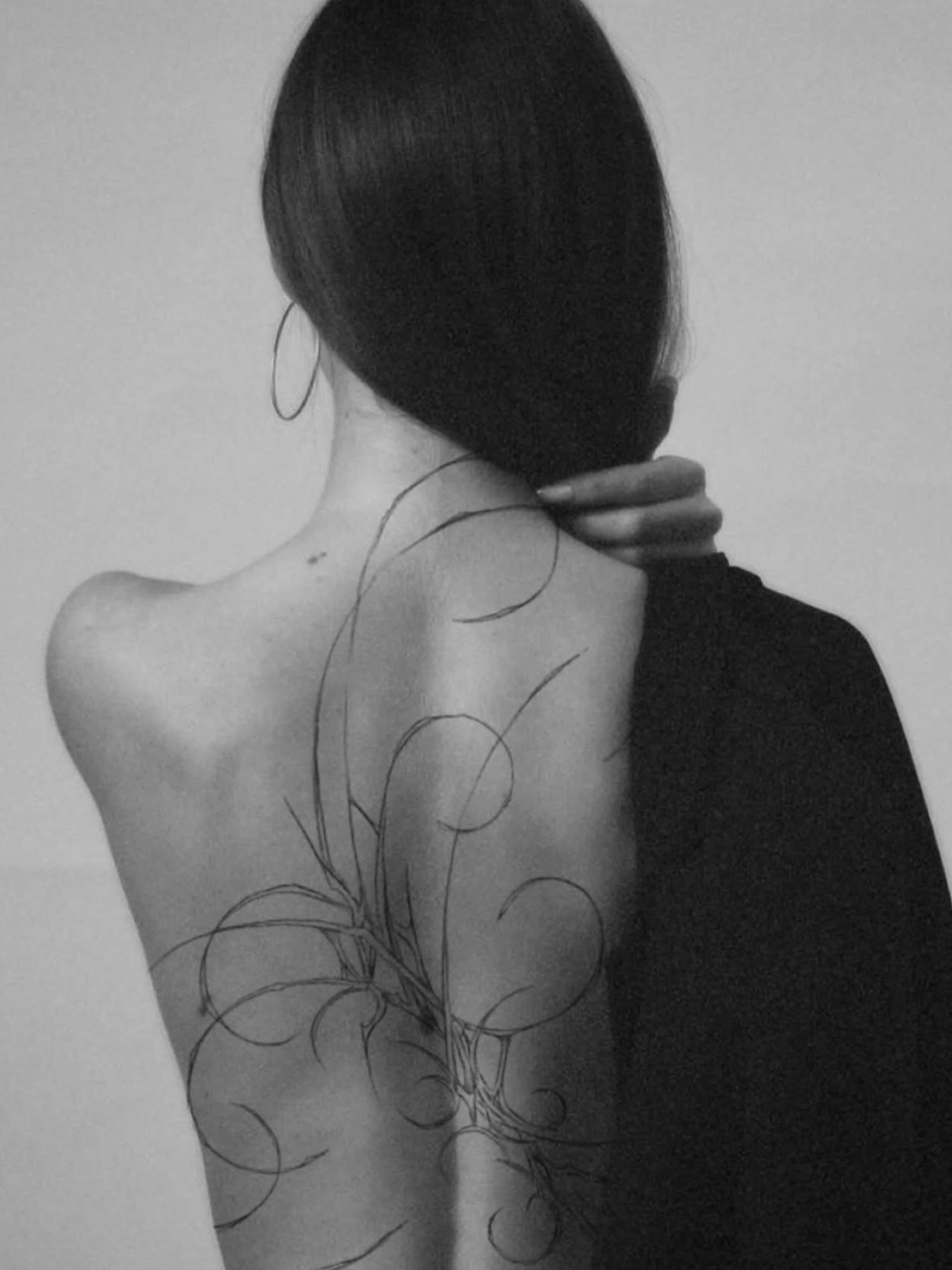
Organic grass swirls
Mira Paul • Sacred__kid • Tattoo Artist
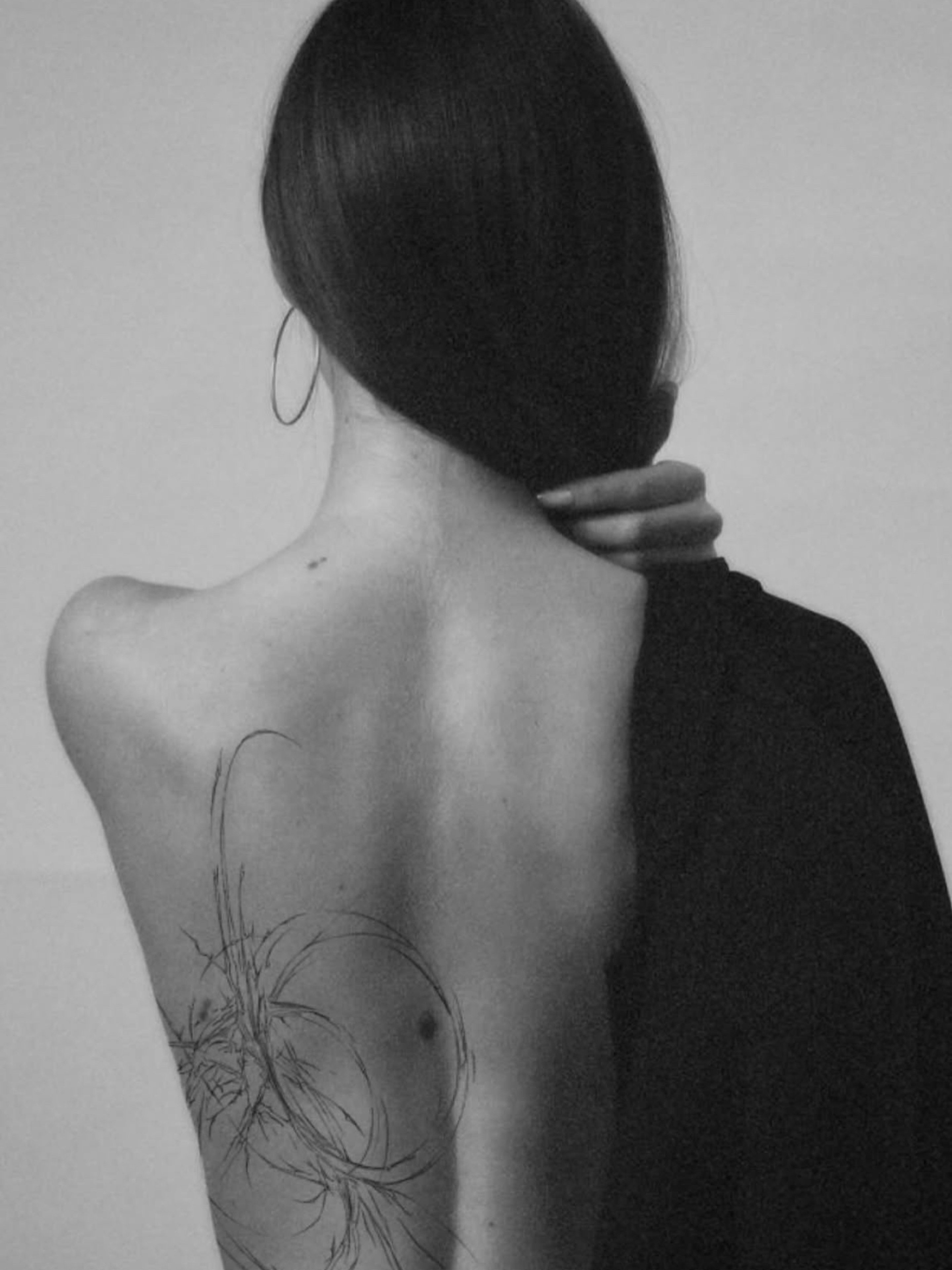
Abstract circles and lines
Mira Paul • Sacred__kid • Tattoo Artist
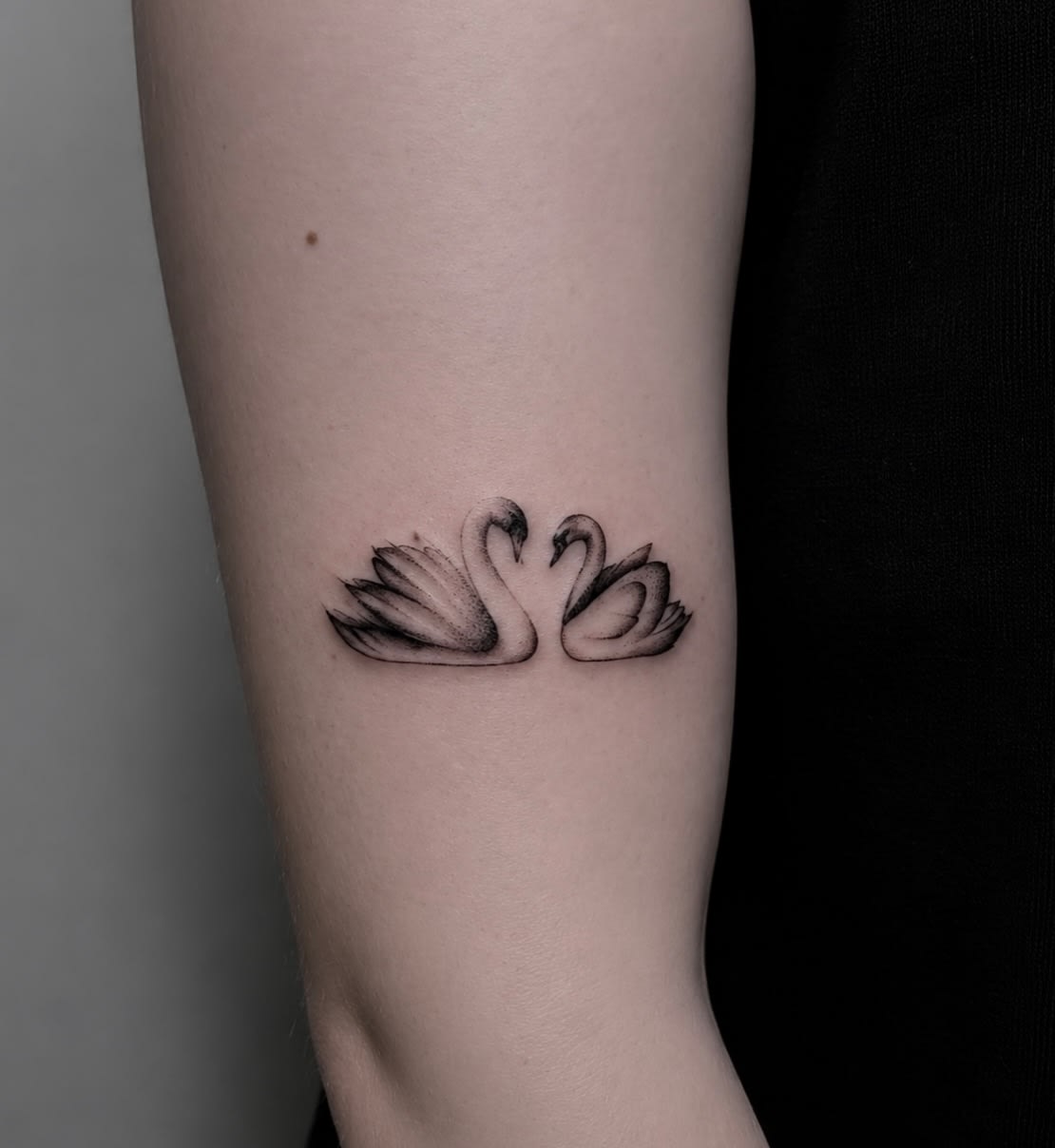
Mirrored Swans
Justyna Góra • Tattoo Artist • Permanent Makeup
Indicative ranges — every piece is quoted individually after a free consultation.
Minimalist tattoo
300 PLN
~75 €
A single small motif in a thin line, with no shading or fill — one symbol, a date or a short word. The shortest session on our list.
Get your quoteSmall design
from 400 PLN
~100 €
Small motifs, lettering and single elements with detail or light shading — usually one short session.
Get your quoteMedium project
500–1000 PLN
~125–250 €
Hand-sized compositions: fine line, ornaments, lettering with graphics, smaller shaded motifs.
Get your quoteLarge project
1000–2000 PLN
~250–500 €
Detailed designs on the forearm, calf or back — more detail, often longer or multi-stage work.
Get your quoteSleeves and large pieces
individual quote
Sleeves, large compositions and multi-session projects are billed per session across several appointments.
Get your quoteThe ranges are indicative. The final, binding price is set after the consultation and once the design is approved.
Our artists’ portfolio is the best test of whether a style fits your skin and idea. Filter by style, body placement or tags.
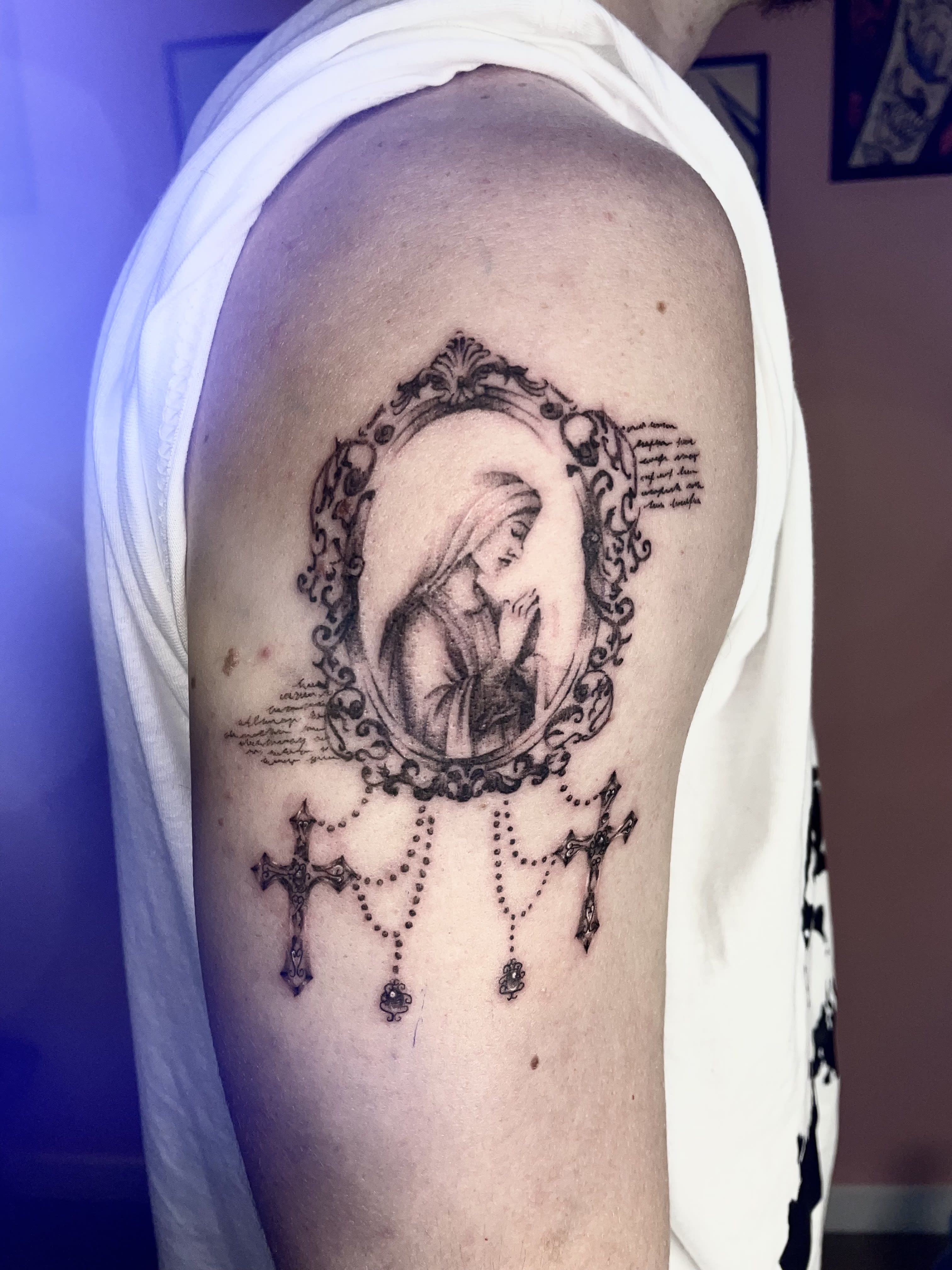

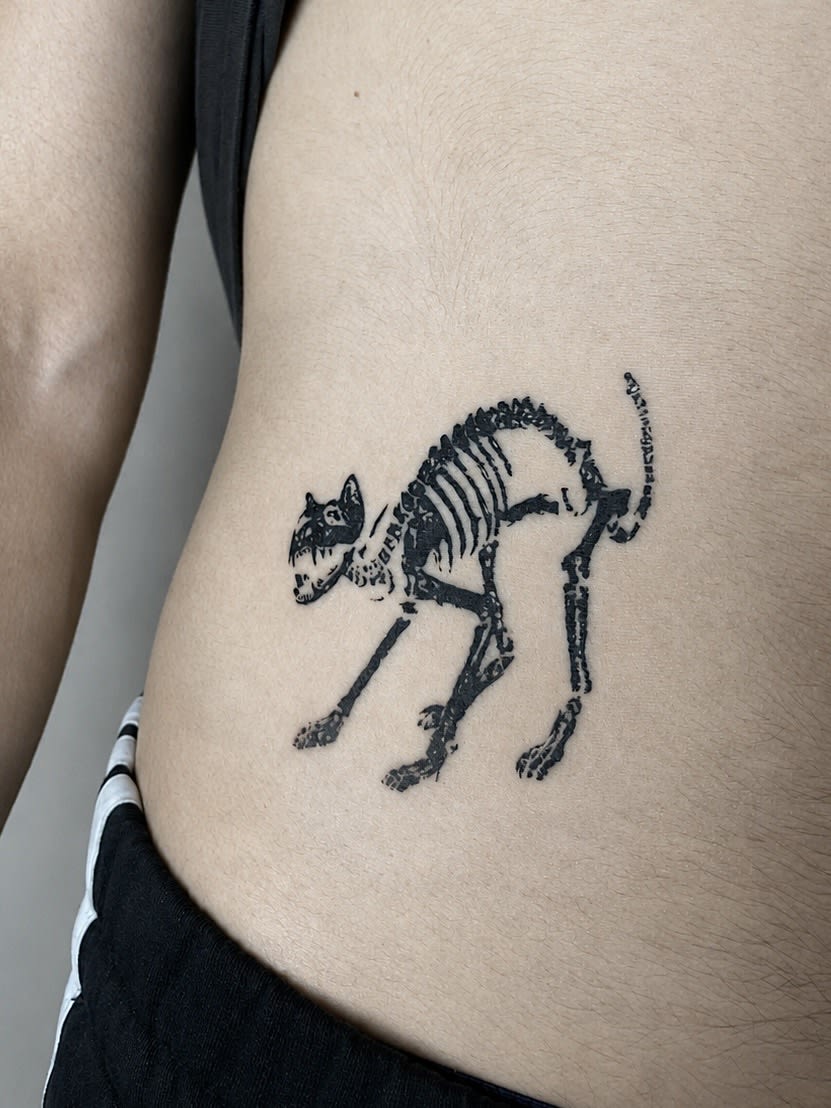

Each artist has their own specialities — see profiles and portfolios, or describe your idea in the form and we’ll match the right person.
The techniques in this gallery have their own pages — motifs, healing, prices and healed examples.
We cover old or unloved tattoos with a new design. See before-and-after transformations straight from our studio.
Practical guides by our artists — pain, aftercare and preparation. No myths, no scare stories.

Original projects waiting for an owner — each with a price and a suggested size.
The questions that matter most
Describe it in the form — we’ll suggest a style, an artist and the nearest date. The consultation and quote are free.