


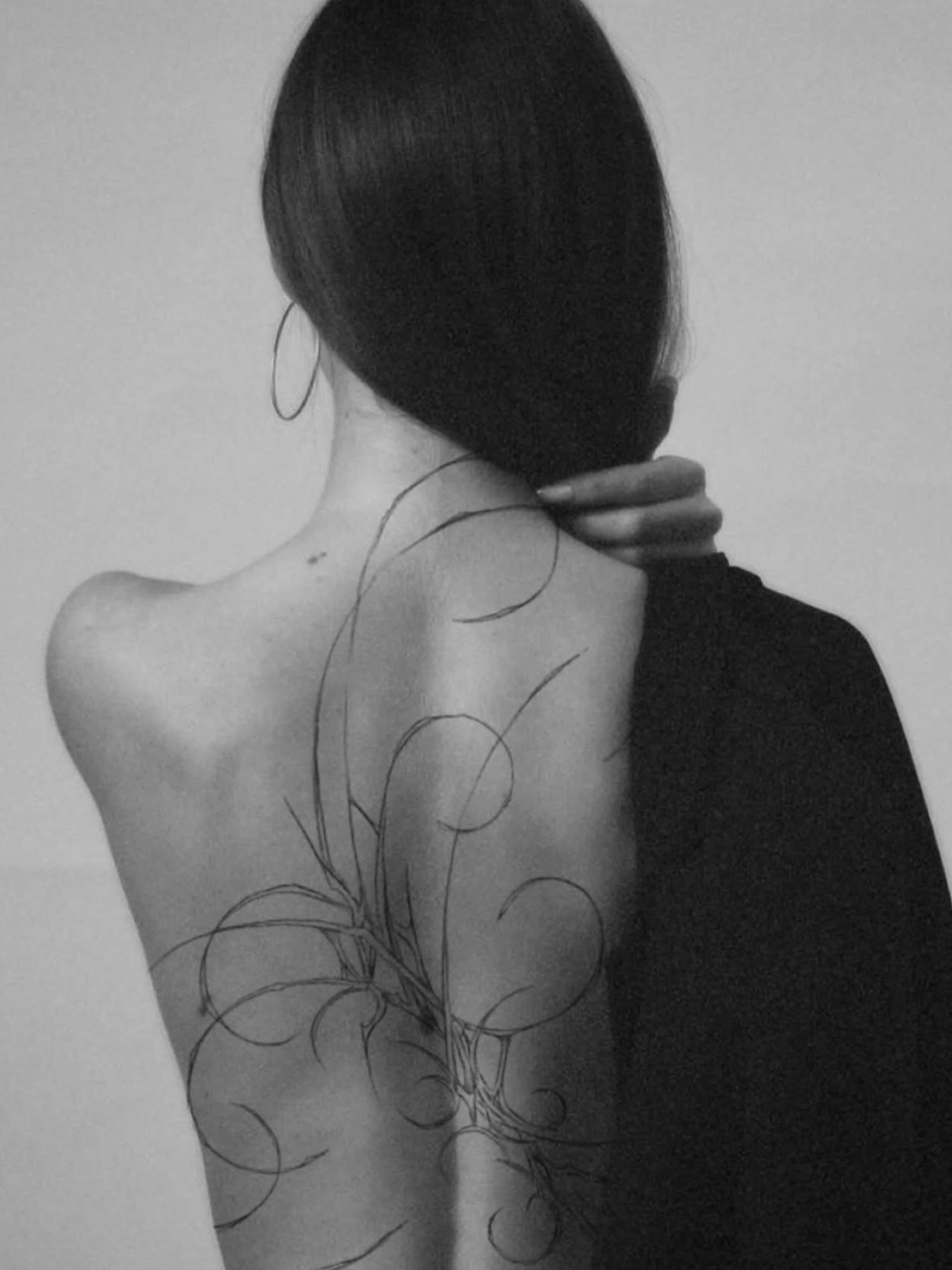
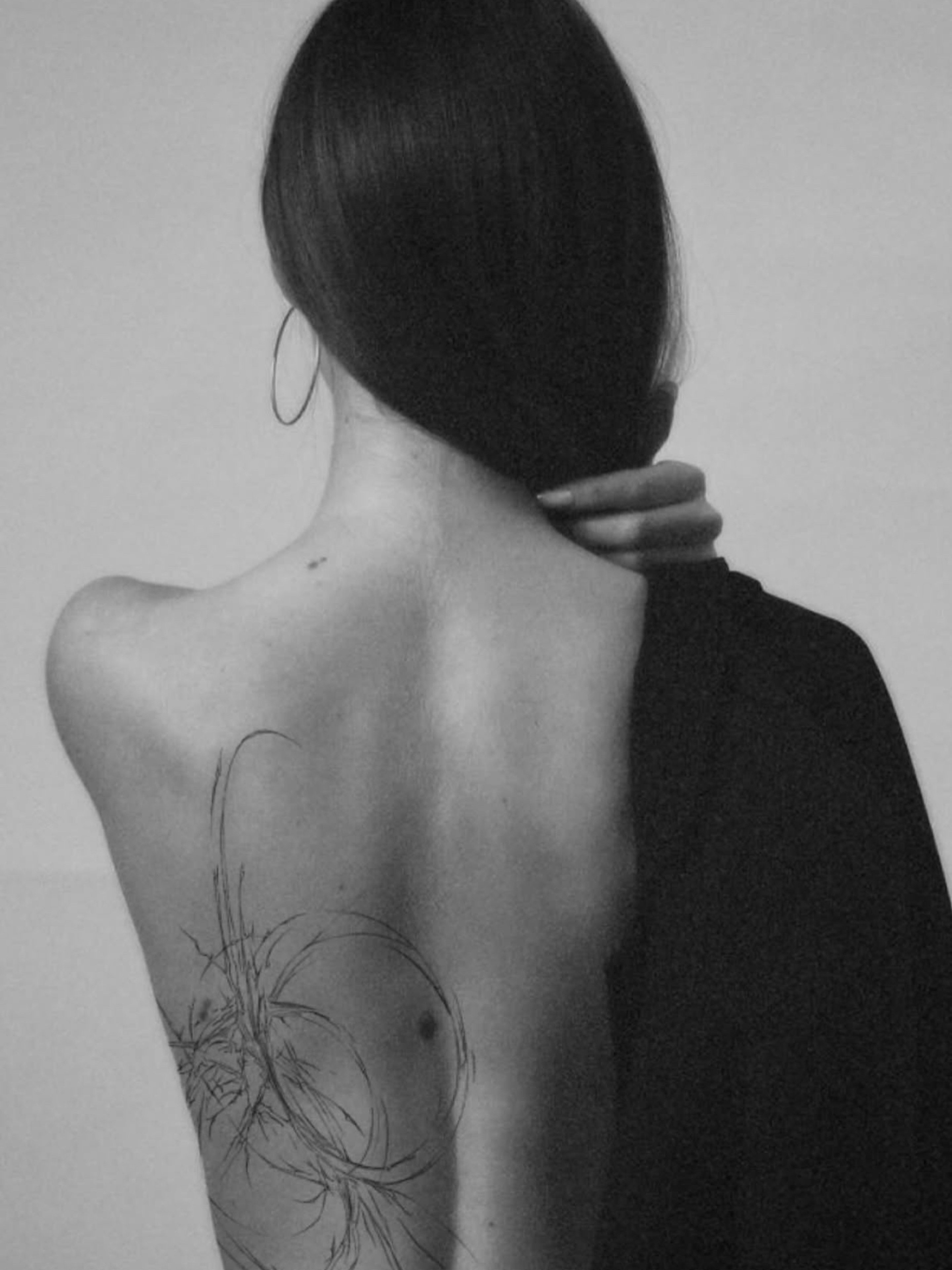


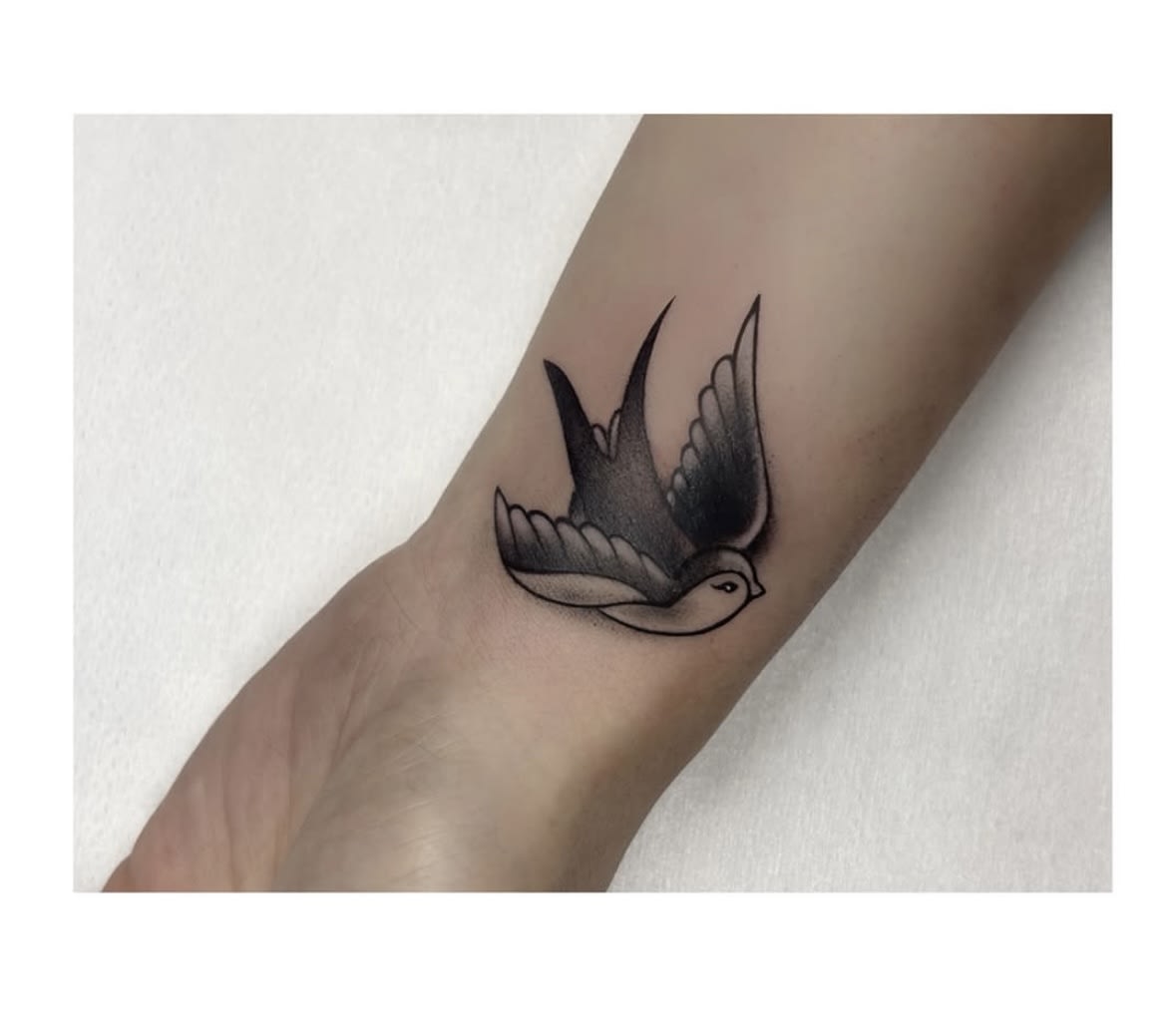
Cover-up — a second life for your tattoo
We cover old or unloved tattoos with a new design. See before-and-after transformations straight from our studio.
Cover Up
A failed, faded or simply regretted tattoo doesn't have to stay with you forever. We design cover ups that not only hide the old work, but turn it into a tattoo you'll be proud of. See our transformations — before and after.
How it works
A name that stopped meaning anything. A tribal from a holiday fifteen years ago. A design from the days when "any tattoo" mattered more than "a good tattoo". There are as many reasons as clients — and none of them needs explaining. For many people a cover-up is more than an aesthetic procedure: it is the physical closing of a chapter. That is why we treat these projects with particular seriousness — from the first conversation to the assessment of the healed piece.
From the craft side, a cover-up follows one simple, unforgiving rule: pigment in the skin does not behave like opaque paint, but like a semi-transparent layer. New ink does not "paint over" the old — both layers overlap like coloured films. Light yellow will never cover navy linework; deep black, graphite and saturated cool tones will. That is why we design a cover by thinking in values: we map the darkest points of the old piece and write them into the shadows of the new composition, so they become its natural part.
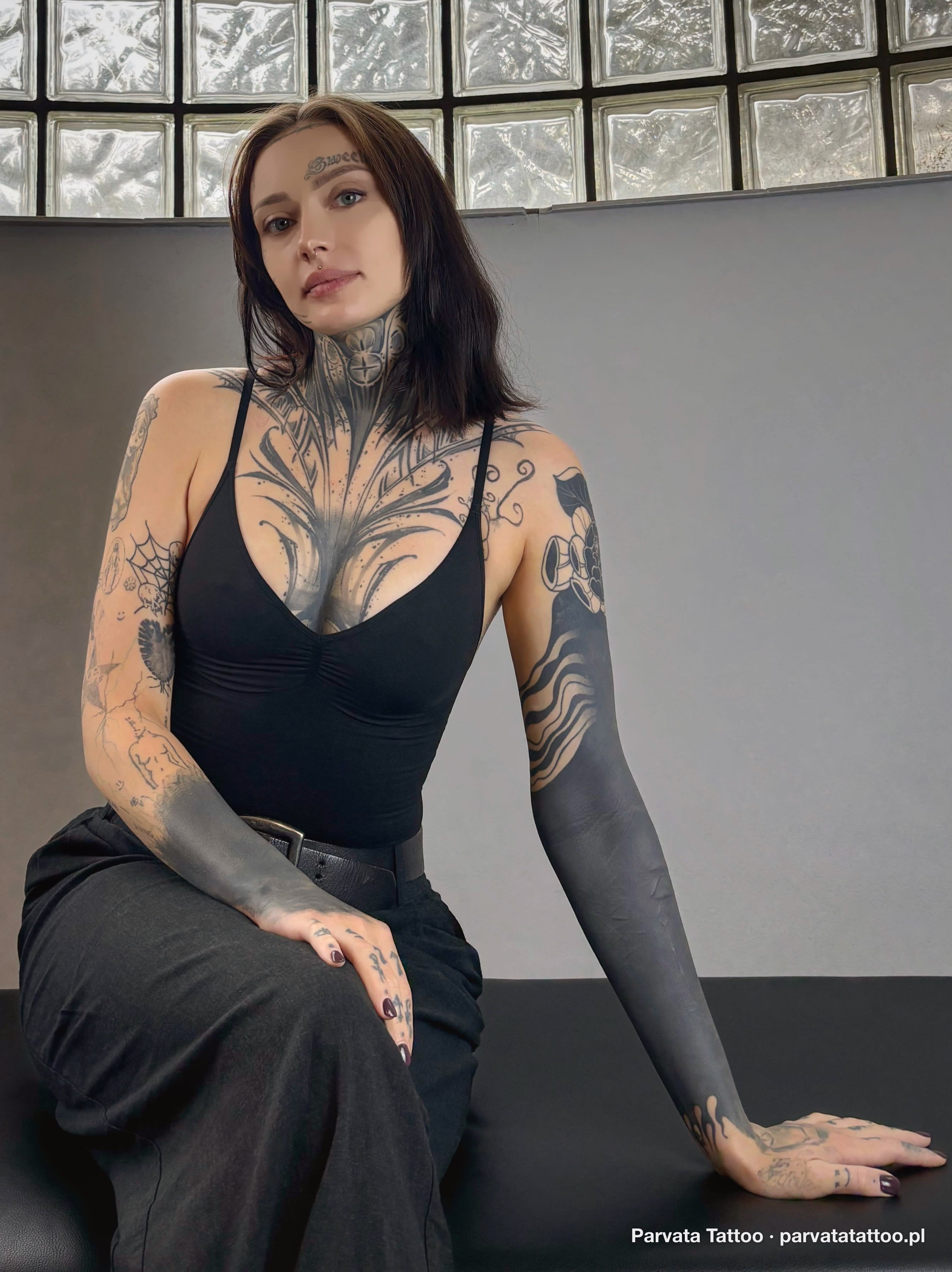
The second rule is about scale: the new design must be larger than the old one — usually by 30–50% — and denser. We need space to lead the eye: strong contrast, detail and the rhythm of the composition draw attention away from the places where the old pigment sits underneath. For that reason the best-covering styles are those with high graphic density: blackwork, ornamental work, dense dotwork, botanical motifs and realism built in dark values. Delicate fine line cannot be a cover — and an honest studio will tell you that up front.
A separate category is lettering and names — the most frequent "patient" in our cover practice. The good news: letters are usually thin linework, which covers gracefully as long as the new design does not try to be another piece of lettering. A letter under a letter always shows through — so we turn an ex-partner’s name not into a new name, but into a composition: a branch of flowers, an ornament, an animal in motion. The further the new motif departs from the rhythm of writing, the better the old word disappears.
Motifs
In theory, anything with enough density can be a cover. In practice, certain motifs work so well that they keep coming back — their natural structure simply swallows old tattoos:
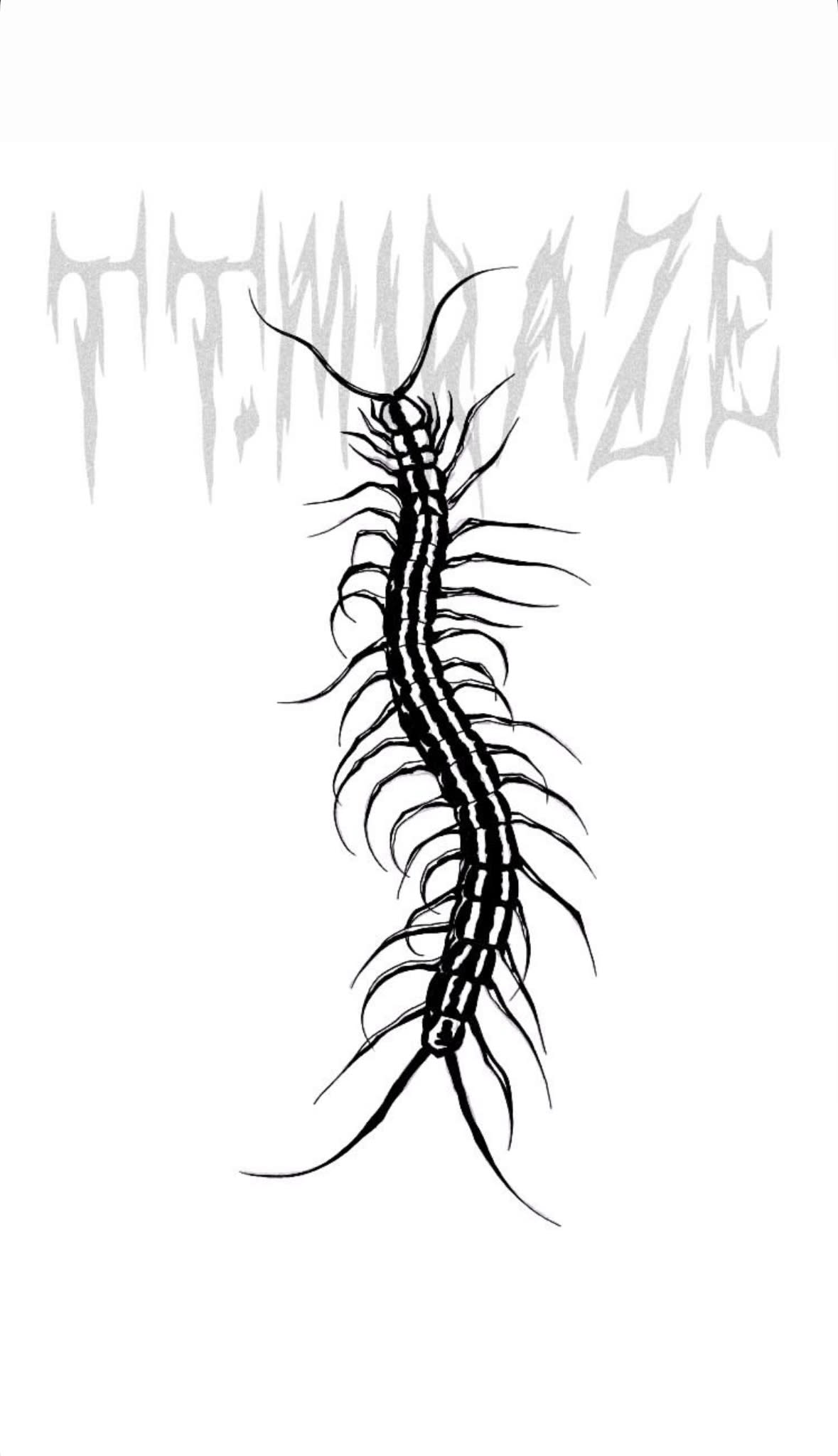
Scales, claws and coils of smoke are hundreds of natural places to hide old pigment. A cover classic for a reason.
Peonies, leaves and tangled stems forgive everything — organic irregularity masks every old line.
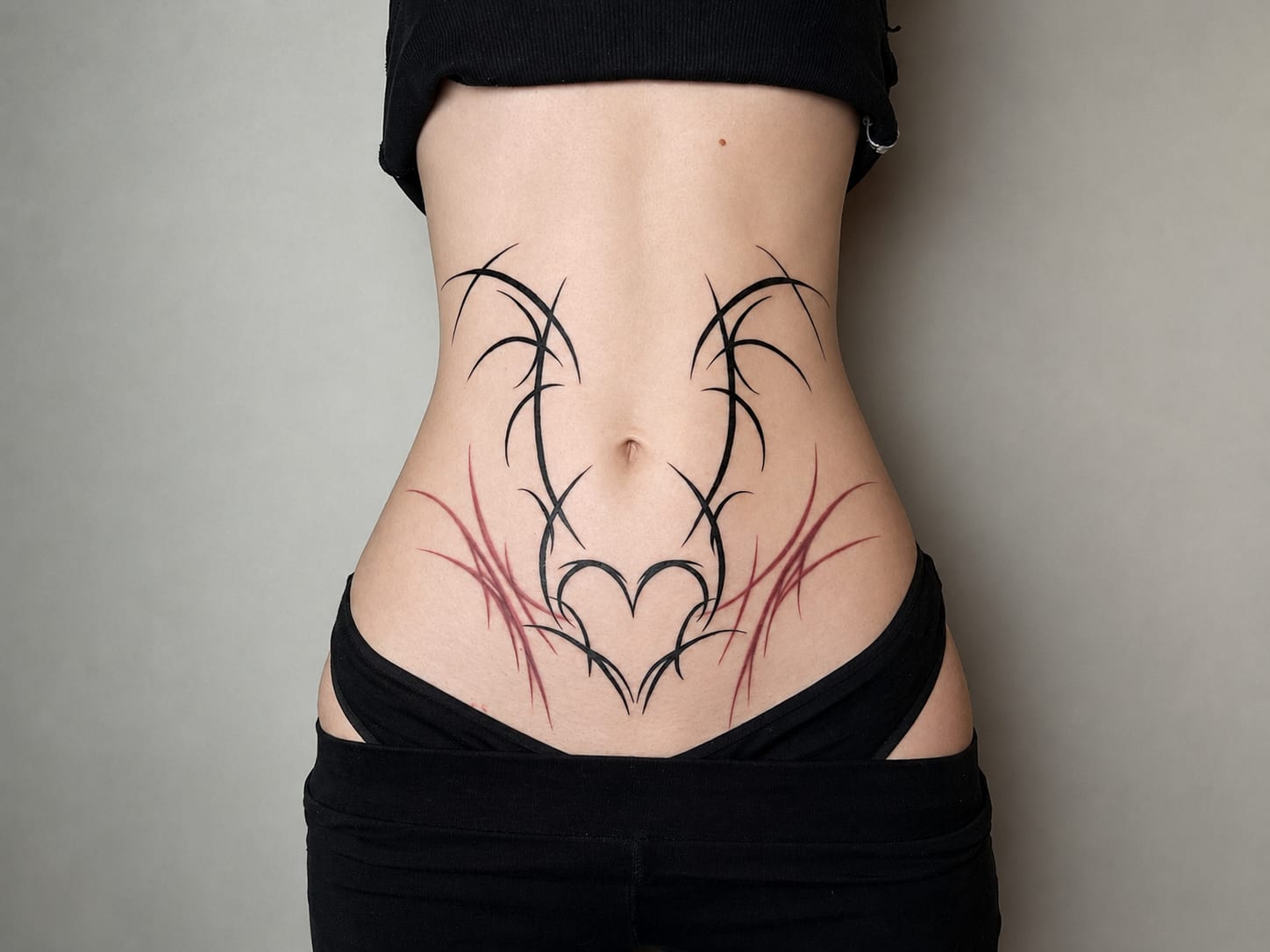
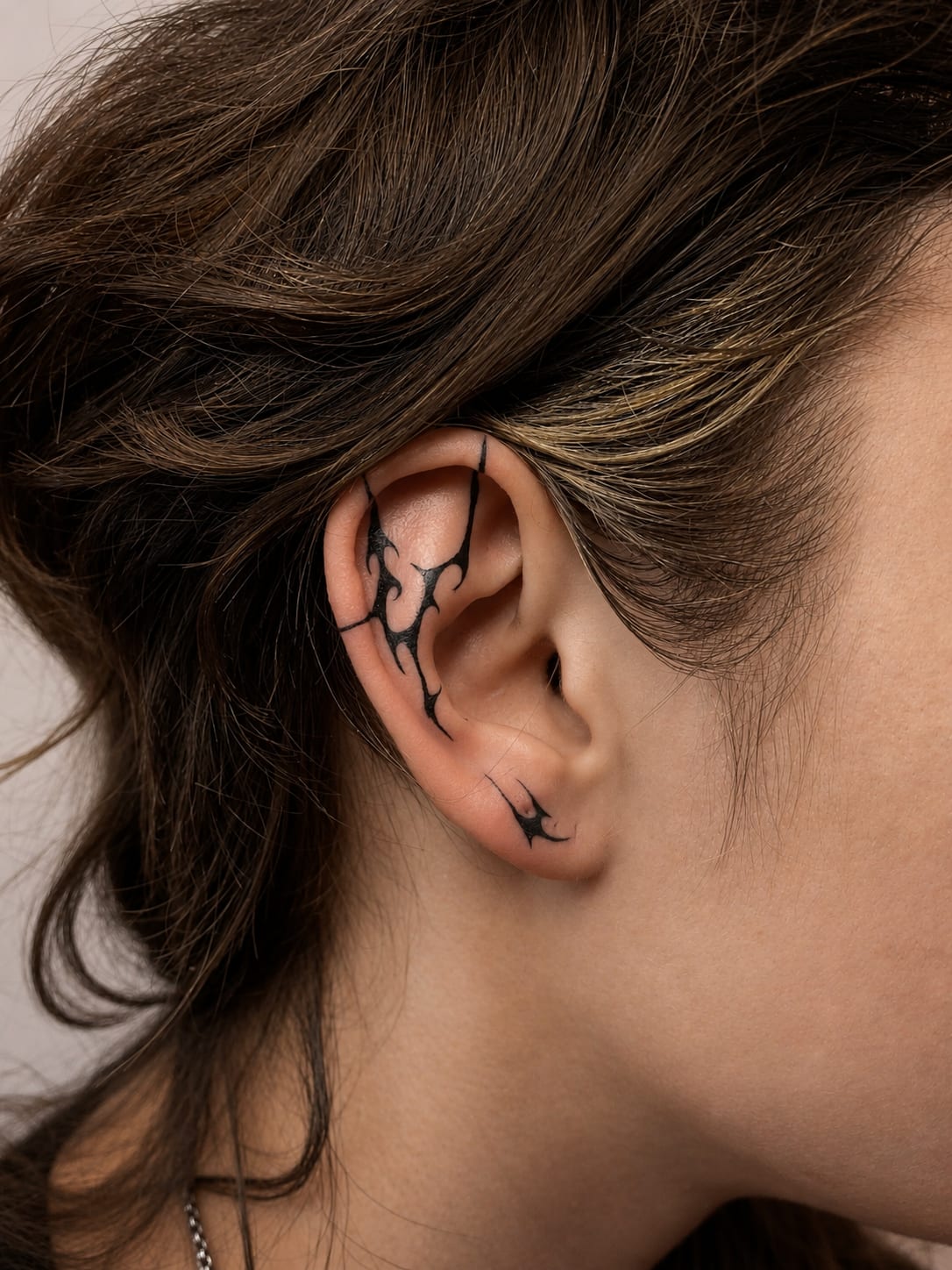
Symmetrical rhythm and dense fills lead the eye across the whole composition, not to what sits underneath.
Waves, wind and cherry blossoms build a large, flowing background — ideal when the old tattoo needs truly strong coverage.
Animal portraits and moody, low-key compositions create a depth in which the old design sinks without a trace.
Bold, abstract planes of black — the most effective covering tool that exists in tattooing.
This does not mean your cover has to be a dragon or a peony. The motif always starts with you — our role is to translate it into a composition that meets the covering requirements. Sometimes it is enough to shift the accents, add a background or densify the shading for a "non-cover" idea to become entirely feasible.
The process
Everything starts with a good photo in daylight. We assess the saturation and depth of the pigment, the colours, the age of the tattoo and the condition of the skin. Usually at this stage we already know whether the cover is feasible right away or needs a staged plan.
We look at the tattoo in person and talk about motifs that speak to you. We say honestly what will work on this skin and what will not — we will not promise a delicate twig where the composition needs a dark dragon.
We draw the composition so it flows with the muscles and writes the old shadows into the new whole. You see the design before the session and we discuss every remark — the stencil is a map, and details are refined on the skin.
Smaller covers are closed in a single appointment. Large, heavily saturated pieces are planned in stages: layer by layer, with a full healing break between sessions. That is not a complication — it is a calculated part of the plan.
A cover is judged only after full healing, when the pigment has settled and the epidermis has regenerated. If the old tattoo faintly shows through anywhere, we refine those spots at a follow-up visit — until the result is finished.
Not every tattoo covers equally easily — and a good studio differs from a poor one precisely in telling you that before the session, not after. Here is our difficulty map:
If after the analysis we conclude that a cover makes no sense right now, you will hear it straight — together with a plan B: waiting for the pigment to fade, a staged project, or a different composition that embraces the difficult spot instead of fighting it. We would rather decline and propose a path than execute a cover that will need… another cover in a year.
Body areas
Placement affects a cover twice: once through how the skin takes pigment, and again through how much space the design gets. A short guide:
A large, even plane and skin that heals well. The most common cover placement — the design has room to unfold.
Natural curves help hide the geometry of the old design in the movement of the new composition. Great for Japanese motifs and beasts.
Grateful anatomy and plenty of space. Old tattoos from school days usually live here — and disappear from here most often.
The largest canvas on the body. Even a heavily saturated old tattoo gets so much space around it that it stops dictating terms.
A demanding placement — the skin is thinner and the session more intense. But large compositions can look spectacular here.
Little room to enlarge the design, and the skin wears pigment out quickly. Here we more often propose a considered blast-over or a staged plan.
Whatever the placement, one rule applies: we lay out a cover design for the anatomy, not for the rectangle of a photo. A composition that flows with muscle and bone looks natural from every angle — and that is exactly what makes it impossible to guess anything was ever underneath.
Scars
Covering scars is different work than covering an old tattoo — and we treat it separately. Post-surgery scars, burns, accident marks or traces you do not have to tell us about if you do not want to — each has a different structure, elasticity and sensitivity. The common denominator is one: scar tissue takes pigment differently than healthy skin.
The basic safety rule: the scar must be fully mature, usually a minimum of 12 months after healing — pale, flat and stable, not pink and active. Pigment in a scar can settle unevenly and heal lighter, so we design organic motifs that forgive it: botanicals, ornaments, dotwork, compositions with soft edges. A geometric grid of straight lines through the middle of a scar is asking for trouble — and we simply do not do that.
With larger or unusual scars we can start with a test fragment: we tattoo a small piece, wait for full healing and only then plan the whole. It takes longer, but it gives certainty instead of hope. We also know how much this change means — for many of our clients covering a scar is the end of explaining themselves with every short sleeve. This part of our work gives us the most satisfaction.
One caveat we would rather state too early than too late: a tattoo does not even out skin texture. A raised or sunken scar will remain palpable under the fingers — what changes is what the eye sees, not what the hand feels. A well-designed piece, however, makes the gaze stop at the composition rather than what lies beneath it. And that is exactly the goal.
Sometimes the old piece is so saturated that the honest answer is: lightening first. Laser tattoo lightening breaks up the pigment and after a few treatments can turn an "impossible" cover into an entirely feasible project. At Parvata we do not perform laser treatments — but if your tattoo requires it, we will tell you straight at a free consultation, before you spend any money. We would rather you come back in six months with a good base than promise a miracle today.
There is also a third way: the blast-over — deliberately tattooing a new, bold design directly over the old one, without hiding it. The old tattoo remains visible underneath as a background, while a new layer of graphic blackwork or ornament dominates the composition. It is an aesthetic for the decisive, firmly rooted in contemporary tattooing — if it speaks to you, let us talk about it at a consultation.
Which way to choose? You do not have to settle it alone — that is what the consultation is for. Bring the tattoo and we will lay out realistic scenarios with the time, number of sessions and approximate budget for each. The decision is always yours; our job is to make sure it is based on facts, not promises.
A cover-up is always more work than a fresh piece on clean skin: the design has to reconcile your expectations with the hard constraints of the old pattern, and the execution is sometimes spread over stages. That is why you will not find a "covers from X" price list here — every quote is made after seeing the tattoo and discussing the direction of the design.
The final amount comes down to a few concrete factors: the size and saturation of the old piece (the darker it is, the more layers the new one needs), the surface of the new design, the level of detail, the placement on the body and the expected number of sessions. At the consultation we break the quote down into these elements, so you know exactly what you are paying for.
The consultation is free and commits you to nothing: you bring the tattoo (or send a photo through the form) and leave with concrete information — what is possible, in how many sessions and within what budget. No guessing, no hidden costs along the way.
A well-designed cover ages like any solid tattoo — with one difference: two layers of pigment are at work underneath. That is why the foundation of a cover’s longevity is contrast built at the design stage. The stronger the hierarchy of black and light at the start, the more years the composition stays legible before the natural migration of pigment begins to soften the edges.
What can you do yourself? Two things: SPF on the healed piece throughout the sunny season, and moisturising — dry skin scatters light and optically "dims" a tattoo. If the contrast weakens after years, a healed cover can be refreshed: we deepen the blacks and restore the shadows in one short session. It is a much simpler procedure than the cover itself — because this time the design cooperates instead of fighting.
A failed cover is the most expensive tattoo money can buy — you pay twice, and the skin takes a third layer of pigment. Before you choose a studio (ours or any other), watch for a few warning signs:
At Parvata every cover starts with analysis and an honest conversation — including when honesty means "not yet" or "this needs three sessions, not one". You can see our clients’ healed transformations higher up this page, and at the consultation we will also show them in person.
Half of online consultations fall apart over photos that are impossible to read. A good photo of the old tattoo lets us assess the feasibility of a cover before we even meet — take it like this:
A cover session is often a longer appointment than a standard tattoo — the needle works over skin that has already taken pigment once. Good preparation genuinely shortens the session and improves how the pigment settles, and the aftercare decides half of the final result:
After healing we assess the piece together: if any fragment needs refining, we book a follow-up. We consider a cover finished only when no trace of the old tattoo remains — not when the session ends. Questions about your particular tattoo? Write to us through the form or drop by for a free consultation at the studio on Poświęcka — we will take a look, advise and plan your transformation from start to finish.
Dense blackwork, ornamental patterns and strong, solid motifs cover old tattoos best. Browse our designs that work great for cover-ups.
Indicative ranges — every piece is quoted individually after a free consultation.
Minimalist tattoo
300 PLN
~75 €
A single small motif in a thin line, with no shading or fill — one symbol, a date or a short word. The shortest session on our list.
Get your quoteSmall design
from 400 PLN
~100 €
Small motifs, lettering and single elements with detail or light shading — usually one short session.
Get your quoteMedium project
500–1000 PLN
~125–250 €
Hand-sized compositions: fine line, ornaments, lettering with graphics, smaller shaded motifs.
Get your quoteLarge project
1000–2000 PLN
~250–500 €
Detailed designs on the forearm, calf or back — more detail, often longer or multi-stage work.
Get your quoteSleeves and large pieces
individual quote
Sleeves, large compositions and multi-session projects are billed per session across several appointments.
Get your quoteThe ranges are indicative. The final, binding price is set after the consultation and once the design is approved.
Our artists’ portfolio is the best test of whether a style fits your skin and idea. Filter by style, body placement or tags.
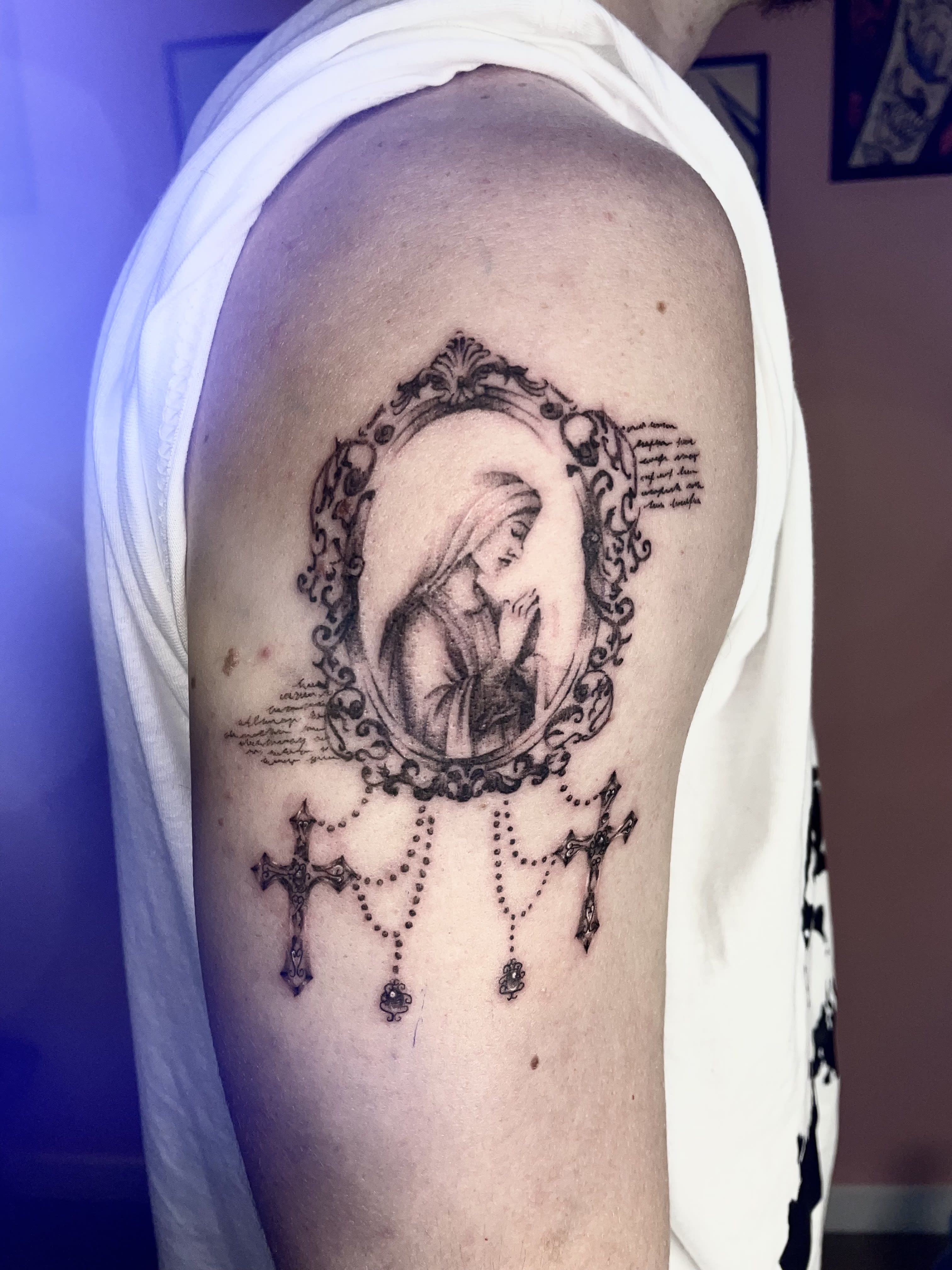

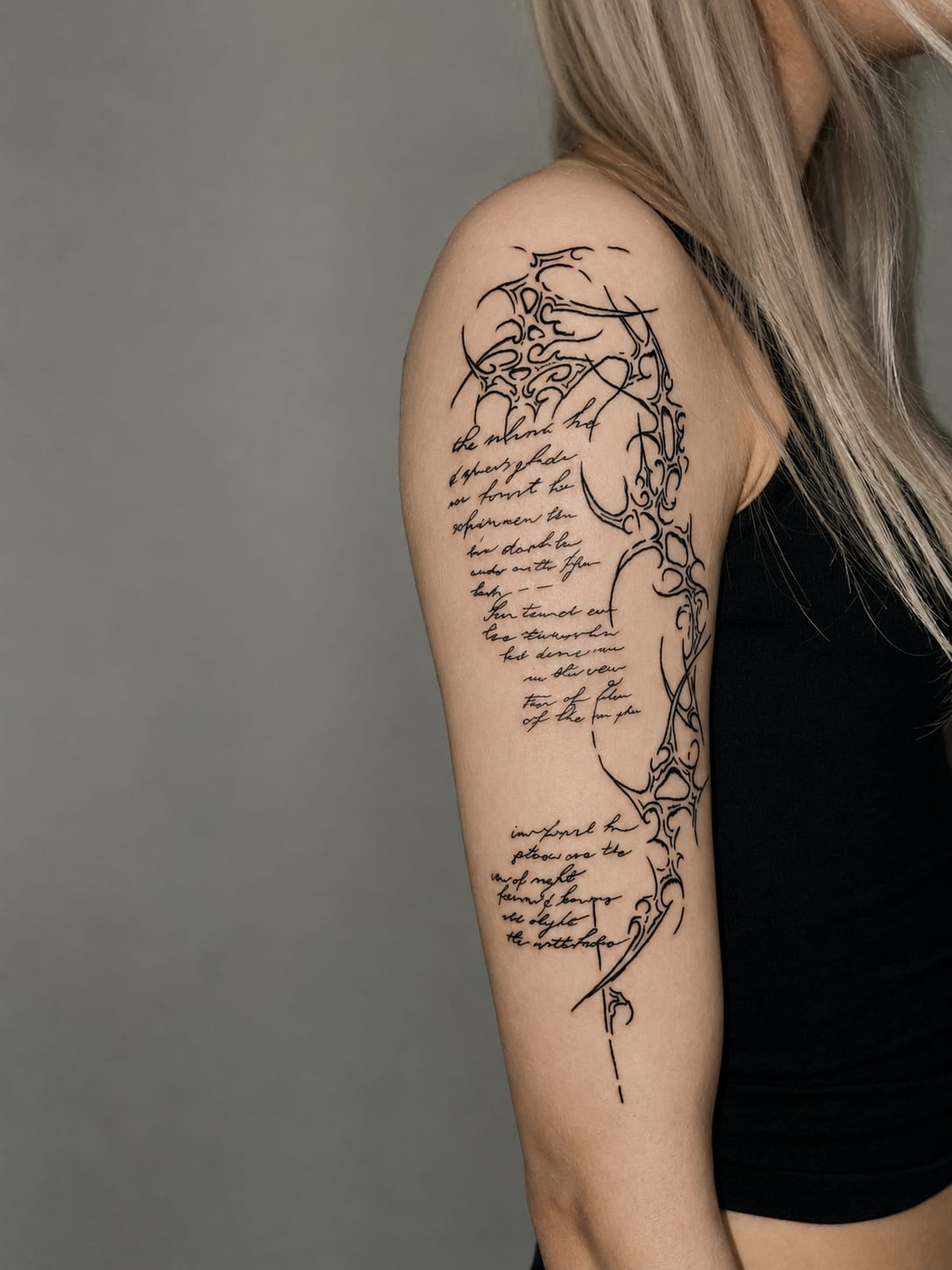
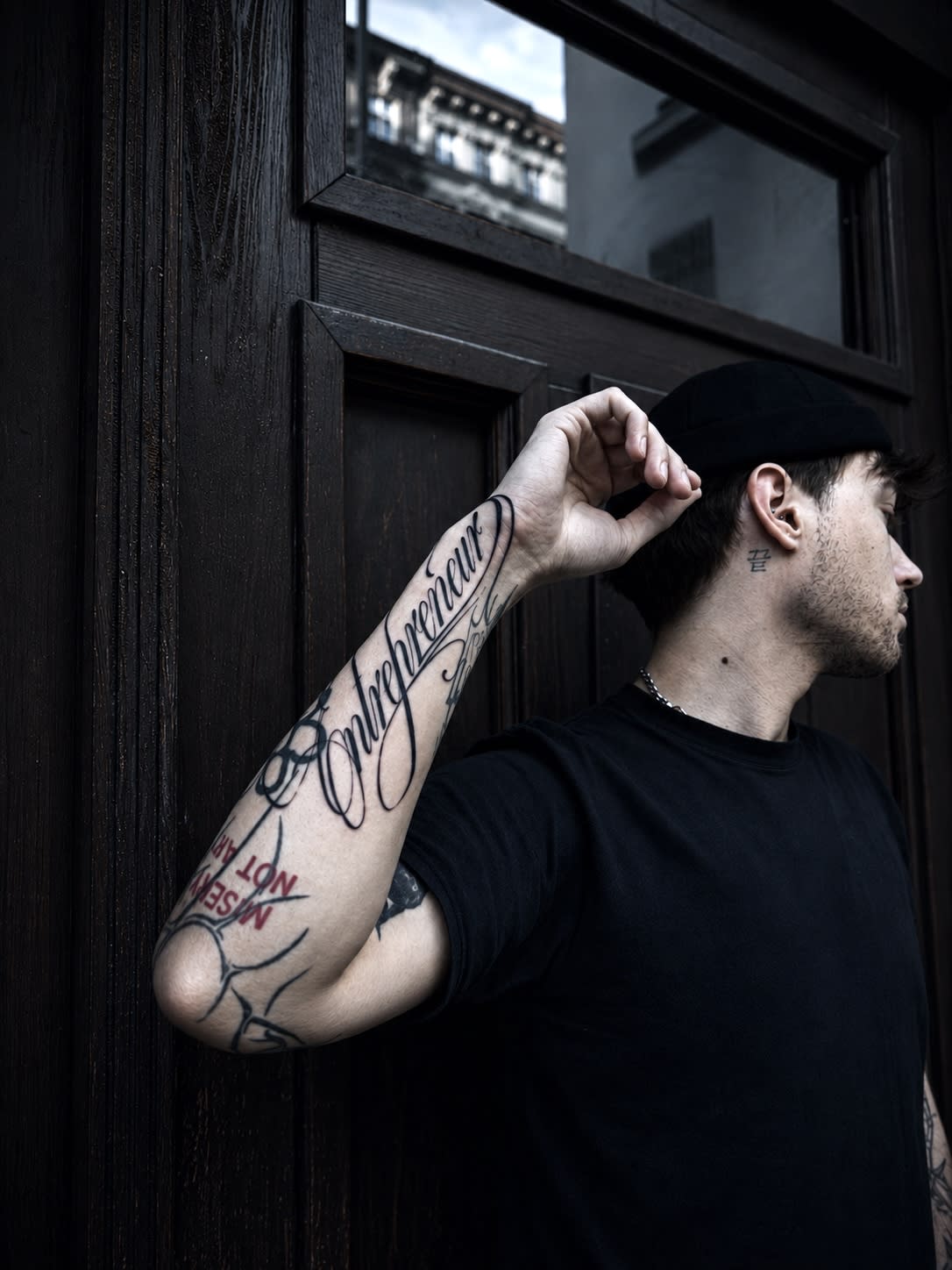
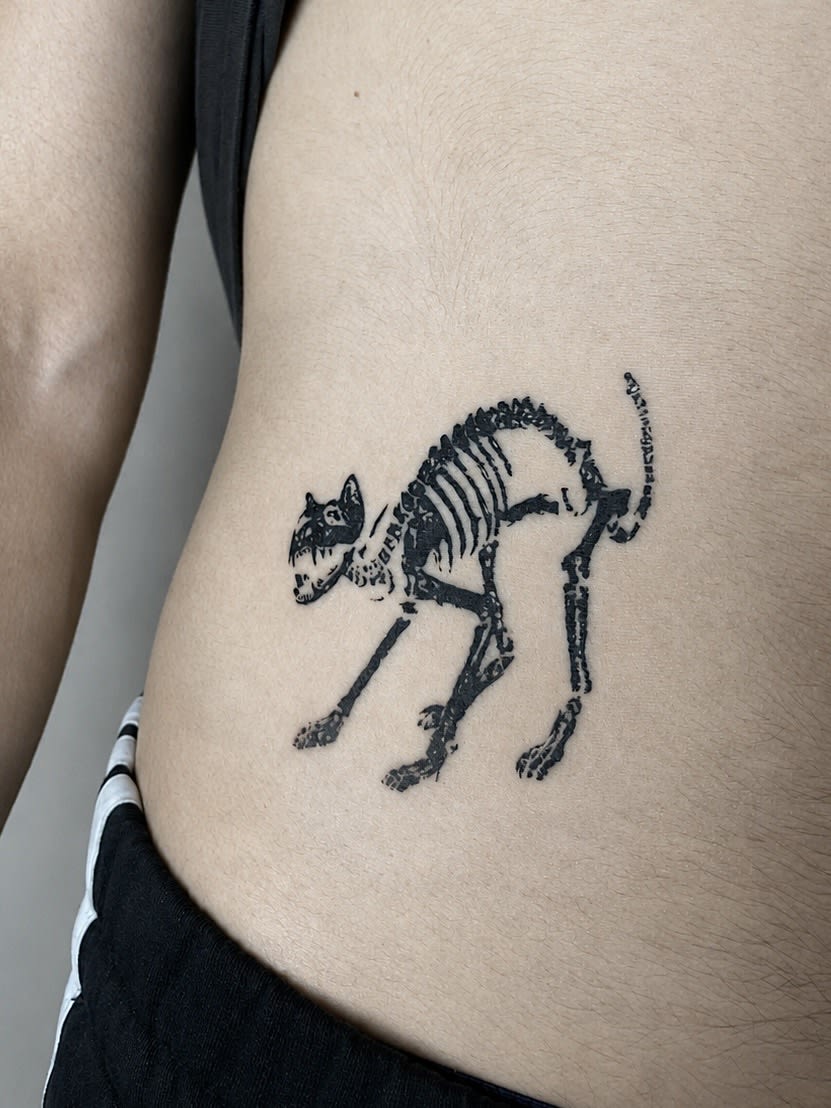

Each artist has their own specialities — see profiles and portfolios, or describe your idea in the form and we’ll match the right person.
The techniques in this gallery have their own pages — motifs, healing, prices and healed examples.
We cover old or unloved tattoos with a new design. See before-and-after transformations straight from our studio.
Practical guides by our artists — pain, aftercare and preparation. No myths, no scare stories.

Original projects waiting for an owner — each with a price and a suggested size.
The questions that matter most
Describe it in the form — we’ll suggest a style, an artist and the nearest date. The consultation and quote are free.
At Parvata Tattoo, we price cover-ups individually after a free, non-committal consultation. Because every project is unique, we calculate the cost based on the size, saturation of the old pigment, and the complexity of the new composition, ensuring total transparency before you commit to the session.
Unfortunately, no; fine line is a delicate style that rarely provides the density needed to hide old, dark pigment. We prioritize honest design choices at our studio, so if a delicate twig won't hide your old work, we will suggest more effective alternatives like blackwork or dense ornamental motifs instead.
A cover-up heals similarly to a standard tattoo, typically requiring 2–4 weeks for the epidermis to regenerate. Because cover-up sessions can be more intense, we emphasize strict adherence to aftercare and suggest keeping the area protected from UV rays with SPF to maintain the contrast of the new design.
Not always, but if your old tattoo is heavily saturated or dark, laser lightening may be necessary to create a better canvas. We assess this during your consultation and, while we don't perform laser treatments ourselves, we will guide you on whether it's the right path for your specific project.
Safety is our priority, and we only tattoo scars that are fully mature, which typically means a minimum of 12 months after the initial healing. The tissue must be pale, flat, and stable, as scar skin accepts pigment differently than healthy skin, requiring a specialized approach to design.
The forearm, calf, and shoulder are excellent for cover-ups because they offer large, even planes and natural muscle curves that help hide the geometry of the old design. Smaller areas like wrists or hands are more challenging to enlarge, so we often propose a staged plan or a blast-over approach for these spots.