17 min readupdated
Tattoo by placement
Head tattoo — Wrocław
A skull does not grow, does not slim down and does not change in circumference. We rate skin stretching here at 1 out of 5, the lowest on the entire price list, so a mandala drawn today will have exactly the same proportions in twenty years. No other placement on the body promises that.
The price for that stability is concrete, though: bone lies directly beneath the skin everywhere, with not a single muscle along the way. The needle has no margin here, touch-ups fall on 30% of pieces, and the vibration is felt through the whole head. And one more thing found nowhere else — whether anyone sees your tattoo is decided by the length of your hair, not by your clothes.
- 7/10
- Pain
- 14–28 days
- Healing
- 30% of pieces
- Touch-up rate
- 1–4 h
- Typical session
The first touch-up after healing is included in the price.
over 200 tattoos done5 on Google (43 reviews)
Our work: head
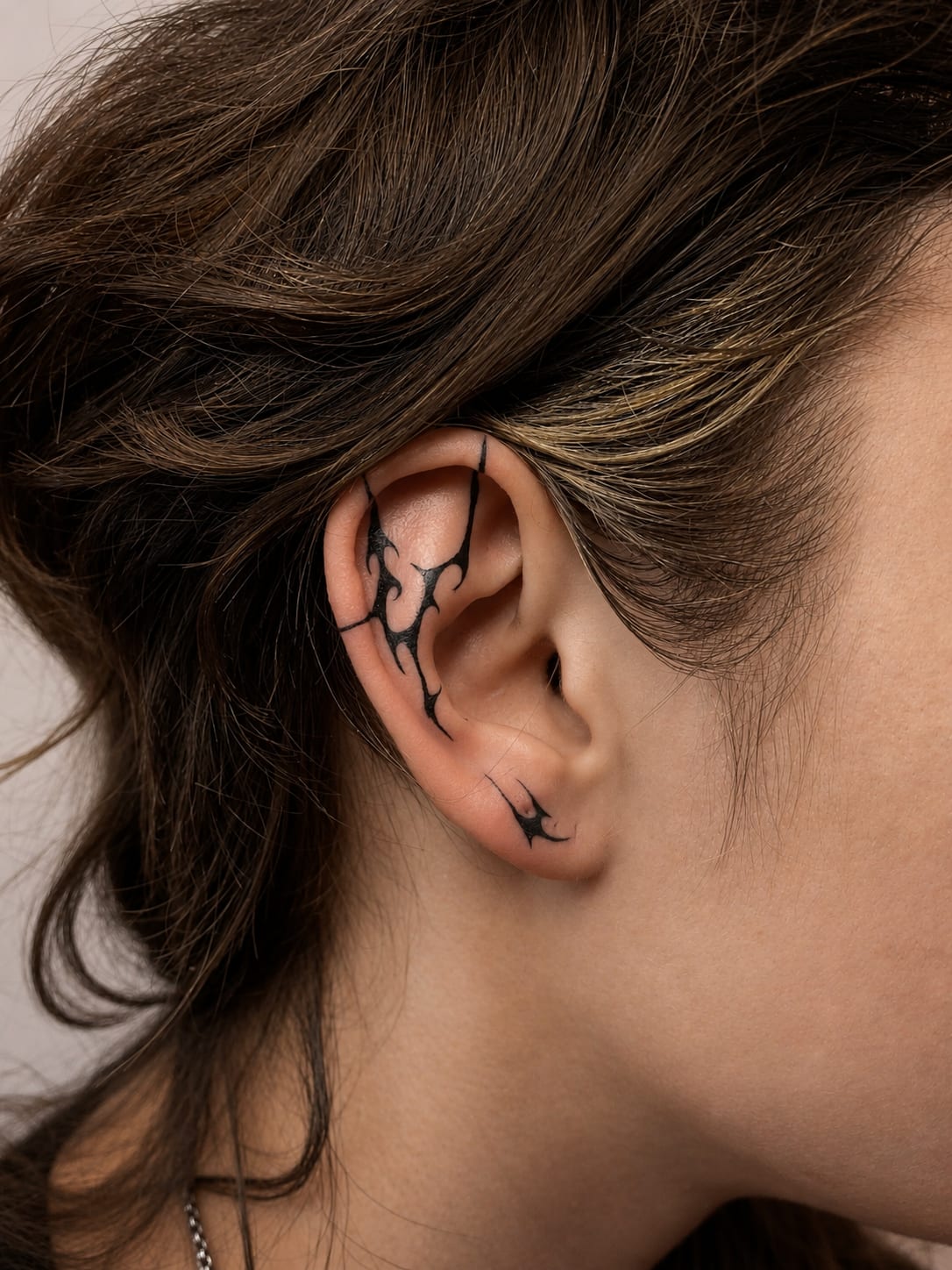
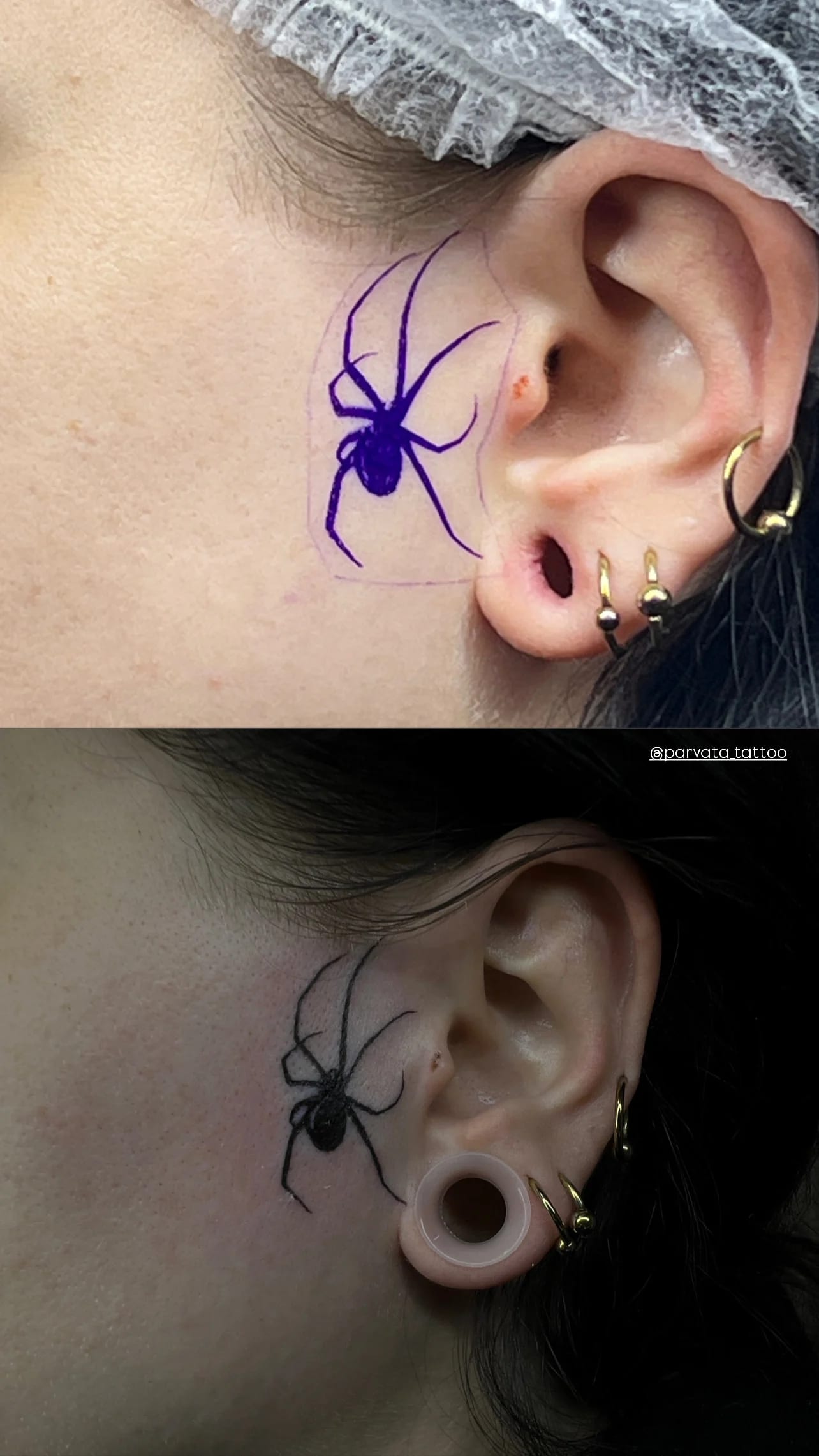
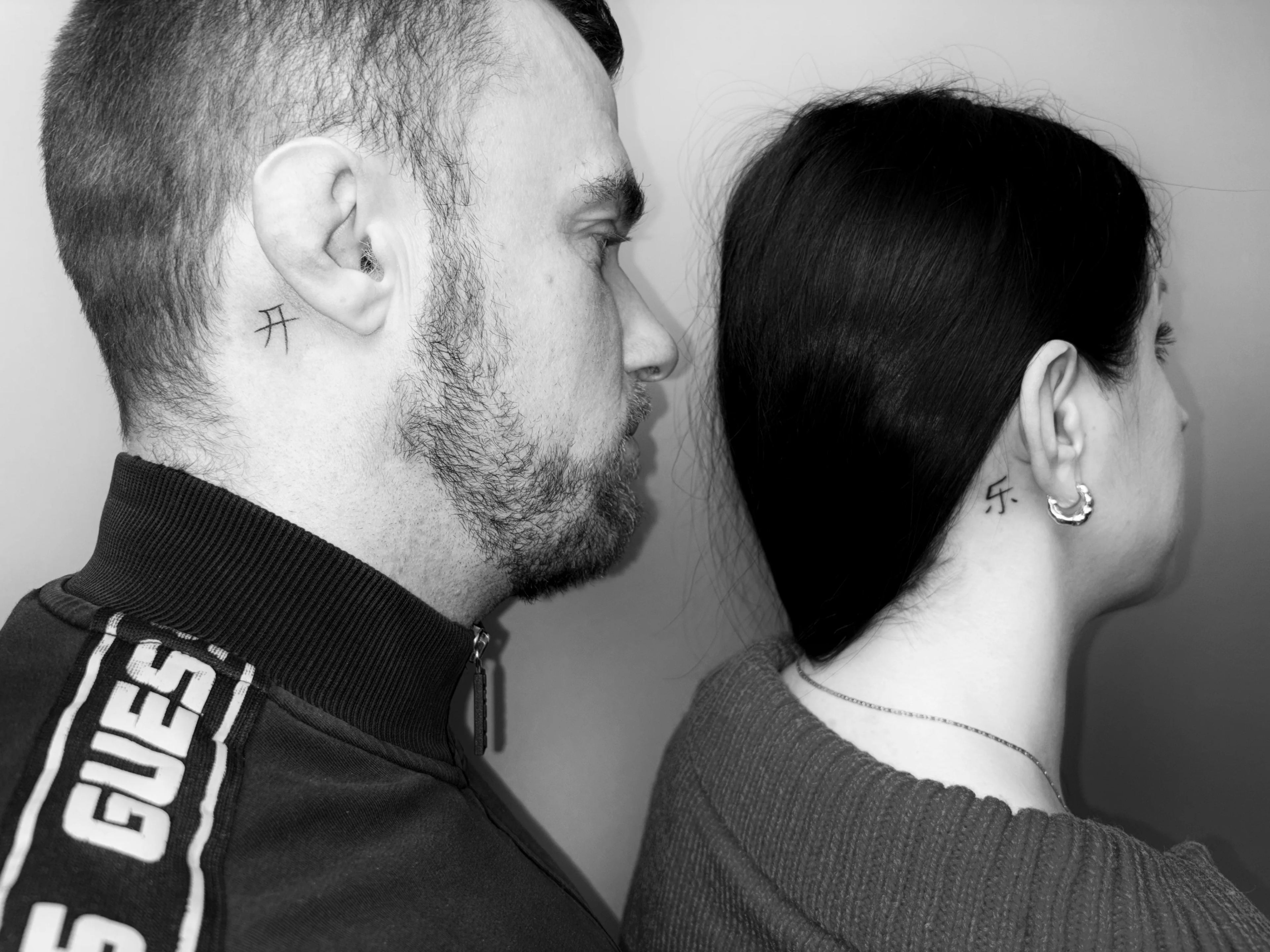
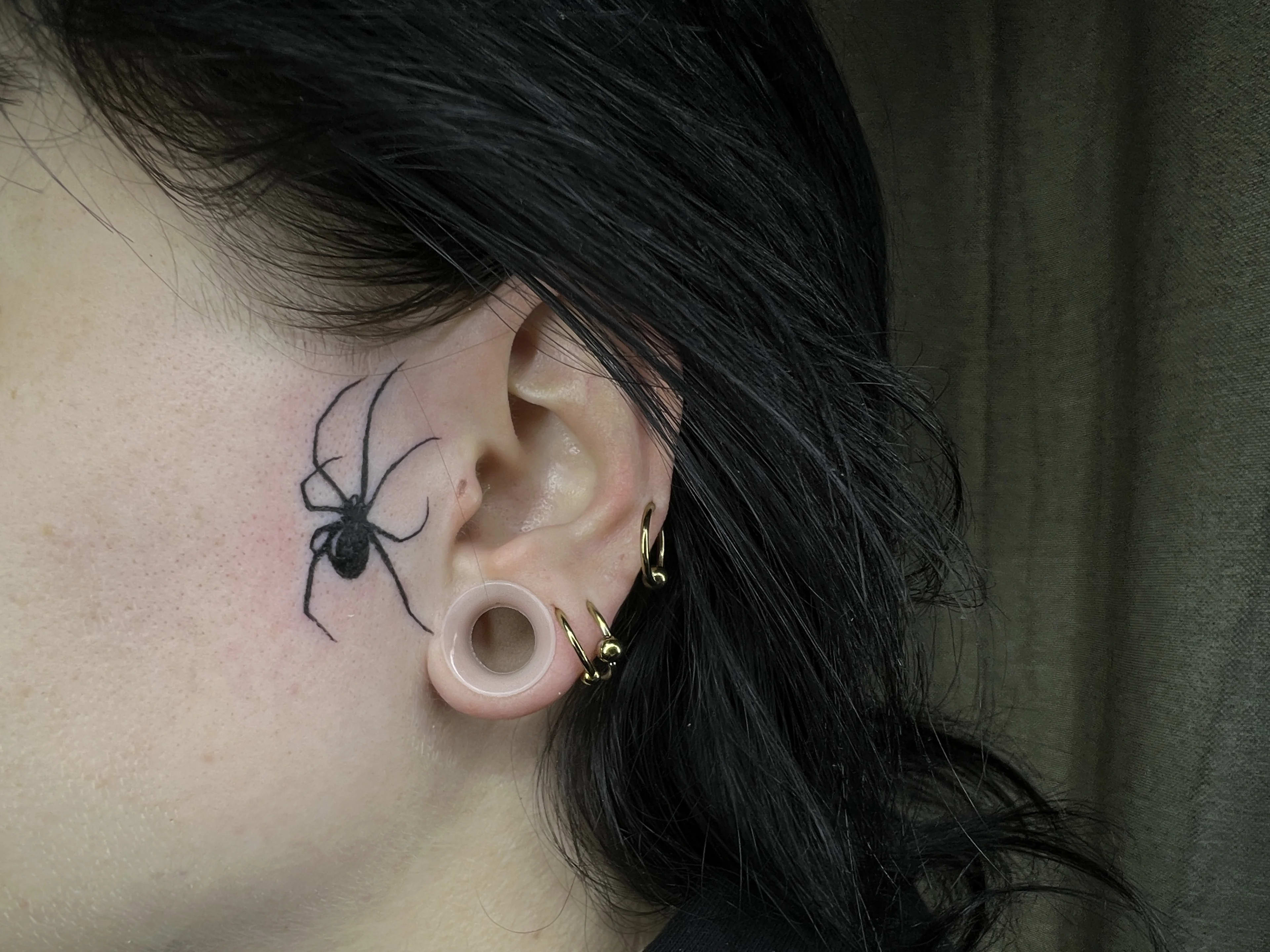
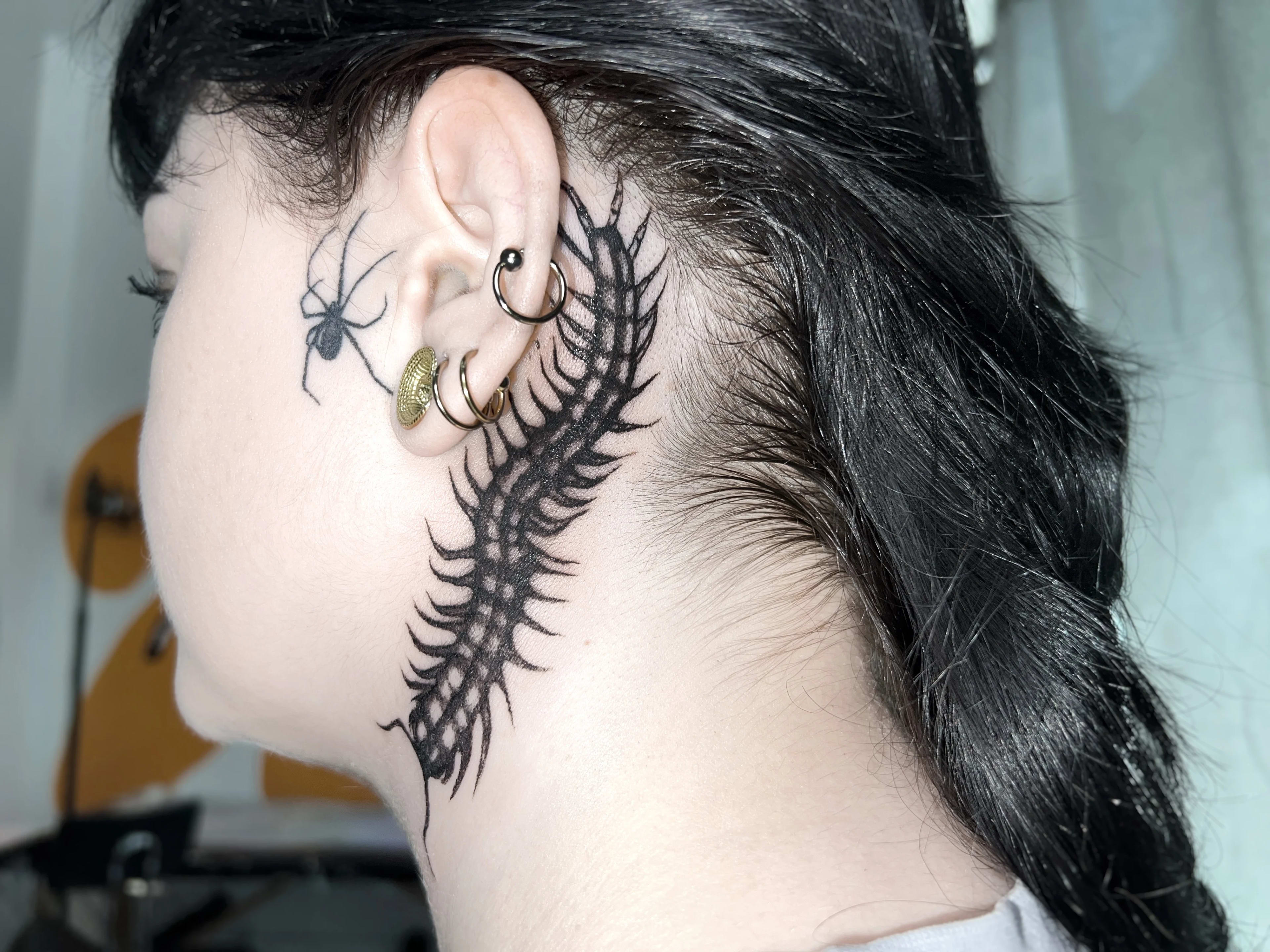
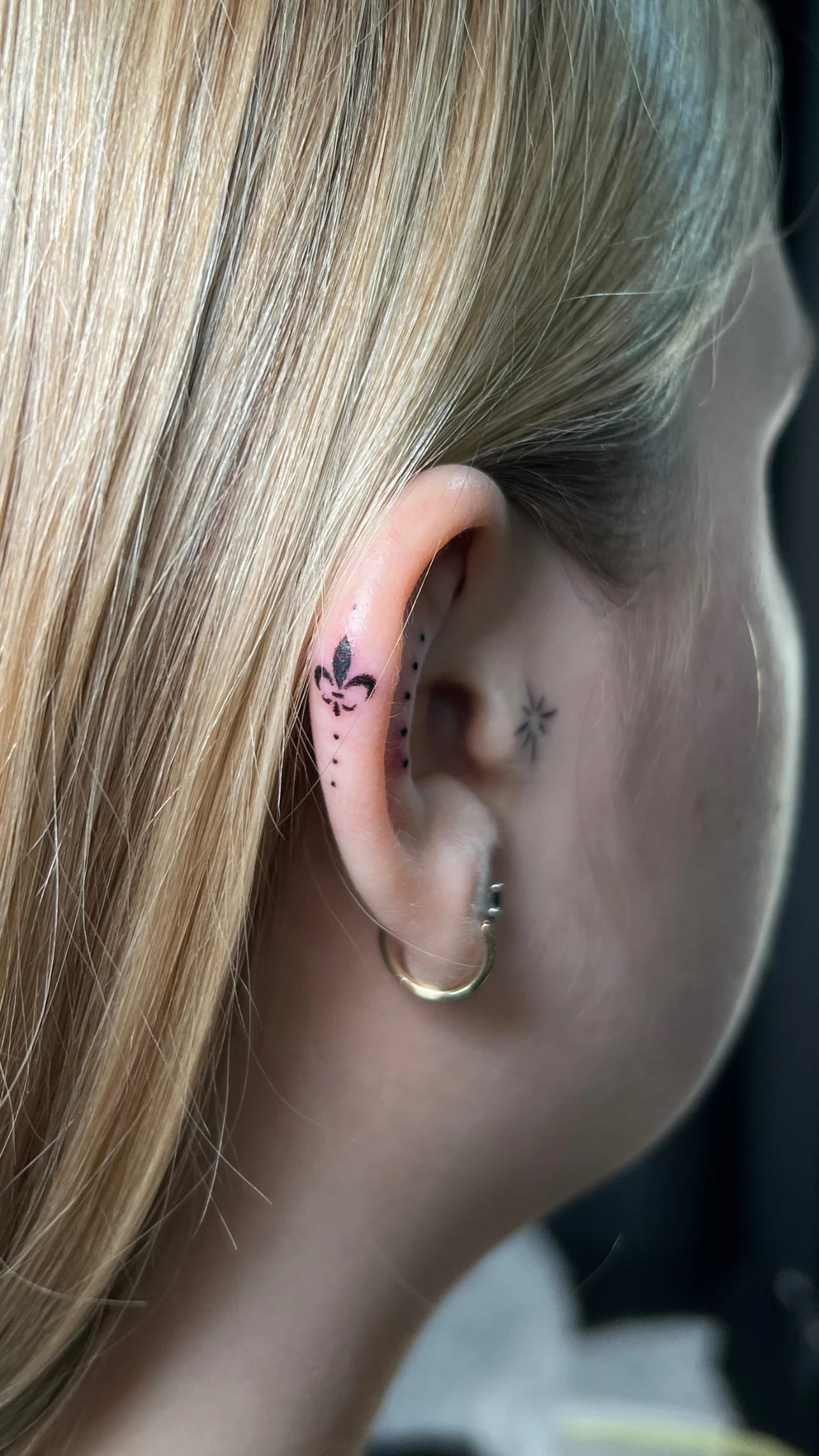
01Anatomy
Bone everywhere, muscle nowhere
- very high
- Bone proximity
- low
- Skin thickness
- high
- Nerve endings
The head is the only placement where bone proximity is 5 out of 5 across the entire surface. There are no easier and harder zones here in the sense there are on a back or a leg — the skull lies beneath the skin everywhere, from the forehead to the back of the head.
The skin of the scalp is 2 out of 5 in thickness, but it is taut and well supplied with blood, which actually favours healing. Beneath it run a thin layer of connective tissue and the periosteum. The needle therefore works on a hard, unyielding base that cushions nothing.
Differences within the area concern curvature rather than the base. The sides of the skull, above the ears, are the most convex and the skin is at its tautest there. The back of the head is flatter and borders the nape, which can make it gentler in sensation. The temples are the thinnest and most sensitive — vessels visible beneath the surface run there.
Hair follicles pose no obstacle to needle work and hair grows back normally after a session. What does change is how the design looks: regrowing hair gradually covers it, and with a longer hairstyle even large compositions disappear.
02Pain
Seven out of ten, carried through the skull
- 7/10
- Pain
- very high
- Bone proximity
- high
- Nerve endings
The head scores 7 out of 10, the same as the chest, but the sensation is entirely different. On a chest the pain appears at a point, over the sternum. Here it spreads through the whole skull, because bone transmits vibration superbly.
People most often describe it as a vibration heard from the inside, something between a thudding and a hum. The pressure of the needle itself can be bearable, but the sound and the vibration carried through bone right beside the ear are a new experience even for people with several tattoos.
Most sensitive are the temples and the areas above the ears. The back of the head, closer to the nape, is usually gentler and that is where we most often begin a session.
We plan sessions short — one to four hours. The reason is not the pain itself but fatigue: lying still with the head in one position under constant vibration tires you faster than the level of sensation would suggest. On larger compositions we almost always split the work across several appointments.
03Composition
A sphere on which the design radiates outward
- radial
- Design flow
- no
- Movement zone
A skull is a sphere, so a composition here has neither a vertical axis like a forearm nor a panel like a thigh. The design radiates — from a point at the crown, or from the line of the ear towards the back.
Concentric layouts symmetrical about the axis of the head work best: mandalas, rosettes, ornament spreading from a single point, geometry fitted to the curvature. Their advantage is that they read coherently from every side, and a head is looked at from many sides.
One-sided compositions occupying the side of the skull above the ear are the second popular variant and are easier to plan. Very often they extend work from the nape or the side of the neck.
The curvature is stronger here than on an upper arm, so a stencil almost never sits right first time. Fitting and correcting take longer than at any other placement, and on symmetrical designs we check from both sides and from above before starting.
One more thing worth remembering: you will not see your own head whole in a mirror. As with a back, we document the finished piece from several angles, because otherwise the result is hard to judge.
04Healing
Two to four weeks and hair growing back
- 14–28 days
- Healing
- ~22 days
- Epidermis turnover
- moderate
- Friction
The epidermis on the head renews in about 22 days, and full healing takes two to four weeks. The good blood supply of the scalp works in your favour here — the initial phase usually goes smoothly.
We rate friction at 3 out of 5, and it comes from things easy to forget: a pillow, a hat, a hood, over-ear headphones and the back of a chair. All of them make contact with the same surface many times a day.
Specific to this placement is hair regrowth. It begins during healing and in the first days can itch alongside the healing skin, which is very easy to confuse. Shaving comes back only after full healing — before that a razor takes the scabs off along with the pigment.
- A clean pillowcase changed daily for the first week; your head rests on it for eight hours without a break.
- No hat, hood or over-ear headphones until the skin has closed — that is the most common source of friction in this area.
- Do not shave or clip until it has fully healed; with hair growing back, the temptation arrives after about a week.
- Wash your hair gently with lukewarm water, without scrubbing and without harsh shampoos; the scalp is more sensitive than usual in this period.
- The itching in the second week is double — from healing and from regrowing hair. A pat with an open palm works as well as scratching and does not damage the work.
05Longevity
Shape forever, pigment under fire
- very low
- Skin stretching
- 30% of pieces
- Touch-up rate
- very high
- Sun exposure
Two extremes meet here and it is worth separating them clearly, because they concern different things.
The shape of the composition is as safe as it gets on a head. We rate skin stretching at 1 out of 5, the lowest on the Parvata Tattoo price list — a skull does not change circumference with weight, in pregnancy or when building muscle mass. A mandala drawn today will have exactly the same proportions in two decades. No other placement guarantees that.
The pigment, on the other hand, has an uphill task. Touch-ups affect about 30% of pieces — the third highest figure after the foot and the hand. Thin skin directly over bone, a faster epidermal turnover (22 days) and sun exposure at 5 out of 5 all contribute. A head faces upwards, so it receives more radiation than any other part of the body.
The practical conclusion: if you wear your hair short and the tattoo is permanently uncovered, sunscreen on the scalp is not a cosmetic recommendation here but the basic condition for keeping the work. With longer hair the problem largely disappears on its own, because hair shields the skin.
06Risks
A narrow margin and a decision about very high visibility
- high
- Blowout risk
- low
- Skin thickness
- very high
- Bone proximity
We rate blowout risk on the head at 4 out of 5. Thin skin stretched directly over bone leaves a narrow depth margin, and a hard base gives no reserve — the needle has nowhere to go deeper without consequences. That is why the work goes more slowly and more carefully here than on muscular placements.
The second risk concerns detail and is a direct consequence of 30% touch-ups. Very fine lines and dense fills lose legibility faster on a head than anywhere else apart from the hand and the foot. So we design with wider gaps and a stronger line, and on work built from thin drawing we give warning that it will need refreshing.
The third risk is not technical and we raise it plainly at the consultation. Coverability on the head is 2 out of 5, but it depends entirely on hair — with a short haircut the tattoo is as visible as one on a hand, every professional situation included. It is a decision from the same category and it deserves the same conversation.
There is one more scenario worth thinking through in advance: a change of hairstyle. A tattoo made on a shaved head disappears under regrowing hair, and a tattoo planned "under the hair" becomes fully visible after every shave. It is worth knowing which of those situations you are designing for.
07Styles
Techniques that take bone and curvature
- low
- Skin thickness
- radial
- Design flow
What decides here is geometry above all, rather than durability. The head is the only surface genuinely viewed from every side — from the front, in profile, from behind and from above when you are shorter than the person you are talking to. The design therefore has to hold up in each of those views, because none of them is the "correct" one.
For that reason compositions with rhythm win over compositions with a story. Mandalas, rosettes, ornament spreading from one point and geometry fitted to the curvature have a repeating structure — whichever part you see, you recognise the whole. Tribal motifs are a classic of this area for exactly that reason, not out of sentiment.
Realism and narrative scenes lose out not because of execution but because they have a single viewpoint. A portrait on a skull is legible from one side and looks like a fragment from the other three. If a figurative image matters to you, the side of the head above the ear treated as a flat panel works far better.
The question of scale is separate. Refreshing pigment on a head means returning for another session with the same vibration carried through bone — so with micro-detail and very thin linework we say before the sketch how often that will repeat. It is not a refusal, it is the information needed to decide.
Blackwork with large areas is the safest choice here: it reads from all sides, sits well on a sphere and holds its appearance from the day of the session for longest.
08Everyday life
The only coverability you control yourself
- low
- Coverability
- very high
- Sun exposure
We rate head coverability at 2 out of 5, but the figure is unusual because it does not depend on clothing. It depends on hair — and that is the only such case on the whole body.
With a shaved head the tattoo is fully visible, exactly as on a hand. With hair a few centimetres long it starts to disappear. With a longer hairstyle it ceases to exist for other people. You need neither a shirt nor a sleeve for that: you steer visibility by the rate at which your hair grows.
For some people that is the greatest advantage of this placement. You can have a very large, striking piece and show it only when you want to, with no restrictions on how you dress. For others it is a problem, because it ties the tattoo to a particular hairstyle for years.
After healing, hats, helmets and headphones return without any restriction, and the work itself needs no daily attention. The only lasting habit is sunscreen with short hair — at exposure of 5 out of 5 a head takes more sun than anything else we tattoo.
09First tattoo
Not to begin with — one of the few things we ask
- 7/10
- Pain
- 30% of pieces
- Touch-up rate
- low
- Coverability
We do not propose the head for a first tattoo, and it is one of the few situations where we clearly suggest a different order.
There are three reasons and they act together. A sensation of 7 out of 10 with vibration carried through the skull is an experience nothing in a description prepares you for. Touch-ups on 30% of pieces mean the work will almost certainly require a return. Visibility with short hair is complete and lasting.
On top of that comes the simplest thing: with a first tattoo you do not yet know how your skin takes pigment or how it looks once healed. On a forearm that is information you gather along the way. On a head it is information worth having beforehand.
If the head is your goal, the best route is usually the nape. It borders directly, has far gentler conditions, and the design can later be led upwards onto the back of the skull as a natural extension. You gain experience in the same area without closing off any route.
10Nearby placements
The head joined with the nape
- very high
- Sun exposure
- 30% of pieces
- Touch-up rate
In practice the head borders one area we tattoo: the nape and the upper part of the neck. That neighbourhood is exceptionally close, though, because both placements share nearly all their properties.
The neck and the head have the same maximum sun exposure (5 out of 5), similar skin thickness and a high touch-up rate — 25% against 30%. Pieces crossing from the nape onto the back of the skull are the most common connection we make here, and we plan them as one composition from the first sketch.
The difference that matters in practice concerns stability. The nape is muscle, so the base is softer and less demanding, but the skin there works when the head moves. A skull is hard and demanding, but completely still. On a design crossing the border both behaviours meet in one composition and we account for that in the drawing.
If you like the idea of a large piece in this area but the numbers for the head give you pause, the middle path is a composition based mainly on the nape, entering the skull only with its upper part. Most of the surface then lands on a gentler base.
11Price
Short sessions, a long perspective
- 1–4 h
- Typical session
- 30% of pieces
- Touch-up rate
Sessions on the head run one to four hours and rarely benefit from being extended — what decides is the fatigue caused by the position and the constant vibration, not the size of the project. So we spread large compositions across several appointments even when the surface would theoretically fit into one longer session.
The pace of work here is among the slowest on the price list. A hard base and a narrow depth margin call for careful needle control, so the same surface takes genuinely more hours than on an upper arm. Since we bill time, that translates directly into the figure.
The most important component, though, is the long-term one, and we speak about it before the session rather than after a year. At 30% touch-ups and maximum sun exposure, a head tattoo is work you maintain — roughly one piece in three needs a top-up, and with short hair and no sunscreen, refreshing after some years is a realistic scenario.
A custom design and a post-healing review are included in the price exactly as everywhere else, and at this placement the design stage is exceptionally long, because a stencil on a sphere needs correcting repeatedly. We give a binding quote after a free consultation.
Nearby placements
- neckThe only direct neighbour and an exceptionally close one: the same maximum sun exposure, similar skin and a comparable touch-up rate (25% against 30%). Pieces from the nape onto the back of the skull we plan as one composition.
- handThe other placement where we discuss visibility just as openly. With a shaved head a tattoo is as visible as one on a hand — the difference being that here you steer it by the length of your hair.
- backThe opposite in conditions: the thickest skin, 8% touch-ups and minimal sun instead of maximum. If what you want is a large piece rather than this specific location, a back will give it at far lower cost.
Styles that look great in this spot


Frequently asked questions
Yes — on the Parvata Tattoo scale the head scores 7 out of 10, the same as the chest, but the sensation is of an entirely different kind. Bone proximity here is 5 on a five-point scale across the whole surface: the skull lies directly beneath thin skin everywhere, from the forehead to the back of the head, and there is not a single spot with muscle underneath. Bone transmits vibration superbly, so the pain is not localised but spreads through the whole head. People most often describe it as a vibration heard from the inside, something between a thudding and a hum — and it is the sound beside the ear that is a new experience even for people with several tattoos. The temples and the areas above the ears are most sensitive; we usually begin at the back.
Yes, hair follicles pose no obstacle to needle work and hair returns normally after a session. What does change is how the design looks: regrowing hair gradually covers it, and with a longer hairstyle even large compositions disappear. That makes the head the only placement on the body whose coverability you steer yourself, with no change of clothing — with a shaved head the tattoo is fully visible, with hair a few centimetres long it starts to disappear, and with a longer hairstyle it ceases to exist for other people. One important aftercare note: do not resume shaving until it has fully healed, because a razor takes the scabs off along with the pigment, and regrowing hair makes that tempting after about a week.
No, and it is the greatest advantage of this placement. We rate skin stretching on the head at 1 on a five-point scale — the lowest on the entire Parvata Tattoo price list — because a skull does not change circumference or shape with weight swings, in pregnancy or when building muscle mass. A mandala drawn today will have exactly the same proportions in two decades, which no other placement guarantees; for comparison the stomach and the thigh both sit at 5 out of 5 on the same scale. It is worth separating two things, though: what is stable is the shape of the composition, whereas the pigment itself has an uphill task, since touch-ups here affect about 30% of pieces at sun exposure of 5 out of 5.
More often than at most placements — touch-ups affect about 30% of pieces, the third highest figure on the Parvata Tattoo price list after the foot and the hand. Three factors combine: thin skin 2 out of 5 stretched directly over bone, a faster epidermal turnover of about 22 days, and sun exposure at 5 out of 5. That last one is the most underrated: a head faces upwards, so it receives more radiation than any other part of the body. If you wear your hair short and the work is permanently uncovered, sunscreen on the scalp is the condition for keeping it. With longer hair the problem largely disappears on its own.
Those with a strong line and wide gaps, built radially. A skull is a sphere, so a composition has neither a vertical axis like a forearm nor a panel like a thigh — the design radiates from a point at the crown or from the line of the ear towards the back. Mandalas, rosettes, ornament and geometry fitted to the curvature work best, because they read coherently from every side, and a head is looked at from many sides. Blackwork and tribal motifs built on a repeating rhythm also hold up very well here. Fine line, micro-detail and realism we advise against before the sketch: at 30% touch-ups and on a hard base they need the most frequent refreshing, and every refresh means another session with the same vibration.
No, and it is one of the few situations where we clearly suggest a different order. The reasons act together: a sensation of 7 out of 10 with vibration carried through the skull is an experience nothing in a description prepares you for; touch-ups on 30% of pieces mean the work will almost certainly require a return; and visibility with short hair is complete and lasting. On top of that comes the simplest thing — with a first tattoo you do not yet know how your skin takes pigment. If the head is your goal, the best route is the nape: it borders directly, has gentler conditions, and the design can later be led upwards onto the back of the skull.
More about the studio
Have an idea for a tattoo in this spot?
Book a free, no-obligation consultation — we will match an artist and design the motif for your body.