



Cover-up — a second life for your tattoo
We cover old or unloved tattoos with a new design. See before-and-after transformations straight from our studio.
Tattoo styles
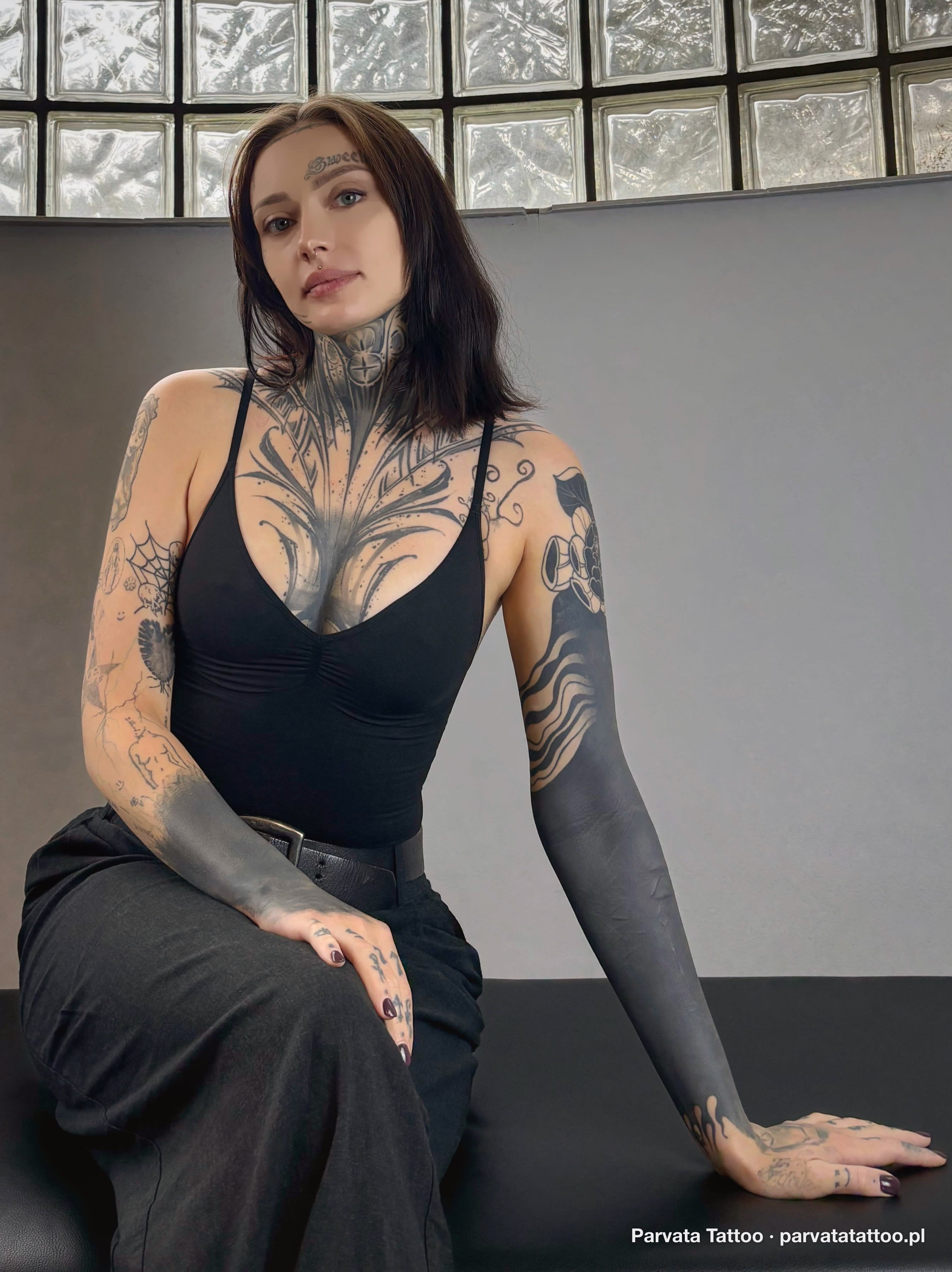
Tribal is back in a big way: from classic Polynesian patterns to modern neotribal and cybersigilism. Bold, high-contrast tattoos designed for your anatomy.

Tribal is the oldest language of tattooing — tribal patterns accompanied people long before modern studios existed. Their distinctive, high-contrast forms of solid black fills were, for decades, a symbol of strength, belonging and protection. And today they're having a second youth: alongside the classics, they've returned in the form of neotribal and cybersigilism — sharp, dynamic compositions gladly worn by the younger generation.
At our studio in Wrocław we design tribals in both spirits: with respect for traditional patterns and with a modern, graphic edge. It's a style that, more than any other, has to be designed for the body — a well-guided tribal can optically strengthen an arm, slim a calf and accentuate the back.
In this guide we take tribal apart: from Polynesian roots to neotribal and cybersigilism, through the best placements, pricing and session preparation, to the aftercare that keeps black holding sharp edges for decades. At the end — answers to the questions we hear most often about tribal.
Classic tribal originates from cultures where tattooing was a ritual: Polynesia (Maori ta moko, Samoan pe'a), Borneo and the tribes of the Americas. Patterns built from bands of deep black, sharp terminations and rhythmic repetitions carried information about status, courage and spiritual protection.
In the West, tribal dominated the 1990s — often in a simplified, commercial form. The style's contemporary return is more interesting: artists go back to the sources, or reprocess tribal aesthetics into a completely new graphic language, fitted to the wearer's anatomy and personal symbolism.

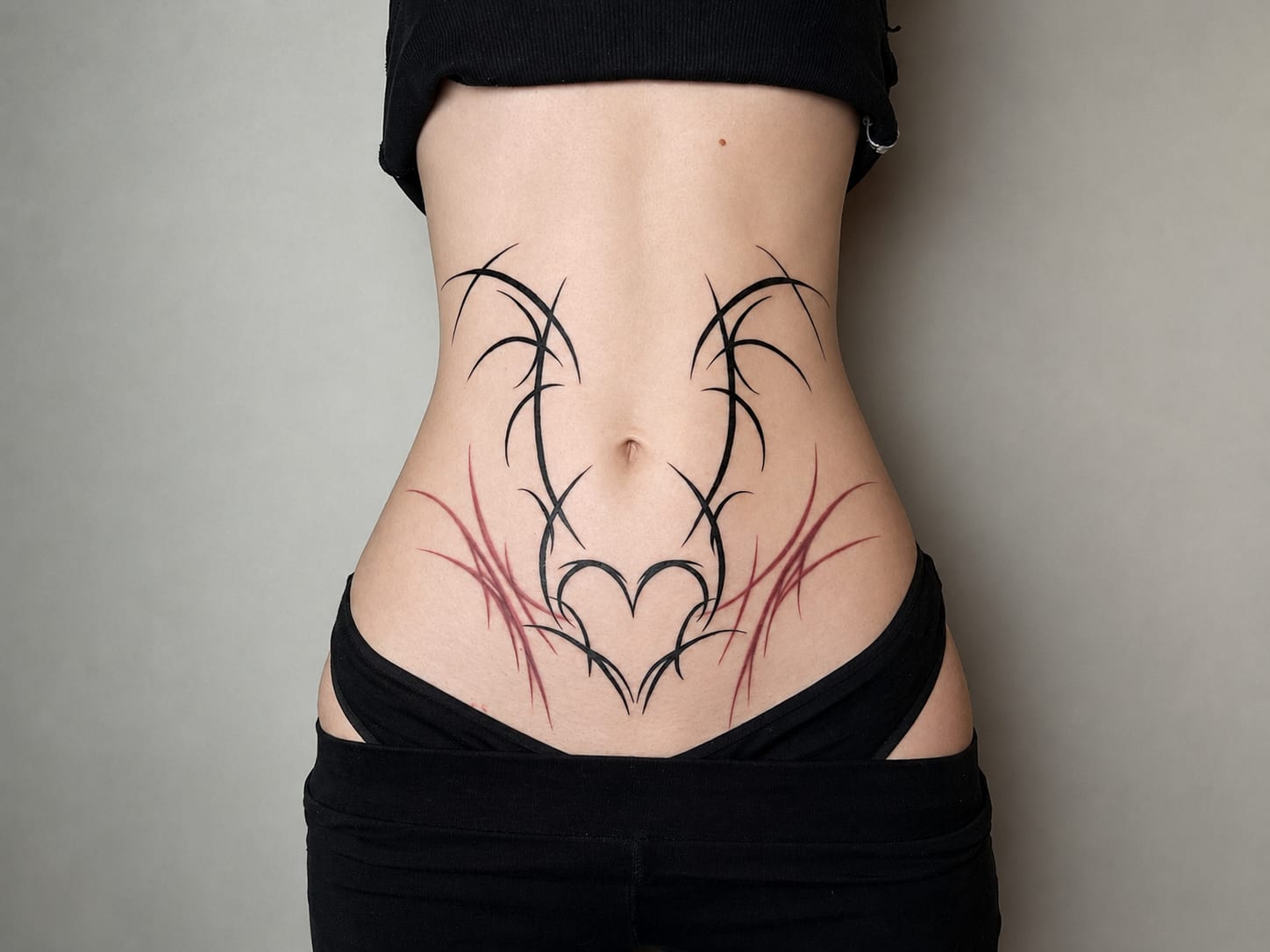
Neotribal takes contrast and dynamism from the classics but abandons the literal copying of tribal patterns. The forms are sharper, more fluid, often asymmetrical — resembling cracks, thorns, metallic shapes. It's an aesthetic strongly present in the fashion and music of recent years.
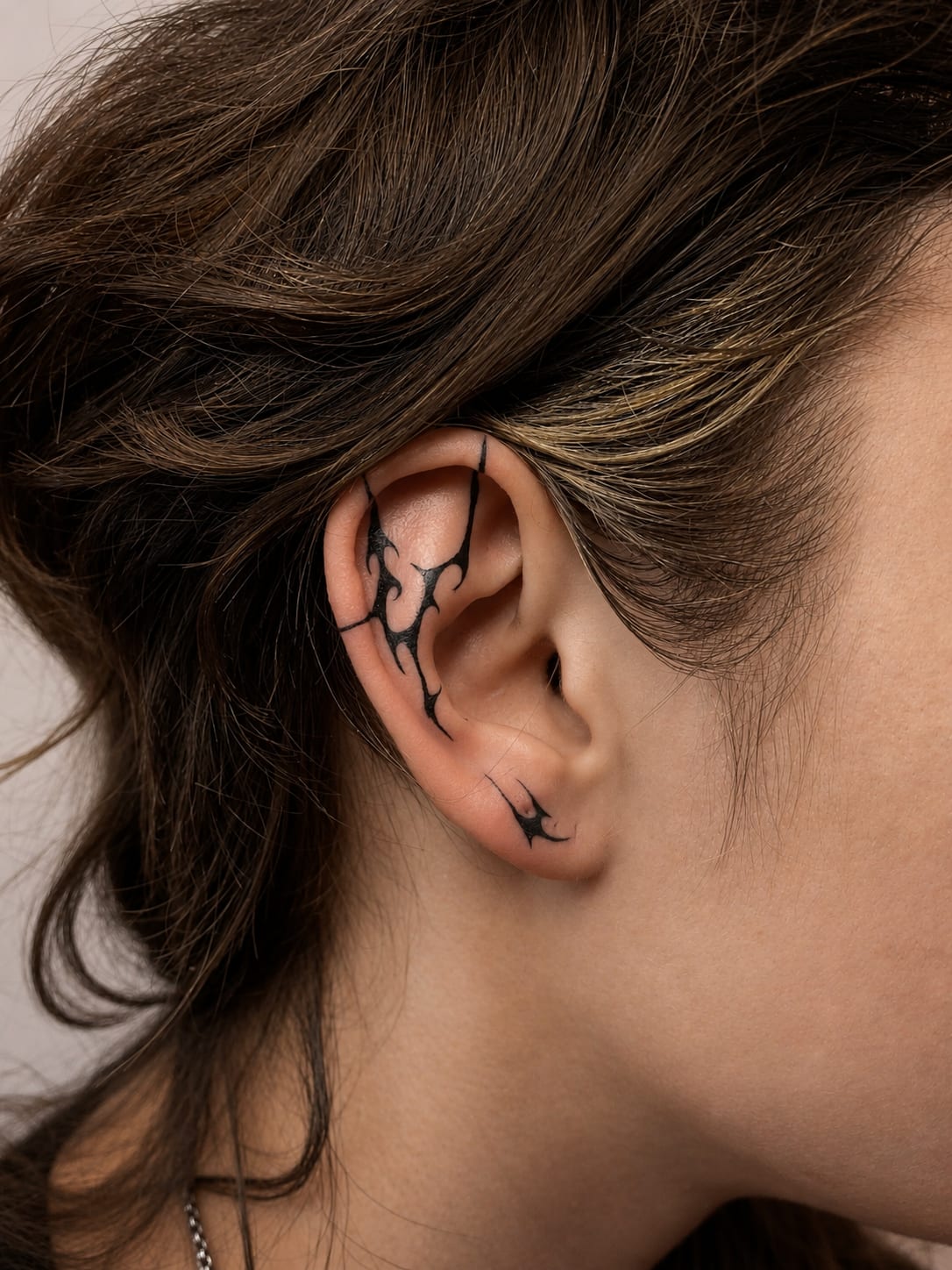
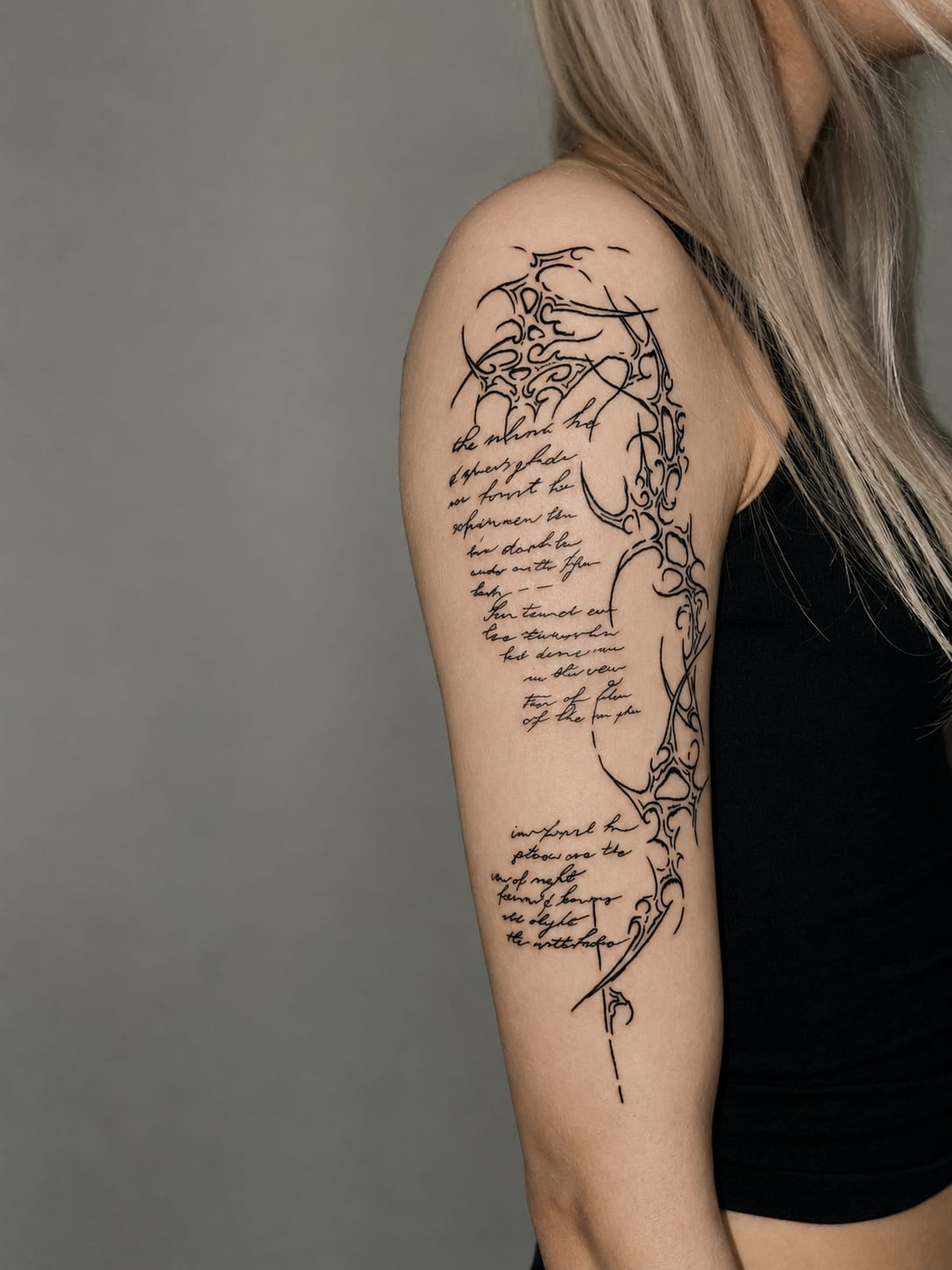
Cybersigilism goes a step further: thin, spiky lines interweave into forms resembling sigils and digital ornaments. Unlike massive tribal, it works with a lighter stroke, so it also looks good at a smaller scale — on the nape, sternum or along the spine. In our portfolio you'll find work in both of these currents.

If you're choosing a tribal inspired by a specific culture, it's worth knowing the meanings of the basic motifs:
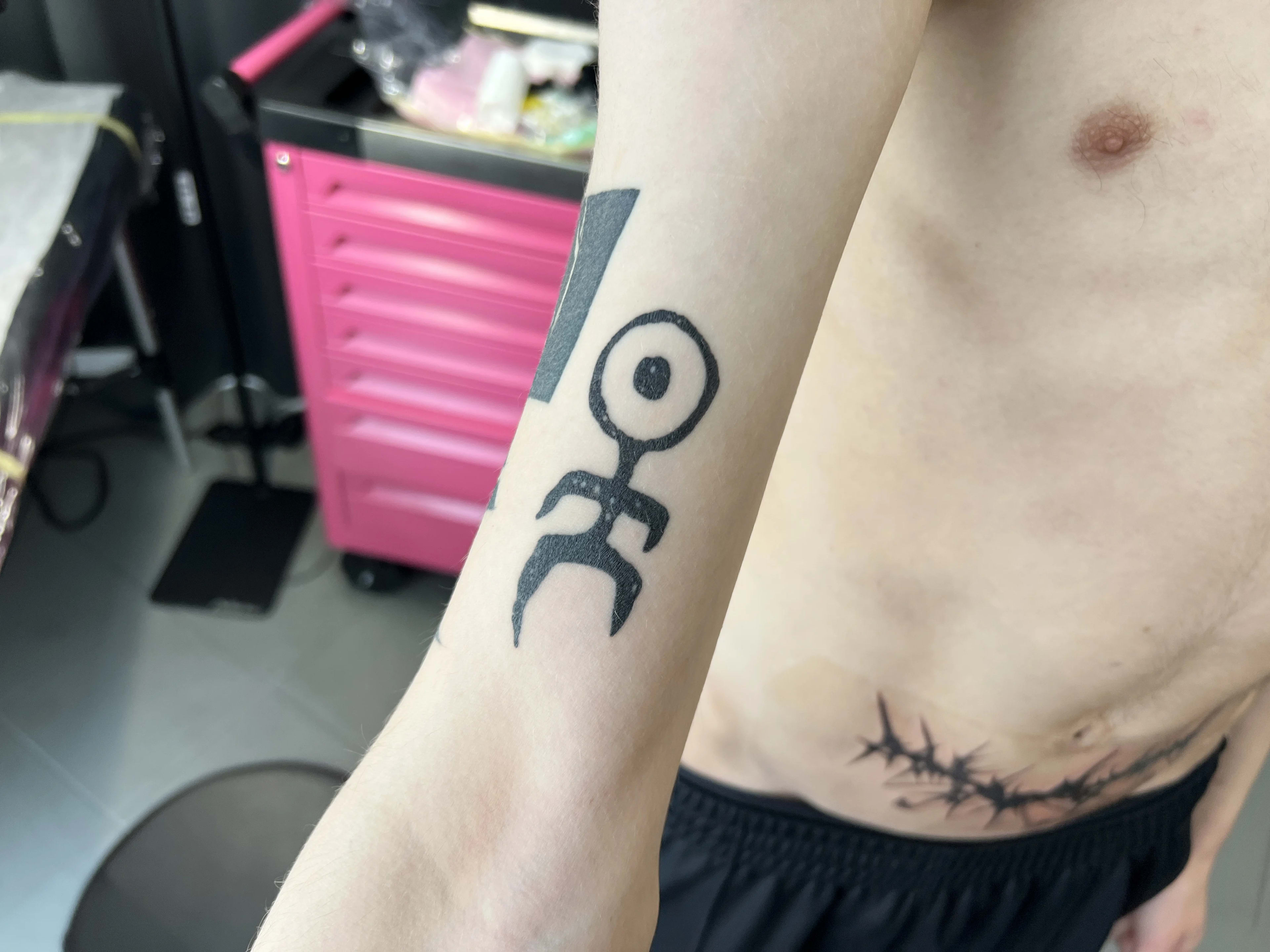
Tribal isn't a picture you stick on — it's a form that has to flow with the body. Bands of black are guided along the deltoid muscle, around the calf, along the line of the shoulder blade. That's why the classic placements for tribal are the arm with the shoulder, the chest transitioning into the arm, the calf, the back and the forearm.
This dependence on anatomy is also why we often design tribal directly on the body, with a marker, before the session. A well-guided pattern optically builds the silhouette; a poorly guided one cuts it in random places. At the consultation at the studio we'll show you how the pattern will behave in motion.

Large areas of solid black require solid, even fill technique — a craft you see immediately after healing: uniform, deep black with no wipe-outs or clouds. We split larger tribals into sessions: first the outlines and structure, then the fills.
The reward is a durability no other style competes with. Black pigment in large fields ages the slowest, and any refresh after many years is a simple session. Tribal also works great in cover-ups — dense black can cover old, failed pieces; see our Cover Up page.
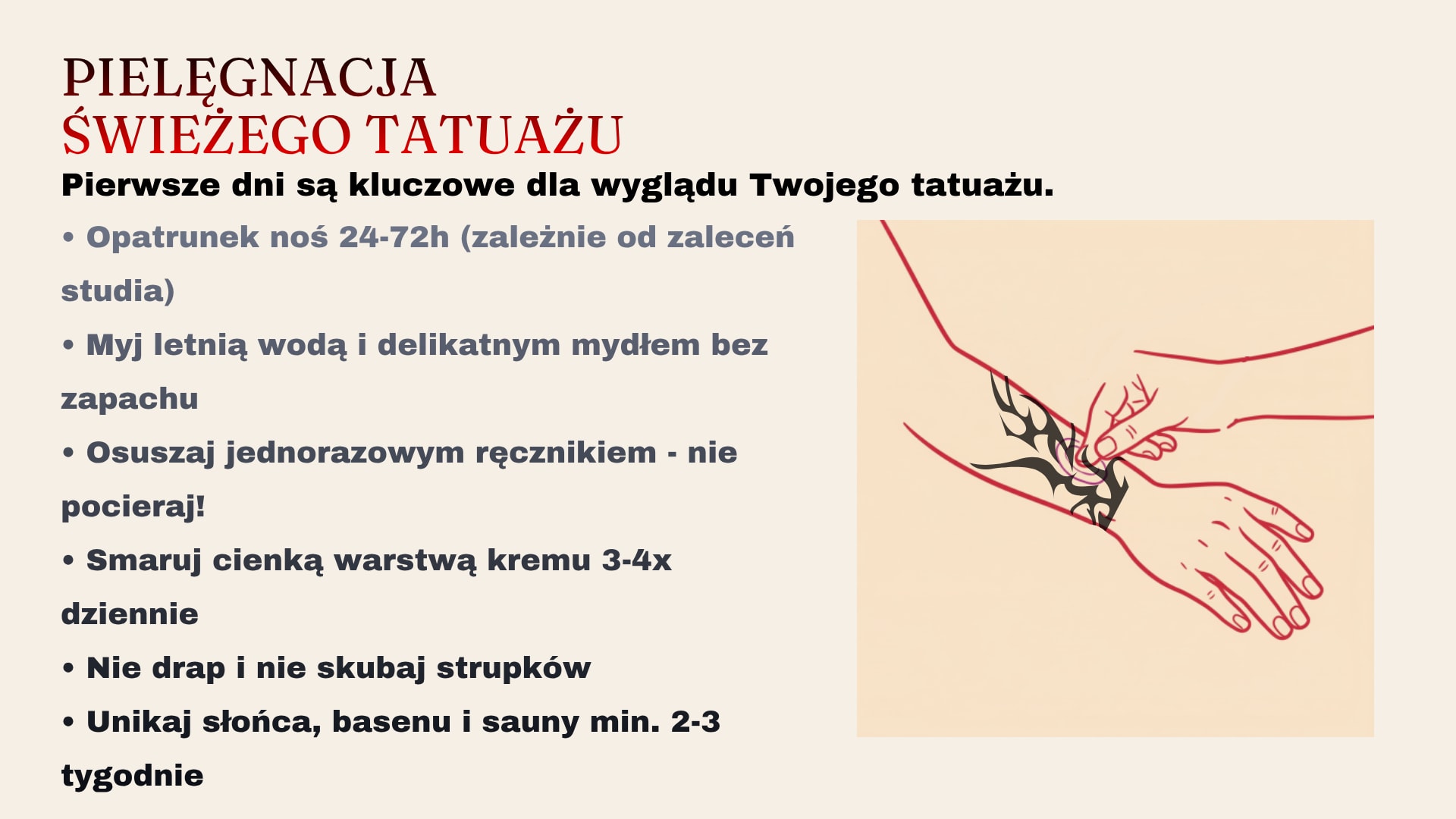
Large fills heal more intensely than single lines: the skin may flake and feel tighter. The key is patience — a thin layer of ointment, loose clothing, no picking or soaking until the epidermis rebuilds. You'll find a complete guide in the article on fresh tattoo aftercare on our blog.
After healing, black likes two things: moisturising and sun protection. Regular application and SPF 50 in summer will keep the deep contrast — and it's precisely the contrast that makes tribal, tribal.
Tribal has its natural territories. Number one for decades remains the upper arm and shoulder: the strong, rounded form of the muscle is the perfect stage for dynamic, sharp shapes that flow around the body like armour. The calf is the second classic — its tapering vertical form carries tribal exceptionally naturally, slimming and strengthening the leg at once.
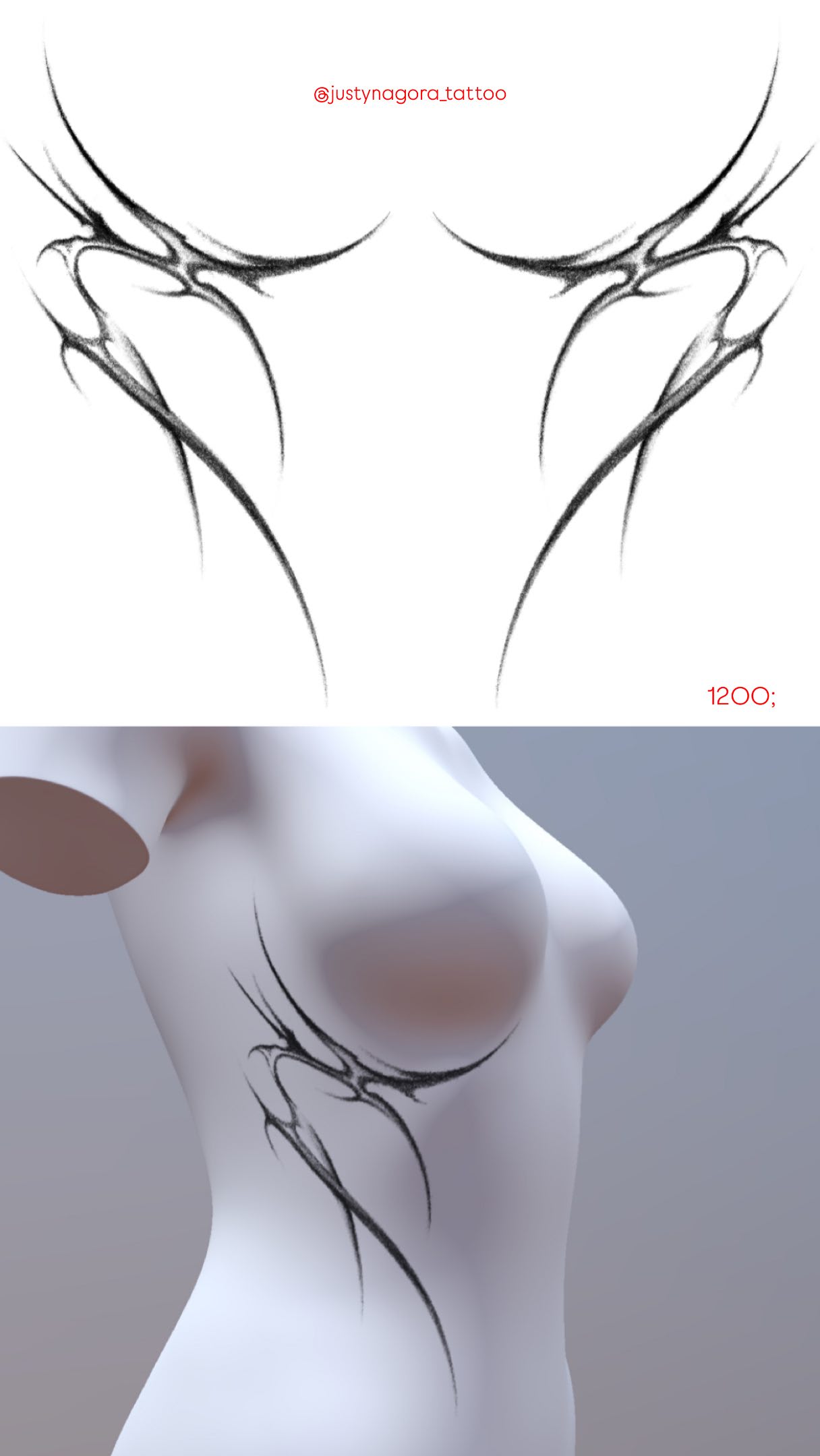
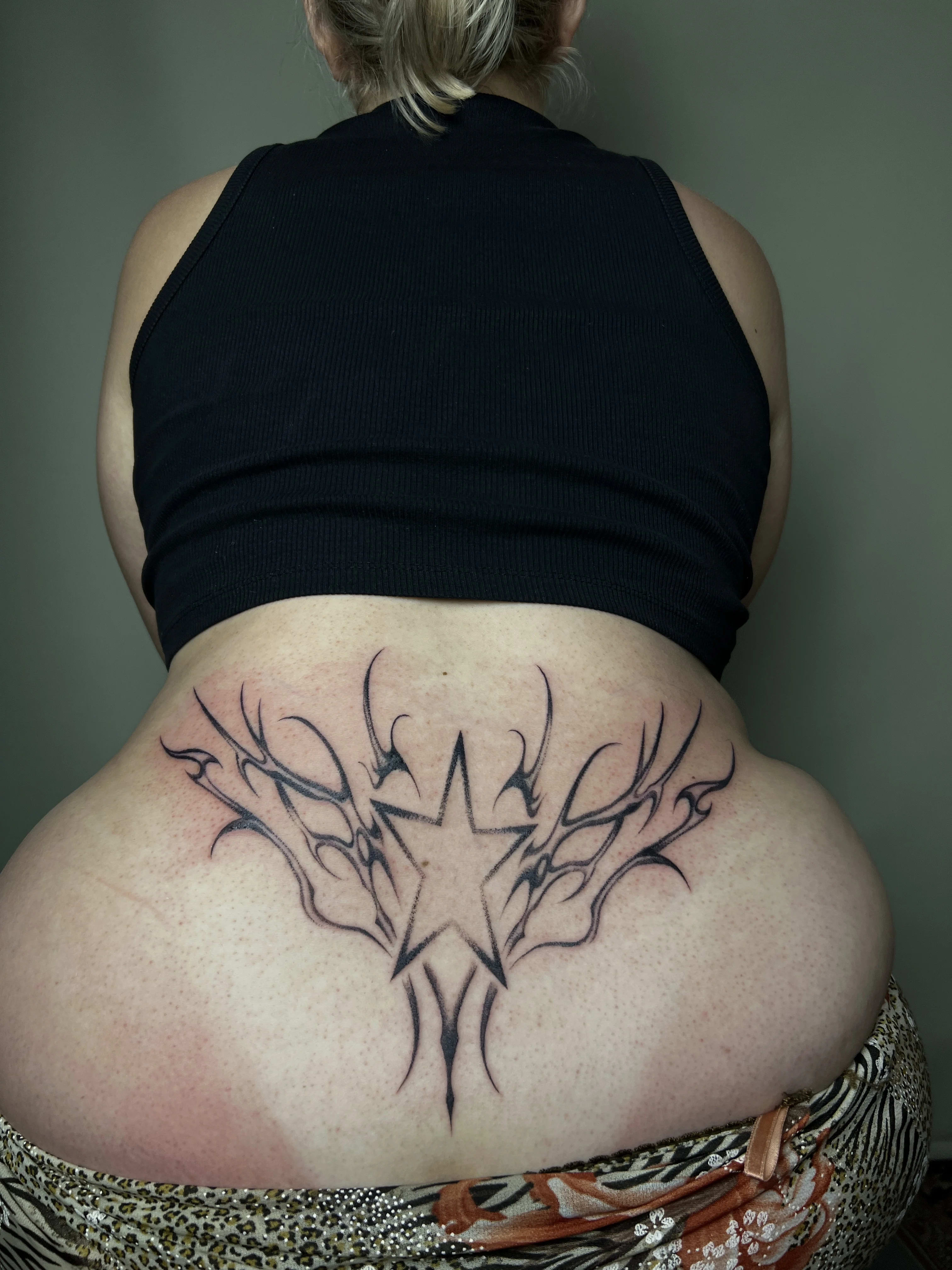
The back gives tribal its biggest playground: symmetrical compositions along the spine, wing-like forms on the shoulder blades, full projects from nape to lower back — multi-session work with an effect no other style matches. A growing trend is neotribal on the sternum and ribs: spiky forms radiating from the body's axis, gladly combined with cybersigilism.
All these silhouettes are in our Portfolio. Torn between placements? Bring the dilemma to a consultation — we will fit the design to two or three options live.
Tribal prices predictably, because its cost flows from two measurable things: surface and the share of solid black. A sharp, outline-based neotribal on the forearm is a different block of work than a classic, densely filled shoulder piece — even though both are called tribal.
Fills are the main driver of time: even, deep saturation of large black fields takes methodical repeated passes, and they decide whether the work closes in one session or three. Symmetrical back or chest compositions add a longer design and fitting stage; cover-ups — where tribal is exceptionally effective — add work around the old tattoo.
Rough ranges are in our Pricing; after you send an idea through the form we reply with a specific quote and a realistic session count. Think of tribal as a long-term investment: black ages the most stably of all pigments, so the cost spread over decades of wear is exceptionally honest.
The first story is the returners: men who remember tribals from the nineties, waited out the jokes, and now come back to the style they always liked — this time in its new wave. Neotribal gives them a strong, sharp aesthetic without the retro complex.
The second story is seekers of roots: people fascinated by Pacific cultures and their symbolism of strength, protection and belonging. For them we design with respect for the sources — drawing on the language of Polynesian or Māori forms without copying patterns that carry specific ancestral meaning in those cultures.
The third story is the club-and-scene aesthetic: a young generation that discovered cybersigilism through music, fashion and gaming. Their tribals are spiky, asymmetrical, often on the sternum, nape or along the spine — closer to digital glitch than tribal tradition, and that is exactly their strength. The common denominator: everyone wants a tattoo that gives the body power — optically and symbolically.
For decades tribal passed as an almost exclusively masculine style. The new wave overturned that: today some of the most interesting neotribal and cybersigilism pieces are made on women's bodies, and they drive the style's evolution.
Feminine tribal works with a slimmer line: sharp, elongated forms along the spine, spiky compositions on the sternum and under the bust, finer „thorns” on the nape or forearm. Instead of building mass, it emphasises the line — graphic jewellery with claws. Its strongest placements are the body's axis: spine, sternum, nape — elegant and predatory at once.
The marriage with ornament works beautifully too: neotribal spikes dissolving into lace-like geometry (more on our Ornamental page). If your moodboard is full of sharp black but you fear „masculine” bulk — book a consultation; we will show pieces that break that stereotype.
Myth one: „tribal is a nineties embarrassment”. The mocked „armbands” were a product of mass fashion for one catalogue pattern — the problem was the template, not the style. Modern tribal is designed individually for the anatomy, and neotribal and cybersigilism are among the freshest aesthetics in tattooing today.
Myth two: „the black mass will blur into a blot”. Well-laid black is the most stable pigment in tattooing — it is colour work that demands more care. The condition is technique: even saturation, correct depth and thought-out gaps between elements. Our oldest tribals still hold sharp edges.
Myth three: „tribal means nothing, it is just squiggles”. Tribal patterns are one of humanity's oldest symbolic languages — strength, protection, belonging, passage. A modern tribal can carry exactly as much meaning as you put into it: from pure aesthetics to a personal talisman; both routes are fully legitimate.

Tribal with fills is a marathon, not a sprint — and a body is worth preparing for a marathon. A week before, moisturise the skin at the working area: supple skin takes pigment more evenly, which makes a real difference on large black fields. Skip the solarium and heavy sunbathing in the same period — we do not tattoo freshly sunned skin.
The day before: sleep and hydration. A tired, dehydrated body copes worse with longer sessions, and with tribal it is the time, not the intensity, that tends to be the main challenge. Alcohol is out for 24 hours — it thins the blood and worsens pigment work.
On the day: a solid meal, comfortable loose clothing and something for the time — headphones, a playlist, an audiobook. For multi-hour sessions bring a snack and a drink. The rest is on us: a sterile station, fittings, a second-skin dressing and aftercare instructions matched to the size of the fills.

Choose tribal for bold black forms designed around your muscles — classic Polynesian character or the new wave of neotribal and cybersigilism.
We don't copy cultural patterns 1:1 without understanding their meaning — we design original compositions inspired by the tradition, honestly and with respect.
Fills tend to be more noticeable than single lines, because the needle works over the same area for longer. A good night's sleep, a meal before the session and breaks along the way make a big difference. Larger pieces are split into stages.
Yes, with respect: instead of copying authentic ancestral patterns (which carry specific family meanings), we design compositions inspired by that aesthetic, with symbolism matched to your story. We're happy to discuss it at a consultation.
The classic builds on traditional, symmetrical tribal patterns; neotribal is a contemporary interpretation — sharper, more dynamic, often asymmetrical forms, and cybersigilism adds thin, spiky lines on top. The choice depends on the character you want to wear.
It's one of the best styles for cover-ups — solid black fields and a strong pattern structure hide old work effectively. Send a photo through the form or visit our Cover Up page; we'll assess the options free of charge.
Smaller compositions are one session. A full upper arm with the shoulder or an elaborate calf pattern is usually 2–3 sessions: outlines first, then fills. We'll present an exact plan and quote after the consultation, depending on the project's scale.
Traditionally yes — and black remains the most durable choice. Contemporary variants are sometimes broken with a red accent or grey, and cybersigilism occasionally pairs with delicate shading. It's a matter of the design we'll choose together.
Yes, especially as outline neotribal on the forearm or upper arm — the session is shorter than with full fills, and the effect is strong from day one. Classic, densely filled forms are better planned once you know how your skin reacts.
It's one of our more frequent commissions: an old pattern can be re-saturated, redesigned in a neotribal spirit or worked into a larger, modern whole. Bring a photo to the consultation — we'll show you options from a gentle lift to a full metamorphosis.
Send your idea through the form — with references or a description of the energy you're after (classic, neotribal, cybersigilism). At a free consultation we'll fit the forms to your anatomy and set a session plan.
They're close cousins from different eras of inspiration. Neotribal reinterprets tribal black: it keeps its organic, muscle-led logic but sharpens the forms and opens the compositions. Cybersigilism goes a step further — its needle-like, thin shapes resemble digital glitches and sigils, more often run along the body's axis (sternum, spine, nape) and pair more readily with techwear aesthetics than Pacific tradition. At the consultation we'll show both languages on examples — you'll see the difference at first glance.
Sketch Glitch on the Shoulder
Justyna Góra • Tattoo Artist • Permanent Makeup

Thorn Web
Mira Paul • Sacred__kid • Tattoo Artist

Dark gothic composition
Mira Paul • Sacred__kid • Tattoo Artist

Winged Back Tribal
Justyna Góra • Tattoo Artist • Permanent Makeup
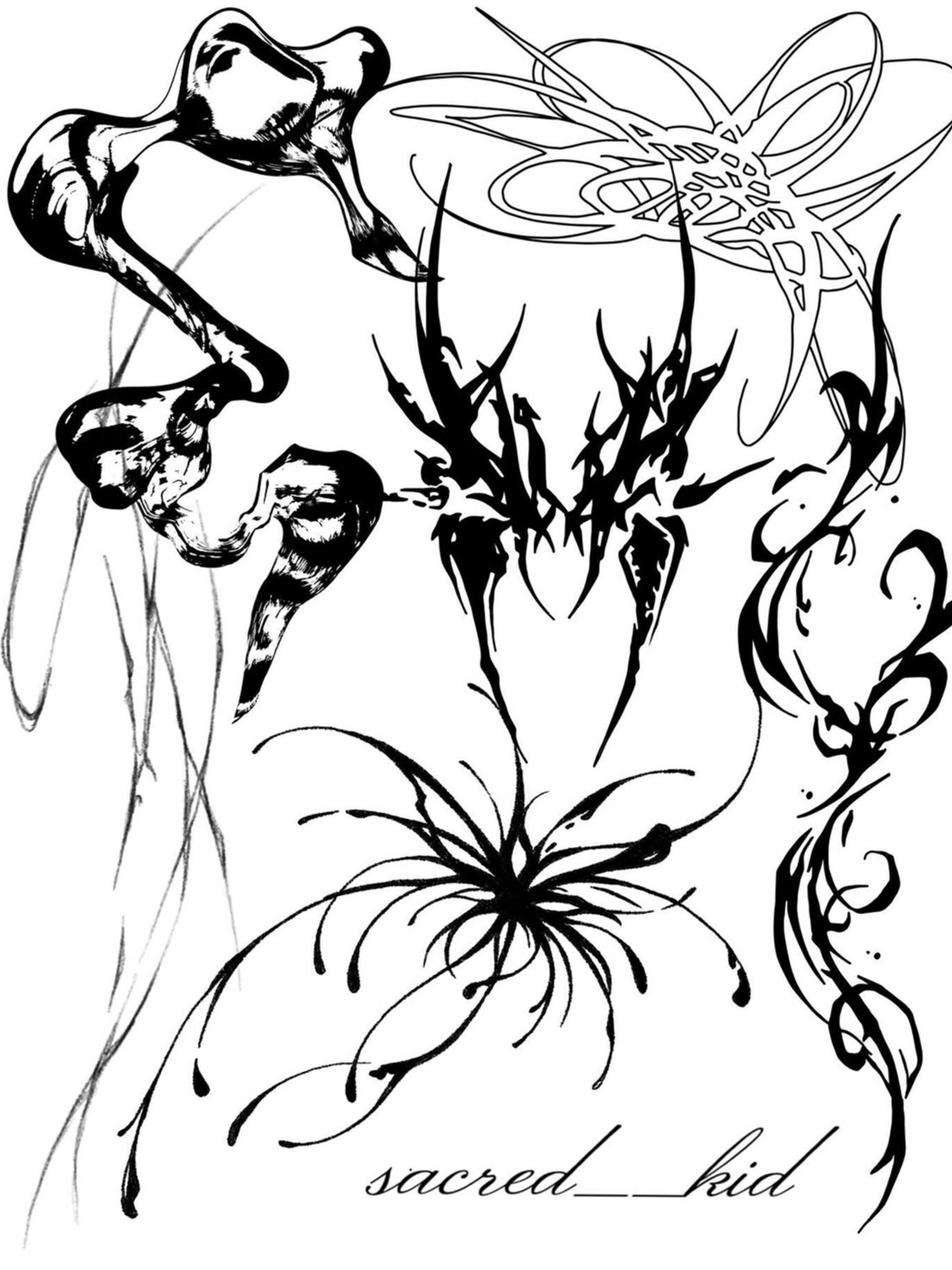
Liquid cybersigil forms
Mira Paul • Sacred__kid • Tattoo Artist

Thorn Cathedral Back Piece
Justyna Góra • Tattoo Artist • Permanent Makeup
Indicative ranges — every piece is quoted individually after a free consultation.
Minimalist tattoo
300 PLN
~75 €
A single small motif in a thin line, with no shading or fill — one symbol, a date or a short word. The shortest session on our list.
Get your quoteSmall design
from 400 PLN
~100 €
Small motifs, lettering and single elements with detail or light shading — usually one short session.
Get your quoteMedium project
500–1000 PLN
~125–250 €
Hand-sized compositions: fine line, ornaments, lettering with graphics, smaller shaded motifs.
Get your quoteLarge project
1000–2000 PLN
~250–500 €
Detailed designs on the forearm, calf or back — more detail, often longer or multi-stage work.
Get your quoteSleeves and large pieces
individual quote
Sleeves, large compositions and multi-session projects are billed per session across several appointments.
Get your quoteThe ranges are indicative. The final, binding price is set after the consultation and once the design is approved.
Our artists’ portfolio is the best test of whether a style fits your skin and idea. Filter by style, body placement or tags.

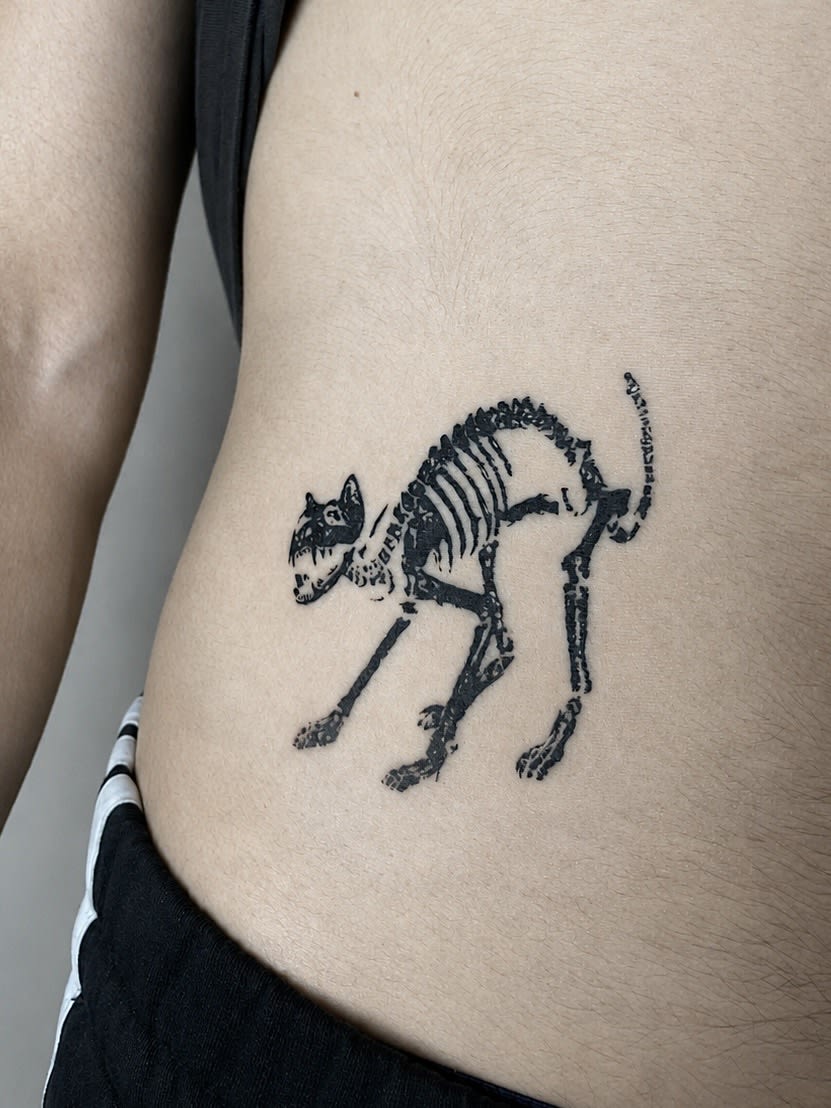

Each artist has their own specialities — see profiles and portfolios, or describe your idea in the form and we’ll match the right person.
The techniques in this gallery have their own pages — motifs, healing, prices and healed examples.
We cover old or unloved tattoos with a new design. See before-and-after transformations straight from our studio.
Practical guides by our artists — pain, aftercare and preparation. No myths, no scare stories.

Original projects waiting for an owner — each with a price and a suggested size.
The questions that matter most
Describe it in the form — we’ll suggest a style, an artist and the nearest date. The consultation and quote are free.