18 min readupdated
Tattoo by placement
Rib tattoo — Wrocław
The ribs are a placement full of contradictions. The skin here is the thinnest on the body, the bone sits directly beneath it, and we rate the pain at 9 out of 10 — it simply does not get harder. At the same time this is the tattoo that will age best of all: sun exposure here is 1 out of 5, the lowest figure on the whole price list.
On top of that comes a third thing: coverability 5 out of 5. A rib tattoo is invisible under any clothing, a t-shirt included. It is a piece you show when you choose to, and only then. For some people that privacy is the entire reason they pick this placement despite the pain.
- 9/10
- Pain
- 21–35 days
- Healing
- 20% of pieces
- Touch-up rate
- 2–6 h
- Typical session
The first touch-up after healing is included in the price.
over 200 tattoos done5 on Google (43 reviews)
Our work: ribs
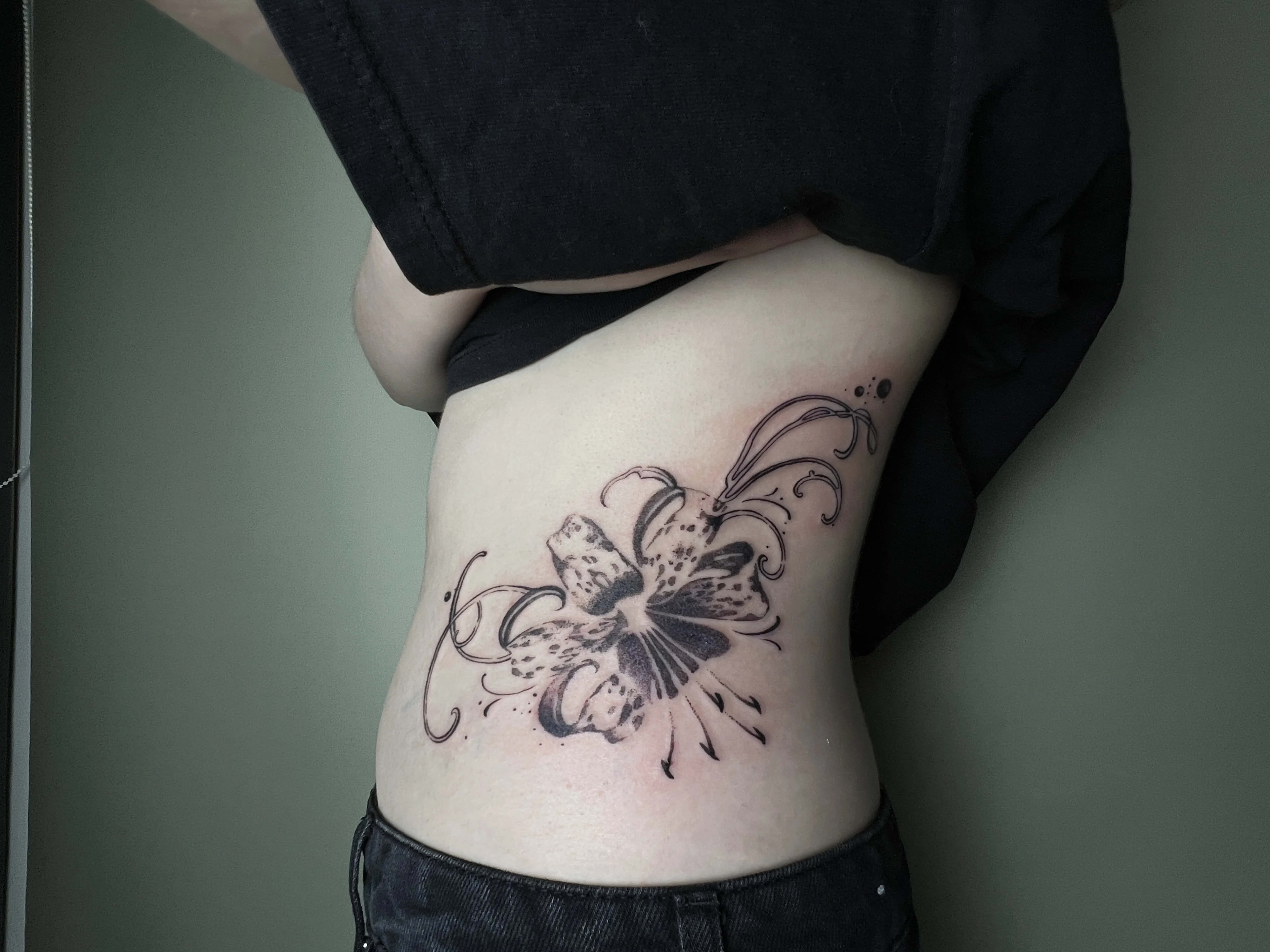
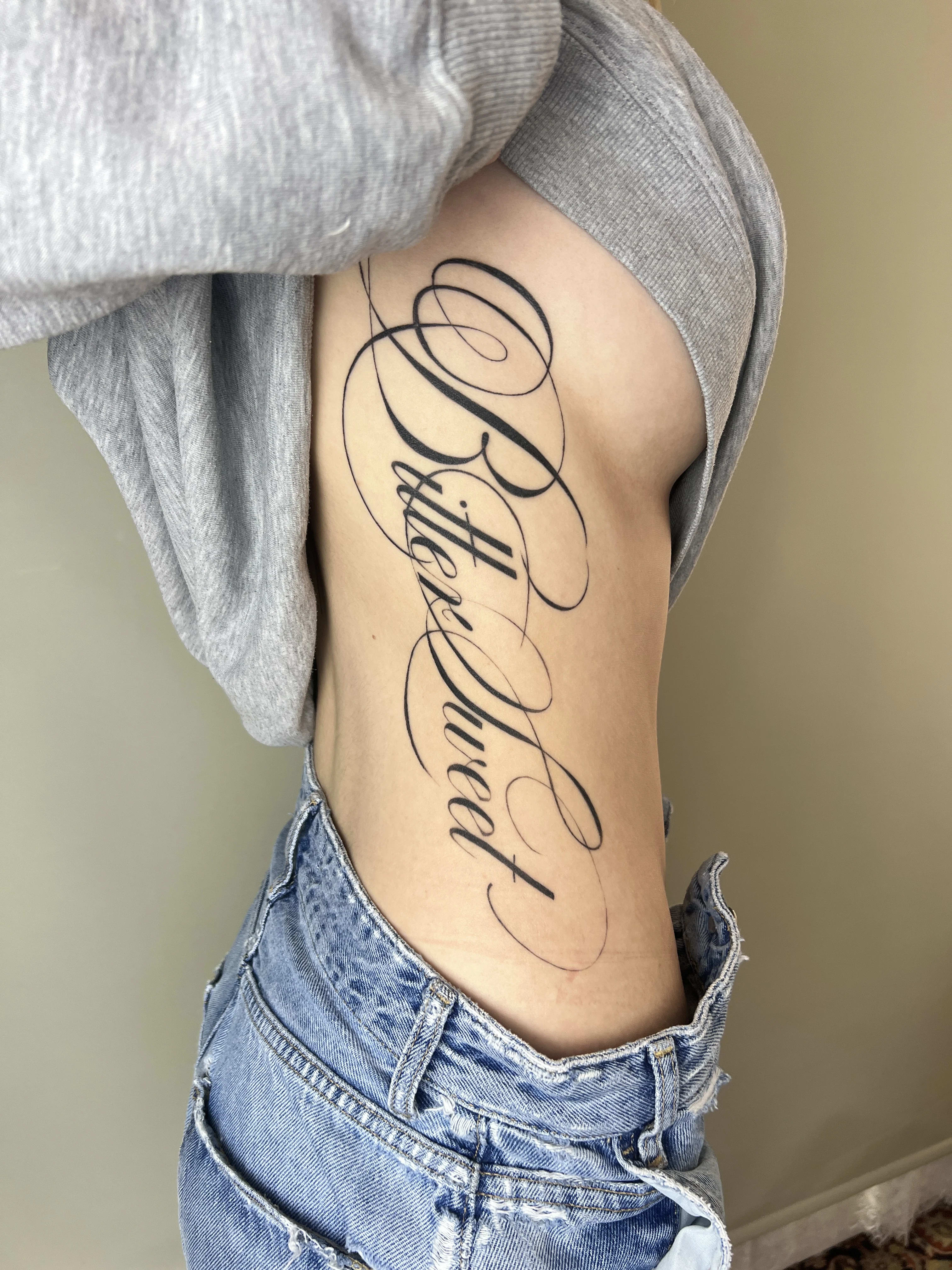
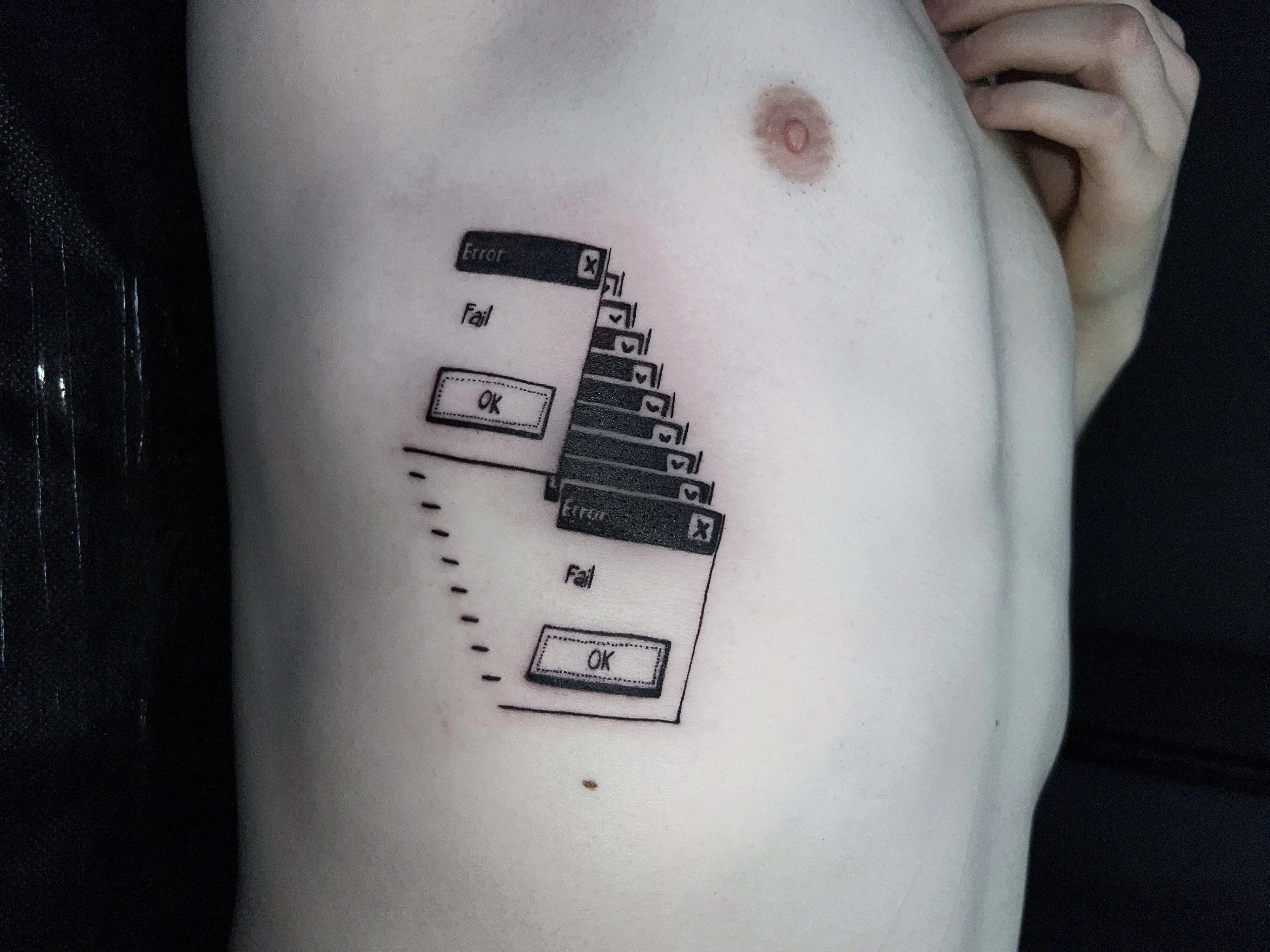
01Anatomy
A millimetre of skin over a bone that moves
- very low
- Skin thickness
- very high
- Bone proximity
- very high
- Nerve endings
We rate skin thickness on the ribs at 1 on a five-point scale — the lowest of every placement we tattoo. Between the epidermis and the bone there is practically no intermediate layer: no muscle, no fat, just thin tissue stretched across the arc of the ribs. Bone proximity is 5 out of 5.
The crucial factor, though, is not the thinness itself but the arrangement. Ribs alternate: hard bone, intercostal space, bone again. Every few centimetres the needle crosses from a firm base to a soft one and back, and each responds differently to the same pressure. That is why work on the ribs calls for constant depth correction rather than one setting for the whole session.
The chest rises and falls throughout the session. That cannot be held for more than a few seconds and nobody asks you to — we work with the rhythm of your breathing, entering on the exhale when the surface is at its most settled. For the same reason we ask you to breathe slowly and deeply rather than hold your breath, which tenses the whole torso and hinders the work more than the movement does.
Nerve ending density is high here (5 out of 5), and the intercostal nerves run along the lower edge of each rib. The sensation therefore does not spread evenly: in bands it is bearable, and every few centimetres distinctly sharper. That is normal and predictable, so we warn you before the first pass.
02Pain
A nine that does not come from a single cause
- 9/10
- Pain
- very high
- Bone proximity
- very low
- Skin thickness
The ribs share the highest value on our scale with the hand and the foot, but the pain here is of a different kind. On the hand a sharp, pinpoint burn dominates. On the ribs resonance is added: thin skin transmits the vibration straight into the bone, and the bone distributes it across the whole ribcage. People describe it as a thudding felt deeper than the needle is working.
The second component is respiratory. During longer work around the lower ribs a reflex of shallow breathing appears, and shallow breathing increases tension and fatigue. This is one of the few placements where the way you breathe genuinely changes how the session goes — and where it is worth saying so out loud rather than gritting your teeth.
The distribution is uneven. Hardest are the area under the arm and the lower costal arch, where the skin is thinnest and most mobile. The middle of the side, closer to the back, is often noticeably gentler. We take that into account when designing: the most demanding fragments get planned for the start of the session, when your reserve of patience is at its largest.
Sessions usually run two to six hours, but with ribs we split the work across two appointments more often than anywhere else. Not because of the size of the project, but because after a while the tension in the torso muscles starts to work against precision. A second visit beats a worse second half.
03Composition
The design wraps the torso, so it is never seen whole
- wrapping
- Design flow
- no
- Movement zone
The ribs are a surface curved in two directions at once: the arc of the ribs runs from the spine to the sternum, and the whole torso is a cylinder. A composition designed flat looks skewed on this base, because a drawing on paper does not have that curvature.
So we draw a rib design with wrapping in mind, and fit the stencil on the body itself, standing up. That detail matters: lying down, the skin on your side settles quite differently from how it does standing — and standing is how you will be looking at the tattoo.
Motifs with a clear vertical or diagonal direction work best, led along the line of the ribs: slender botanical compositions, ornament running down from the armpit, scenes laid out along the height. Forms that are wide horizontally lose the most here, because they disappear around the edge of the torso.
Something worth knowing in advance: you will never see a rib tattoo whole in a mirror. You will always be viewing it at an angle or in a photograph. That is why we document the finished piece from several sides — otherwise the first impression after a session can mislead, coming from the perspective rather than from the work.
04Healing
Three to five weeks, with bedding as the main enemy
- 21–35 days
- Healing
- ~26 days
- Epidermis turnover
- low
- Friction
Healing on the ribs takes three to five weeks, longer than on the forearm. The reason is straightforward: thin skin over bone has a poorer blood supply than tissue over muscle, and the epidermis here renews in about 26 days.
Friction from outside is moderate (2 out of 5) — the side of the torso does not work the way a hand does. The problem is something you do not control: sleep. Most people sleep on their side, and a fresh rib tattoo pressed into a mattress for eight hours heals worse and more often needs topping up afterwards.
The second daily culprit is underwear and a bag strap running exactly across the line of healing work. Both can be foreseen and avoided if you think about it before the session rather than on day three.
- For the first week sleep on your back or on the opposite side — it is the one thing in rib aftercare that genuinely makes a difference.
- A loose cotton t-shirt rather than a tight one: pressure on fresh work is worse here than rubbing alone.
- Move your bag to the other shoulder while it heals, if the strap crosses your side.
- No torso twists and no intense training for about ten days — stretching fresh skin over the rib arc opens small splits.
- A deep breath can sting in the first few days. That is normal and passes; it is not a sign that something has gone wrong.
05Longevity
The best-preserved tattoo you can have
- very low
- Sun exposure
- 20% of pieces
- Touch-up rate
- very high
- Coverability
Here comes the reward for a hard session. Sun exposure on the ribs is 1 out of 5 — the lowest of every placement on the Parvata Tattoo price list. The side of the torso stays covered all year, and across those few days on a beach it takes a fraction of what a forearm collects on the way to work.
That has a direct consequence: ultraviolet light is the main factor stripping contrast from tattoos over the years, and here it barely acts at all. A rib piece after ten years usually looks closer to the day of the session than the same piece on an arm.
Touch-ups affect about 20% of rib tattoos. That is twice the forearm figure but three times less than the hand, and it stems mainly from thin skin and difficult working conditions rather than later wear. Top-ups here are usually done once, shortly after healing — after which the tattoo sits stably.
The only thing that genuinely changes this design over time is a change in your silhouette. With large weight swings the skin on your side stretches and contracts, and a wrapping composition responds to that more than a design on a flat surface. If a major weight change is planned, it is worth waiting with the project.
06Risks
Thin skin forgives the least
- high
- Blowout risk
- very low
- Skin thickness
- moderate
- Skin stretching
We rate blowout risk on the ribs at 4 out of 5. With skin thickness at 1 out of 5, the margin in which the needle works at the correct depth is minimal — a fraction too deep and pigment spreads along the tissue, giving the line a bluish halo. Most exposed are the areas near the sternum and the lower costal arch.
We counter that with pace and with dividing the work: shorter passes, more frequent checks, less pressure than on a thigh or a back. It is one of the reasons a rib session takes longer than the surface area of the design alone would suggest.
The second risk concerns detail and stems from movement. The skin on your side shifts with breathing and with every twist of the torso, so very fine elements placed close together lose separation faster than on a stable base. For projects built on thin linework we increase the gaps more than the sketch appears to require.
We rate skin stretching here at 3 out of 5 — moderate. The side of the torso changes with weight swings distinctly less than the stomach, but distinctly more than the forearm. Worth remembering with symmetrical compositions, where a shift on one side catches the eye.
07Styles
Formats that use the height of the side
- very low
- Skin thickness
- wrapping
- Design flow
The side of the torso gives one of the largest continuous surfaces on the body — from armpit to hip — and that is what decides what works here. The ribs are a placement for large formats, not for single small motifs, which simply get lost in that space.
Strongest are elaborate botanical compositions run vertically, blackwork with large areas of solid black, ornament and geometry fitted to the arc of the ribs, and realism in a vertical format. All share one trait: they use the height rather than fighting the curvature.
Shading and tonal transitions come out very well on the ribs despite the difficult conditions, because the skin here is even and hairless. It is one of the better placements for a soft, painterly effect.
We approach very small lettering and micro-detail more cautiously. Not because they will not work — they will — but because on a surface this demanding it is a shame to spend a session on a motif that would look just as good on a forearm at a third of the discomfort.
08Everyday life
A tattoo you show on your own terms
- very high
- Coverability
- very low
- Sun exposure
Coverability on the ribs is 5 out of 5 — the maximum. Every t-shirt, every shirt, every set of workwear covers this placement completely. There is no conversation here about your profession or about how someone will react at an interview.
That changes the character of the decision. With a forearm, a large part of the conversation is about who will see the tattoo. With ribs that question disappears and only the design remains — which is why the most personal pieces often land here, the ones their owner has no wish to explain to passers-by.
In daily life a healed rib tattoo gets in the way of nothing: it does not rub against equipment, does not need sunscreen, does not require changed habits. The only period to think about it is the first few weeks of healing.
What is worth knowing is that this is a tattoo you yourself rarely see. If you need daily eye contact with your own work, the ribs will not give you that — and it is the one argument that genuinely counts against this placement.
09First tattoo
Can you start with the ribs
- 9/10
- Pain
- 2–6 h
- Typical session
- 21–35 days
- Healing
You can, but we rarely advise it, and the reason differs from the hand. We advise against the hand because a tattoo holds badly there. The ribs hold ink well — the only problem is that a first session at 9 out of 10 for pain, lasting several hours, can be an experience that puts people off the next one.
If you want to start here regardless, we propose a middle path: we begin with a smaller fragment of the intended composition, in a calmer part of the side, and see how you respond. Only the second session moves into the hardest areas. Nothing in the project is wasted, and you make the next decision with real knowledge rather than an imagined version.
Healing is a separate matter. Three to five weeks with a restriction on which side you sleep is more inconvenience than a first tattoo on an upper arm, and it is worth knowing in advance so it does not collide with a busy week.
Honestly: most people with large, successful rib pieces came to them with one or two tattoos already behind them. That is not a rule, but it is the pattern we see most often.
10Nearby placements
The ribs against other large surfaces
- 9/10
- Pain
- very low
- Sun exposure
The ribs belong to the group of placements with a large continuous surface, but they are the extreme within it — and a comparison with the neighbours shows that most clearly.
The back gives even more room and is considerably gentler: 5 out of 10 for pain instead of 9, skin thickness 5 out of 5 instead of 1, touch-ups on 8% of pieces instead of 20%. The same task in terms of size gets done there under calmer conditions. If what you care about is mainly the format rather than the specific location, it is worth seeing the back before you decide.
The chest lies right alongside and shares with the ribs a coverability of 5 out of 5 and low sun exposure, but it is distinctly gentler in sensation (7 out of 10) and has a different geometry: symmetrical about the sternum rather than wrapping. Pieces crossing from the chest onto the ribs are common, and we then plan them as one composition from the start.
The thigh is the opposite of the ribs in every dimension except coverability: 4 out of 10 for pain, the thickest skin on the list, a flat surface and touch-ups on 7% of pieces. Anyone after a large format with the least possible discomfort should start exactly there.
11Price
Why we talk in sessions rather than pieces
- 2–6 h
- Typical session
- 20% of pieces
- Touch-up rate
Rib pieces are usually large, so we bill them differently from small motifs. A session runs two to six hours here, and elaborate compositions get spread across two or more appointments. Multi-session work is billed at Parvata Tattoo at 1800 PLN per session.
A smaller motif on the ribs is of course also possible, and then the usual terms apply — the lowest rate on the list is 300 PLN for a minimalist tattoo, while large single projects most often fall between 1000 and 2000 PLN.
One thing affects the price here that easier placements do not have: pace. On thin skin over bone the work goes more slowly, so the same surface area takes more time than on a thigh. We do not add a difficulty surcharge, but the real time is longer and we say so when quoting, so the number of hours does not come as a surprise.
The design work and the check-up once it has healed are part of the price. We give a binding figure after a free consultation, at which we fit the design to the arc of your ribs — with this placement that stage cannot be skipped. A deposit of 100–500 PLN comes off the final price in full.
Nearby placements
- backThe same size league, completely different conditions: 5 out of 10 for pain instead of 9, the thickest skin instead of the thinnest, and touch-ups on 8% of pieces instead of 20%. If large format is your goal, start by comparing these two.
- chestThey sit side by side and share full coverability, but the chest is gentler and symmetrical about the sternum rather than wrapping the torso. Pieces crossing from one to the other we plan as a single composition.
- thighThe other pole of large formats: the thickest skin on the list, pain at 4 out of 10 and a flat surface. Anyone wanting a large piece with the least discomfort should look at the thigh.
Styles that look great in this spot
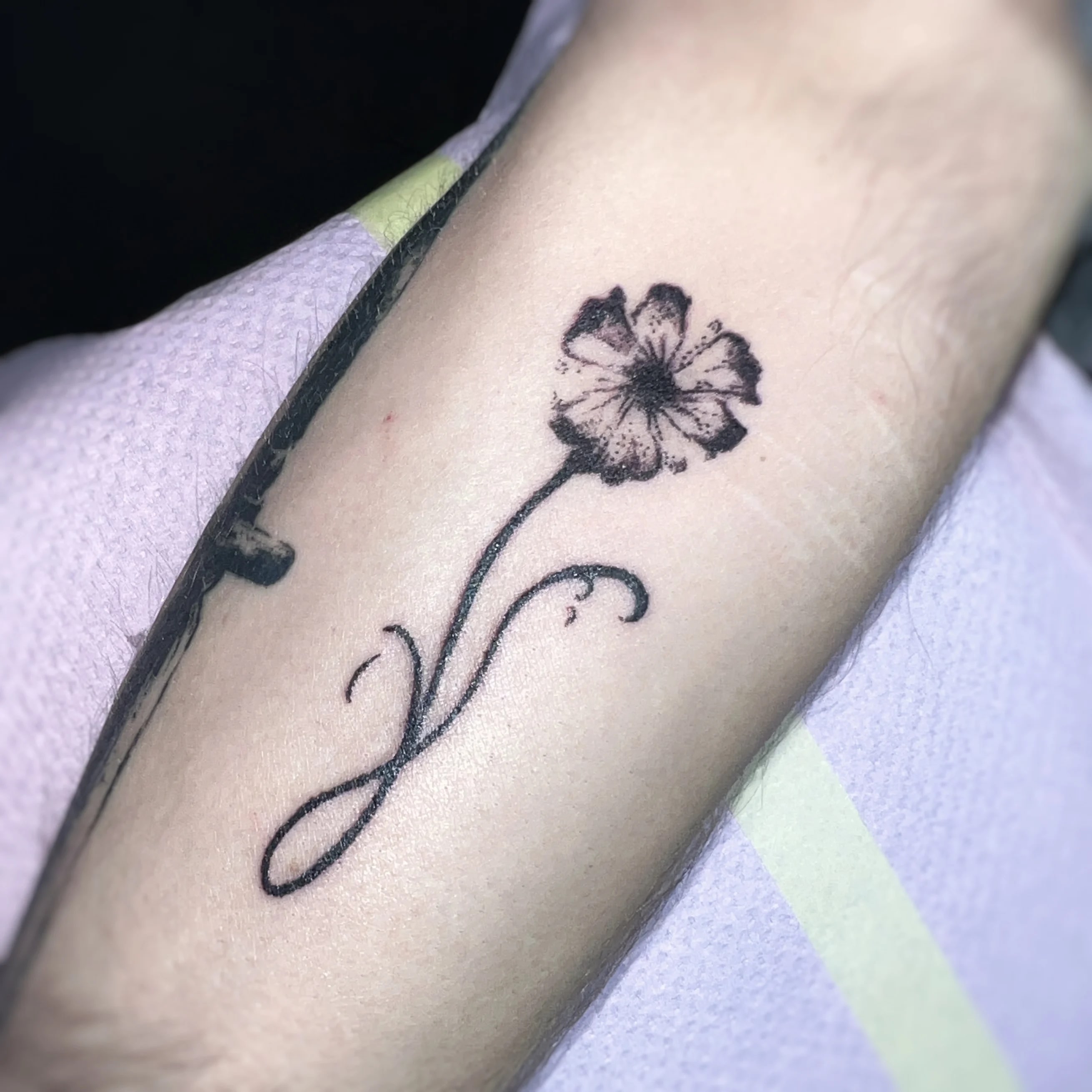


Frequently asked questions
Yes — on the scale used at Parvata Tattoo the ribs score 9 out of 10 and share that value with the hand and the foot. The pain here has a different character from the hand, though. We rate skin thickness at 1 on a five-point scale, the lowest on the entire price list, so the thin layer transmits vibration straight into the bone, and the bone distributes it across the whole ribcage. People most often describe it as a thudding felt deeper than the needle is working. A second component is added: the intercostal nerves run along the lower edge of each rib, so the sensation does not spread evenly — in bands it is bearable, and every few centimetres distinctly sharper. Hardest are the area under the arm and the lower costal arch, which is why we plan the most demanding fragments for the start of the session.
Three to five weeks, longer than on the forearm. The reason is anatomical: thin skin stretched over bone has a poorer blood supply than tissue resting on muscle, and the epidermis in this area renews in about 26 days. Friction from outside is moderate and we rate it at 2 on a five-point scale, because the side of the torso does not work the way a hand does. The biggest problem is sleep: most people sleep on their side, and fresh work pressed into a mattress for eight hours heals worse and more often needs topping up afterwards. That is why at Parvata Tattoo we ask you to sleep on your back or the opposite side for the first week. The second daily culprit is a bag strap running across the healing piece.
Far more slowly than anywhere else, and that is the greatest advantage of this placement. We rate sun exposure on the ribs at 1 on a five-point scale — the lowest on the entire Parvata Tattoo price list. Ultraviolet light is the main factor stripping contrast from tattoos over the years, and the side of the torso stays covered all year, taking a fraction of what a forearm collects on the way to work. In practice a rib piece after ten years looks closer to the day of the session than the same design on an arm. Touch-ups affect about 20% of rib tattoos and stem from thin skin and difficult working conditions rather than later wear — they are usually done once, shortly after healing.
The side of the torso gives one of the largest continuous surfaces on the body, from armpit to hip, and that is what decides the choice. The ribs are a placement for large formats, and single small motifs simply get lost in that space. Strongest are elaborate botanical compositions run vertically, blackwork with large areas of solid black, ornament fitted to the arc of the ribs and realism in a vertical format — all of which use the height rather than fighting the curvature. Shading and soft tonal transitions come out exceptionally well here, because the skin is even and hairless. Forms that are wide horizontally lose the most, since they disappear around the edge of the torso. We fit the design on the body standing up, because lying down the skin settles differently.
Completely. We rate rib coverability at Parvata Tattoo at 5 on a five-point scale, the maximum — every t-shirt, shirt and set of workwear covers this placement fully. That changes the character of the whole decision: with a forearm, much of the conversation is about who will see the tattoo, whereas with the ribs that question does not arise at all and only the design remains. This is why the most personal pieces often land here, the ones their owner has no wish to explain to passers-by. The flip side is that you too will rarely see this tattoo — in a mirror you will never see it whole, only at an angle or in a photograph.
Rib pieces are usually large, so we bill them by session more often than by piece. A session runs two to six hours here, and elaborate compositions are spread across two or more appointments — Parvata Tattoo bills multi-session work at 1800 PLN per session. A smaller motif is also possible, and then the usual terms apply: the lowest rate on the list is 300 PLN for a minimalist tattoo, while large single projects most often fall between 1000 and 2000 PLN. We add no surcharge for the difficulty of the placement, but we do warn that on thin skin over bone the work goes more slowly, so the same surface area takes more hours than on a thigh. The figure becomes binding once we have seen the ribs and the design together, at the free consultation.
More about the studio
Have an idea for a tattoo in this spot?
Book a free, no-obligation consultation — we will match an artist and design the motif for your body.