




Cover-up — a second life for your tattoo
We cover old or unloved tattoos with a new design. See before-and-after transformations straight from our studio.
Tattoo styles
A herbarium worn on skin: wildflowers, sprigs and plants in the spirit of vintage botanical etchings — fineline, dotwork or a soft watercolour accent.
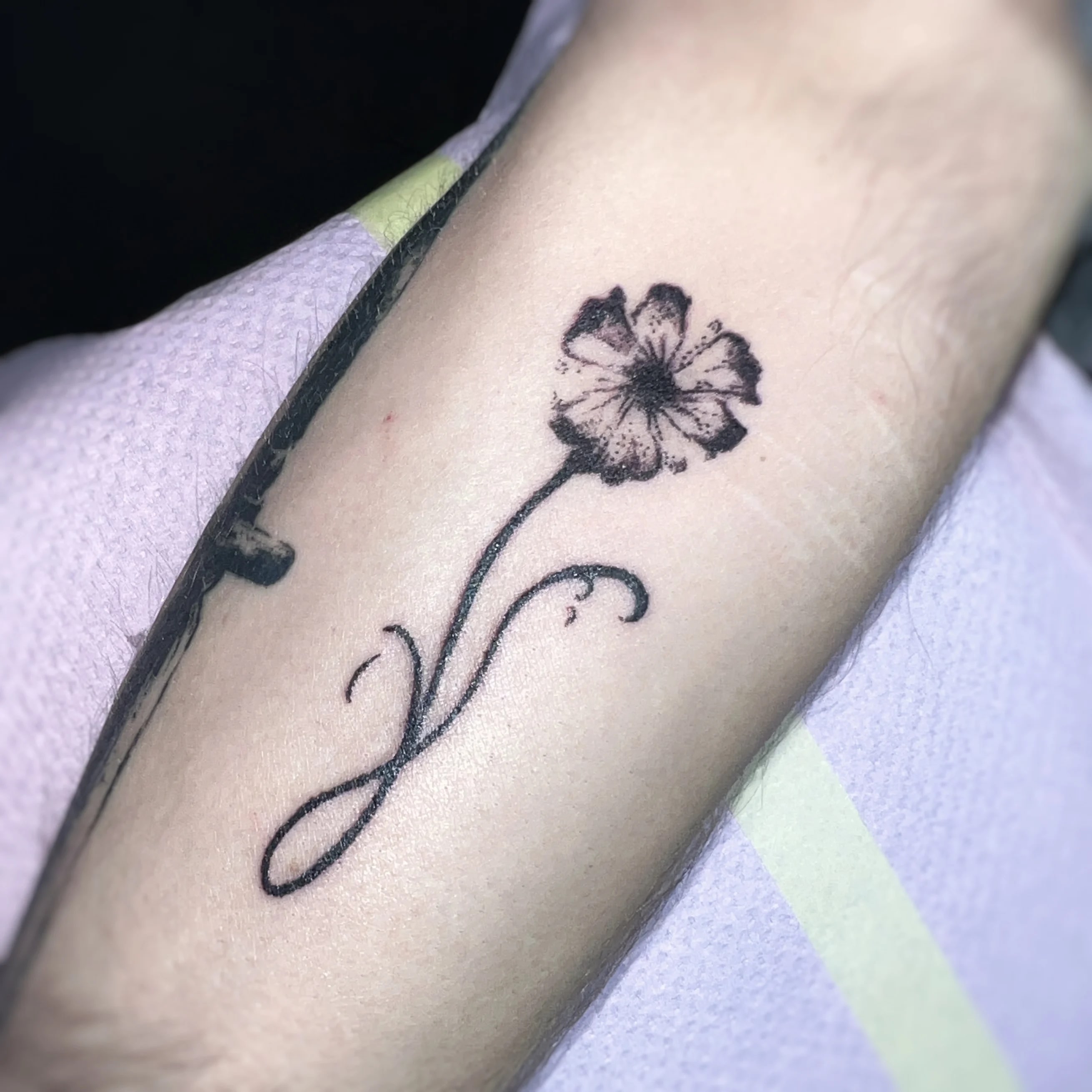
The botanical tattoo is probably the most timeless current of the past decade: it does not shout or chase trends, it just grows quietly on the skin like a well-planned garden. It draws on the aesthetics of old atlases and herbaria — precise linework, delicate shading and respect for the plant''s anatomy.
At our Wrocław studio botany is one of our favourite specialities: from a single sprig of lavender on the forearm to elaborate wildflower compositions wrapping the arm. We design from nature — sometimes literally, because the best pieces begin with a photo of a plant that truly means something to you.
Further down this guide you will find everything worth knowing before the first visit: the history of botanical engravings, plant symbolism, matching placements, how the session and pricing work, and how to care for a delicate line.
What separates botany from a mere „flower” is the approach: the inspiration comes from 18th- and 19th-century natural atlases. Plants are shown whole — stem, leaves, buds, sometimes even the root — with structural realism rather than just a pretty petal. It is scientific illustration turned art.
That is why botany loves black and graphic work: thin lines, stippled shadows, restrained contrast. This aesthetic is immune to fashion — an etching looked good two hundred years ago and will look good in another twenty, on skin as well.
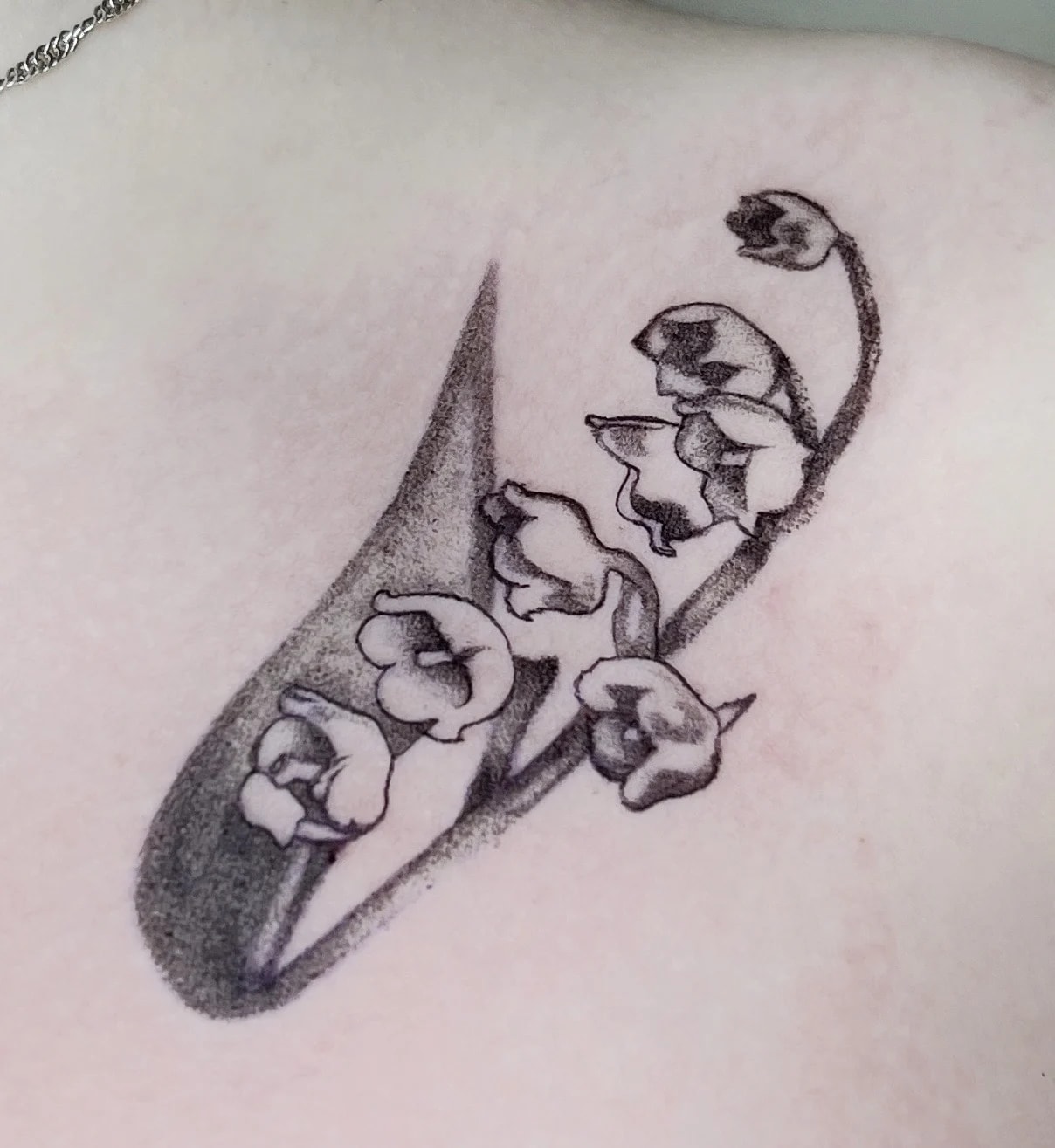
Fineline brings lightness — single thin lines draw the plant as if with a nib. Dotwork builds velvety depth with stippled shading and no hard transitions. We usually combine both in one piece: nib for the outline, dots for the shade.
A colour version? Absolutely: watercolour washes or single colour accents on a black skeleton — the red of poppy petals, the violet of lavender. Colour guided on top of an outline ages calmly and with class.
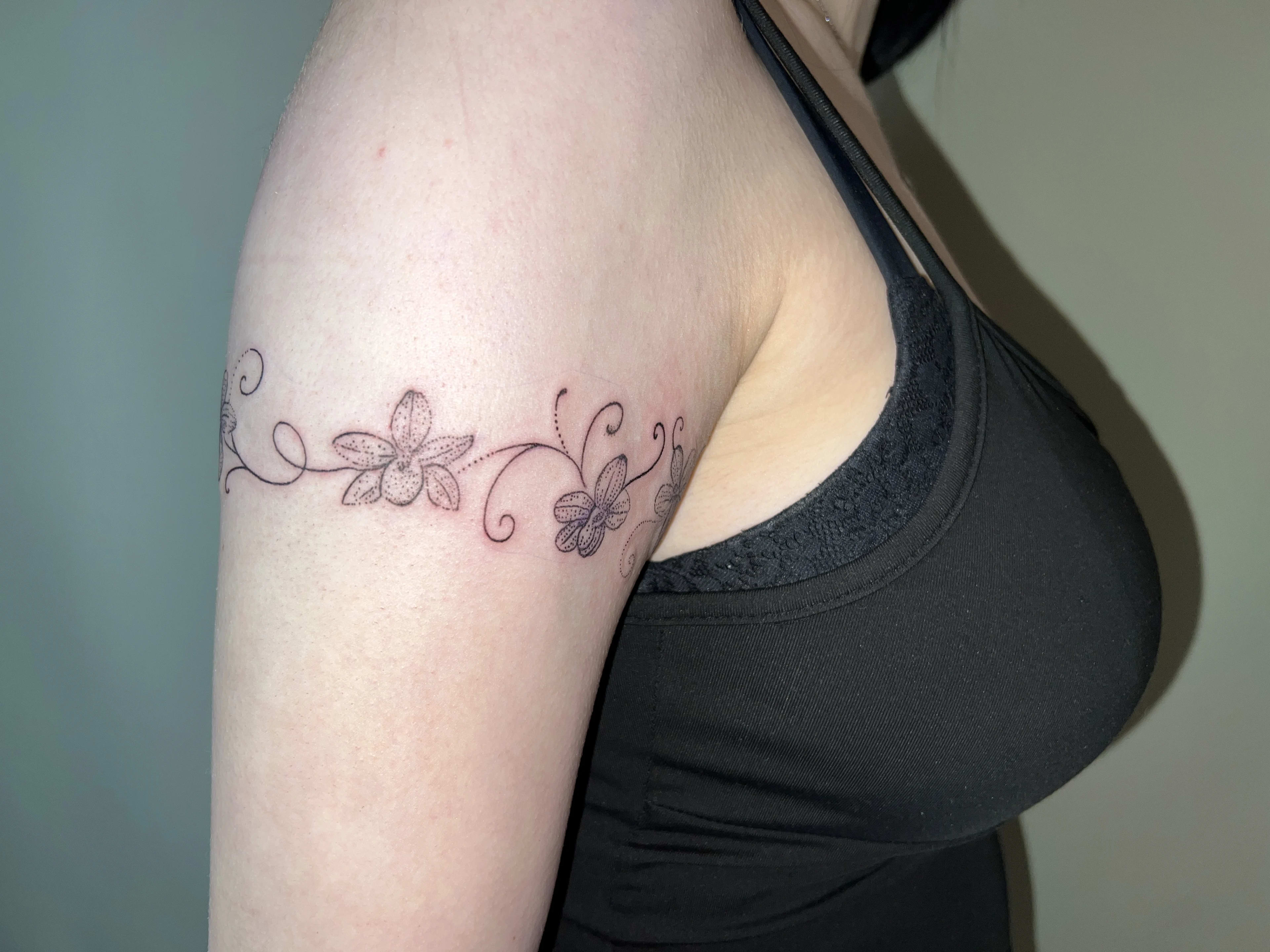
Plants speak softly, but clearly:

Plants have a natural advantage: their forms settle along the body by themselves. A sprig guided along the forearm or the spine, a flower nested into the collarbone, a wreath around the arm, a vine on the ribs — we design so the stem flows with the muscle line, not across it.
Botany also expands beautifully. You start with one plant, add another a year later — and a „garden sleeve” grows over time. It is also a graceful choice for a first tattoo: elegant, discreet and easy to love forever.
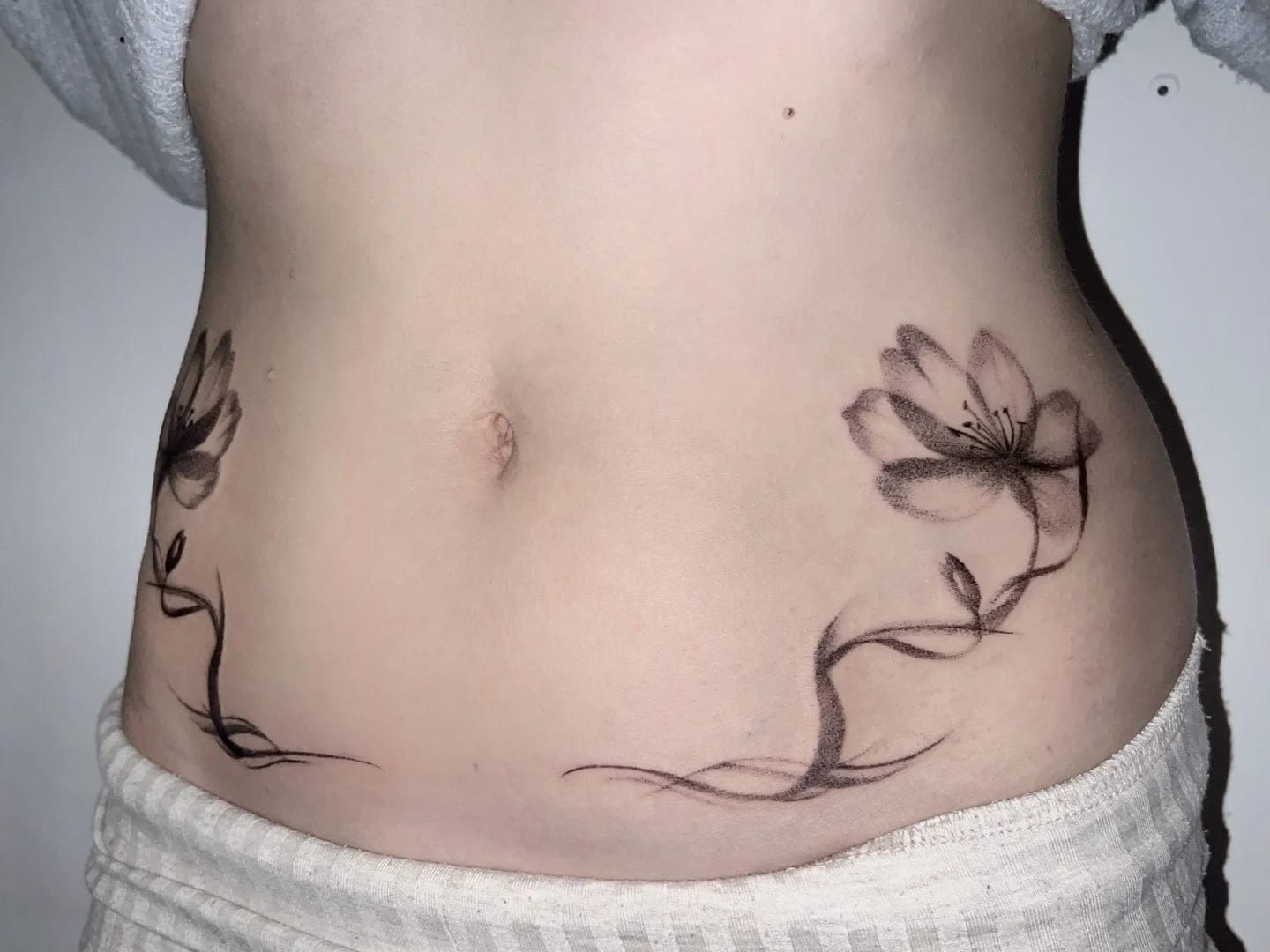
Honestly: very thin lines soften a little over the years — that is skin physics, not poor craftsmanship. So we keep minimum spacing between lines, never cram detail into miniatures and give the linework room to breathe where needed.
A well-designed botanical fineline looks like an etching after healing and like a delicate, noble graphic years later. A refresh, if ever needed, is one short session. See how our plants live on real skin in the portfolio.
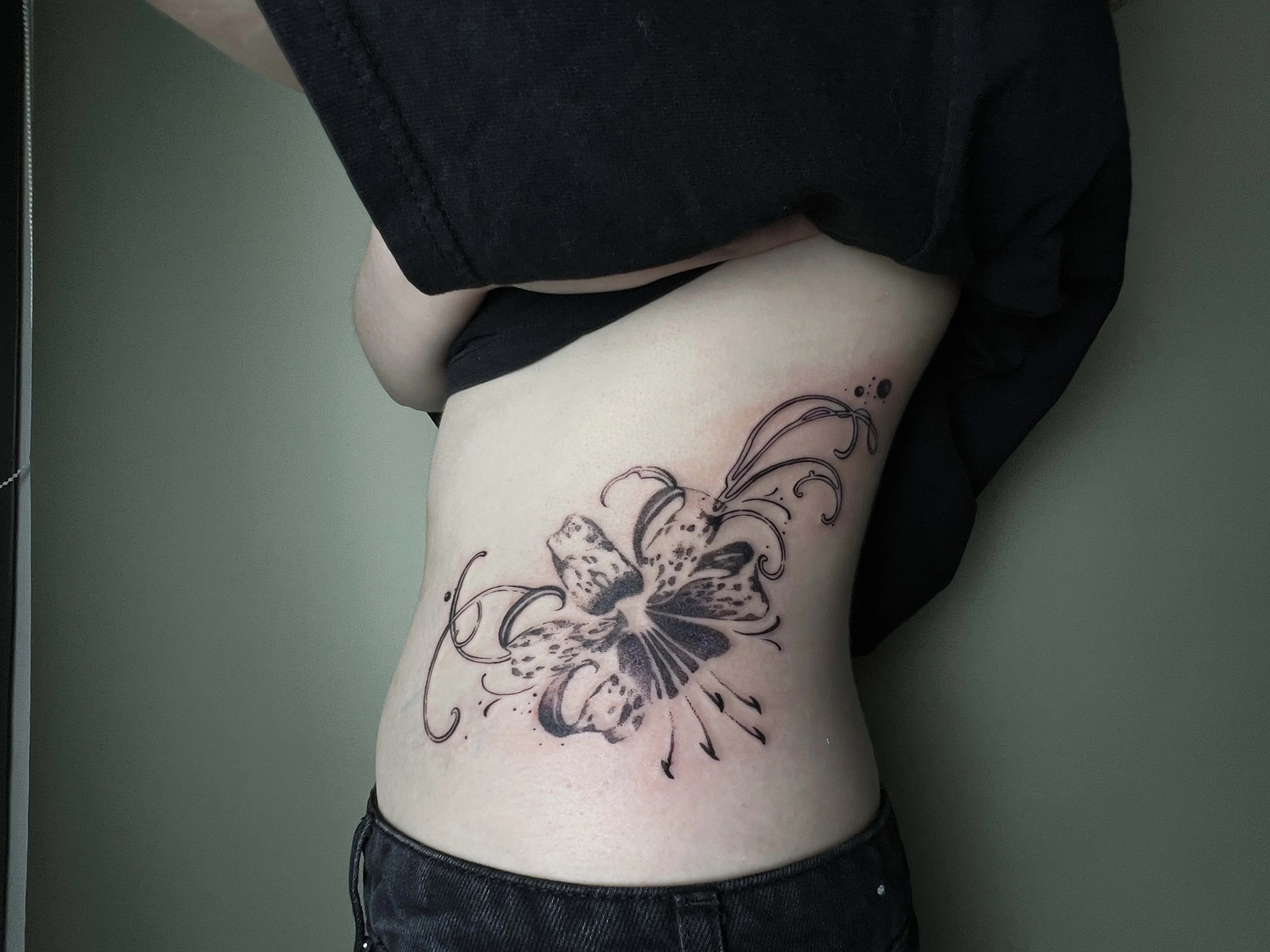
Thin linework heals fast and gently: a thin layer of ointment, loose clothes, no soaking or picking until the epidermis rebuilds. A complete healing guide is on our blog.
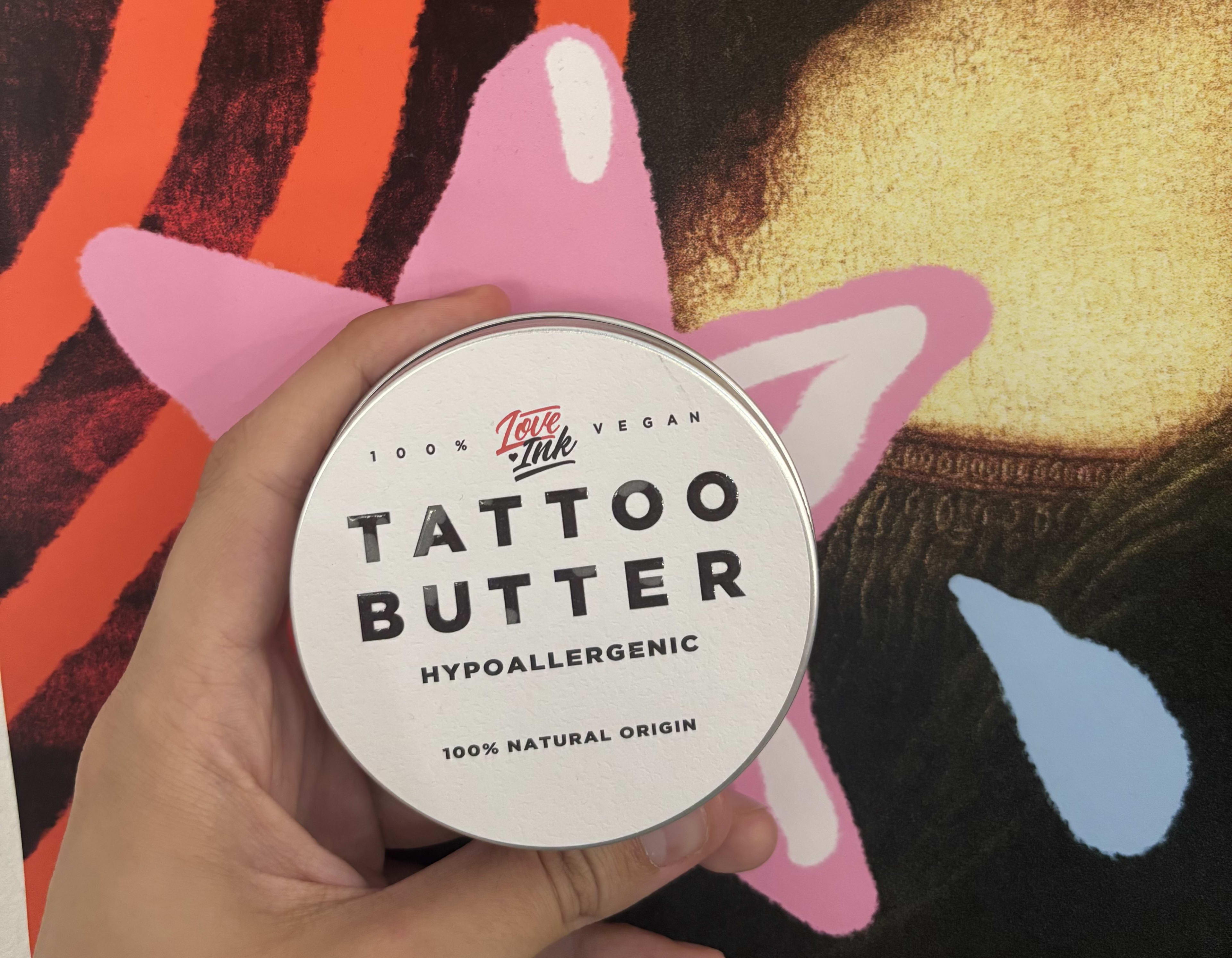
Once healed, delicate lines and soft shadows look best on cared-for skin: regular moisturising plus SPF in summer — and your herbarium stays sharp for decades.
Botany has a wide price range because its scale is wide: from a single lavender sprig on the wrist to a wildflower composition wrapping the whole arm. The first factor is size and the number of elements — every stem, flower head and leaf is separate, precise thin-needle work.
The second factor is technique: pure fine line is faster than work combining outline with dotwork stippling or a watercolour accent. The third is the design stage: botany made from a real plant — a wedding-bouquet photo, a herb from a garden — needs translating from photograph to engraving: choosing the frame, simplifying detail, planning the composition for the anatomy.
Rough ranges are in our Pricing; specifics after a free consultation. Small sprigs are usually one short session; larger compositions are planned in stages, which we say upfront.

Botany is one of the gentler tattoo experiences: most pieces are made with thin needles, without large fills, and sessions are relatively short — a single sprig is often an hour or ninety minutes. Most people describe the discomfort as scratching.
Sensation depends mainly on placement: forearm, upper arm and calf are calm territory; the collarbone, ribs and spine — spots botany happens to love compositionally — can be more sensitive. We say so honestly at the design stage and adjust the pace to you.
The session itself runs classically: stencil fitting (with botany we often adjust the angle by a few degrees so the plant truly flows with the body), then outline, then shading and accents. You leave with a second-skin dressing and aftercare instructions.
The first story is a keepsake: a flower from a wedding bouquet, a herb from grandma's garden, a plant from a meaningful place. Botany is the most personal style we know — it carries a memory in a form you can show the world without explaining it.
The second story is aesthetics: people who love engravings, old atlases and quiet, timeless design. Botany does not chase trends — a sprig tattooed ten years ago looks just as good today. The third story is the first tattoo: a delicate form, a short session, gentle healing and a motif whose meaning can grow for years — many people start with one sprig and return until a private herbarium grows.
If any of these stories sounds like yours, send your idea through the form — the consultation is free and the design always individual.

The best botanical pieces start from a real plant, so the first thing we ask for is a reference: a photo of a flower from an important day, a plant pressed in a book, sometimes just a species name and a memory. We do not copy the photograph — we translate it into the language of engraving: clean line, thought-out shading, botanical fidelity.
At the consultation we set the frame and scale, and show how the design sits on the body — botany has to grow with the anatomy, otherwise it looks like a sticker. With larger compositions we design forward: leaving room for future plants and keeping a shared direction of growth.
You will see the design before the session and we will go through revisions together. Only when everything works — frame, scale, placement — do we book the tattooing date.

The aesthetic we wear on skin today has centuries of pedigree. Before photography, plants were documented in engravings: precise black-and-white illustrations for atlases, pharmacopoeias and herbaria. Their authors had to reconcile the two things that still define good botany — scientific fidelity of detail and a clean, readable line that survives imperfect print on imperfect paper.
That is exactly the tattooer's problem: skin, like old handmade paper, has its texture, stretch and limits. The line must be confident enough to survive in this medium for decades — which is why the language of old engravings transferred to skin so naturally.
Modern botanical tattooing took the best of that tradition — apothecary precision, delicate hatching, atlas-style captions, a single plant on a clean background — and added its own means: dotwork stippling, soft watercolour accents, compositions that flow with the body instead of a stiff catalogue card.
If this aesthetic is close to you, browse our Portfolio — and you are welcome to bring a scan of an old atlas page to the consultation. References like that are pure pleasure for us.

Plants have a rare compositional trait: they can wrap around almost any other motif and give it context. Hence botany's frequent duets — a sprig winding around a quote, a flower growing out of an initial, a date in a wreath; more about typefaces on our Lettering page.
The second classic: botany with symbols of time — clocks, hourglasses, moon phases. The plant gives these motifs life and softness, telling a story of passing without pathos. Flowers with animals work the same way: a moth among peonies, a snake in the grass, a bird with a sprig.
We also increasingly pair botany with geometry: plants inscribed in circles and arcs, symmetrical bouquets in an ornamental spirit — a direction that looks especially good on the forearm and calf. And if you already have scattered tattoos, botany is the best binder we know: sprigs and leaves can join separate motifs into one thought-out whole.

Plants have a natural direction of growth — and that, not fashion, should decide the placement. The most graceful spot is the forearm: the elongated surface guides a stem exactly as it would grow in nature. The calf comes second — vertical, stable, with room for an elaborate composition; the thigh adds everyday discretion.
The collarbone and ribs are the zone of the most poetic compositions — a sprig laid along the bone looks designed by the body itself. The price is higher sensitivity during the session and more skin movement, which the design must anticipate; we warn about both honestly. The spine deserves its own note: a vertical plant along the back is one of the most striking botanical motifs of all, provided the symmetry is perfect.
Few placements are discouraged: palms, fingers and feet wear a delicate line down faster than any plant grows. If you care about those areas, we will say plainly which form makes sense there — and which ends in disappointment.
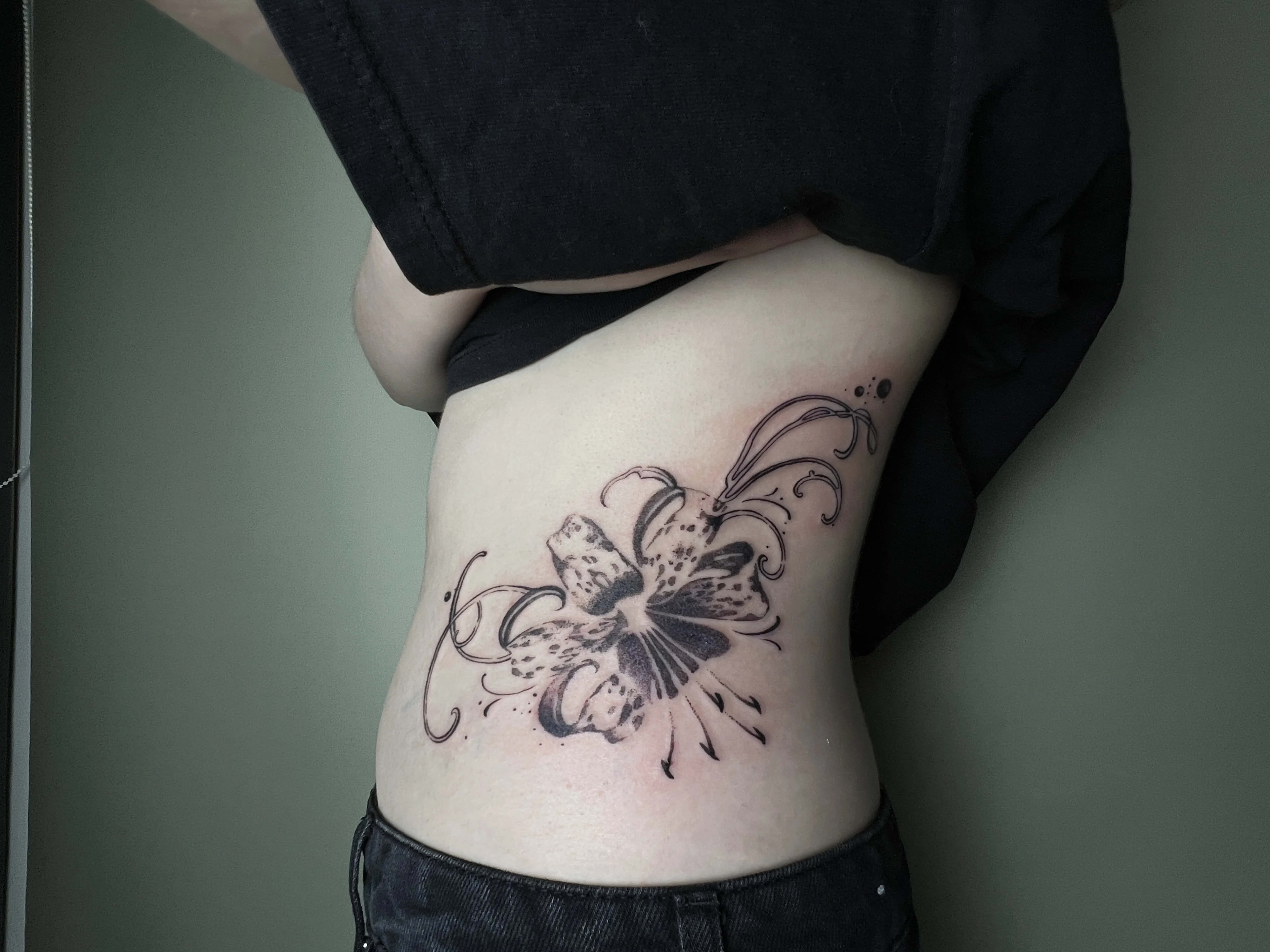
Choose botanical when you want a motif that flows with your body — a sprig along the forearm, a herbarium on the calf, a flower under the collarbone. A style for people who prefer a whisper to a shout.
We don't promise hair-thin lines will stay that way forever — skin changes, so we design with a readability margin instead of racing for maximum delicacy.
They will soften slightly over time — like every tattoo. We design with a margin: proper spacing, a sensible size, no cramped detail in a miniature. Thanks to that the piece stays readable for years, and a refresh is a rare, short session.
It is usually a delicate, fairly quick job with a thin needle, so most people go through it without trouble. The collarbone, ribs and spine are more sensitive — we will warn you and adjust the pace.
Yes — and we warmly encourage it! The best designs come from personal plants: a flower from a wedding bouquet, a herb from grandma's garden, a leaf from a trip. We will turn it into an engraving you wear like a memory.
Black is the classic and the stable choice — closest to the botanical-atlas look. Colour gives a watercolour softness. We often combine both worlds: a black line plus one colourful accent. At the consultation we will pick the variant for you.
We plan the composition 'forward': we leave room for more plants and keep a shared direction of growth. Such a garden-sleeve grows with you over the years — each session adds a new plant to the collection.
A single sprig from about 8–10 cm looks great and ages well. We will also do smaller forms — by simplifying the detail. At the consultation we will show how your chosen motif behaves at your size.
Yes — it is one of the most common debut choices. The session is short, the discomfort mild, healing calm, and the motif timeless: a sprig from a decade ago looks just as good today. Botany also grows easily — from one plant to a whole herbarium, at your own pace.
A single sprig is usually an hour to ninety minutes; an elaborate floral composition on the forearm — one longer session; a garden wrapping the arm is planned in stages. We give the exact time with the design, as it depends on the number of elements and techniques.
Send your idea through the form — ideally with a photo of a plant that means something to you, or references from our portfolio. We will set up a free consultation at the studio at ul. Poświęcka 17/40 in Wrocław, match an artist and prepare an engraving-style design for your body.
Often yes — the organic shapes of plants camouflage old outlines well, and denser leaf compositions can hide a lot. With dark old work we will honestly assess whether laser lightening is needed first. Send a photo through the form — the assessment is free.
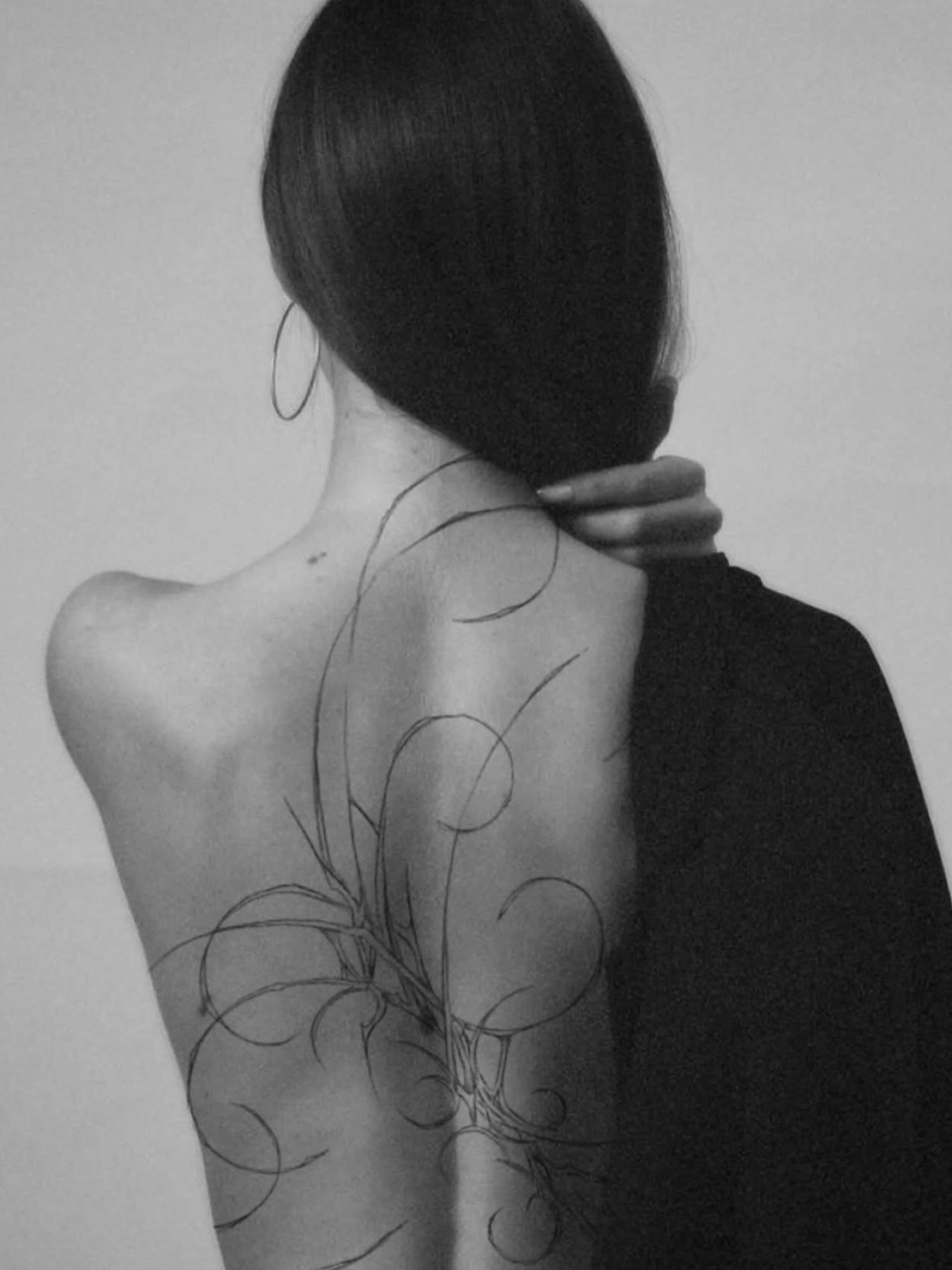
Organic grass swirls
Mira Paul • Sacred__kid • Tattoo Artist

Cartoon gloom and botanicals
Mira Paul • Sacred__kid • Tattoo Artist

Lily, Dagger & Bows
Justyna Góra • Tattoo Artist • Permanent Makeup

Nostalgic dotwork motifs
Justyna Góra • Tattoo Artist • Permanent Makeup
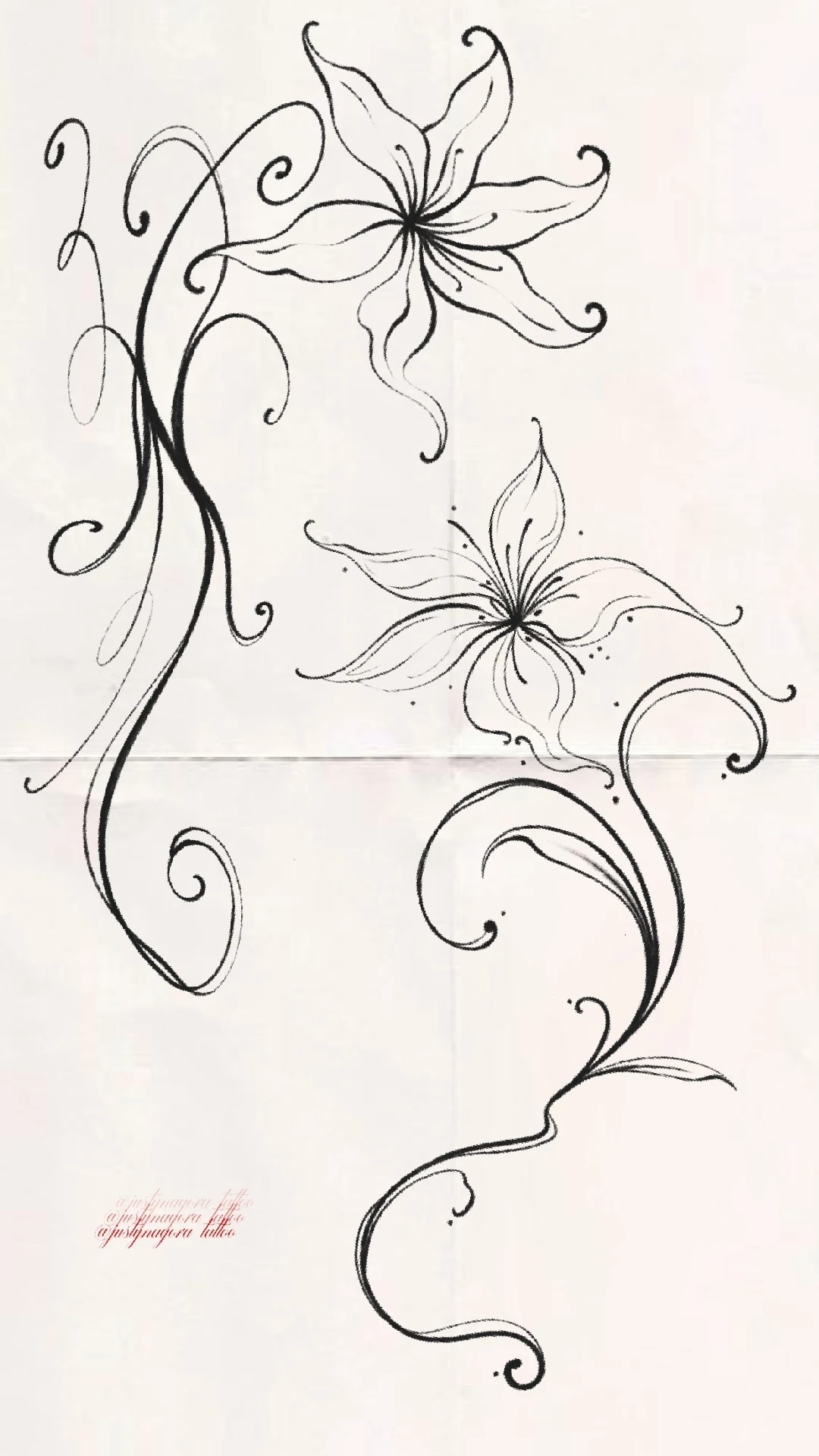
Fluid floral vines
Justyna Góra • Tattoo Artist • Permanent Makeup
Pixelated folk embroidery
Justyna Góra • Tattoo Artist • Permanent Makeup
Indicative ranges — every piece is quoted individually after a free consultation.
Minimalist tattoo
300 PLN
~75 €
A single small motif in a thin line, with no shading or fill — one symbol, a date or a short word. The shortest session on our list.
Get your quoteSmall design
from 400 PLN
~100 €
Small motifs, lettering and single elements with detail or light shading — usually one short session.
Get your quoteMedium project
500–1000 PLN
~125–250 €
Hand-sized compositions: fine line, ornaments, lettering with graphics, smaller shaded motifs.
Get your quoteLarge project
1000–2000 PLN
~250–500 €
Detailed designs on the forearm, calf or back — more detail, often longer or multi-stage work.
Get your quoteSleeves and large pieces
individual quote
Sleeves, large compositions and multi-session projects are billed per session across several appointments.
Get your quoteThe ranges are indicative. The final, binding price is set after the consultation and once the design is approved.
Our artists’ portfolio is the best test of whether a style fits your skin and idea. Filter by style, body placement or tags.
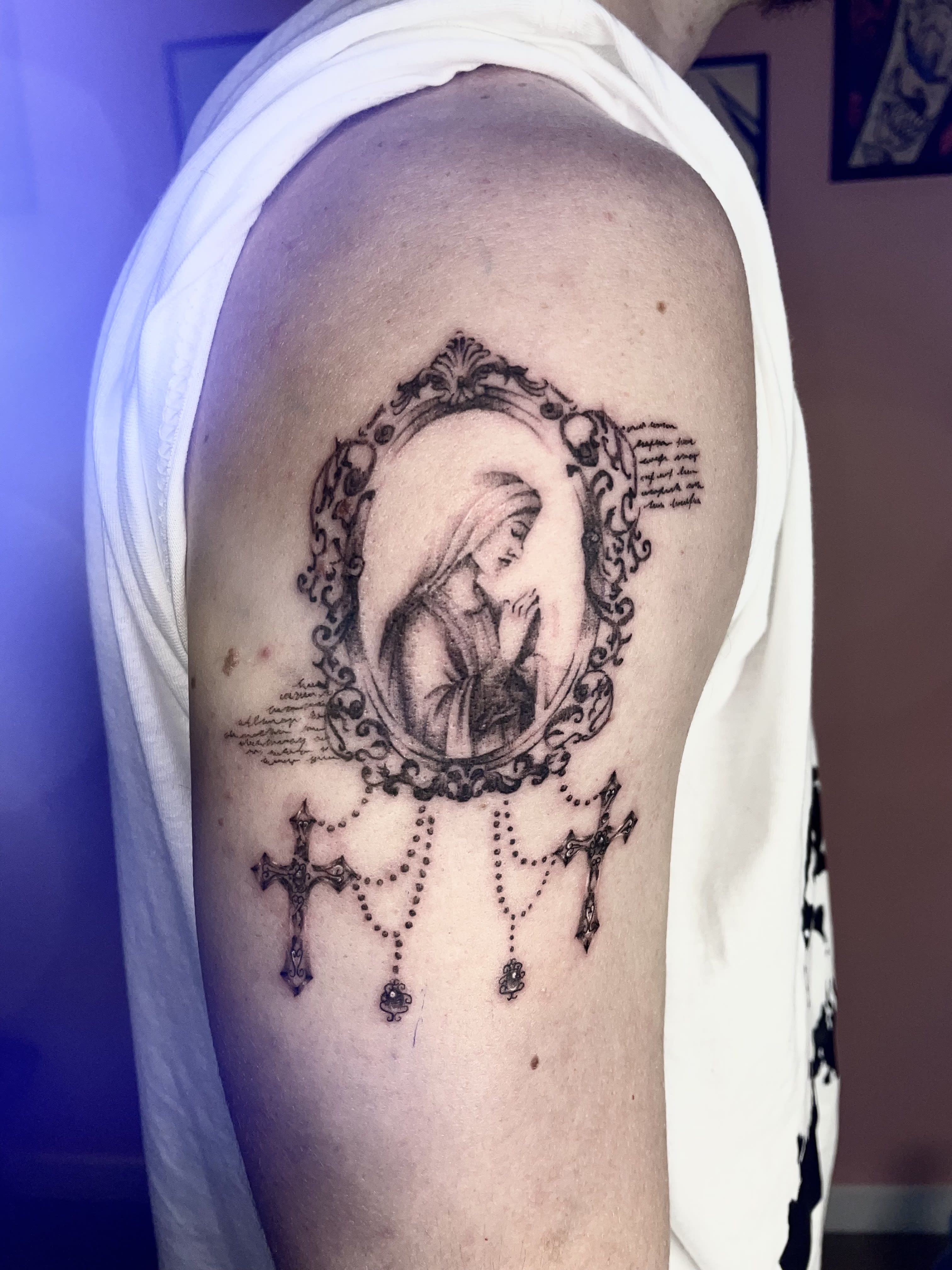

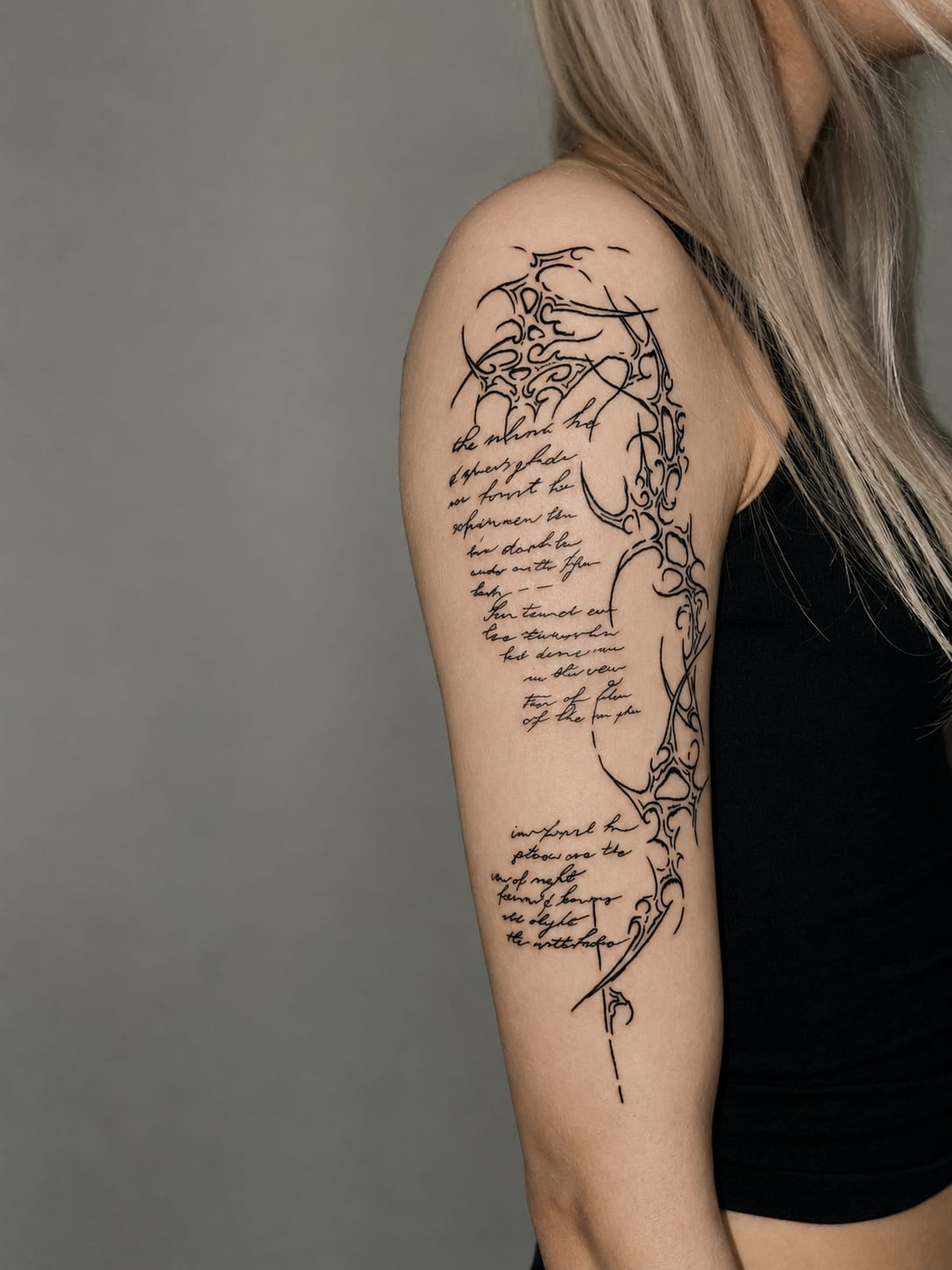
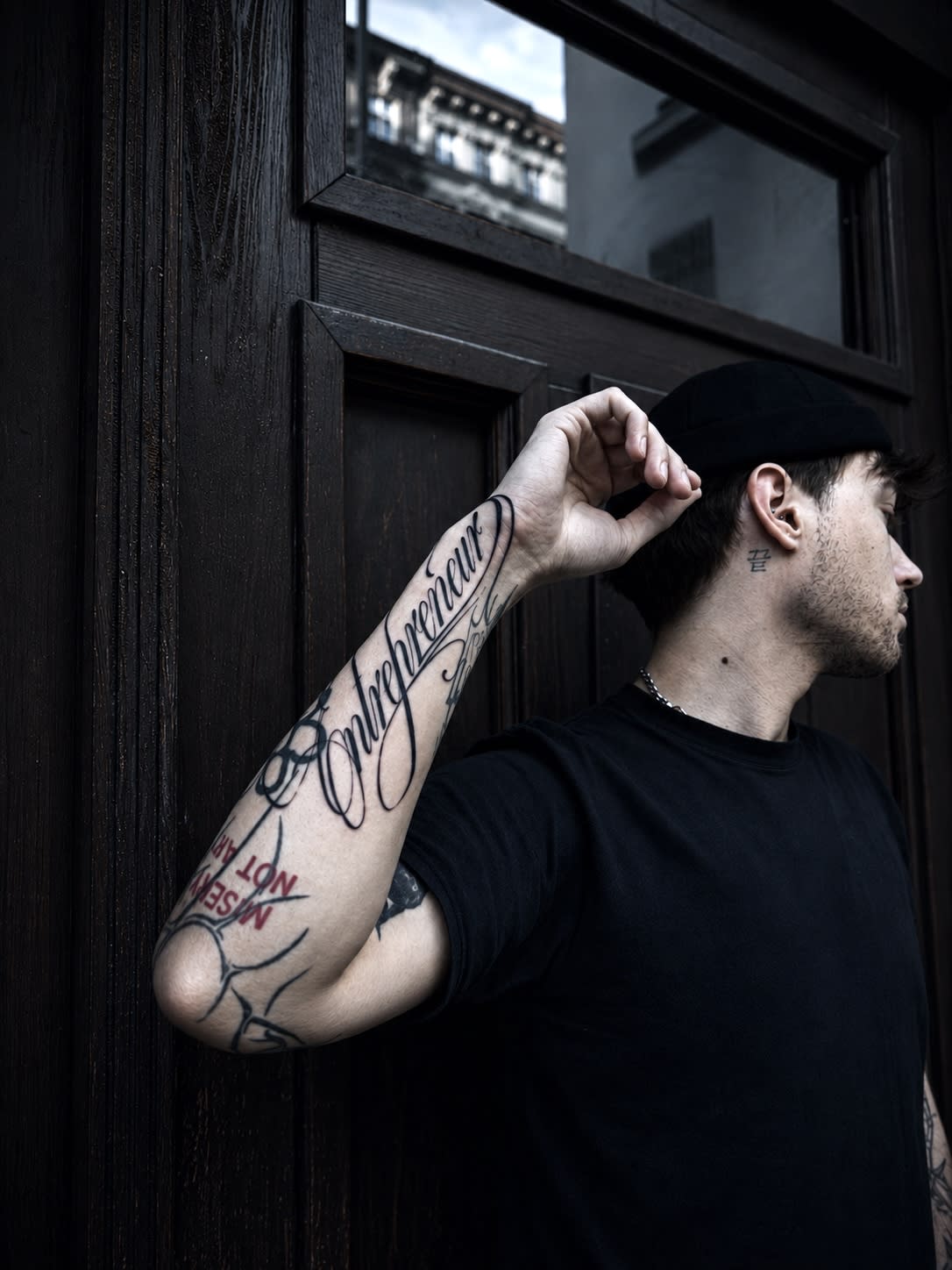
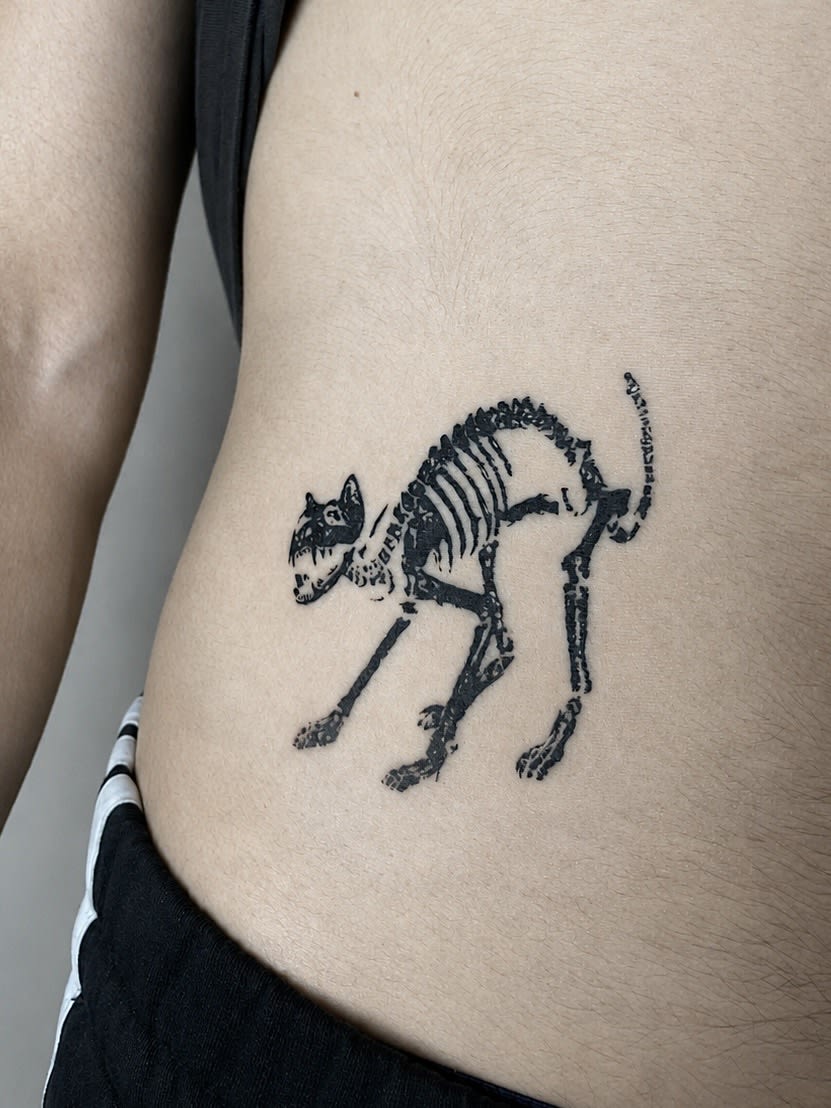

Each artist has their own specialities — see profiles and portfolios, or describe your idea in the form and we’ll match the right person.
The techniques in this gallery have their own pages — motifs, healing, prices and healed examples.
We cover old or unloved tattoos with a new design. See before-and-after transformations straight from our studio.
Practical guides by our artists — pain, aftercare and preparation. No myths, no scare stories.

Original projects waiting for an owner — each with a price and a suggested size.
The questions that matter most
Describe it in the form — we’ll suggest a style, an artist and the nearest date. The consultation and quote are free.