17 min readupdated
Tattoo by placement
Stomach tattoo — Wrocław
The stomach is the one placement where we talk not only about the design but about the next few years of your life. We rate skin stretching here at 5 out of 5 — the highest on the price list — and unlike the thigh, a stomach changes along two axes at once. Pregnancy and larger weight swings leave a clearer mark here than anywhere else.
We do not write that to discourage anyone. We write it because that one factor decides the choice of motif, the timing of the session and how the piece will look in five years. The remaining conditions here are very good: a soft base, sun practically absent, and a tattoo seen only by the people you show it to.
- 5/10
- Pain
- 21–35 days
- Healing
- 14% of pieces
- Touch-up rate
- 2–6 h
- Typical session
The first touch-up after healing is included in the price.
over 200 tattoos done5 on Google (43 reviews)
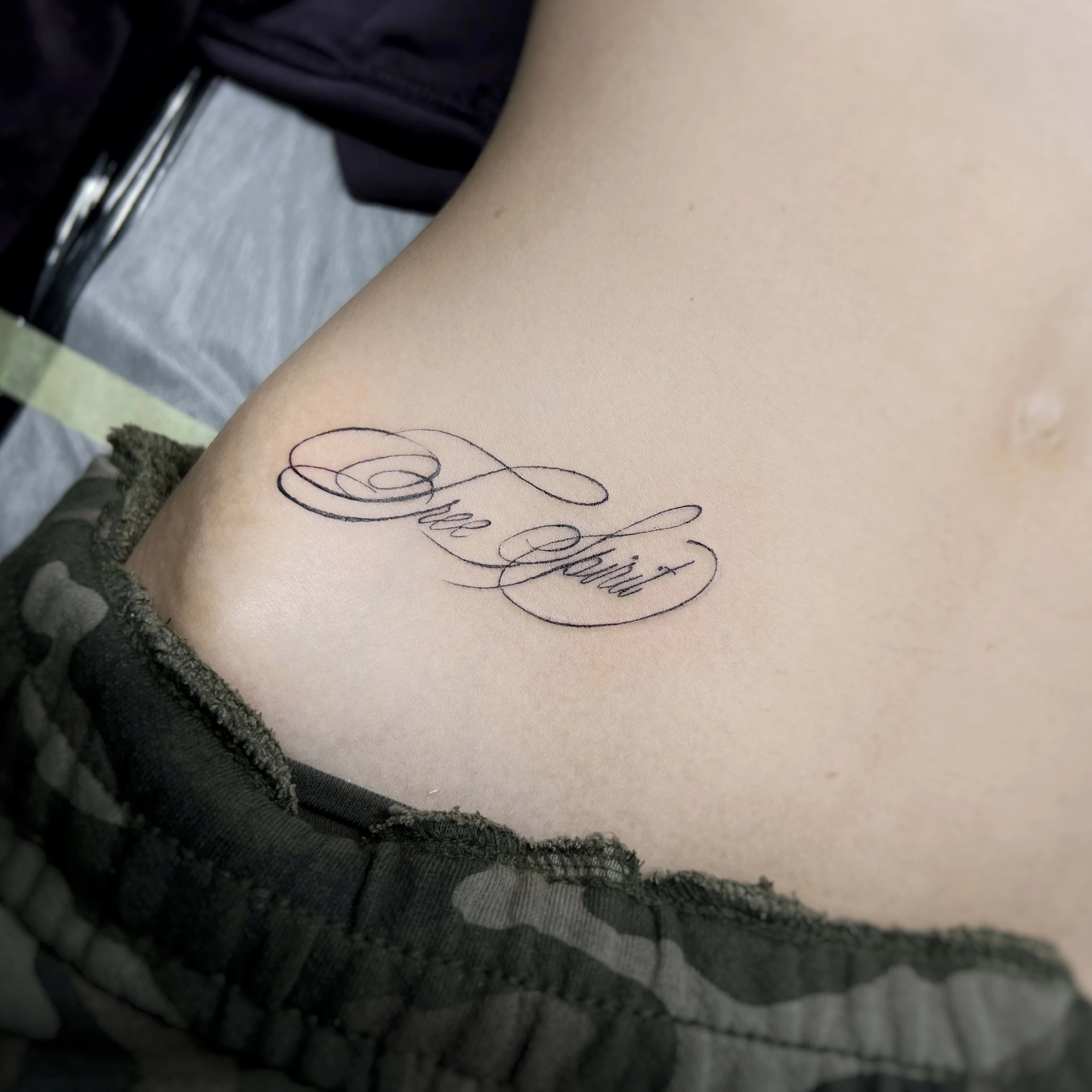
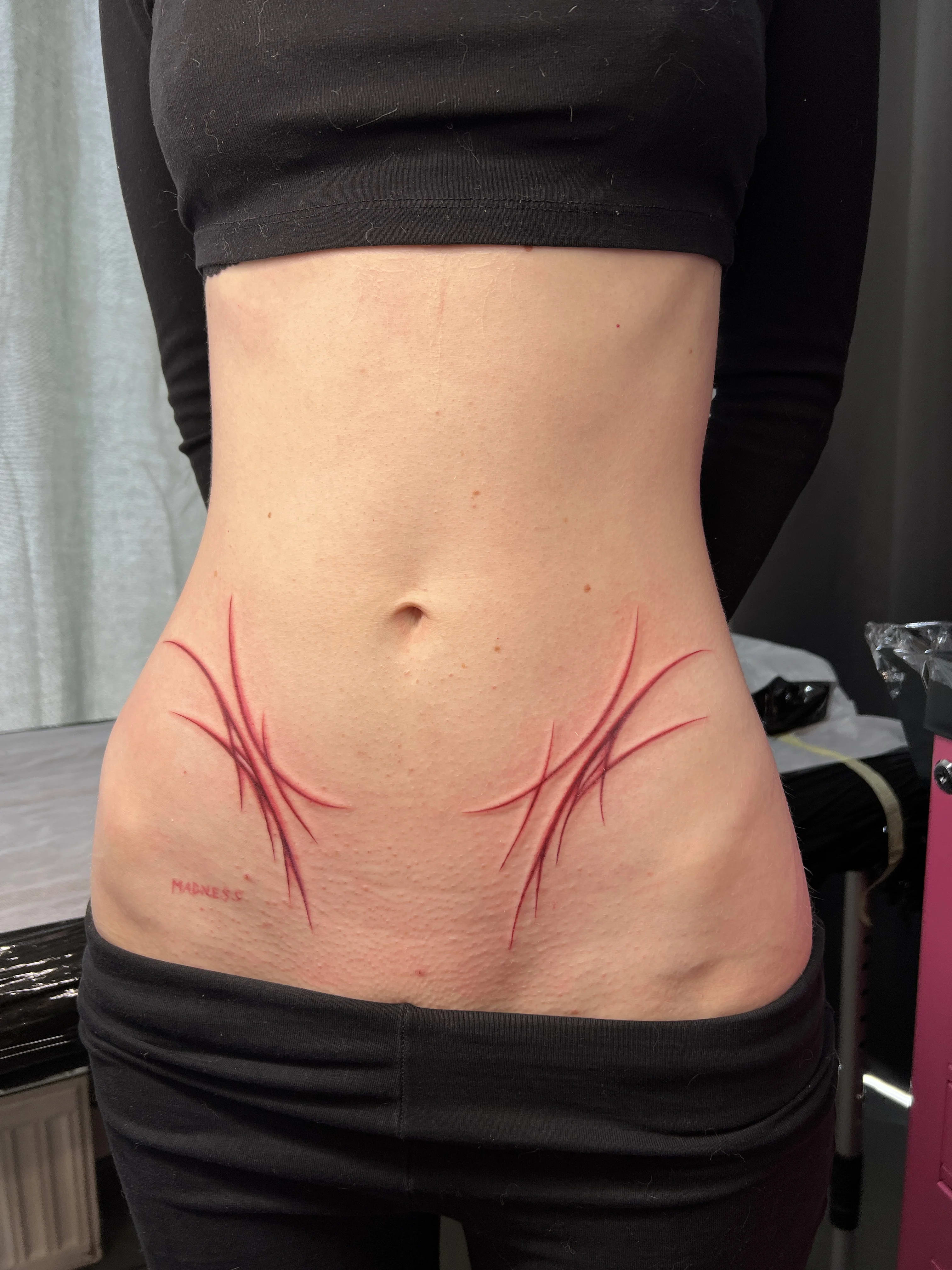
Our work: stomach
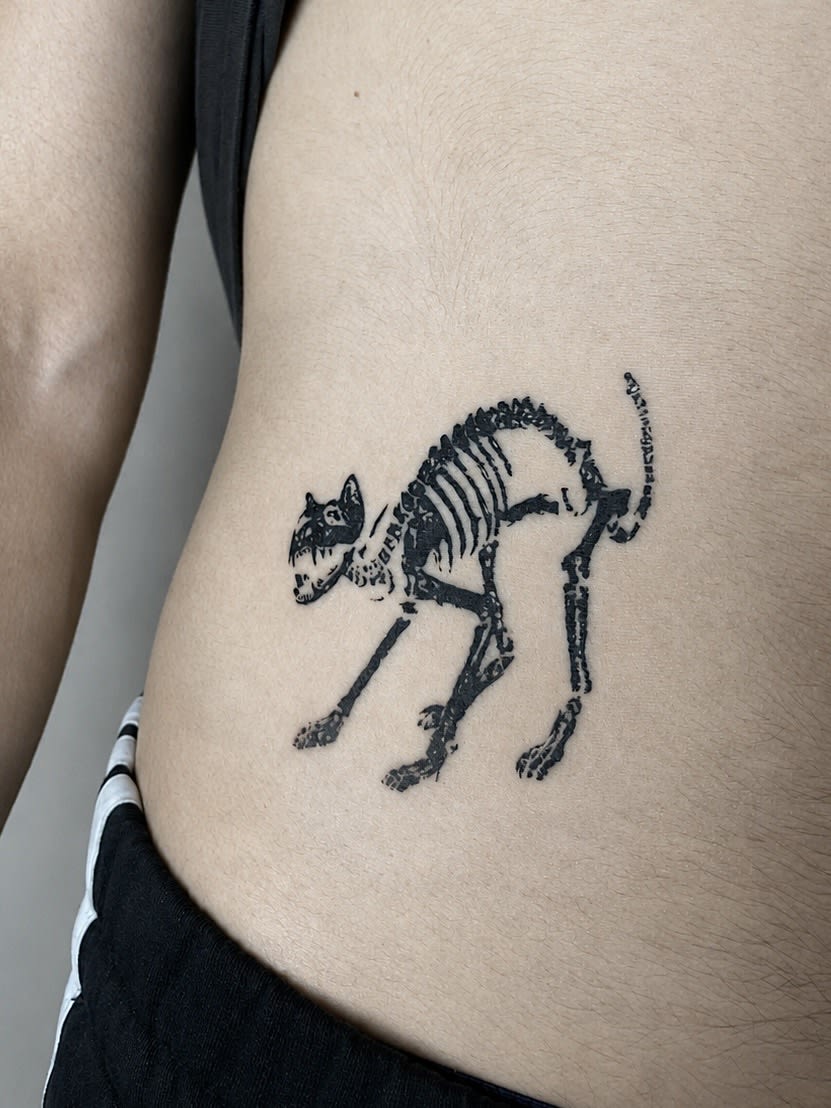
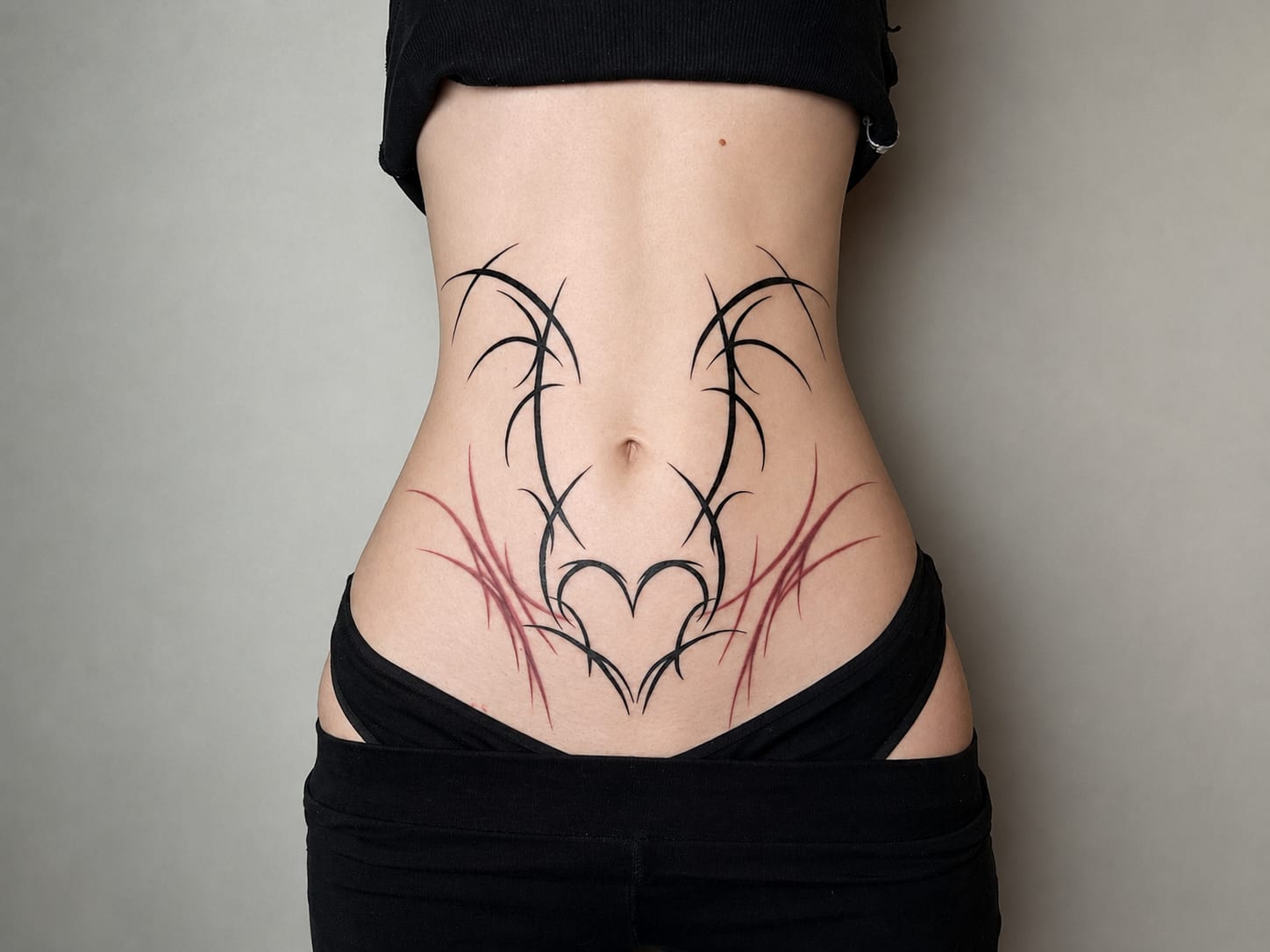
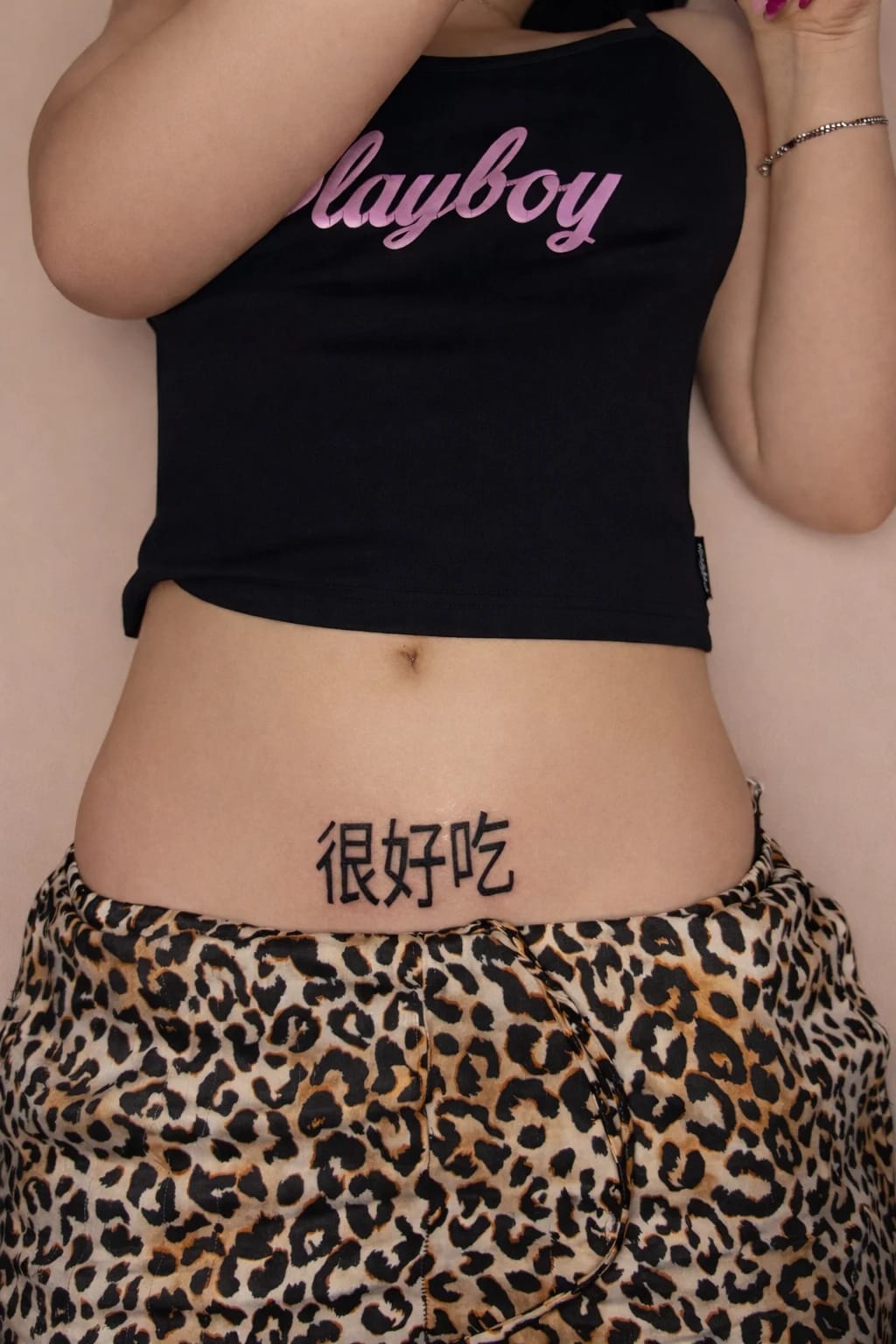
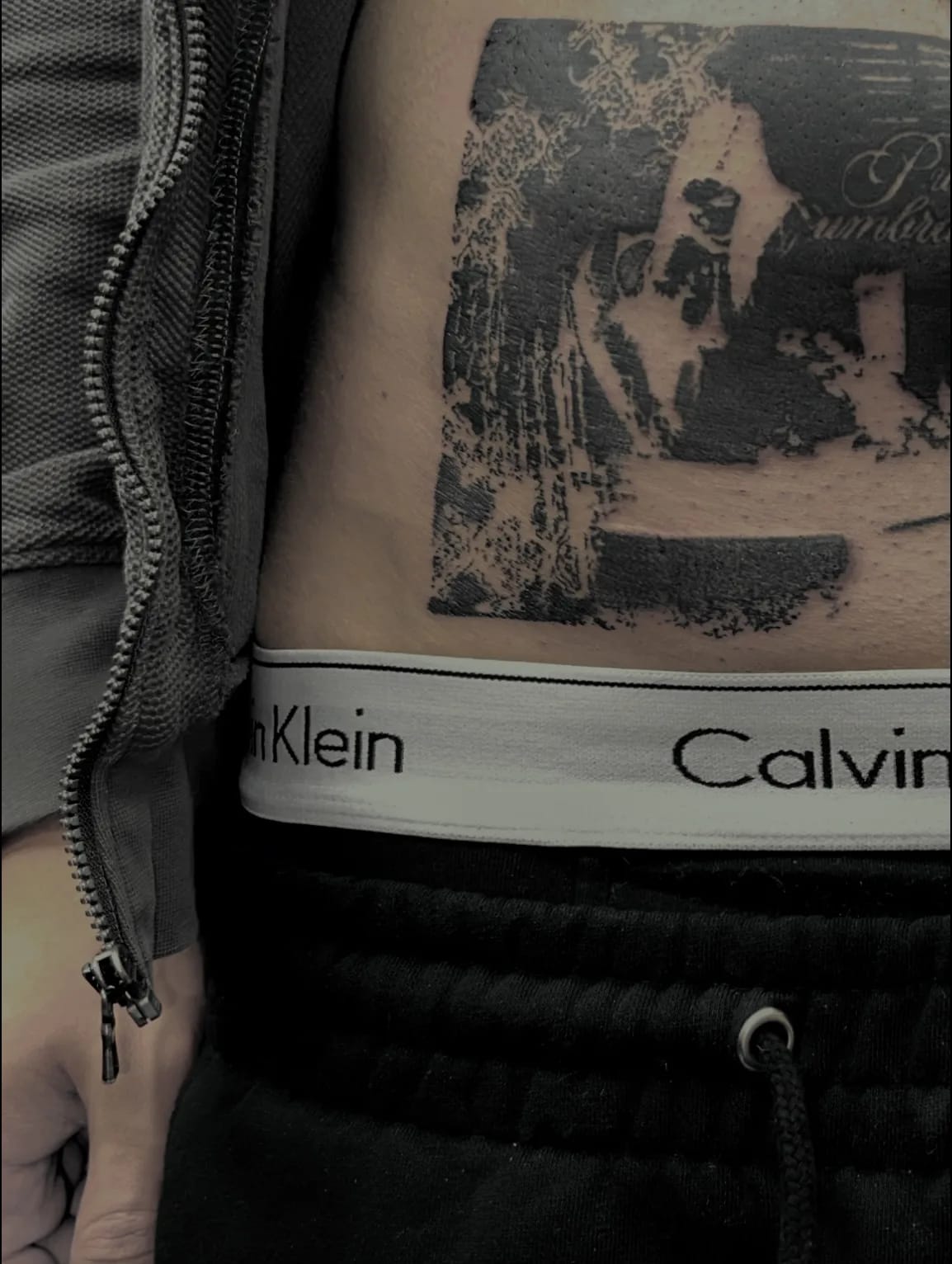

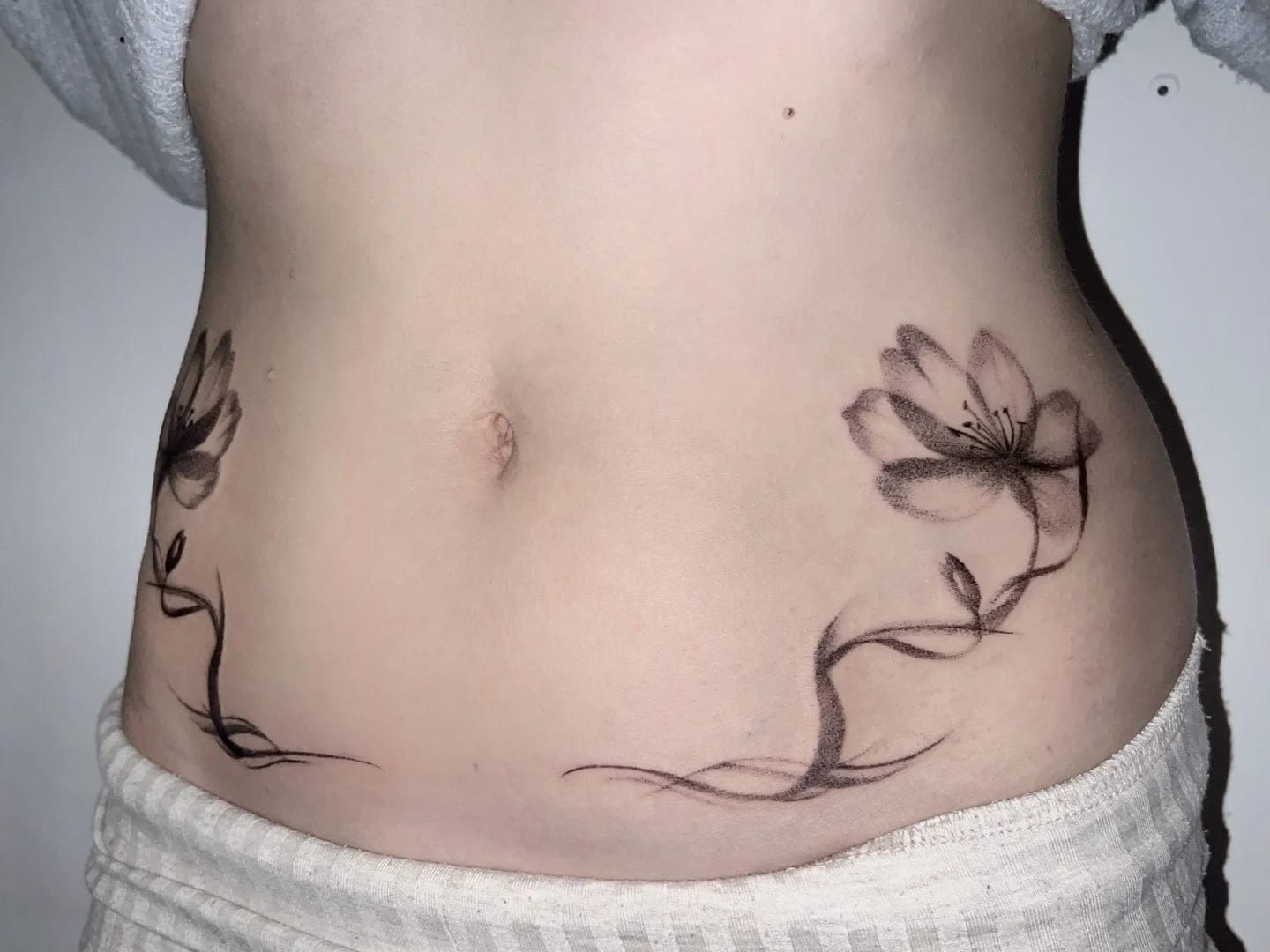
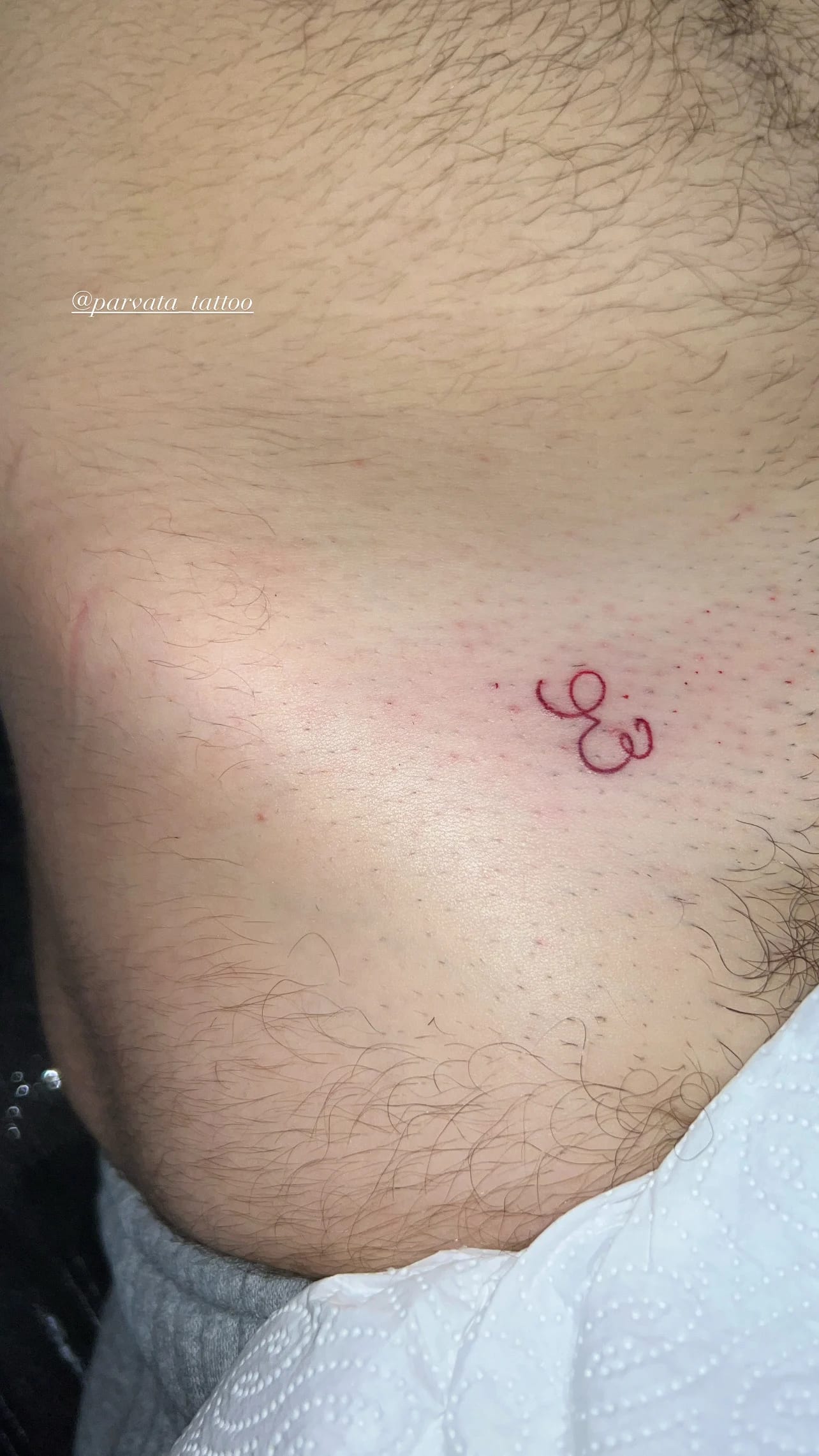
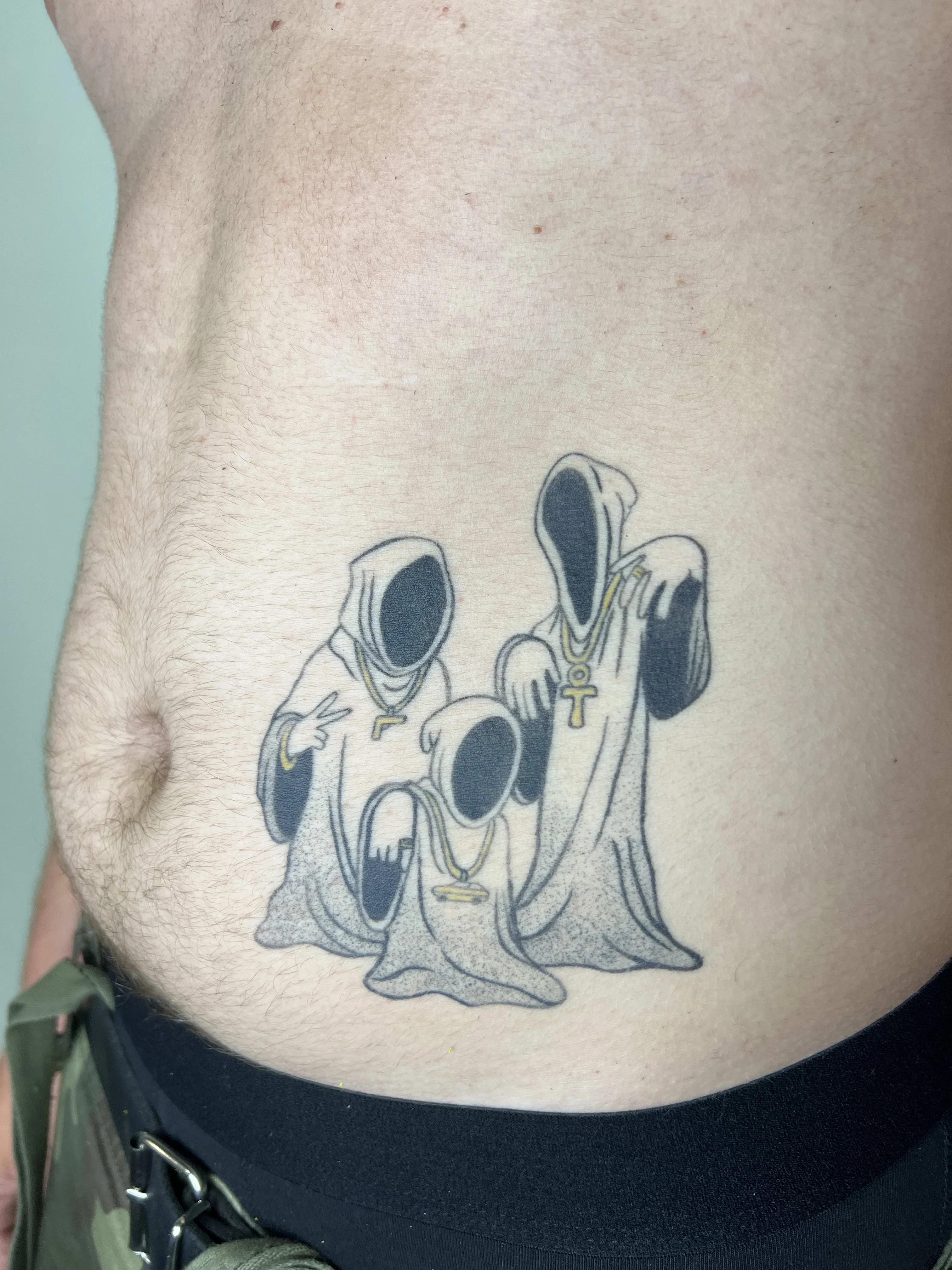
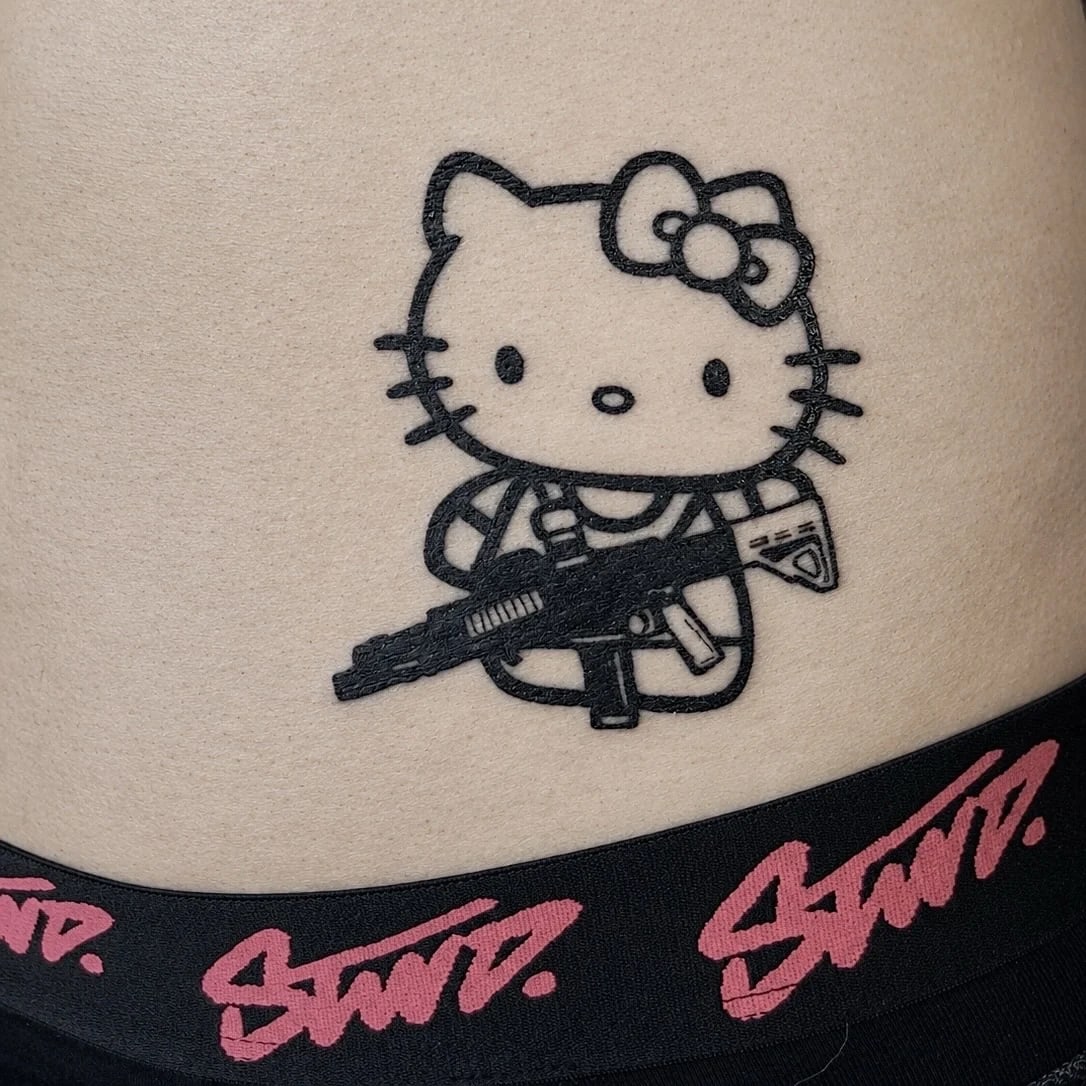
01Anatomy
A soft middle with hard edges
- moderate
- Skin thickness
- low
- Bone proximity
- moderate
- Nerve endings
The stomach has neither bone nor thick muscle beneath it — there is a wall of rectus and oblique muscles covered by a layer of fatty tissue whose thickness varies between people more than at any other placement. We rate bone proximity at 2 out of 5 and skin thickness at 3 out of 5.
That softness has one technical consequence found nowhere else: the base gives way under the needle. The skin has to be held taut by hand during the work, and across larger areas that means doing so repeatedly in different directions. It is a normal part of the session, though it can surprise someone who only knows what having an arm tattooed feels like.
The edges behave quite differently from the middle. The costal arch above, the iliac crests below — in both places bone comes close to the surface and the sensation sharpens noticeably. The same session can therefore run calmly for an hour and turn demanding the moment the design reaches the ribs.
The navel is a subject of its own and we return to it under composition. Anatomically it is scar tissue with a different structure from its surroundings — pigment behaves unpredictably on it, so we do not tattoo the navel itself.
02Pain
Five out of ten, but very uneven
- 5/10
- Pain
- moderate
- Nerve endings
- low
- Bone proximity
The stomach scores 5 out of 10, and it is one of the least accurate averages on the whole price list, because the differences within a single placement run to several levels.
The soft middle, out to the sides of the navel, is gentle — comparable to an upper arm. We rate nerve ending density at 3 out of 5, so it is not the nerves that decide. The sensation is diffuse and dull rather than sharp.
Three zones are harder: the costal arch above, the area near the iliac crests at the sides, and the lower stomach, where the skin is thinner and more sensitive. On large compositions covering the whole stomach we pass through all three, so we give warning before the session and plan the order so the most demanding areas fall early.
There is one more factor absent on limbs: reflexive tensing. A stomach tightens by itself when something hurts, and a tense stomach is harder to tattoo evenly. So we ask for calm, deep breathing and take breaks more often than on a leg — not out of courtesy, but because a relaxed abdominal wall gives a better line.
03Composition
The design runs across, and has to decide what to do about the navel
- across
- Design flow
- no
- Movement zone
The stomach is one of two placements on our price list where composition runs horizontally rather than lengthwise. The surface is wider than it is tall, symmetrical about the midline and bounded by clear edges: the ribs above, the hips at the sides.
So wide, symmetrical layouts work best here — motifs spreading to both sides from the axis of the body, band compositions running beneath the ribs, ornament emphasising the line of the hips. A tall, narrow design looks lost on a stomach, because there is no way to use the width available.
The navel is the most distinctive compositional problem we have anywhere on the body. It cannot be ignored, sitting exactly in the middle, and tattooing it is out. Three solutions remain, and we choose between them deliberately: a two-part composition that avoids the centre and spreads outwards; a design that incorporates the navel as an element, for instance as the centre of a rosette or the eye of a motif; or a piece placed entirely below it or above it.
The last decision concerns body position. A stomach looks different standing, lying down and seated, and the difference is far larger than at any other placement. We always fit the stencil standing, because that is the position the tattoo will be seen in.
04Healing
Three to five weeks with a waistband as the main problem
- 21–35 days
- Healing
- ~30 days
- Epidermis turnover
- low
- Friction
Healing takes three to five weeks, and the epidermis on the stomach renews in about 30 days. We rate friction at 2 out of 5 — low; a stomach does not work like a hand and does not rest on bedding like a back.
There is one object that spoils that calm picture, though: the waistband of your trousers. It runs exactly across the lower stomach, presses with every bend and every time you sit, and in office work stays in contact with a fresh tattoo for eight hours a day. It is the most common cause of uneven healing we see at this placement.
The second issue is bending. A stomach creases every time you sit, crouch and lean forward, so fresh skin is folded repeatedly in the same place.
- Trousers with a low, soft waistband, or joggers, for the first week — if the design reaches the lower stomach, that is a condition rather than a suggestion.
- If you work sitting down, get up more often; eight hours bent forward is eight hours of folding healing skin.
- No sit-ups or abdominal training for about two weeks — tensing stretches fresh work.
- A loose t-shirt rather than a tight one, especially with designs reaching the ribs.
- A pulling sensation on a deep breath in the first days is normal and passes.
05Longevity
No sun at all, but skin that changes
- very low
- Sun exposure
- 14% of pieces
- Touch-up rate
- very high
- Skin stretching
Sun exposure on the stomach is 1 out of 5 — the lowest, together with the ribs and the thigh. The main cause of tattoo fading is practically absent here, so in terms of colour and contrast a stomach piece ages very well.
Touch-ups affect about 14% of pieces. That is an average result and stems mainly from two things: a soft, yielding base on which even filling is harder to achieve, and pressure from a waistband during healing.
The real question about durability here, though, is not about pigment but about shape. We rate skin stretching at 5 out of 5 — the highest on the price list, tied with the thigh. The difference lies in direction: a thigh stretches mainly around its circumference, while a stomach stretches along two axes at once, vertically and horizontally. That is why a change in silhouette shows here more clearly than anywhere else.
We say so openly, because it is the only placement where we sometimes suggest postponing the appointment ourselves. If you are planning a pregnancy in the coming years, or are in the middle of a major weight change, a stomach tattoo made now may look different in two years — and it is better to hear that before the session than after.
06Risks
Pregnancy, weight and stretch marks — a conversation we do not skip
- very high
- Skin stretching
- moderate
- Blowout risk
- moderate
- Skin thickness
This is the most important section on this page, and it is deliberately not written in small print.
Pregnancy stretches the skin of the stomach to a degree that cannot be compared with any other change to the body. A tattoo made before it usually survives, but the composition may distort, and where stretch marks appear, lines crossing them are broken. How severely cannot be predicted — it depends on the skin, on how the pregnancy goes and on genetics. The most honest answer is this: if a pregnancy is in your plans for the coming years, it is worth waiting or choosing a motif that will take the change.
Which designs take it? Organic, asymmetric ones with no regular grid — botanical work, flowing motifs, compositions with an irregular rhythm. Distortion spreads evenly through them and does not catch the eye. Worst affected are geometry, mandalas, concentric circles and anything resting on perfect symmetry; there every shift shows immediately.
A large weight loss works similarly, though in the other direction: skin after significant slimming can be looser and the design loses its tension. With a planned major reduction we usually suggest waiting until the weight has settled. That is not a refusal but arithmetic: work done a year later will look better for the following twenty.
On the purely technical side we rate blowout risk at 3 out of 5. It is raised by the soft base, which has to be held taut by hand, and by thinner skin on the lower stomach and near the ribs.
07Styles
What sits well on a wide, soft surface
- moderate
- Skin thickness
- across
- Design flow
The choice of technique on a stomach is governed by the same criterion as everything else at this placement: how it will behave when the shape changes.
Organic compositions at a large scale do best — botanical work spread wide beneath the ribs, animal motifs, flowing forms, ornament with an irregular rhythm. All share the advantage of having no single pattern whose disruption would be visible.
Blackwork and large areas of solid black also work, and mask unevenness in the skin into the bargain. It is one of the few techniques that looks better with time on a stomach than fine detail does.
We are more cautious with geometry, mandalas and precise symmetry. They can be executed and on the day of the session they look superb, but they are the techniques most sensitive to stretching — and stretching here is the greatest possible. If exact geometry matters to you, a thigh or a back will give a far better result after years. We say so before the sketch, not after.
Realism comes out well on a stomach provided the scale is large and the layout horizontal — a face or a scene set wide beneath the ribs has enough room here.
08Everyday life
The most private placement we tattoo
- very high
- Coverability
- very low
- Sun exposure
Coverability on the stomach is 5 out of 5. Every t-shirt, every set of workwear and most swimwear covers it. In practice it is a tattoo known only to the person you show it to.
That changes the character of the decision just as it does with the ribs: the question of work, of reactions and of first impressions disappears, and only the question of the design remains. So the stomach more often than anywhere else receives deeply personal work — connected with the body, with change, or with a history its owner does not intend to explain to anyone.
You too will see it rarely, though differently from a back: in a mirror, looking down, in foreshortening. Worth remembering when designing, because a design made "to be seen from above" and one made "to be seen in a mirror" are two different layouts.
A healed piece asks for nothing. It needs no sunscreen outside a holiday by the water, does not interfere with sport and has no contact with anything that might abrade it.
09First tattoo
Rarely a first tattoo, and usually not because of pain
- 5/10
- Pain
- 21–35 days
- Healing
- very high
- Skin stretching
The stomach is not a bad placement for a first tattoo in terms of sensation — 5 out of 10 is the middle of the scale, and the soft centre is gentle. The reason we rarely propose it at a first visit is different.
A first tattoo should be a decision that is easy to judge two years later. On a stomach that judgement depends not only on the work but on what your body does in the meantime — and at 5 out of 5 for stretching, that is a variable not worth adding to the equation for a first piece.
There is a practical matter too. Healing with a waistband running across fresh work calls for more organisation than healing on an upper arm, and with a first tattoo there are plenty of new things at once already.
If you want to start here regardless, we suggest two things: a smaller motif rather than a large composition, and a position on the upper stomach, beneath the ribs, where stretching is distinctly lower than on the lower part. That lets you get to know your own skin without stepping straight into the most changeable area.
10Nearby placements
The stomach in the context of the whole torso
- very high
- Skin stretching
- very high
- Coverability
The stomach borders the ribs at the sides and the chest above, and all three placements share full coverability and minimal sun exposure. They differ, however, in everything to do with the base.
The ribs are the exact opposite of the stomach in terms of firmness: the thinnest skin on the price list directly over bone, pain at 9 out of 10 instead of 5, and a stable base instead of a yielding one. Pieces crossing from the stomach onto the side are common, and we then warn that the sensation will change very noticeably within one session.
The chest sits higher and is considerably more stable — stretching 4 out of 5 against 5 out of 5, and above all it is not subject to the same changes in pregnancy. If you want a large piece on the torso but worry about the durability of its shape, the chest is the safer choice.
The thigh shares with the stomach the highest stretching value, but it changes along one axis rather than two, and it has the lowest touch-up rate on the whole price list. Anyone after a large, fully coverable surface with the best durability should start there.
11Price
When to do it so you do not pay twice
- 2–6 h
- Typical session
- 14% of pieces
- Touch-up rate
With a stomach the most important cost factor is neither technical nor a matter of the price list. It is timing.
The pricing itself is ordinary: surface area, density of detail and time at the skin decide, and a session runs two to six hours here. The stomach carries a small difficulty surcharge, because a soft base has to be held taut throughout and the work goes a shade more slowly than on a thigh.
The real difference appears over several years. A tattoo made just before a pregnancy or in the middle of a large weight reduction may need compositional repair, and that can cost more than the original work, because fixing a stretched design is harder than making one from scratch. The same piece postponed by a year can therefore genuinely cost less.
That is why we ask about plans at the consultation. Not out of curiosity, and not to talk anyone out of anything — simply because at this one placement the date is part of the project. A custom design and a review after healing are included exactly as everywhere else, and we give a binding figure after a free consultation.
Nearby placements
- ribsA dozen centimetres to the side and the base goes from the softest to the hardest: skin 1 out of 5 over bone and pain 9 instead of 5. On pieces crossing from the stomach onto the side we warn that the sensation will change mid-session.
- chestThe same full coverability, but a more stable base and no changes tied to pregnancy. If you want a large torso piece and worry about the durability of its shape, start with the chest.
- thighShares the highest stretching value of 5 out of 5 with the stomach, but changes along one axis instead of two and has the lowest touch-up rate on the price list (7%). A large, fully coverable surface with the best durability.
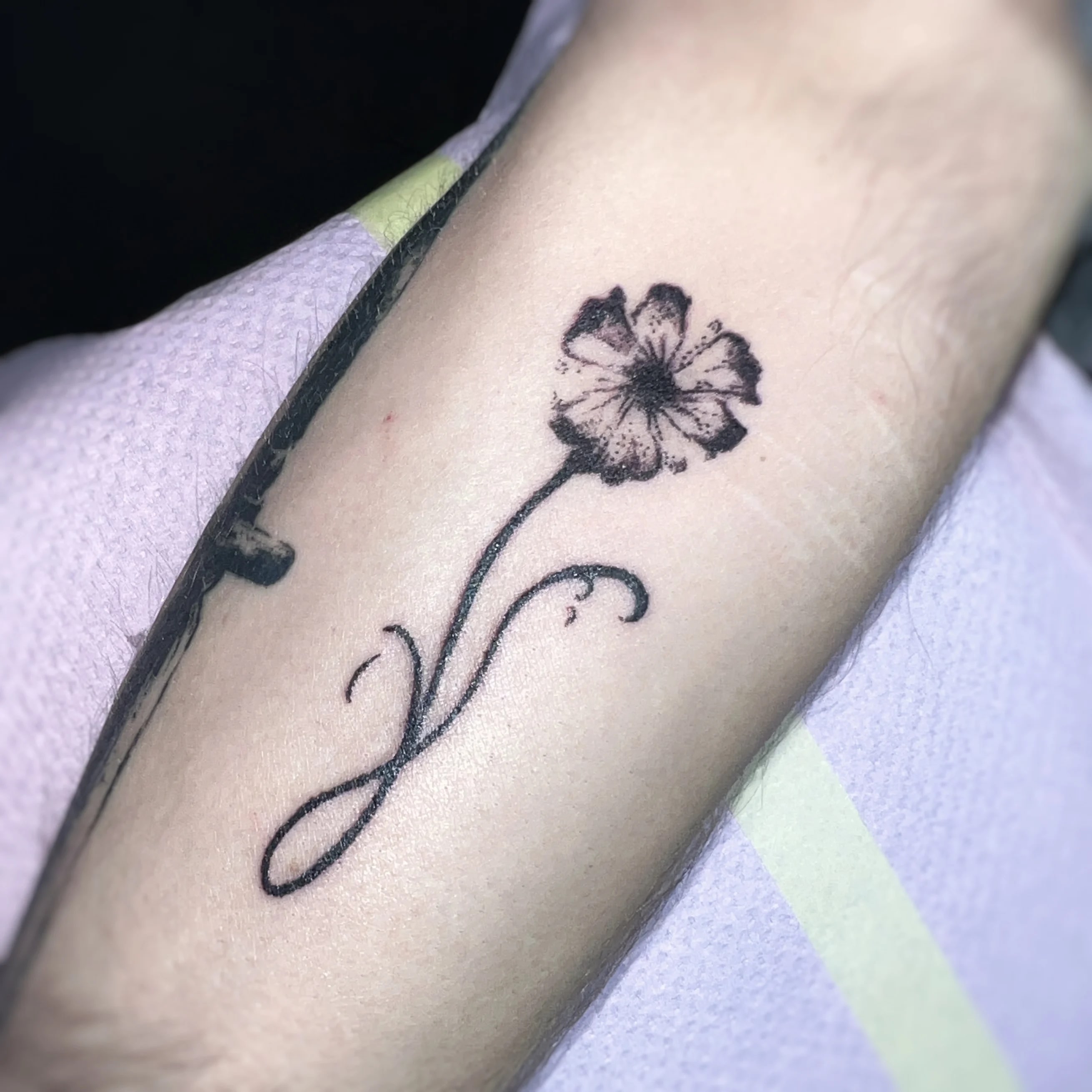
Styles that look great in this spot


Frequently asked questions
It usually survives, but the composition may distort — and we say so openly before the session rather than after. We rate skin stretching on the stomach at 5 on a five-point scale, the highest on the entire Parvata Tattoo price list, and pregnancy stretches that skin to a degree incomparable with any other change to the body. Where stretch marks appear, lines crossing them are broken. How severely cannot be predicted, since it depends on the skin, the course of the pregnancy and genetics. What does matter is the choice of motif: organic, asymmetric designs with no regular grid take the change well, because distortion spreads through them evenly. Worst affected are geometry, mandalas and concentric circles, where every shift shows immediately.
Moderately, but very unevenly — on the Parvata Tattoo scale the stomach scores 5 out of 10 and it is one of the least accurate averages on the price list. The soft middle, out to the sides of the navel, is gentle and comparable to an upper arm; the sensation there is diffuse and dull rather than sharp. Three zones are distinctly harder: the costal arch above, the area near the iliac crests at the sides, and the lower stomach, where the skin is thinner. There is also a factor absent on limbs — reflexive tensing. A stomach tightens by itself when something hurts, and a tense abdominal wall gives a worse line, so we ask for calm breathing and take breaks more often than on a leg.
We do not tattoo the navel — anatomically it is scar tissue with a different structure from its surroundings, and pigment behaves unpredictably on it. Since it sits exactly in the middle of the available surface, it cannot be ignored either, and it is the most distinctive compositional problem anywhere on the body. Three solutions remain, and we choose between them deliberately at the sketch stage. The first is a two-part composition that avoids the centre and spreads outwards. The second is incorporating the navel as an element of the design — as the centre of a rosette, say, or the eye of a motif. The third is placing the whole piece below or above it. The choice affects the entire layout, so it is settled before the drawing, not during it.
Three to five weeks, and the epidermis in this area renews in about 30 days. We rate friction at 2 on a five-point scale, which is low, because a stomach does not work like a hand and does not rest on bedding like a back. That calm picture is spoiled by one object, though: the waistband of your trousers. It runs exactly across the lower stomach, presses every time you sit, and in office work stays in contact with fresh work for eight hours a day — it is the most common cause of uneven healing we see here. That is why for the first week we ask for trousers with a low, soft waistband, or joggers. Abdominal training is worth setting aside for about two weeks.
Wide and horizontal. The stomach is one of two placements on the Parvata Tattoo price list where composition runs across rather than lengthwise — the surface is wider than it is tall, symmetrical about the midline and bounded by the ribs above and the hips at the sides. Layouts spreading to both sides from the axis of the body work best, along with band compositions beneath the ribs and ornament emphasising the line of the hips; a tall, narrow design looks lost here. In terms of technique, organic motifs at a large scale win, as does blackwork, which additionally masks unevenness in the skin. We avoid geometry and precise symmetry, because those are the techniques most sensitive to stretching.
Completely — we rate coverability at Parvata Tattoo at 5 on a five-point scale. Every t-shirt, every set of workwear and most swimwear covers it, so in practice it is a tattoo known only to the person you show it to. On top of that comes the lowest possible sun exposure, 1 out of 5, meaning the main cause of fading practically does not act here and the piece keeps its contrast for a very long time. It is worth knowing, though, that you too will see it rarely and always in foreshortening — looking down, or in a mirror. A design made to be seen from above and one made to be seen in a mirror are two different layouts, so we settle that before the sketch.
More about the studio
Related searches
Have an idea for a tattoo in this spot?
Book a free, no-obligation consultation — we will match an artist and design the motif for your body.