Does a Tattoo Hurt? A Pain Map, Proven Tips and Advice from Wrocław Tattoo Artists
It's probably the most common question we hear at our studio before anyone even sits down in the chair. Does a tattoo here hurt? The answer isn't simply yes or no — because the truth is more nuanced and depends on many factors worth knowing before your first session. In this article we explain, without beating around the bush, what you can really expect. We'll go through the scale and map of tattoo pain, point out the places where a tattoo hurts most and where it hurts least, and suggest how to prepare your body and mind so the whole session is as comfortable as possible. This is knowledge from a practitioner's perspective — dozens of hours spent with the machine in hand and hundreds of conversations with people for whom it was their first tattoo ever.

Does a tattoo hurt? The short answer
Yes, getting tattooed involves pain — it would be dishonest to claim otherwise. The needle repeatedly punctures the skin, introducing pigment into the dermis, so feeling some discomfort is natural and can't be completely eliminated.
The good news, however, is that in the vast majority of cases the pain that comes with tattooing is bearable. After the first session most of our clients say the same thing: I expected it to be worse. The human brain tends to exaggerate the unknown, and the real sensations turn out to be less dramatic than the imagination.
The feeling is most often described as scratching, burning or a slight stinging — something like dragging a sharp fingernail over a scratch, or the sensation of a hot cat scratching the skin. The intensity depends mainly on the body area, the size and design of the tattoo, and your individual pain threshold.
It's also worth remembering that the discomfort during tattooing isn't constant. After a while the body gets used to the stimulus, endorphins are released and many people fall into a kind of rhythm in which the pain fades into the background.
What tattooing pain depends on
There's no single universal answer to the question does a tattoo hurt, because the final sensations are made up of several independent variables. Understanding them helps you consciously plan the project and choose both the placement and the size so the experience is as comfortable as possible.
The anatomy of the area we tattoo is crucial. Where the skin is thin, lies close to the bone and is densely innervated, the pain will be stronger. Where there is more fatty tissue or muscle to cushion the needle's work, the sensations are milder.
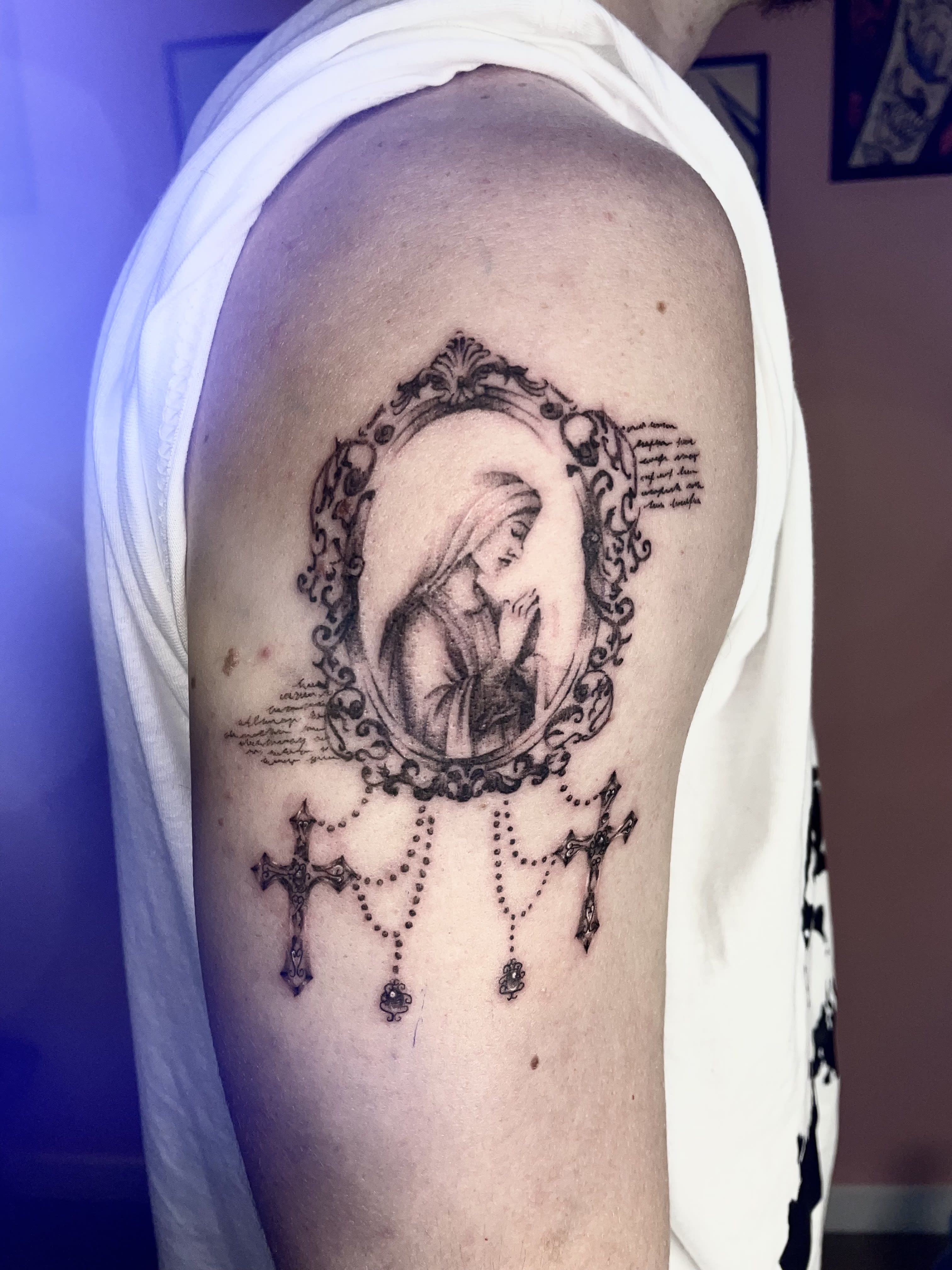
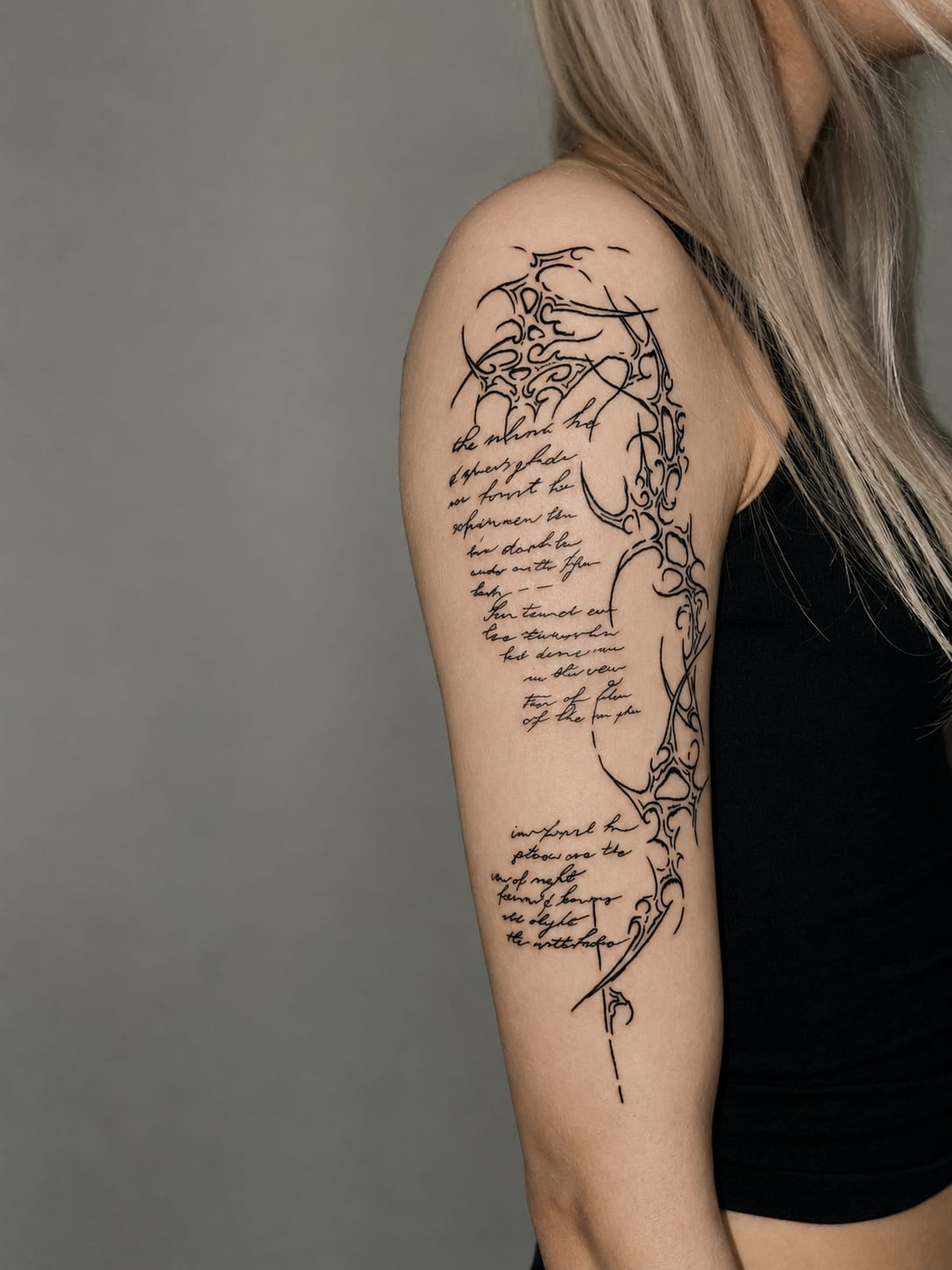
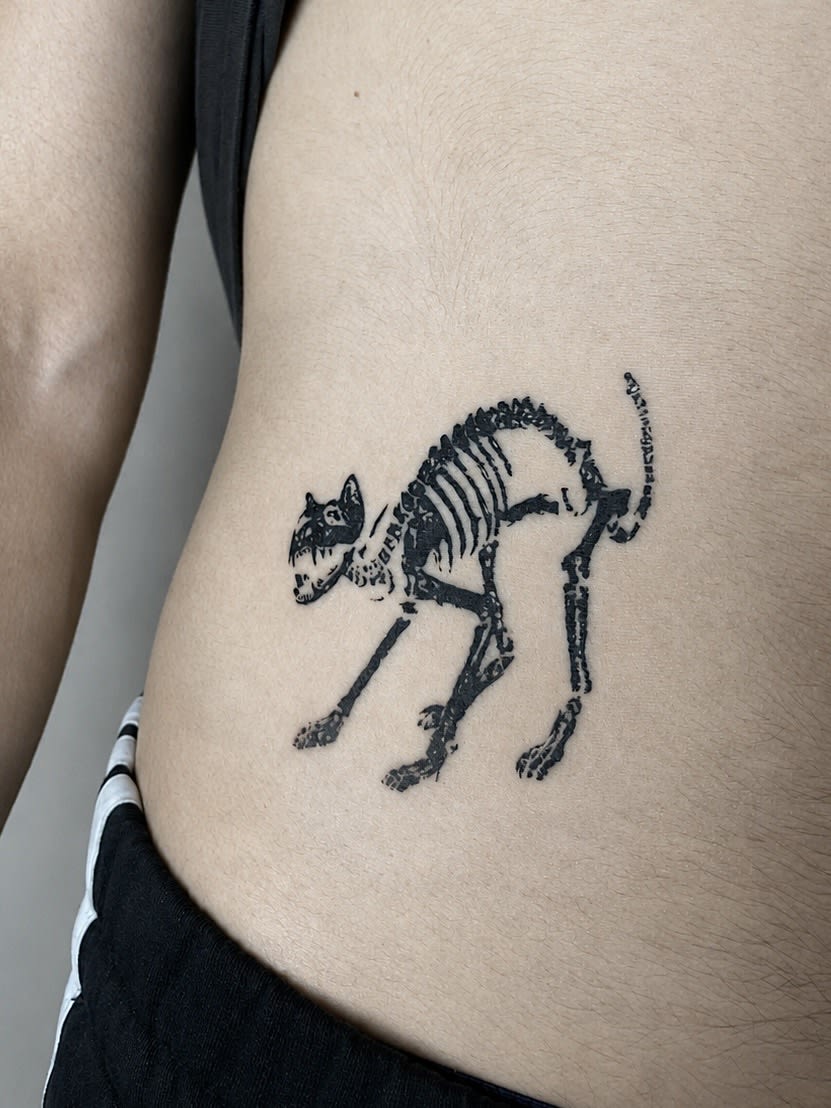
The technique and the design itself also matter. A large, heavily filled Blackwork piece will require longer work on the same fragment of skin than a subtle, thin Fineline. The longer the needle works in one place, the more irritated the skin becomes.
- Body location — the thickness of the skin, the amount of fatty tissue, proximity to bone and the density of nerve endings
- Individual pain threshold — a very personal matter, differing even between people of similar build
- Size and design of the tattoo — larger, heavily shaded projects mean longer work on the skin
- Length of the session — the longer the tattooing lasts, the more fatigue and sensitivity build up
- General condition of the body — hydration, sleep, stress levels and what we ate before the visit
- The artist's experience — a confident, smooth hand and well-chosen equipment genuinely reduce discomfort
The scale and map of tattoo pain
Among tattoo artists there's a concept of the so-called tattoo pain map — an approximate division of the body into zones of varying sensitivity. It's an illustrative tool, not a rigid rule, because every body reacts differently. Even so, it gives a very useful point of reference, especially when you're planning a first tattoo and don't know what to expect.
The principle governing this map is fairly simple. Pain is greater where the skin is thin and lies directly on bone, where there are many nerve endings and in particularly mobile areas. Pain is lesser where the skin is underlaid by a layer of muscle and fatty tissue that cushions the needle's work.
By convention, pain during tattooing can be rated on a scale from one to ten. Places such as the outer arm or the forearm rank low, around three to four. Ribs, ankles or the inner arm can reach eight to nine. It's worth emphasising that these are averaged values — your map may look a little different.
The tattoo pain map is also a great tool for talking to your artist. If you dream of a specific motif but in a very sensitive zone, a good artist will help you assess whether it's worth splitting the project into stages or gently shifting its position without losing aesthetics.
Where a tattoo hurts most – the most sensitive places
The question of where a tattoo hurts most comes up in conversation almost as often as does a tattoo hurt itself. The answer here is fairly consistent between people, because it follows directly from anatomy — thin skin, bone just beneath and a large number of nerve endings are a recipe for more intense sensations.
Ribs are a classic at the top of this list. The skin there is very thin, there's practically no fatty tissue, and every breath moves the chest, making the pain distinct and hard to fully relax through. It's a similar story with the sternum and the area under the bust.
Other sensitive regions are the feet and ankles, where the skin sits directly on bone and tendons, and the inner elbow and armpits — areas that are densely innervated and rarely exposed to stimuli. The it hurts a lot group also includes the neck, spine, inner thigh and, understandably, intimate areas.
It's worth mentioning the hands and fingers here — thin skin, plenty of nerve endings and constant mobility make tattooing there quite demanding. On top of that comes the difficult healing of a tattoo in places we often wash and use.
- Ribs and sternum — thin skin, no cushioning, movement while breathing
- Feet and ankles — skin right on bone, tendons and numerous nerve endings
- The inner elbow and armpits — rarely irritated, very sensitive areas
- Neck and spine — thin skin close to the vertebrae and large nerve trunks
- Inner thigh and intimate areas — delicate skin and high sensitivity
- Hands and fingers — thin skin, mobility and difficult tattoo healing
Where a tattoo hurts least – places recommended for a first tattoo
If you're looking for an answer to where a tattoo hurts least, look to where muscle and fatty tissue form a natural cushion beneath the skin. These are the zones we most often recommend to people getting a first tattoo who want to get used to tattooing without jumping in at the deep end.
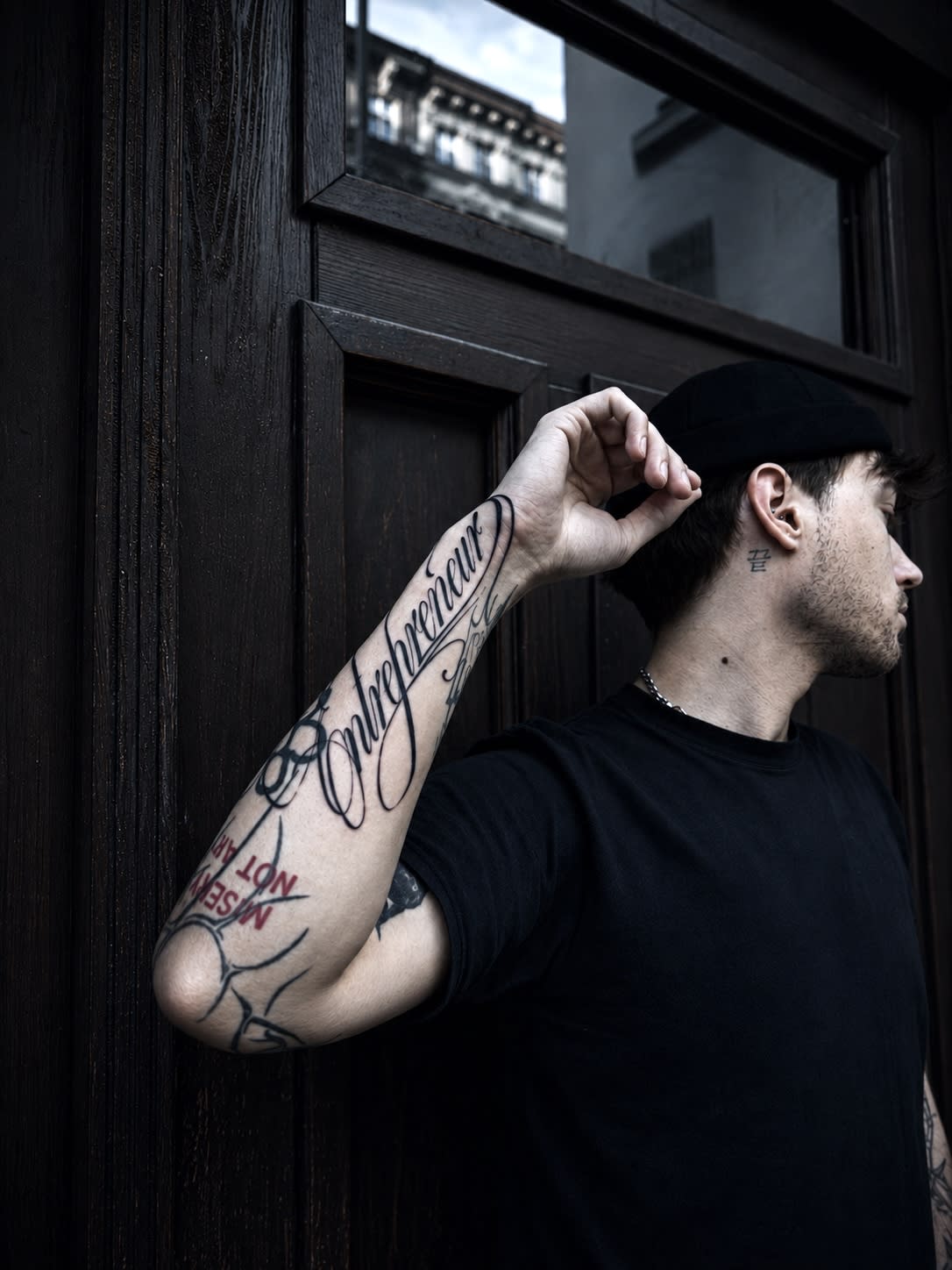
The forearm, especially its outer side, is one of the most comfortable areas. The skin here is relatively thick, and the muscle base cushions the needle's work well. It's also a great spot visible to the owner, which can be an added bonus for a first project.
The outer arm, i.e. the biceps and shoulder area, is also among the mild ones. The calves and thighs work similarly — a large muscle mass and fatty tissue mean the discomfort during tattooing there is usually moderate. These are good placements for larger, more elaborate designs.
It's worth remembering that even in these mild zones there are more sensitive points — for example the inner arm or the area around the knee. The general rule still holds, however: the more muscle and soft tissue, the easier it is to endure a longer session.
- The outer forearm — thick skin, good cushioning, convenient access
- The outer arm and shoulder — mild sensations, great to start with
- Calves — plenty of muscle, moderate pain, room for larger designs
- Thighs, especially the outer side — lots of soft tissue and space for a design
- The upper back and shoulders — relatively thick skin with a good base
How to prepare for a session to reduce pain
Proper preparation can genuinely affect how you experience the whole procedure. A body that's rested, fed and hydrated handles tattooing far better than one that's stressed and weakened. These are details, but together they make a big difference.
Start with sleep — a well-rested person has a higher pain threshold and a steadier mind in the chair. On the day of the session eat a solid but not heavy meal a few hours before the visit, to keep a stable blood sugar level. A drop in energy during a long session can intensify the sensation of pain and cause weakness.
Hydration is a topic not to be underestimated. Well-hydrated skin is more elastic and takes pigment better, and you feel steadier throughout the session. Drink water both in the days leading up to the visit and during it.
A separate matter is alcohol before a tattoo — it's one of the most important don'ts. Alcohol thins the blood, increases bleeding, makes the artist's work harder and worsens the quality of tattoo healing. On top of that, it doesn't numb the way some think — it can even heighten sensitivity the next day. Give it up for 24 hours before the visit too.
- Get enough sleep — fatigue lowers the pain threshold and makes it harder to relax
- Eat a full meal a few hours before the session
- Take care of hydration in the days before the visit and during it
- Skip alcohol before the tattoo — at least 24 hours in advance
- Wear comfortable, loose clothing that exposes the tattooed area
- Bring something to drink and a light snack for a longer session
- Avoid excess caffeine, which can increase tension and trembling
Ways to ease the pain during tattooing
Although pain can't be switched off completely, there are a few proven ways to genuinely ease it. The most important tool, however, is in your head — attitude and breathing can do more than you'd think.
Conscious, calm breathing helps relax the muscles and lower tension. When you tense your body in anticipation of pain, you paradoxically feel it more. It's worth focusing on even, deep breaths, listening to music or talking with the artist to distract yourself from the stimulus.
During longer sessions, don't be afraid to ask for a break. A short moment to drink water, stretch and catch your breath can reset the sensation of pain and let you finish the work in better shape. A good artist senses when such breaks are needed, but don't hesitate to ask for them.
A separate topic is numbing creams. Lidocaine preparations can reduce the sensations, especially in very sensitive areas, but their use has its limitations. The numbing works temporarily, can change the consistency of the skin and affect the needle's work, so always consult this idea with the artist before applying anything. In many cases it simply isn't necessary.
- Breathe evenly and deeply — muscle tension increases pain
- Distract yourself — conversation, music, a podcast or an audiobook
- Ask for breaks during longer sessions
- Consider numbing creams only after consulting the artist
- Break a large project into several shorter sessions
- Don't come hungry or hungover — that intensifies discomfort
Outline or shading – which hurts more
A common question is which stage of tattooing is more demanding: the line or the fill. The answer depends on the technique and personal sensitivity, but some patterns can be pointed out.
Doing the outline is usually a sharp, distinct feeling of dragging across the skin — the needle works precisely along a single line. For many people this is the most stinging moment, but also a relatively short one on a given fragment.
Shading and filling in areas is a different sensation — more diffuse, resembling burning or chafing. It isn't as pinpoint-sharp as the outline, but it spreads over a larger surface and lasts longer, so the irritated skin becomes more and more sensitive. In heavily filled styles like Blackwork, this stage is often the most tiring.
Delicate techniques such as Fineline or Dotwork rely on subtle needle work and are often described as gentler, although the precision and attention to detail can lengthen the session. Ultimately, what hurts more is an individual matter — which is why it's worth discussing the work plan with the artist before starting.
How long does a tattoo hurt afterwards and how to care for a fresh tattoo
The pain doesn't end the moment the artist puts down the machine — a fresh tattoo is essentially a wound that makes itself felt for a few days. This is a completely normal stage and there's no cause for concern, as long as it proceeds calmly.
For the first 24 hours the area can be tender, sting slightly and resemble a graze or a mild sunburn. Over the following days itching and skin peeling appear — a sign that tattoo healing is on the right track. The most noticeable spots tend to be those that are sensitive anyway, like ribs or feet, and those that move a lot, such as elbows.
The key to comfortable healing is proper tattoo aftercare. A fresh design has to be washed gently, its peeling scabs left alone, and protected from the sun and from bathing in water where infection is easy. We always give detailed instructions after the session, and you'll find more tips in our separate aftercare article and in the FAQ section.
If the pain intensifies instead of subsiding, and strong redness, swelling, discharge or fever appears, contact the studio or a doctor. Such symptoms are rare, but shouldn't be dismissed.
- Wash the tattoo gently with lukewarm water and a mild product, no scrubbing
- Apply a thin layer of the recommended product — don't overdo the amount
- Don't pick at peeling scabs or flaking skin
- Avoid sun, sunbeds, pools and long baths during healing
- Wear loose clothing so as not to irritate the fresh tattoo
- Watch the area and react if symptoms intensify
Pain versus gender, pain threshold and individual factors
There's a belief that one gender tolerates tattooing better than the other, but reliable observation contradicts this. The pain threshold is a deeply individual trait and can't be predicted based on gender. We see both men who go pale and ask for a break, and women who calmly doze through multi-hour sessions.
How we feel pain is influenced by many factors: genetics, current stress levels, fatigue, hormones and even past experiences. In women, sensitivity can fluctuate depending on the phase of the cycle, which is why some plan their session for the days they feel best.
Body build also matters, but not as unambiguously as it might seem. More fatty tissue in a given area usually softens the sensations, but what counts above all is the local anatomy — the thickness of the skin and the density of nerve endings in a specific place.
It's not worth comparing yourself to others or stressing over friends' stories. Your experience will be your own. The best thing you can do is arrive rested, trust the artist and let your body adapt to the stimulus — and it really can do so faster than you'd expect.
Where to get a tattoo in Wrocław – choosing a trusted studio
The final comfort of the whole procedure is hugely influenced by who you entrust yourself to. An experienced artist works confidently and smoothly, chooses the right equipment and pace, and can also read the client's body signals. All of this genuinely translates into less discomfort during tattooing and better tattoo healing.
When choosing a tattoo parlour, pay attention to hygiene, the sterility of single-use needles, the transparency of the rules and the artists' portfolios. A good tattoo studio in Wrocław offers a calm consultation where you'll discuss the size and design of the tattoo, its placement and what you can expect in terms of sensations. Don't be afraid to ask — a professional will gladly dispel any doubts.
At our studio in Wrocław we work in various styles — from bold Blackwork, through subtle Dotwork and delicate Fineline, to Cover Up projects that mask older tattoos. We also do permanent eyebrow makeup. If you're looking for inspiration, take a look at the Designs and Portfolio sections, and you'll find answers to the most common doubts in the FAQ section.
Wrocław has a really rich tattoo scene, and it's worth taking a moment to find an artist whose style harmonises with your vision. A well-chosen artist means not only a nicer result but also a calmer session — and with a first tattoo, that calm is priceless.
Numbing cream before a tattoo — the facts, minus the marketing
Lidocaine numbing creams exist, they work and they have their place — but so many myths have grown around them that some order is due. Let's start with a fact: properly applied cream can significantly dull the pain of the first hour or two of a session, especially on sensitive spots like the ribs or sternum.
There are three catches. First, timing: the cream usually needs to go on 45–60 minutes before the session under occlusion (film), so it's a planned decision, not a spontaneous one. Second, the skin: some products change its texture — it turns spongy, which can make fine-line work harder. Third, duration: the numbing wears off during a longer session, and the pain then lands on 'unwarmed' skin, which some clients find worse than easing in gradually from the start.
Our practice: for short sessions in mild spots, cream is overkill — adrenaline handles it faster. For long sessions on sensitive zones — talk to us at the consultation and we'll advise on the product and timing, instead of guessing from forums.
What definitely not to do: alcohol 'for courage' (it thins the blood and worsens pigment uptake), painkillers with ibuprofen or aspirin before the session (they thin the blood too), and home experiments with ice (constricted vessels mean worse ink uptake). Courage in a cream — yes; courage in percentages — no.
The session timeline — how pain changes minute by minute
Tattoo pain isn't a flat line but a curve with a plot — and knowing its course is half the comfort. Act one, the first 10–15 minutes: the psychologically worst moment, because the body is still calibrating its response. The good news: that's exactly when adrenaline kicks in, a natural buffer thanks to which most clients say after a quarter of an hour, 'oh, so that's all?'.
Act two, mid-session: the plateau. The body adds endorphins and the pain settles at a level of 'I feel it, but it works'. It's the longest and calmest part — playlists, conversations and scrolling all happen here.
Act three, the last half hour of a longer session: the endorphins run out, the skin is already irritated and the same needle passes feel stronger. That's not weakness — that's biochemistry. That's why experienced artists leave the gentler areas for the end and do the hard fills mid-session, in the endorphin window.
The practical takeaway: don't judge the whole session by the first five minutes or the last ten. And another: breaks work — a short reset with water and a snack can wind the pain curve back by half an act.
Fear of pain versus reality — the psychology of the first needle
Here's the industry's best-kept secret: the fear of tattoo pain is almost always bigger than the pain itself. The imagination, fed by clips and the story of a friend who 'nearly fainted', builds a horror script — then reality arrives and turns out to be a drama series with a light shiver.
The phenomenon has its mechanics: anticipating pain activates the same brain areas as real pain, so by waiting a week for the session and catastrophising, you're treating yourself to free pre-release suffering. A pain loan nobody asked for.
What really helps according to our clients: arrive well rested (fatigue lowers the pain threshold more than anything else), eat properly (a sugar dip means shivers and spots before the eyes, mistaken for a pain reaction), breathe normally (holding your breath tenses the whole body) and — seriously — don't watch the needle for the first minutes if that's hard for you.
Our observation from hundreds of sessions: the loudest about pain are those who don't have a tattoo yet. Those who do talk about their next appointment.
Things you hear from the chair — anecdotes that teach
After years of work every studio has its collection of stories — here are three of our favourites, each with a practical moral.
Story one: a client, a mountain of muscle, announced that 'pain is an abstraction' to him. At the outline on his ribs he asked for a break after eight minutes. The same day a petite client sat through three hours of shading on her sternum, reading an e-book. The moral: muscle mass is not a unit of pain resistance — mindset and sleep are.
Story two: the oldest known tattoo owner, Ötzi the Iceman, wore sixty-one of them — made over five thousand years ago, most likely for therapeutic purposes, without a machine, without sterile needles and, certainly, without lidocaine cream. The moral: if it was possible in the Copper Age, you'll manage in a comfortable chair in an air-conditioned studio on ul. Poświęcka for sure.
Story three: the modern tattoo machine owes its life to… Thomas Edison. His electric pen for copying documents from 1876 was reworked fifteen years later by Samuel O'Reilly into the first patented tattoo machine. The tongue-in-cheek moral: next time the needle buzzes, remember you're technically signing under Edison's invention — just more permanently.
Frequently asked questions
The most sensitive areas have thin skin lying close to bone and densely innervated. Where a tattoo hurts most includes above all the ribs, feet, ankles, inner elbow, neck, spine and intimate areas. The sensations are stronger there because there's no fatty tissue to cushion the needle's work.
It's very individual, but the outline is usually felt as a sharper, pinpoint dragging across the skin, while shading resembles diffuse burning. Shading takes longer and covers a larger area, so with elaborate, heavily filled designs it can be more tiring. It's best to discuss the work plan with the artist before the session.
It's most often compared to scratching the skin with a fingernail over a graze, a slight burning, or a feeling of heat resembling a mild sunburn. In mild spots, like the forearm or arms, it's a bearable discomfort rather than sharp pain. In sensitive zones the sensations are more distinct, but usually still tolerable.
The most effective help is good preparation: sleep, a meal, hydration and skipping alcohol before the tattoo. During the session it's worth breathing calmly, asking for breaks and distracting yourself with conversation or music. Numbing creams can help in very sensitive areas, but always consult their use with the artist beforehand.
The pain itself is similar, but with a first tattoo comes the stress of the unknown, which intensifies the sense of discomfort. Once you know what to expect, it's easier to relax, and the body falls into a rhythm faster. That's why, to start, it's worth choosing a less sensitive placement, like the forearm or calves.
Choose a proven studio and artist who care about hygiene, single-use needles and accessories and a transparent consultation. Pay attention to the artists' portfolios and whether their style suits your vision. An experienced artist will not only produce a nicer design but also make the session calmer and less painful.
Paracetamol — yes, though the effect tends to be symbolic. Ibuprofen and aspirin — no: they thin the blood, which means more weeping, worse pigment uptake and harder work. If you take regular medication (anticoagulants, steroids) — be sure to tell us at the consultation.
Nothing terrible — we stop, take a pause or split the work into two appointments. A tattoo isn't a character test; we prefer two calm visits over one heroic one where the body fights instead of cooperating. We plan the finish so the lines join invisibly.