




Cover-up — a second life for your tattoo
We cover old or unloved tattoos with a new design. See before-and-after transformations straight from our studio.
Tattoo styles
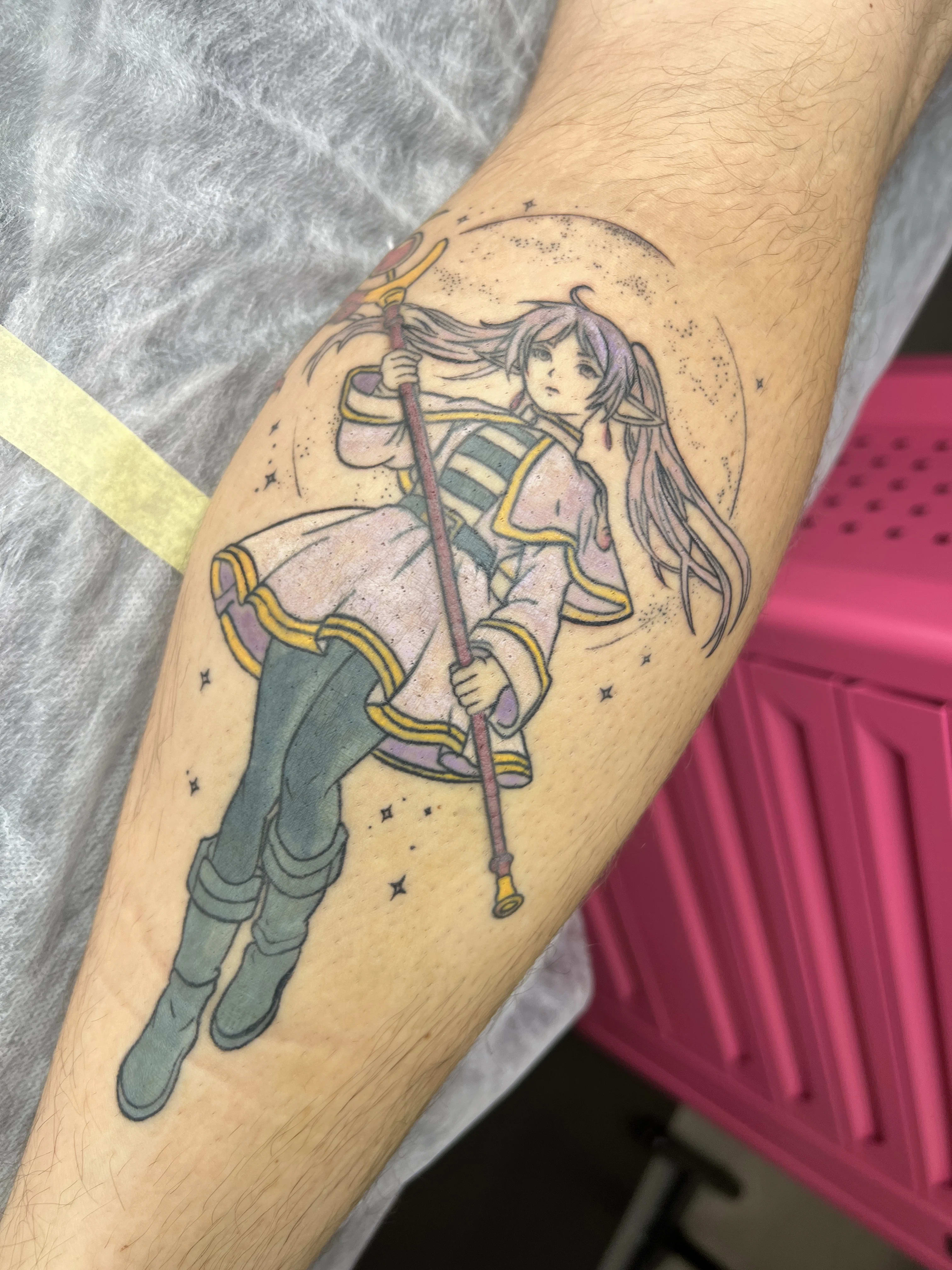
From Ghibli frames to dynamic shonen scenes: anime and manga tattoos designed like original fan art — in colour, or in black with screentone straight off a manga page.

Anime stopped being a niche long ago — today it is one of the most searched tattoo styles in the world, and the generation raised on Naruto, Dragon Ball and Studio Ghibli films wears its favourite stories on skin with pride. Rightly so: few motifs carry as much emotion as the scene that shaped you when you were a teenager.
At our Wrocław studio we treat anime as proper art, not an internet printout. Instead of copying a frame pixel by pixel, we design original fan art: a composition that captures the character and the emotion of the scene, engineered for skin — with outlines that will not blur and colours that age gracefully.
Below you will find a full guide to anime tattoos: from the history of the phenomenon and the choice between colour and screentone, through the physics of a frame on skin, the session and pricing, to the myths worth dispelling. Answers to the most common questions wait at the end — and whatever is missing, we will fill in at a free consultation.
Anime and manga have been shaping imaginations since the 1960s (Astro Boy), through the golden 90s (Akira, Sailor Moon, Evangelion), up to today''s global hits like One Piece, Jujutsu Kaisen and Attack on Titan. Tattooing grew together with the fandom: conventions, cosplay and the internet made wearing your favourite character feel completely natural — like a band tee, but forever.
Fun fact: an anime tattoo is not a „Japanese tattoo style”. Classic irezumi is an entirely different, centuries-old tradition. Anime on skin is a child of pop culture — it blends illustration, comics and modern graphic tattooing into one instantly recognisable aesthetic.

An „anime” tattoo usually means colour: saturated hues, cell shading (flat shadow planes like in animation), light effects and dynamic backgrounds. This route captures the energy of battle scenes and the warmth of Ghibli films.
A „manga” tattoo plays in black: bold linework, screentone (the comic''s distinctive dotted shading), panels and speech bubbles. It looks like a page cut straight out of a volume and ages very steadily, because it relies on black pigment. We do both — the choice depends on the series and your aesthetic.
Every series tells a different story — and gives a different reason to wear it:
A screen frame has contrast and resolution calculated for a monitor, not for skin. That is why we always make an original interpretation: we clean up the composition, strengthen the outline, simplify the background and pick a palette that stays readable after healing — while respecting the original creators.
Bring references: screenshots, volume covers, even the song playing in your scene. The better we understand what that story means to you, the better design you get. See our work in the portfolio and ready designs on the designs page.

Faces and big character eyes are details that need space. We usually do character portraits from about 12–15 cm up; scenes with backgrounds feel best on the thigh, calf, forearm or as part of a sleeve.
Small motifs are possible too — a chibi, a mascot, a series symbol — as long as we simplify the detail. At the consultation we will honestly tell you what survives decades at a given size, and what will melt into a blot after five years.
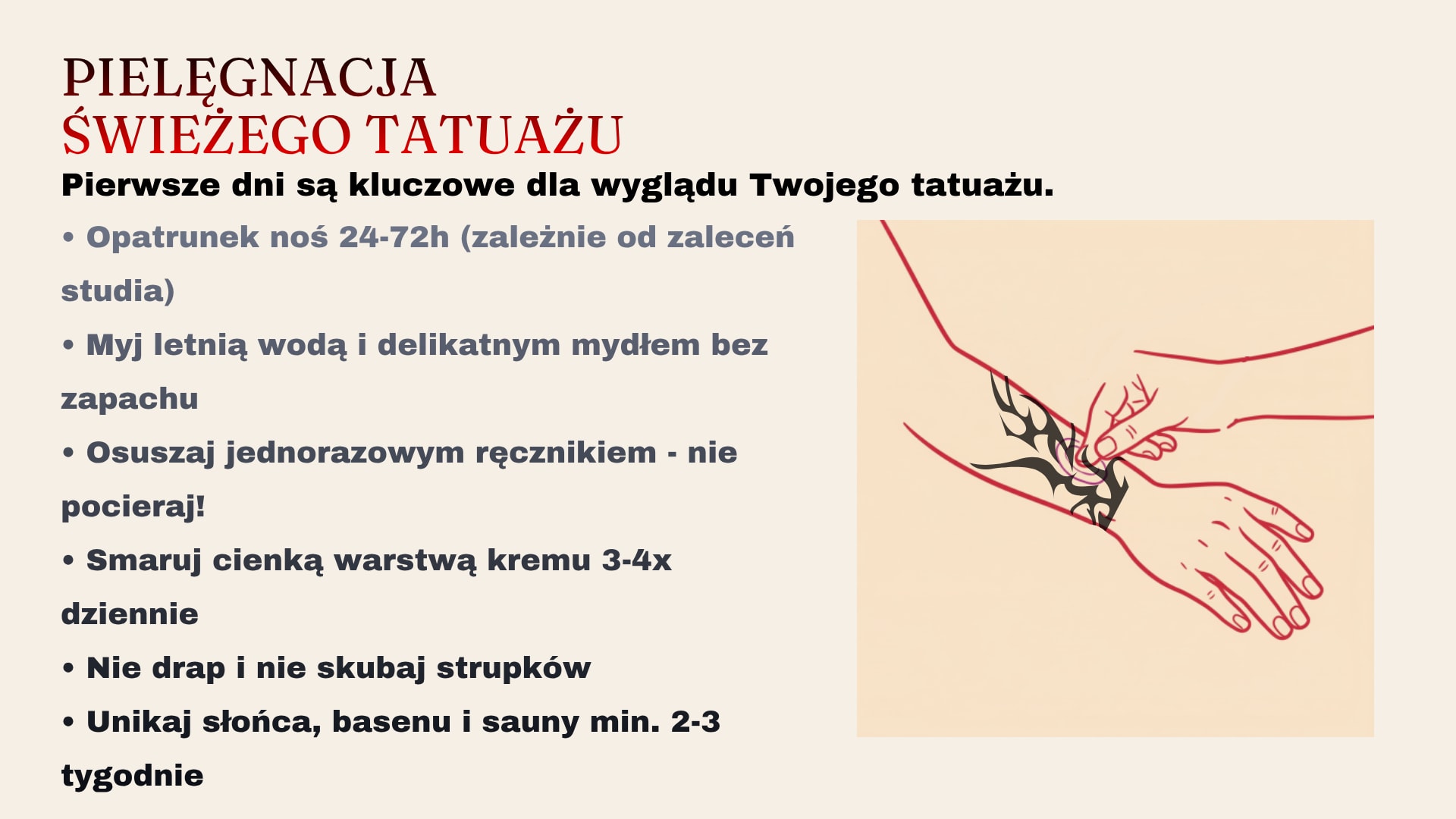
Colour fills heal more intensely than linework alone: the first week is a thin layer of ointment, loose clothes and no scratching. You will find a complete healing guide on our blog.
Saturated colours have one enemy — the sun. SPF 50 in summer is mandatory if Naruto''s orange jumpsuit is to stay orange ten years from now. After years, colour can be refreshed in a single session.
An anime session starts long before the needle — with the fan-art design you see and approve before the visit. On the day itself there is the stencil fitting, final framing corrections on the body, and work in two acts: first the outline that defines the character, then the colours or screentone.
Pain depends mostly on placement and size, not style. A small symbol or chibi on the forearm is a short, gentle session — a common first-tattoo choice. A palm-sized character portrait is one full session; a scene with a background is often spread over two–three visits, because saturating colours needs layers and healing in between.
The manga version (black plus screentone) is often gentler time-wise: fewer layers, fewer passes over the same area — worth discussing at the design stage if you want a shorter session. Come rested and fed — and if you plan a headphone marathon of your favourite series, go ahead: for longer pieces it is the best way to pass the time.
The first story is the generation raised on Naruto, One Piece and Ghibli — people for whom anime was not a cartoon but a school of character. Their tattoos are tributes: the character who taught them persistence, the scene that helped them through a worse time.
The second story is aesthetes of the Japanese line: people who may not know every title but love manga's visual language — dynamic strokes, expressive eyes, screentone, dramatic framing. The third story is patchwork collectors who want a bold, colourful accent in their gallery — an anime motif plays great in such company, compositionally closed and recognisable at first glance.
What unites them: everyone wants the character to look straight off the screen and last decades on skin. That is exactly the tension our original fan-art resolves. Send your references through the form — we do not judge choices; every story deserves a good design.
The range is wide because the forms are: from a small clan symbol to a half-sleeve scene. The first factor is the complexity of the frame — the number of characters, details and planes. The second is colour: a full, juicy anime palette needs layers and time, while the manga version (black plus screentone) is noticeably faster — an honest route to a beautiful anime tattoo on a smaller budget.
The third element is the design stage: original fan-art takes more concept work than a print-off — we redesign the character in a frame cut for your body. That time is included in the quote, and it is what separates a tattoo from a photocopy.
Rough ranges are in our Pricing; specifics after we see your references. One promise upfront: we do not cut quality to fit a budget — if the dream scene exceeds it, we will propose a smarter frame: smaller but polished, rather than large and mediocre.
An anime motif rarely stays alone for long. The most natural alliance is Japanese tattoo classics: waves, cherry blossoms, oni masks and irezumi-spirit clouds create a background that lifts the mood without stealing the foreground.
The second direction is patchwork: characters and symbols from different series arranged like stickers on a laptop — each separate, together telling the owner's story. Designing a single motif, we already think about future neighbours: shared line weight and colour temperature keep the collection coherent. The third, growing current is cyber-anime: mecha and cyberpunk characters combined with sharp neotribal forms — an aesthetic that plays beautifully with strong black (see our Blackwork and Tribal pages).
If you already have tattoos and wonder whether anime will fit — bring photos to the consultation. We will design the motif to enter your collection like a missing card in the deck.
Myth one: „an anime tattoo is childish, you will regret it in five years”. The stories that shape us have no expiry date — today's thirty-somethings grew up on anime exactly as earlier generations did on rock or comics. A well-designed motif from a beloved series ages like any good keepsake: it gains value.
Myth two: „anime colours fade within a year”. Modern pigments and correct technique give colours a decade and more — with sun protection. Anime's flat, saturated fills are technically graceful: easier to refresh than painterly transitions, and the black outline holds the composition even as hues soften.
Myth three: „any tattooer can do anime, it is just a cartoon”. The Japanese line has iron rules — face proportions, eye construction, light logic — and every error shows instantly, because everyone knows the original. Experience in this specific aesthetic matters more here than in almost any other style.
Step one: you send everything you have through the form — frames from the series, official art, screenshots, even a scene described from memory. The more material, the better we understand what you love in the character: the pose, the emotion, the light or a specific story beat.
Step two: a consultation where we set the format (full frame, portrait, chibi, symbol), the technique (colour or screentone) and the placement and size — with an honest talk about how much detail the chosen scale can carry. Here you also get the quote and session count.
Step three: the original fan-art is created. You see it before the session and we go through revisions together — from the angle of a hair strand to the background saturation. Only the approved design goes on skin. Step four: the session and healing with standard care, and after healing a colour check-up — a juicy palette deserves every detail pinned down.
Choose anime when you want to carry a frame from a story that means something to you — a character, a scene, a motif. We redraw fan art from scratch, so the tattoo is yours and not a copy of a screenshot.
We do not copy frames 1:1 — copyright and the way a print sits on skin are two different things. We advise against very small designs packed with detail: raster and colour need room to age well.
No. A black „manga" version with screen-tone shading looks excellent and ages even more reliably. Colour gives you the energy of the animation, black the mood of the comic panel. In the consultation we help you pick the route that fits your series.
We can lean on it heavily, but we always make our own interpretation — first because a screen frame translates badly onto skin, second out of respect for the original creators. The result: your scene, designed to last for decades.
A small symbol or a chibi is one short session. A character portrait usually takes one full session, a scene with a background two or three. Pricing is always individual — check the price list and send your references through the form, and we will come back with specifics.
Every tattoo softens a little over time. That is why we simplify small designs: fewer details, a stronger outline, a readable silhouette. Thanks to that your chibi Totoro stays recognisable years later too.
Often yes — dense, colourful anime compositions can make an excellent cover-up. Send a photo of the old work through the form or visit our Cover Up page; we will assess the options free of charge.
Of course, that is our favourite part of the job. Bring a list of the series and the moments that left something in you, and together we will find a frame that survives both skin and time.
Yes — the rules are the same as with anime: original fan art instead of a copy, a design built for your body and respect for the source. From games through cartoons to comics — if a character means something to you, we will design it well.
Absolutely — a small symbol or a chibi is a short, gentle session and a great start. Bigger frames are better left for the second step, once you know how your skin heals and how it carries colour.
Send your references through the form — frames, artwork, a description of the scene. We will reply with a proposed format and a quote, and during the free consultation at the studio we finalise the framing, the size and the date.
Yes — crossovers are one of our clients favourite categories. The key is a shared visual denominator: one line weight, a consistent colour temperature and a composition in which the characters talk to each other instead of competing. On a fan-art design we plan such a combination exactly as carefully as a single frame — and the result is often more personal than any original frame from the screen.

Coven of dark elves
Mira Paul • Sacred__kid • Tattoo Artist
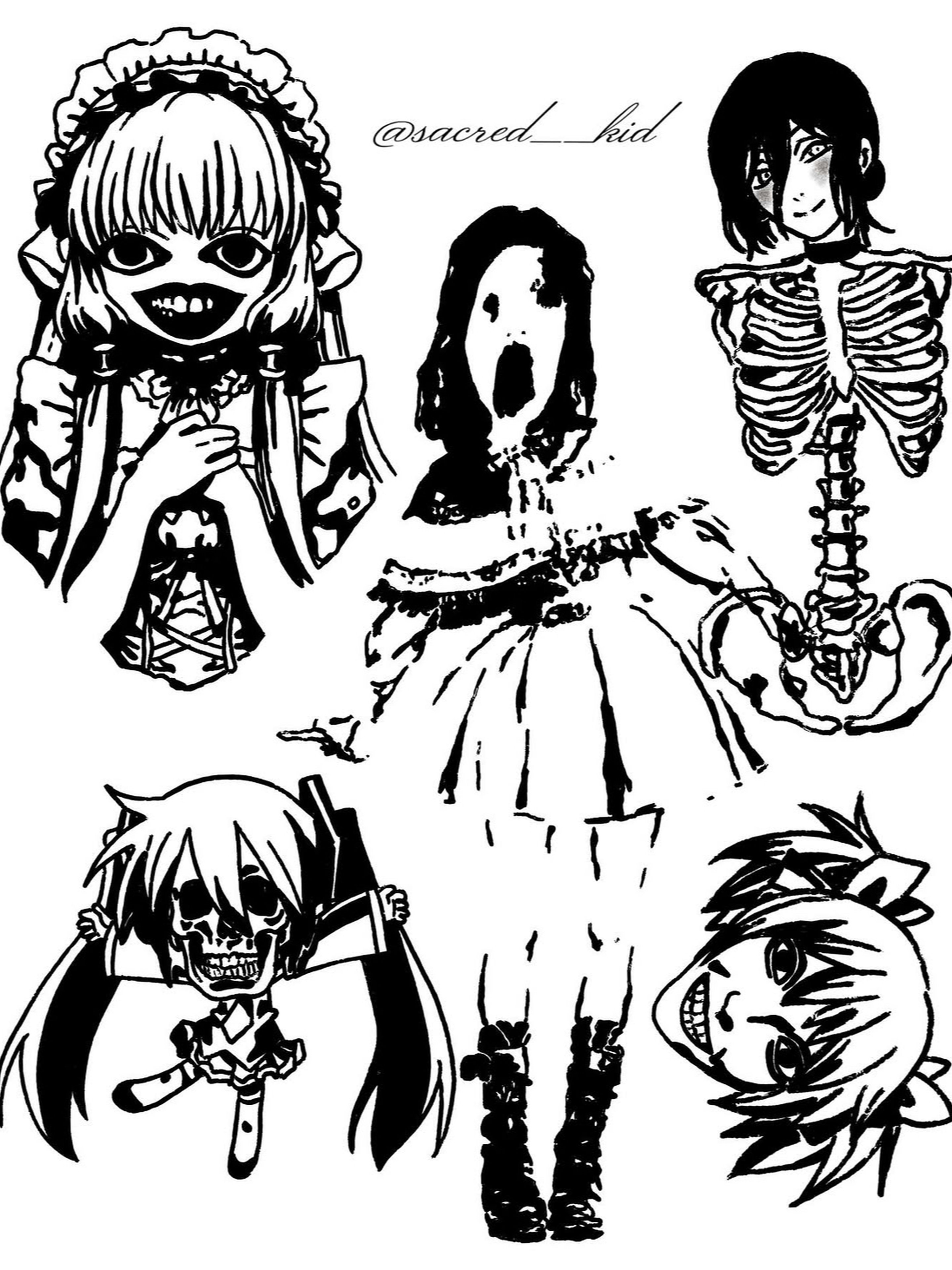
Grotesque anime visions
Mira Paul • Sacred__kid • Tattoo Artist
Dotwork pop culture icon
Justyna Góra • Tattoo Artist • Permanent Makeup

Capsule, portraits and patches
Justyna Góra • Tattoo Artist • Permanent Makeup
Eclectic pop culture flash
Justyna Góra • Tattoo Artist • Permanent Makeup

Eclectic graphic collection
Justyna Góra • Tattoo Artist • Permanent Makeup
Indicative ranges — every piece is quoted individually after a free consultation.
Minimalist tattoo
300 PLN
~75 €
A single small motif in a thin line, with no shading or fill — one symbol, a date or a short word. The shortest session on our list.
Get your quoteSmall design
from 400 PLN
~100 €
Small motifs, lettering and single elements with detail or light shading — usually one short session.
Get your quoteMedium project
500–1000 PLN
~125–250 €
Hand-sized compositions: fine line, ornaments, lettering with graphics, smaller shaded motifs.
Get your quoteLarge project
1000–2000 PLN
~250–500 €
Detailed designs on the forearm, calf or back — more detail, often longer or multi-stage work.
Get your quoteSleeves and large pieces
individual quote
Sleeves, large compositions and multi-session projects are billed per session across several appointments.
Get your quoteThe ranges are indicative. The final, binding price is set after the consultation and once the design is approved.
Our artists’ portfolio is the best test of whether a style fits your skin and idea. Filter by style, body placement or tags.
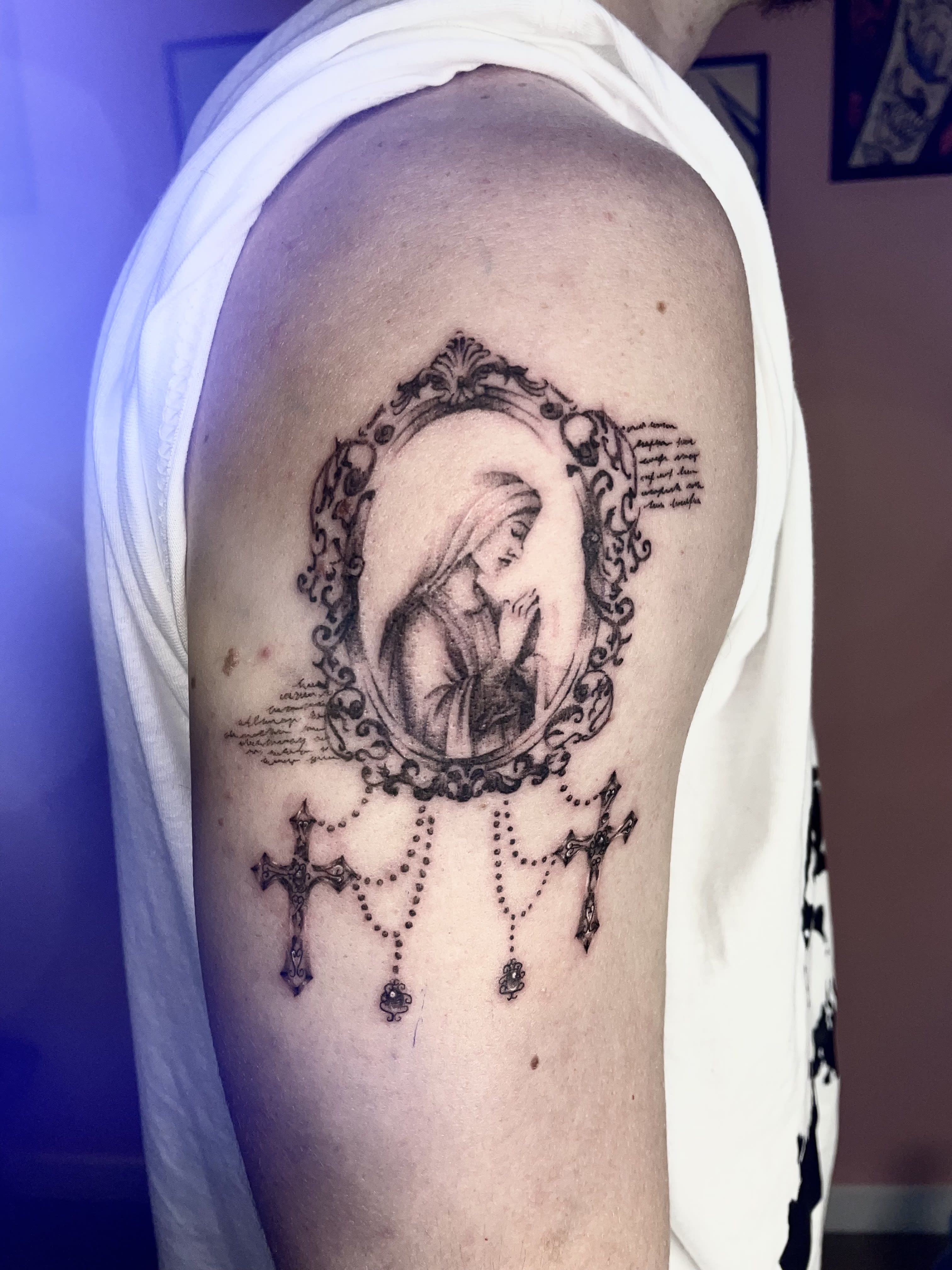

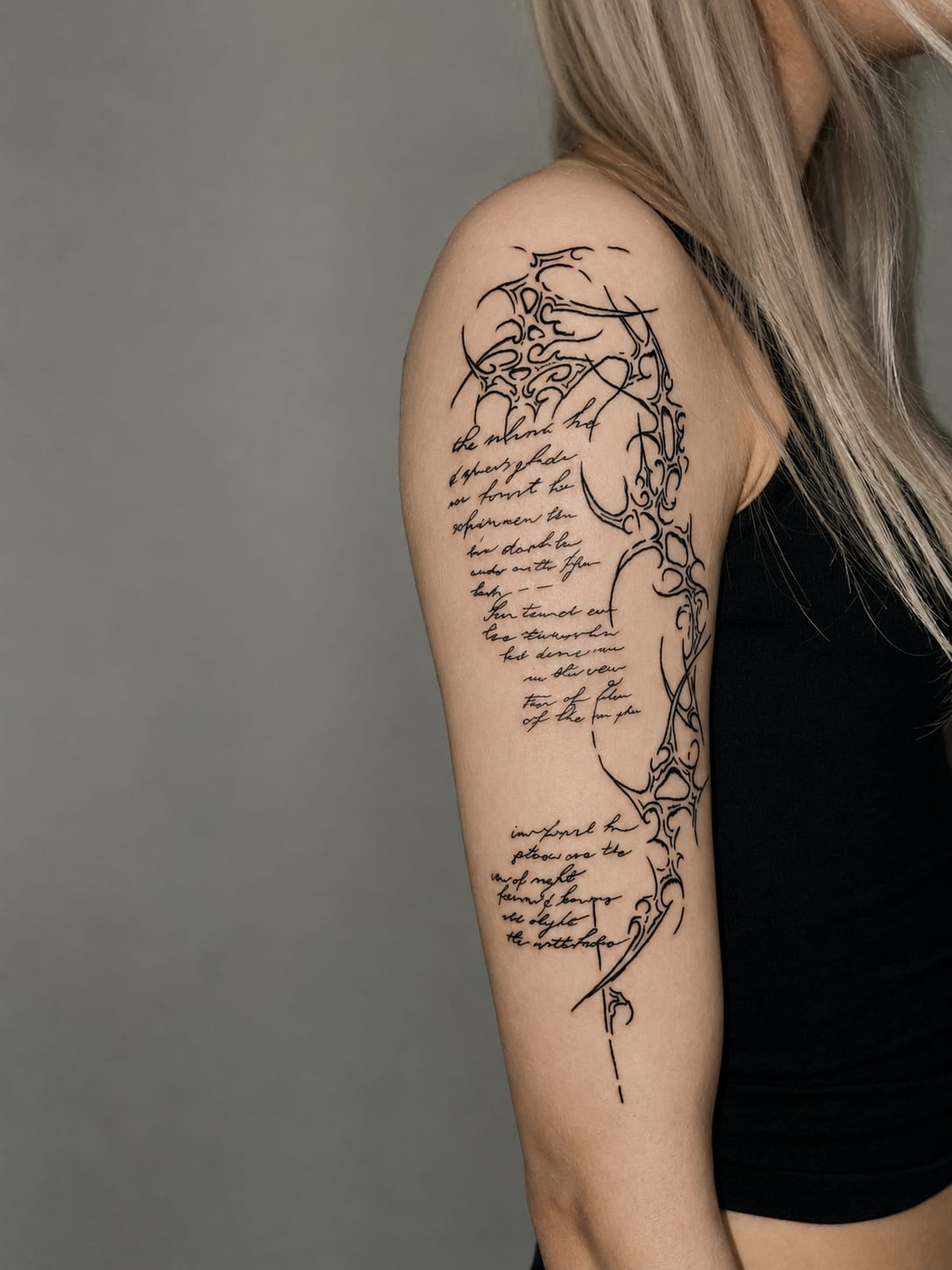
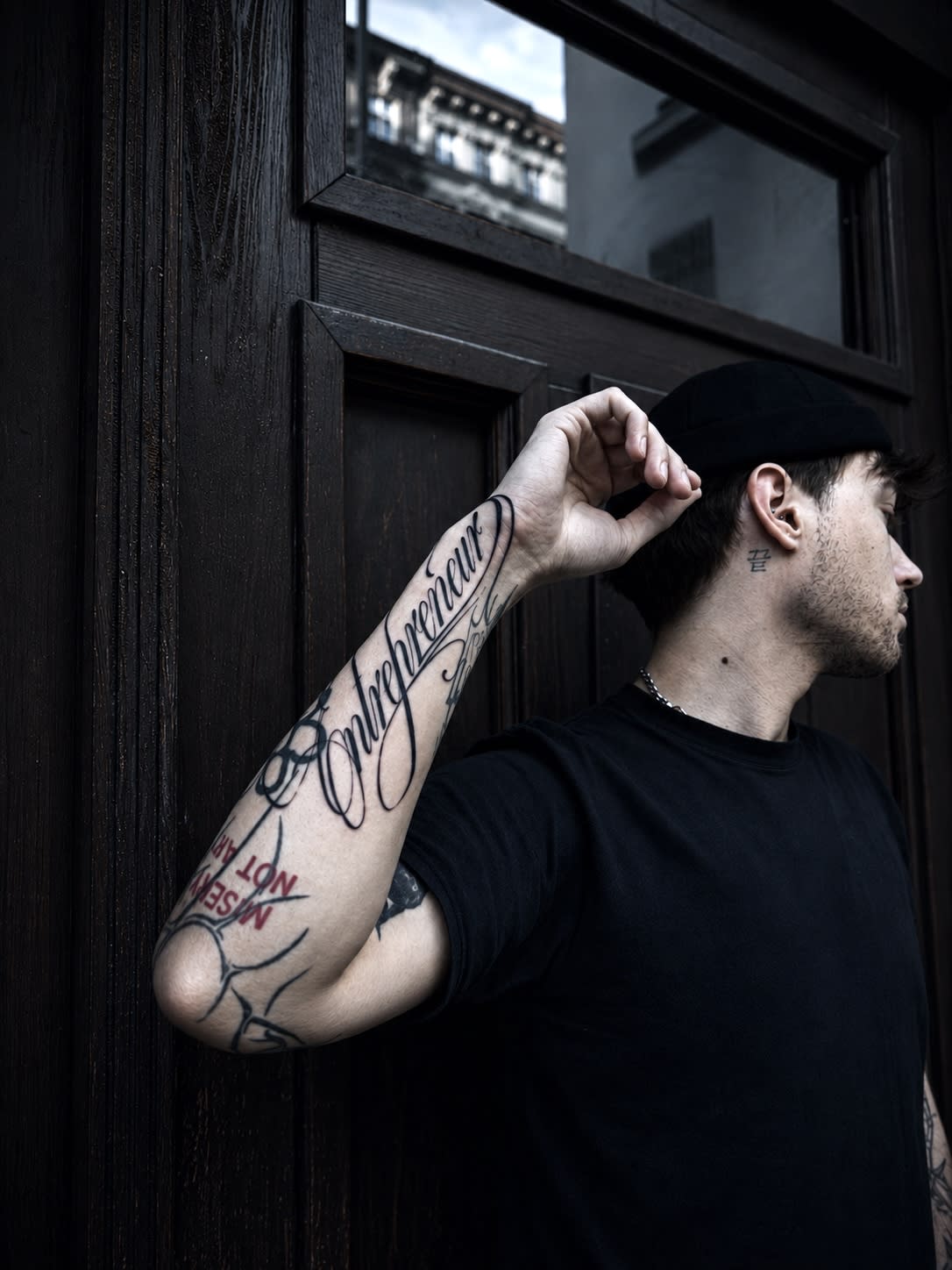
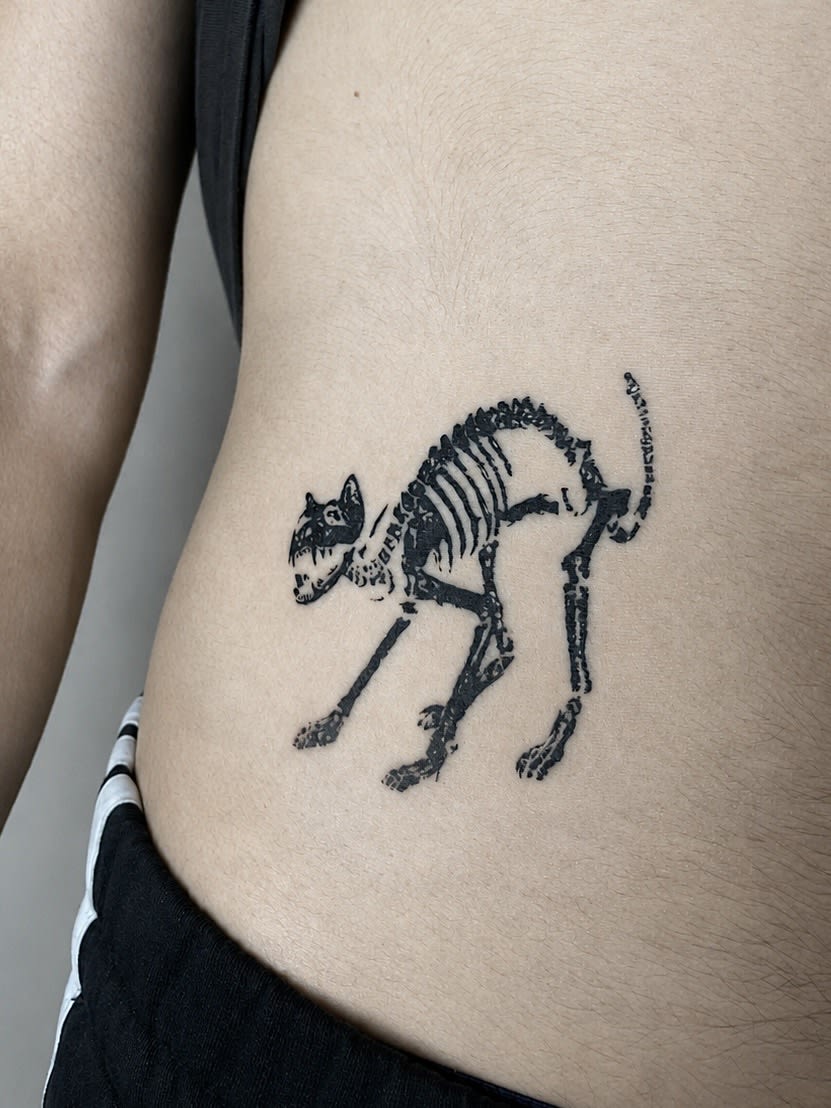

Each artist has their own specialities — see profiles and portfolios, or describe your idea in the form and we’ll match the right person.
The techniques in this gallery have their own pages — motifs, healing, prices and healed examples.
We cover old or unloved tattoos with a new design. See before-and-after transformations straight from our studio.
Practical guides by our artists — pain, aftercare and preparation. No myths, no scare stories.

Original projects waiting for an owner — each with a price and a suggested size.
The questions that matter most
Describe it in the form — we’ll suggest a style, an artist and the nearest date. The consultation and quote are free.