





Cover-up — a second life for your tattoo
We cover old or unloved tattoos with a new design. See before-and-after transformations straight from our studio.
Tattoo styles
A photograph packed into a few centimetres: pet portraits, keepsakes and miniature frames done with a thin needle and surgical precision.

Micro realism is the magic of scale: a tattoo the size of a matchbox that looks like a photograph up close. A miniature portrait of your dog, someone''s eye, your parents'' intertwined hands, a favourite film frame — all rendered so precisely you want to reach for a magnifying glass.
It is also one of the most technically demanding styles: within a few centimetres there is no room for error. At our Wrocław studio we do micro realism with thin needles and full awareness of skin physics — so the miniature stays readable not just in the photo right after the session, but years later.
Below is a complete guide to miniatures: where micro-realism came from, how to prepare references, what it costs and why small does not mean cheap, where a miniature ages best — plus answers to the questions we hear most often.
Micro realism is photographic realism translated into a small scale — usually three to ten centimetres. The style boomed together with Instagram and celebrity tattoos: it turned out a tattoo does not have to be big to impress. It just has to be perfect.
A common misconception: micro realism is not the same as a „small tattoo”. A minimalist symbol reduces form to a sign — micro realism does the opposite: it keeps the light, texture and depth of full-scale realism, only in miniature. A tiny painting, not an icon.
The craft rests on very thin needle configurations (single needle first of all) and soft greyscale transitions that build three dimensions within a few centimetres. Contrast is dosed sparingly and precisely — at this scale every dot counts.
The other half of the work happens before the session: processing the reference, boosting contrast, cropping and testing readability at target size. A good miniature is born in the design stage, and only then under the machine.
Miniatures love personal subjects:
Skin is a living canvas: pigment spreads minimally over the years, and detail packed too densely at too small a scale can merge. That is why we define a minimum sensible size for every motif — a pet portrait usually from 5–6 cm, a composition with background accordingly more.
At the consultation we are painfully honest: we will tell you straight whether your idea survives the chosen scale, or whether it is better to add two centimetres. Those two centimetres are often the difference between „wow” after five years and a soft blot.
Miniatures like stable, smooth skin with little friction: the inner forearm, above the elbow, the calf, the sternum, the shoulder blade. We advise against fingers and feet — pigment wears off fastest there and even the best work loses detail.
Micro realism also works beautifully as part of a collection: single miniatures can gradually form a deliberate patchwork — a discreet alternative to a sleeve. See our work in the portfolio.
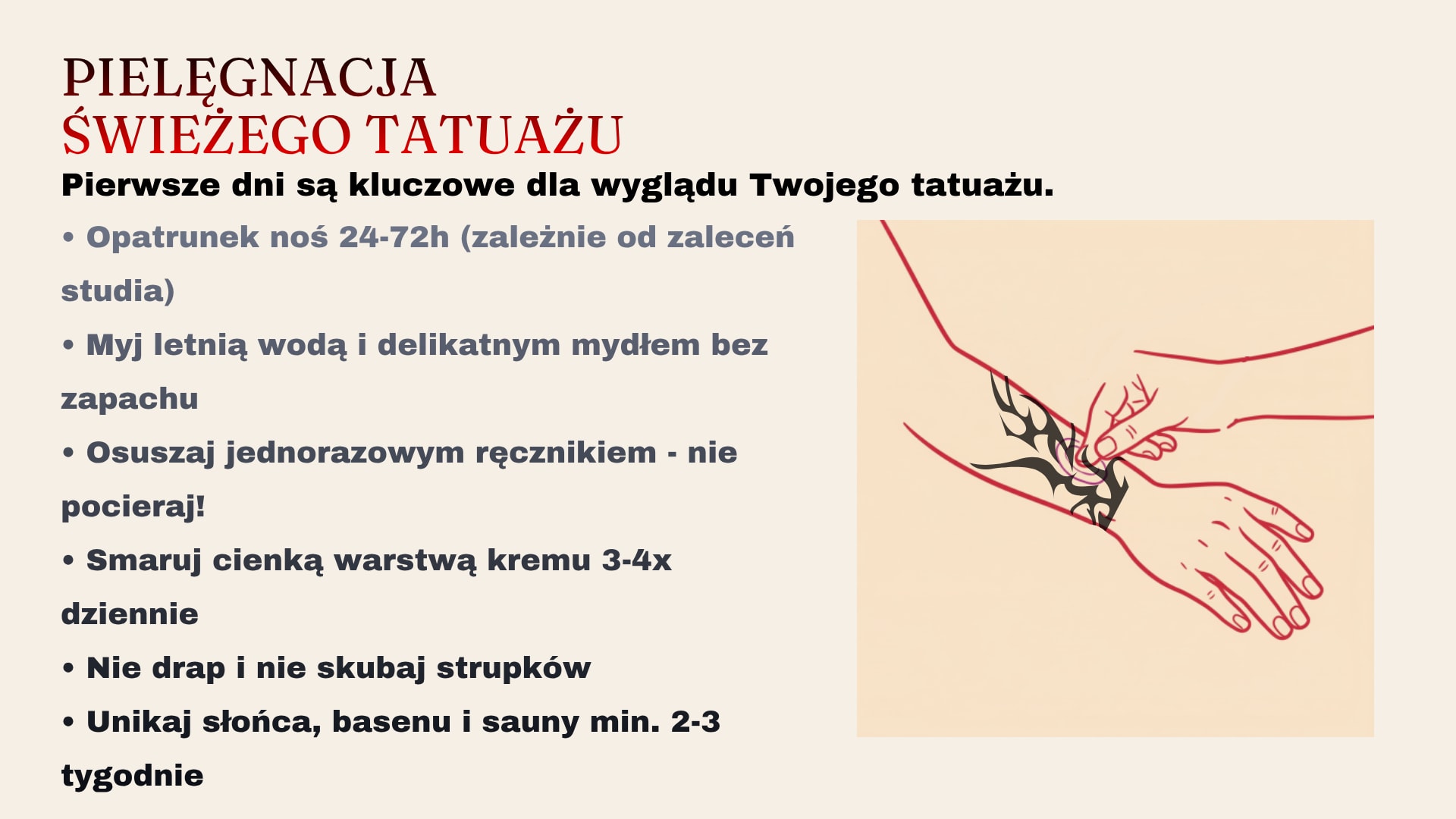
Healing tends to be gentle — thin needles mean little trauma to the skin — but the regime is the same: a thin layer of ointment, loose clothes, no sun, pools or picking. The full healing guide is on our blog.
Once healed, moisturising and SPF extend the contrast. And if a miniature loses sharpness after many years, one short refresh session brings the details back — like restoring a painting.
Micro-realism is a pricing paradox worth understanding before the consultation: a piece the size of a matchbox can cost as much as a sizeable tattoo in a simpler style. You pay not for centimetres but for the density of precision — a miniature portrait is hundreds of micro-decisions, and at this scale there is nowhere to hide inaccuracy.
The quote depends mainly on the complexity of the motif: an eye or a small object is a smaller block of work than a pet portrait with fur or a miniature scene with a background. Placement matters too, and so does the quality of the reference — a good source photo shortens the work, a poor one lengthens it or rules it out.
Rough ranges are in our Pricing. Specifics come after we see your photo and the spot — and we will also say honestly whether the motif makes long-term sense at the chosen size.

Everything starts with the reference, and it decides half the success. The ideal photo is sharp, taken in soft daylight, with detail visible without zooming — for pet portraits a frame at snout level works best. If you have several shots, send them all: sometimes we compose the perfect one from two.
At the consultation we set the frame and scale — and often play devil's advocate: if the dream motif would lose legibility at the chosen size, we will propose a larger scale, a simpler frame or another spot. The session itself is usually 2–4 hours of focused thin-needle work — less painful than the time suggests, because the area is small. We work in layers, from general values to micro-detail.
After healing we invite you for a check-up: miniatures are judged on calm, healed skin, and single details are saturated then if needed.
Myth one: „micro-realism blurs within a year”. What blurs is micro-realism designed against the physics of skin — with detail packed tighter than skin can carry. An honest studio will sometimes say „this frame needs six centimetres, not three” — and that sentence is the best durability insurance there is.
Myth two: „the smaller the tattoo, the shorter the session”. The opposite: a miniature is a densification of work, not a reduction. A 5×5 cm portrait can take more hours than a twice-larger, simpler graphic.
Myth three: „any photo can be put on skin”. Not any. Blurry, dark or heavily filtered references limit the result regardless of the artist's skill — but usually a better shot can be taken or found, and we will help choose it.
Micro-realism does not have to be a lonely island. We increasingly weave miniature, photographic elements into larger compositions: a realistic eye inside an ornament, a small portrait in a medallion surrounded by botany, a film frame as the heart of a patchwork sleeve. The contrast of scales is hard to walk past indifferently.
Such combinations need a plan: a miniature needs „silence” around it — space that does not compete with its detail — so we design the whole composition at once, even if it is made in stages. Techniques mix well too: dotwork stippling as background, a fine-line frame, a delicate colour accent in a black-and-grey miniature.
If you already have tattoos and want to add a miniature — bring photos to the consultation. We will design it to enter the existing arrangement like a missing piece, not a random add-on.
Micro-realism stands on the shoulders of two traditions: black-and-grey realism, which taught tattooers to build chiaroscuro and photographic depth on skin, and the Californian single-needle school, which shrank detail to previously unreachable sizes.
Combining the two — realistic seeing and microscopic precision — created a new genre: a tattoo that keeps full photographic credibility at a few centimetres. Social media fuelled its explosion: miniatures look fantastic in a phone frame, and close-ups reveal craft the naked eye might miss.
Popularity had its price: the internet flooded with pieces made without understanding the physics of skin — beautiful on session day, unreadable two years later. Those are responsible for the miniatures' bad press. Mature micro-realism — the kind we practise — learned its lesson: it designs with a margin, matches scale to motif, and refuses when a frame needs more centimetres than planned.
To see that philosophy in practice, browse the healed work in our Portfolio — the best proof we can show.

The first story is keepers of keepsakes: a portrait of a dog that passed, a child's eye, parents' intertwined hands. Micro-realism is tattooing's most tender carrier of memory — photographic fidelity means the piece does not symbolise a person or a moment, it truly shows them.
The second story is lovers of film, music and pop culture: a cult movie frame, an idol's portrait, a prop from a beloved series — closed in a discreet scale, legible to the initiated, elegant to everyone else. The third story is aesthetic minimalists with ambition: people who want a tattoo as discreet as fine line but with the technical depth of large realism.
The common denominator is patience at the design stage: a good miniature needs a good reference and an honest talk about scale. Send your idea and photos through the form — we will say honestly whether the motif has miniature potential.
It is the most common dilemma at micro-realism consultations. The black-and-grey scale is the technical safe bet: tonal contrast ages the most stably, and a grey miniature portrait stays readable even as skin softens details over the years — at the smallest sizes we almost always recommend this route.
Colour in a miniature works best as an accent: a green eye in a grey dog portrait, a red thread in a black-and-white frame. A single colour signal can do more than a full palette — it draws the eye exactly where we want and stays stable, surrounded by safe black.
Full-colour micro-realism is possible but has conditions: a slightly larger scale, a deliberate high-contrast palette and more sun-protection discipline. We always decide together, live, comparing healed examples in both variants — ten minutes of conversation that pays off for decades. And if colour tempts you more than miniature scale, visit our Colour style page.

Choose micro-realism when you want realistic detail closed into a few centimetres — a pet portrait, an eye, a keepsake. It is precise work on a calm, thin needle.
Skin physics limits miniatures — we cannot fit every detail into 3 cm, and we will say honestly when a design needs more room so it does not blur into a patch over the years.
Every tattoo softens a little over time — that is a natural process. That is why we design with a buffer: the right scale, measured contrast, spacing between details. Well-executed micro-realism still reads perfectly years later, and a possible refresh is one short session.
It depends on the motif: an eye alone we do from about 3–4 cm, a pet portrait from 5–6 cm, a composition with a background from 8 cm up. In the consultation we check your specific idea and show how it behaves at the chosen scale.
Yes — that is our favourite speciality. Prepare a few sharp photos in good daylight (ideally at snout level, not from above). We take care of the rest — the framing, the contrast and the design.
The paradox of miniatures: small does not mean fast. A miniature portrait is usually 2–4 hours of focused work — precision at this scale takes time. Healing, on the other hand, is usually quicker than with large pieces.
Usually yes: a small area plus thin needles mean shorter and gentler discomfort. Most clients describe the session as very bearable — the ribs and sternum remain the most sensitive areas.
A black-and-grey scale is safer at small size and ages more reliably. We use colour selectively — a green eye in a grey portrait, for instance. Full colour feels better at a slightly larger scale; we will advise in the consultation.
Yes, provided you are patient at the design stage: a good miniature needs a good reference and an honest conversation about scale. The session itself is gentle — a small area, thin needles — and the result discreet enough to fit any job and lifestyle.
Yes, we do it often: from one shot we take the pet's snout, from another the eyes, from a third the light. It matters that all the photos are sharp and taken in similar lighting — the design handles the rest. Send everything you have and we will pick the best parts.
Send an enquiry through the form with references — a photo of the pet, the frame or the object. We will assess the motif's potential as a miniature, propose framing and scale, and finalise the details and date during the free consultation at the studio.
It is our most frequent and most rewarding piece: a coin-sized portrait of a companion, faithful down to the marking on the fur. A few sharp photos in daylight are enough — ideally at snout level. We take care of the rest, from the framing to the detail of the eye.
Indicative ranges — every piece is quoted individually after a free consultation.
Minimalist tattoo
300 PLN
~75 €
A single small motif in a thin line, with no shading or fill — one symbol, a date or a short word. The shortest session on our list.
Get your quoteSmall design
from 400 PLN
~100 €
Small motifs, lettering and single elements with detail or light shading — usually one short session.
Get your quoteMedium project
500–1000 PLN
~125–250 €
Hand-sized compositions: fine line, ornaments, lettering with graphics, smaller shaded motifs.
Get your quoteLarge project
1000–2000 PLN
~250–500 €
Detailed designs on the forearm, calf or back — more detail, often longer or multi-stage work.
Get your quoteSleeves and large pieces
individual quote
Sleeves, large compositions and multi-session projects are billed per session across several appointments.
Get your quoteThe ranges are indicative. The final, binding price is set after the consultation and once the design is approved.
Our artists’ portfolio is the best test of whether a style fits your skin and idea. Filter by style, body placement or tags.
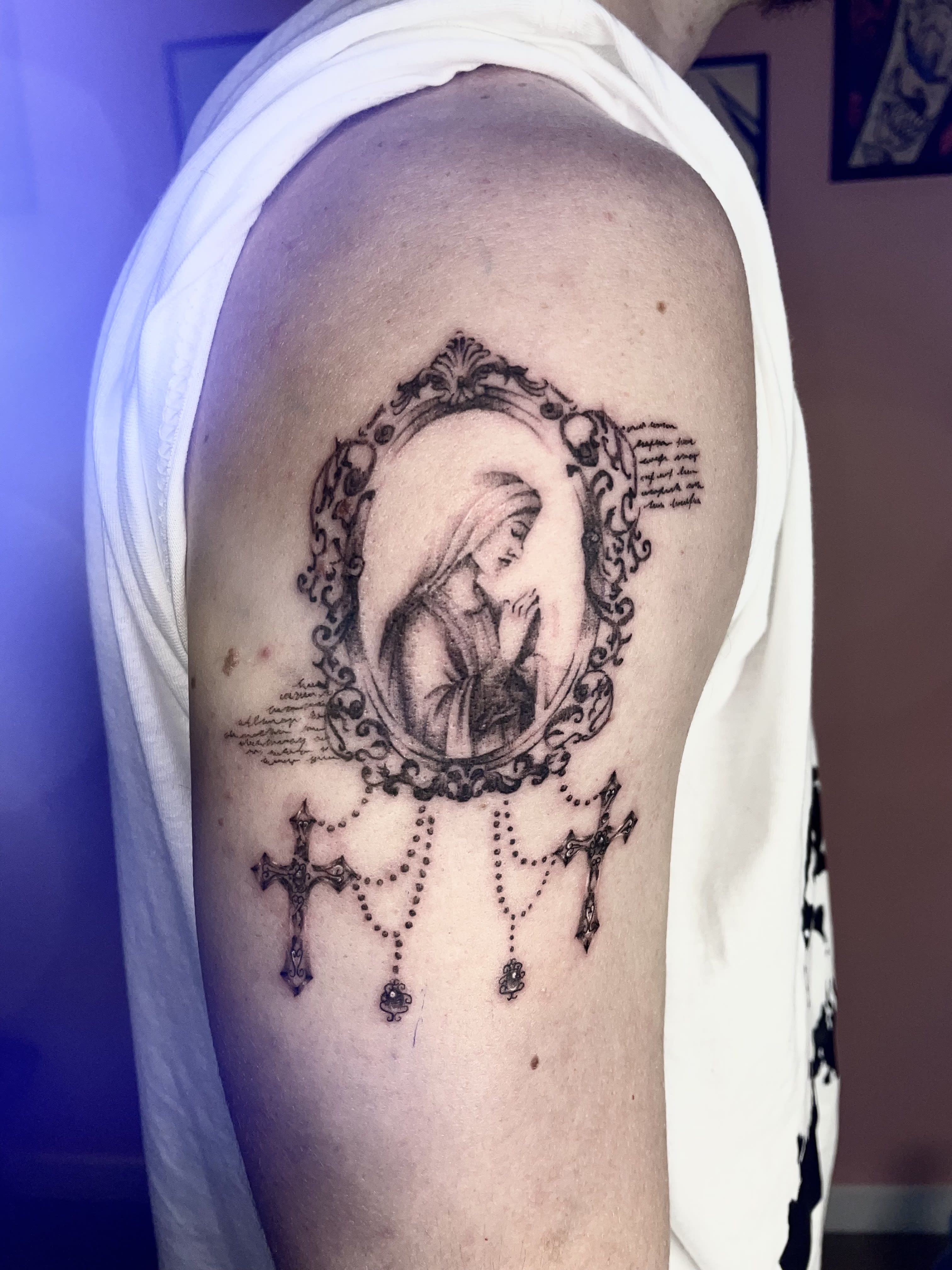
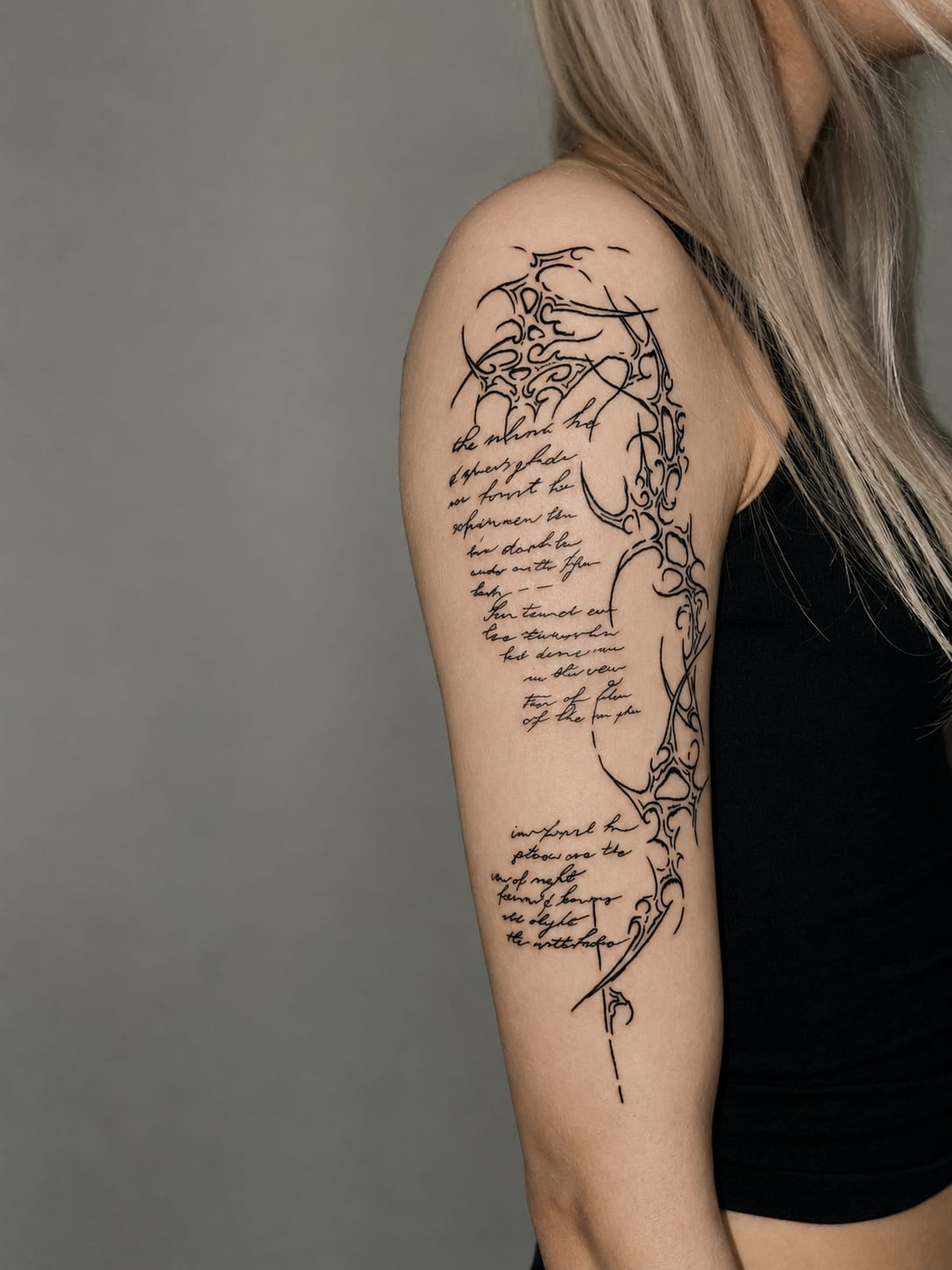
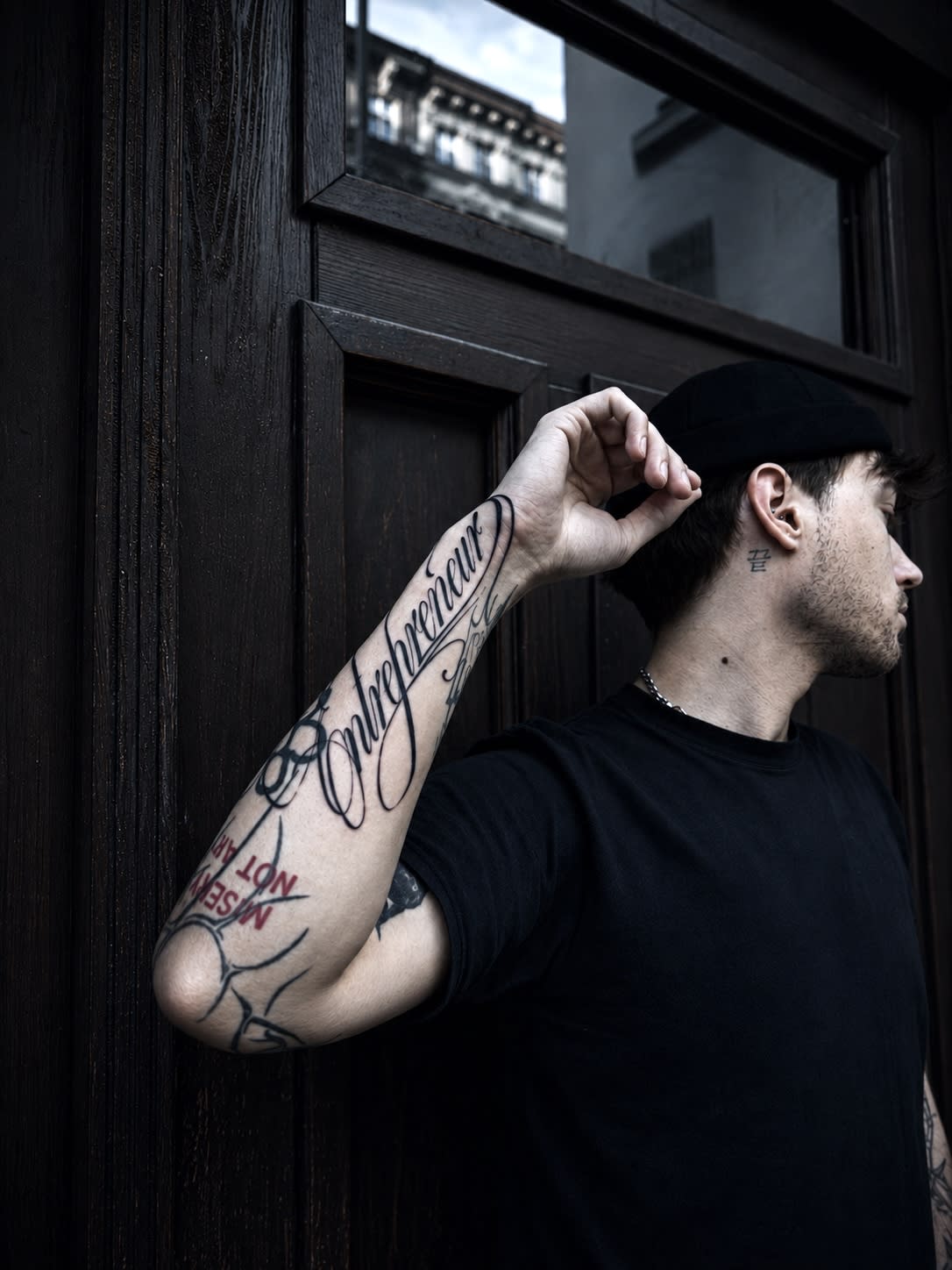
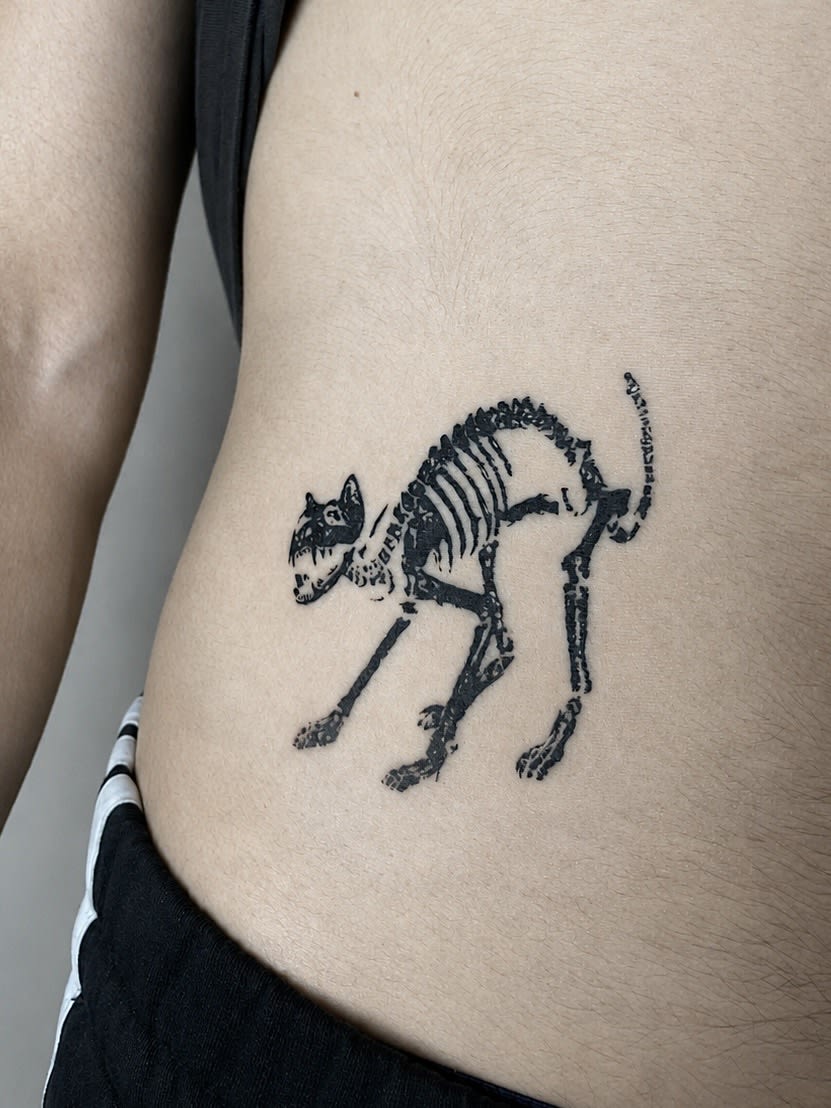

Each artist has their own specialities — see profiles and portfolios, or describe your idea in the form and we’ll match the right person.
The techniques in this gallery have their own pages — motifs, healing, prices and healed examples.
We cover old or unloved tattoos with a new design. See before-and-after transformations straight from our studio.
Practical guides by our artists — pain, aftercare and preparation. No myths, no scare stories.

Original projects waiting for an owner — each with a price and a suggested size.
The questions that matter most
Describe it in the form — we’ll suggest a style, an artist and the nearest date. The consultation and quote are free.