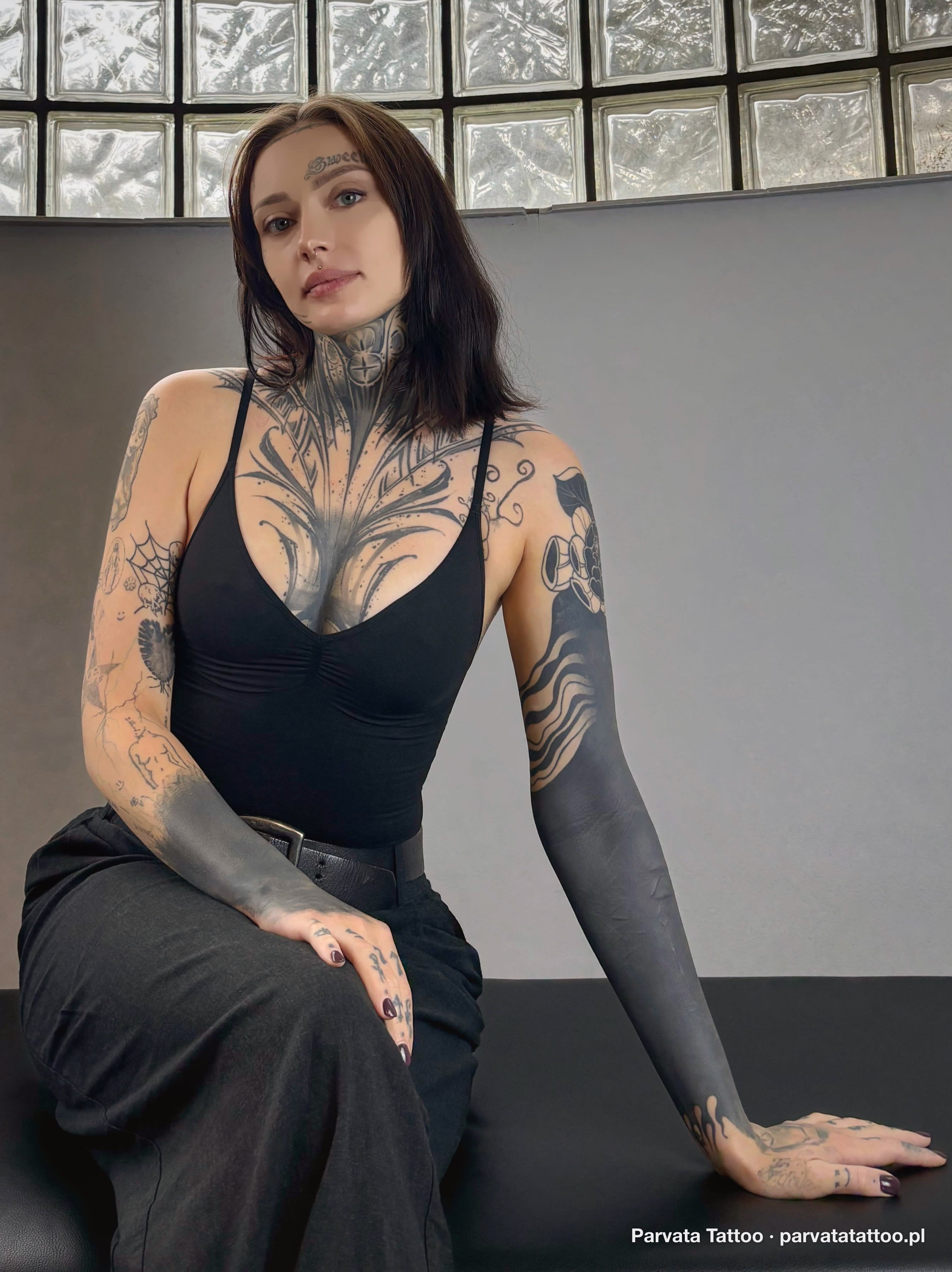
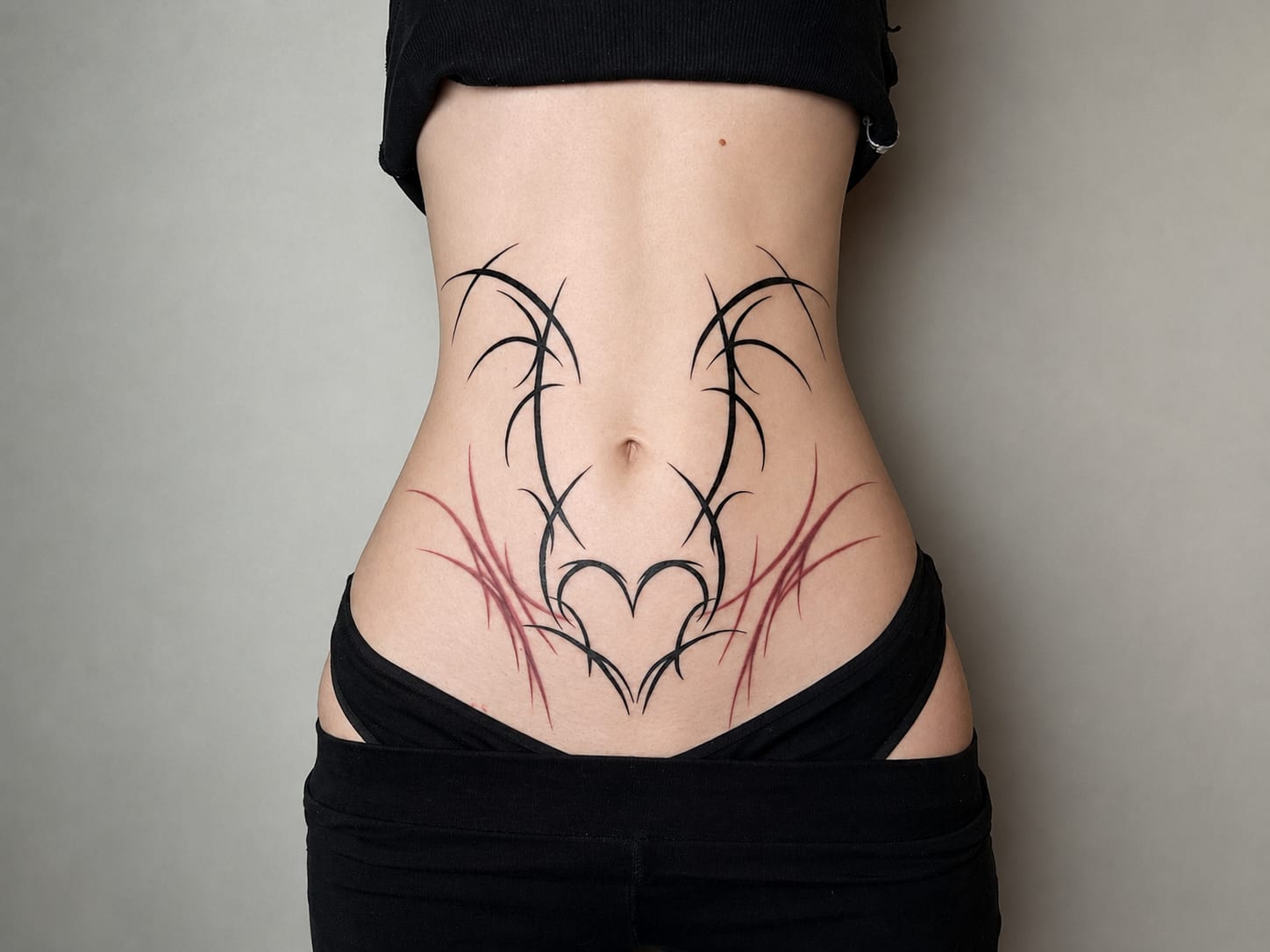


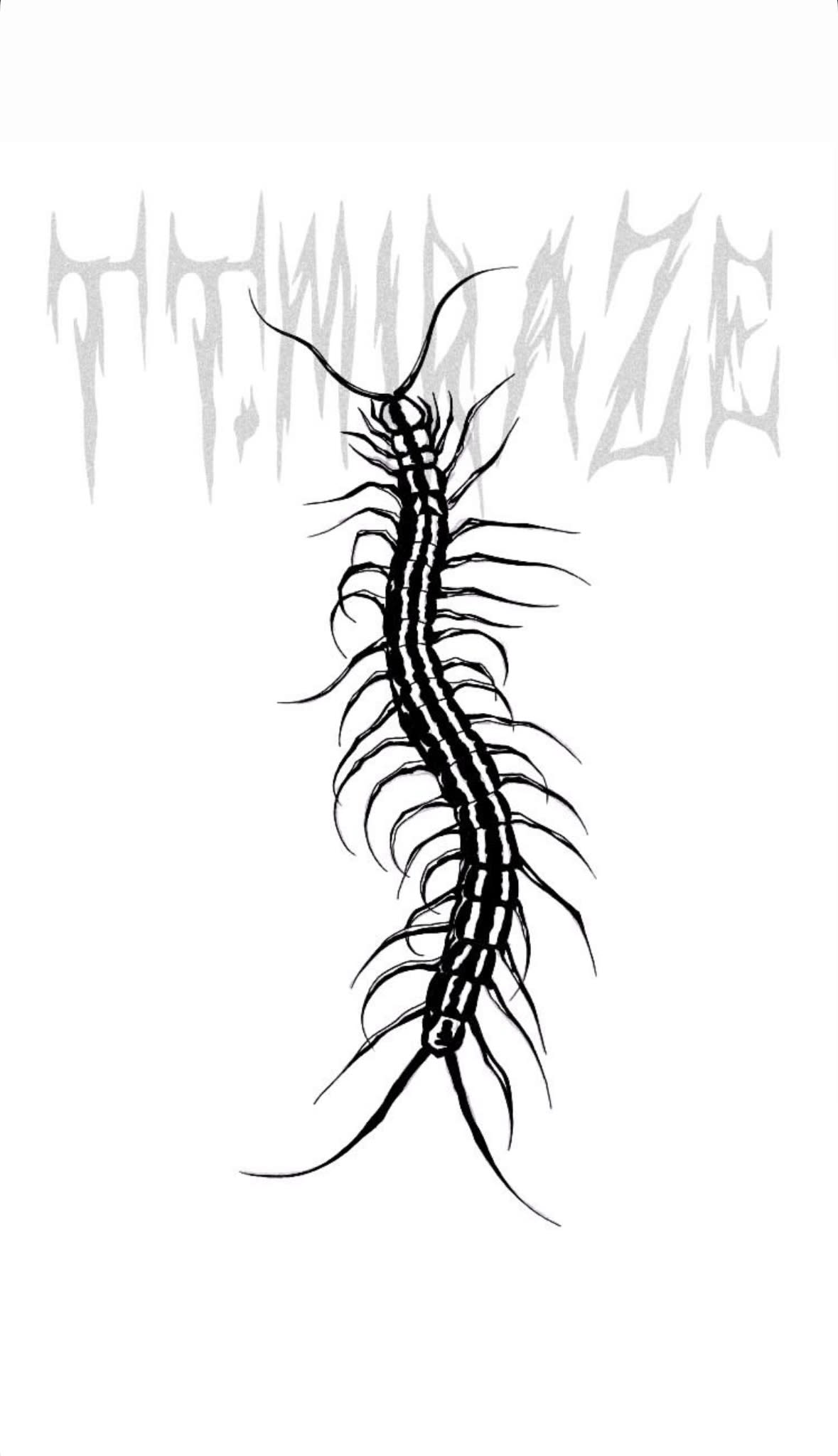


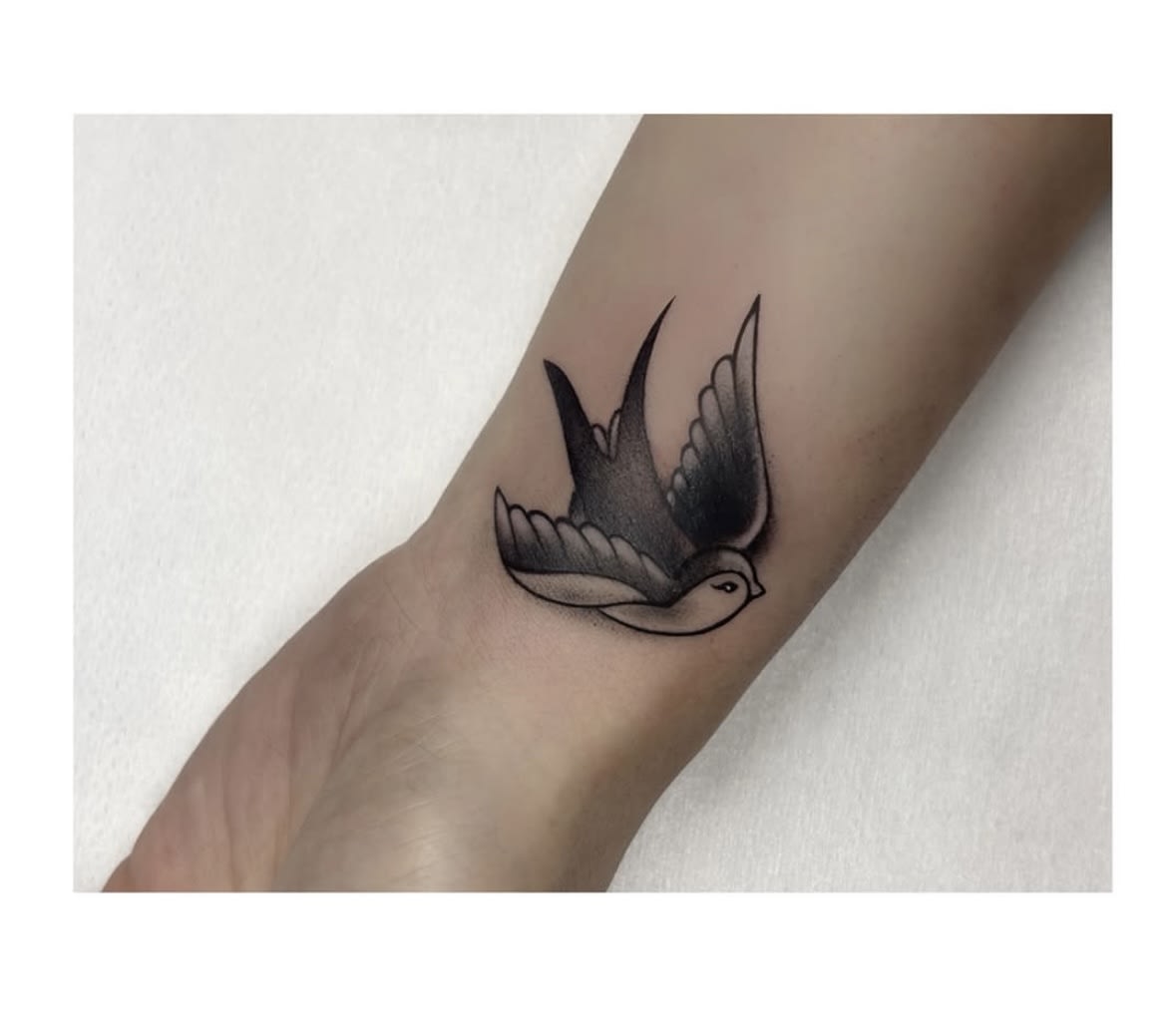
Cover-up — a second life for your tattoo
We cover old or unloved tattoos with a new design. See before-and-after transformations straight from our studio.
Tattoo styles
Minimalist tattoos are maximum meaning in a simple form: small symbols, single lines and subtle motifs. See how we design minimalism that ages well.
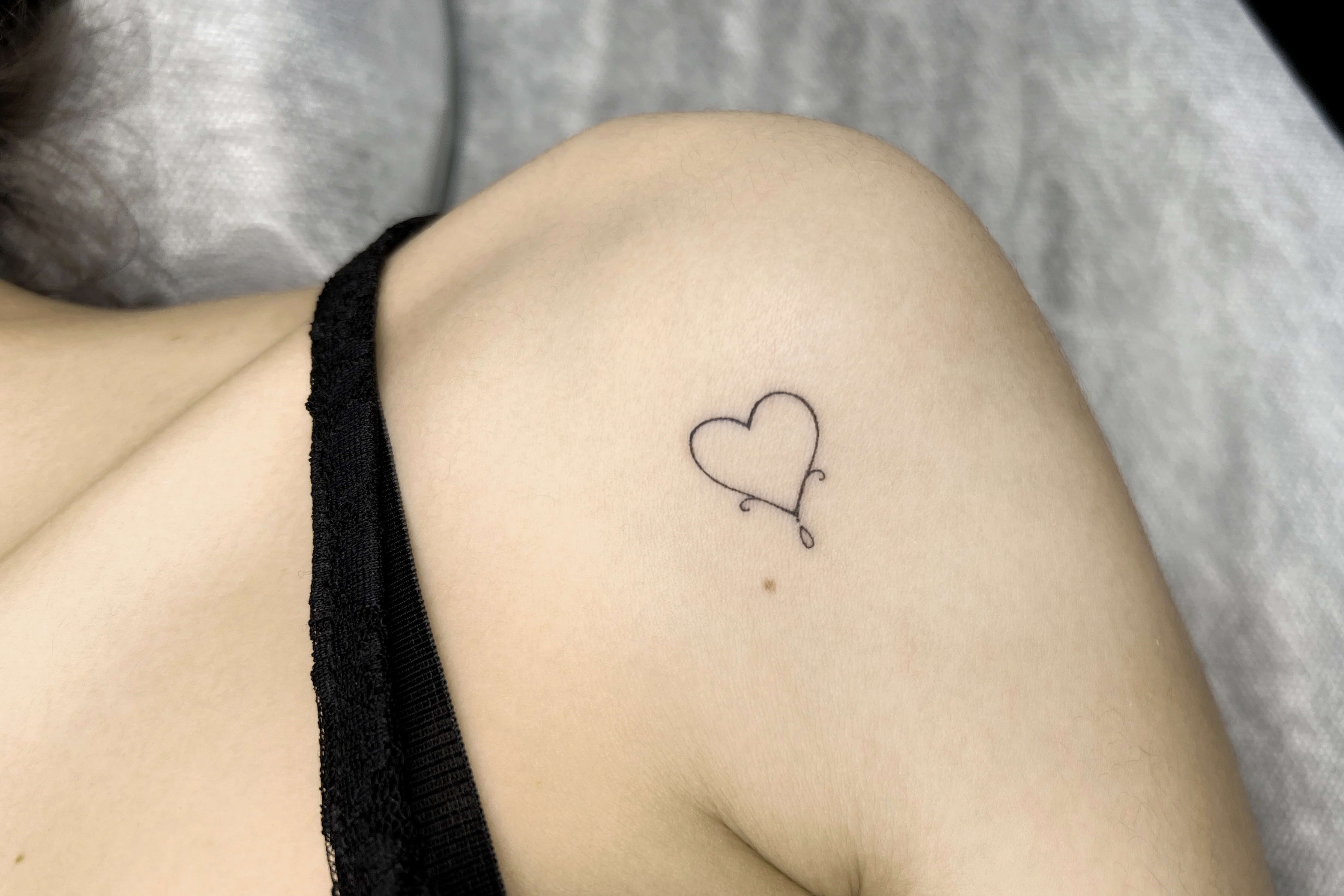
Minimalism in tattooing is the art of subtraction. Instead of elaborate compositions — a single clean line, a small symbol, a word, an outline that says everything without unnecessary embellishment. It's the most common choice for a first tattoo, but also the favourite aesthetic of people who collect small, personal motifs over the years.
Contrary to appearances, minimalism is technically demanding: with such a simple form, every millimetre of line is visible, and mistakes can't be hidden in shading. At our studio in Wrocław we treat small tattoos with the same care as large projects — because well-executed minimalism should stay legible and elegant for decades, not just in the photo right after the session.
Further down you will find a complete guide to minimalism: where it came from, which motifs are chosen most often, where a fine line lives longest, how the session and pricing work — and answers to the questions we hear most often about small tattoos.
Minimalism limits the means of expression to the essential minimum: a thin or medium line, sparing detail, plenty of clean skin around the motif. It's closest to the fine-line technique, but minimalism is a broader philosophy — it also includes simple thick outlines, single dots, geometric micro-forms and discreet lettering.
The greatest strength of this style is its timelessness. A simple motif, well placed on the body, never goes out of fashion, is easy to combine with further tattoos and doesn't dominate the silhouette — which is why it's so readily chosen by people who want a tattoo for themselves, not necessarily for show.
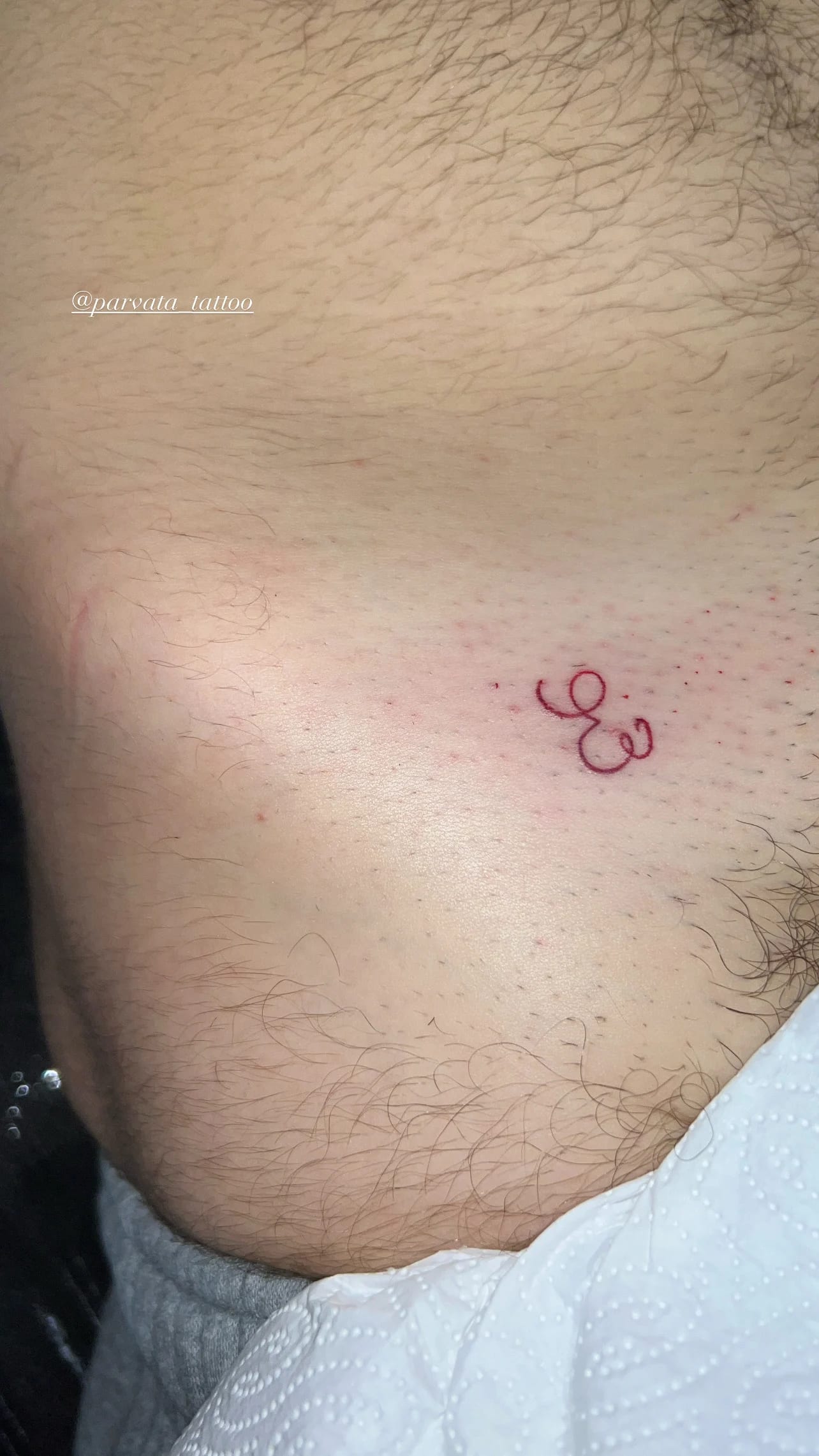
In minimalism the motif has to be legible at a small scale. These work best:

Minimalism gives a lot of placement freedom, because a small form fits almost anywhere: the wrist, forearm, ankle, nape, ribs, the collarbone area or the back of the arm are classics. A small motif can also be hidden — so that only a chosen outfit reveals it.
There are, however, a few places we advise against with a very thin line: fingers, the inside of the hand and the feet. The skin works hardest there and exfoliates quickly, so delicate lines can blur or fade unevenly. At the consultation we'll honestly tell you whether the chosen spot will give a lasting effect.
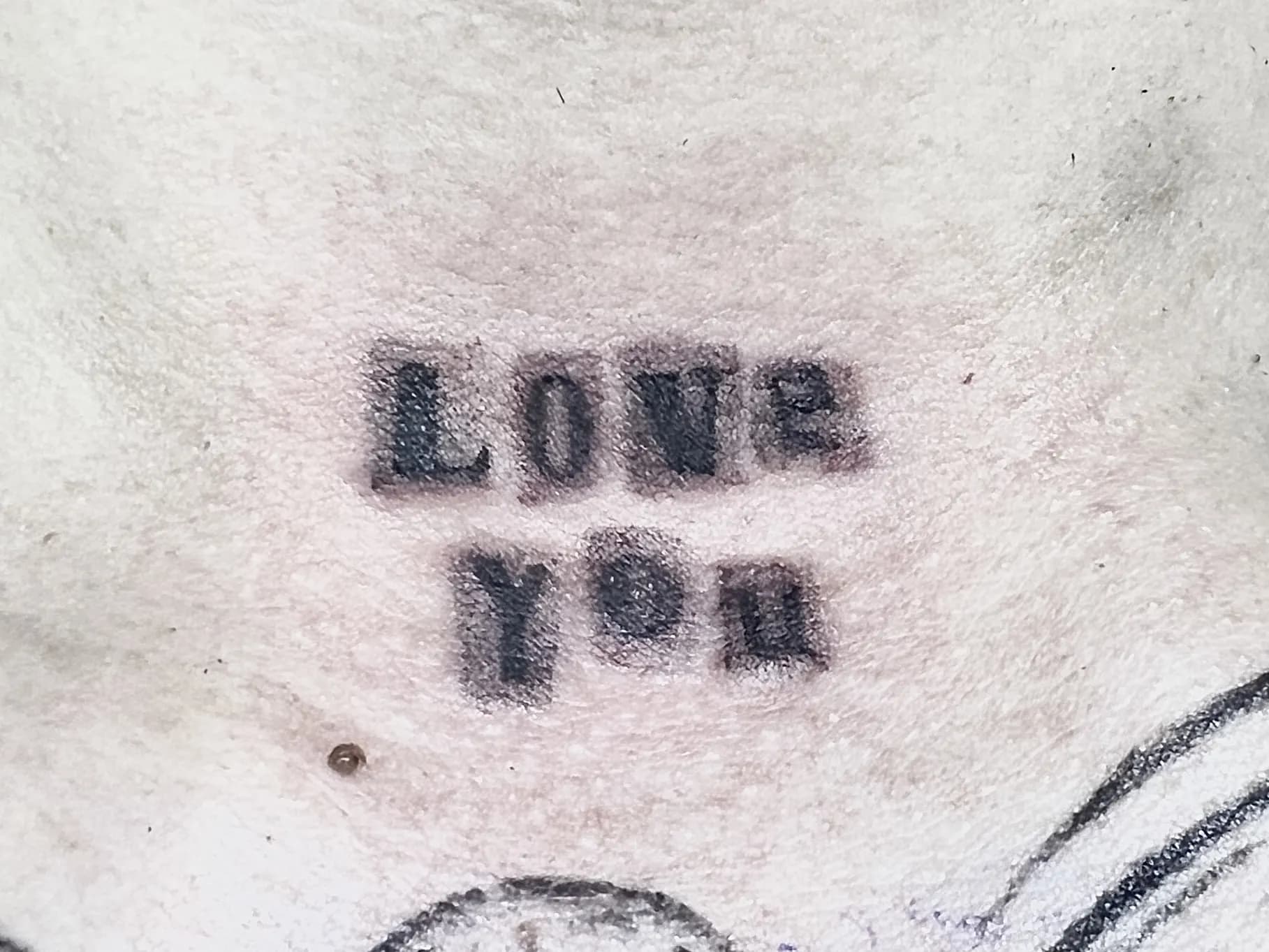
Every tattoo slightly spreads in the skin over time — the pigment diffuses by fractions of a millimetre. In large pieces this is imperceptible; in a micro-tattoo it can decide legibility. That's why, when designing minimalism, we take care of the right spacing between lines, a sensible minimum size for details and a line thickness matched to the body area.
It's also why it's worth choosing an experienced artist rather than being tempted by the cheapest quickie. A line correctly set at the right depth looks great years later; too shallow, it fades; too deep, it spreads into a bluish shadow.

Small tattoos are usually one short visit — often from fifteen minutes to an hour of needle work. That doesn't mean assembly-line production, though: we prepare the design in advance, fit the size and placement to the body, and before the needle touches the skin you always approve the stencil.
At the studio in Wrocław we also regularly hold slots for small designs from our Designs section — ready, original artist projects in an attractive form. It's a good way to get a first tattoo: a proven motif, a quick session, full quality of execution and sterility as with any piece.
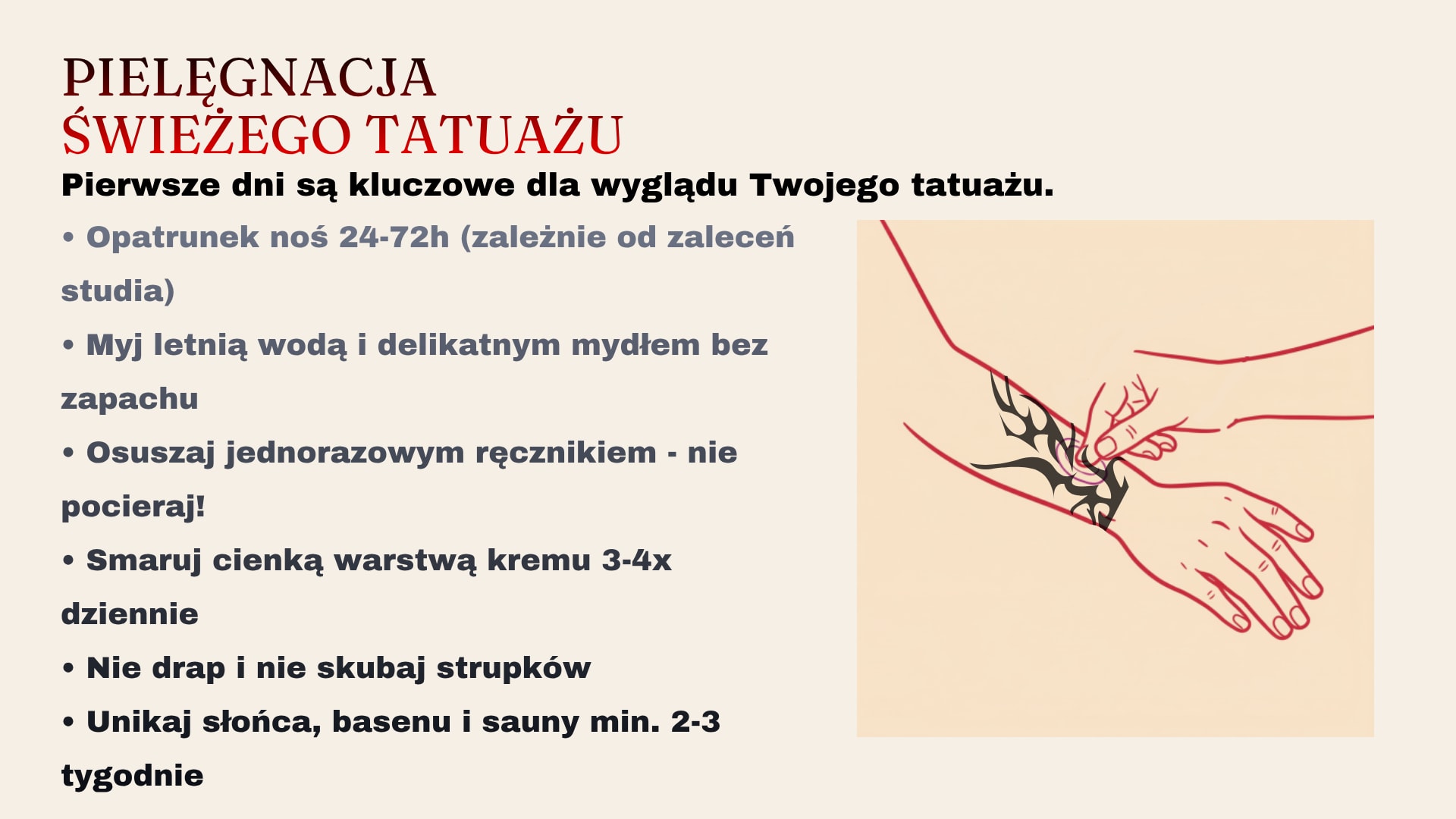
A small tattoo heals quickly — usually 2–3 weeks on the surface — but requires the same discipline as a large one: gentle washing, a thin layer of ointment, no picking at scabs, no pool or sunbed during healing. You'll find a complete step-by-step guide in our article on fresh tattoo aftercare.
After healing, the biggest enemy of a thin line is the sun. SPF 50 on exposed tattoos in summer is a habit that will keep your minimalism sharp for years. And should a line lose contrast after a longer time — a short refresh session restores its full crispness.
Minimalism came to tattooing from outside — from architecture, graphic design and product design, which spent the twentieth century learning to subtract. When visual culture began to prize clean form, skin followed: single lines, small symbols and discreet marks replaced elaborate compositions.
Social media and a new wave of clients brought the breakthrough: people who had never considered a tattoo saw a form made to their measure — personal but unimposing. Small tattoos democratised the whole trade.
Technique matured in parallel: thin needles, precise machines and knowledge of how micro-pigment behaves in skin turned the fine line from a lottery into a craft. Today's minimalism is not „fewer skills” — it is the same skills focused on a smaller surface, with all the discipline any good piece demands.

The first story is debutants: people who thought about a tattoo for years but needed a form for the first step. A short session, a discreet effect and gentle healing take all the weight off that decision.
The second story is meaning-keepers: people for whom a tattoo is a note from life, not decoration — a date, coordinates, a small symbol after an important event. These motifs do not need scale, they need accuracy. The third story is aesthetes of the everyday: lovers of clean design whose tattoos extend that sensibility — considered, economical, perfectly cut.
The common denominator: all three value quality over size. Which works out well, because in minimalism quality is exactly what cannot be faked — every millimetre of the line is in plain sight. Send your idea through the form; a free consultation turns a vague „someday” into a concrete design.
A small tattoo rarely stays an only child. The most beautiful minimalist collections grow over years: a small symbol after a journey, a date next to it, a pet outline a year later — until single marks form a private constellation, legible only to the owner.
To keep the constellation from turning into chaos, think about it from the first motif: shared line weight, coherent aesthetics and deliberate spacing make each new element look planned. Related motifs can live close together (a forearm as a „journal”), while separate chapters of life get separate parts of the body.
Minimalism also pairs well with our other styles: small botany, thin lettering or a micro-realistic detail can coexist in one light collection. Planning your second, fifth or tenth little piece? Bring photos of the existing ones — we will design the new one so the collection still reads as a whole.

Myth one: „a small tattoo means small skills”. The opposite: with a simple form there is no shading to hide inaccuracy and no detail to distract. Every hand tremor stays in view — good minimalism is done slowly and in full focus.
Myth two: „small means sticker-cheap”. Small can be cheaper than large, but never symbolic: the sterile station, single-use equipment, design and the artist's time cost the same regardless of size. A studio's minimum rate is not a whim — it is hygiene, literally.
Myth three: „tiny tattoos vanish within a year”. What vanishes is work done too shallow or in places that wear pigment away — palms, fingers, feet. A well-set line in a sensible spot softens gently with the years but stays readable for decades.
Everything starts with the form: you describe the idea, attach inspirations — Pinterest, a napkin sketch or just a word — and point to the placement. With small forms that is often enough for us to come back with a quote and a date.
The consultation may be short but makes the difference: we refine proportions, match line weight to the placement and say honestly if the dream spot threatens durability. You will see the design before the session — even three lines deserve approval.
The session is usually minutes to tens of minutes of actual work, though we book more: the stencil fitting and millimetre corrections are half the success in minimalism. You leave with a second-skin dressing and brief aftercare instructions; healing is usually uneventful, and your design stays in our archive, so style consistency for future pieces is taken care of.
Minimalism is the natural language of shared tattoos: two complementary symbols, the same date in two hands, halves of one design — small forms carry shared meaning without pathos, and remain independent and elegant on their own.
Designing paired motifs we take care of two things: that each element stands alone (life writes different scripts) and that both fit different bodies — the same line sits differently on a small wrist and a broad forearm, so we sometimes vary the size while keeping the identical form.
The most common commissions are couples and siblings, but we also do friendship tattoos after shared journeys and family ones — a single symbol across three generations. Sessions can be booked together, one after another. It is enough for one of you to send the idea through the form — the rest, including a date for both, we will sort at one consultation.
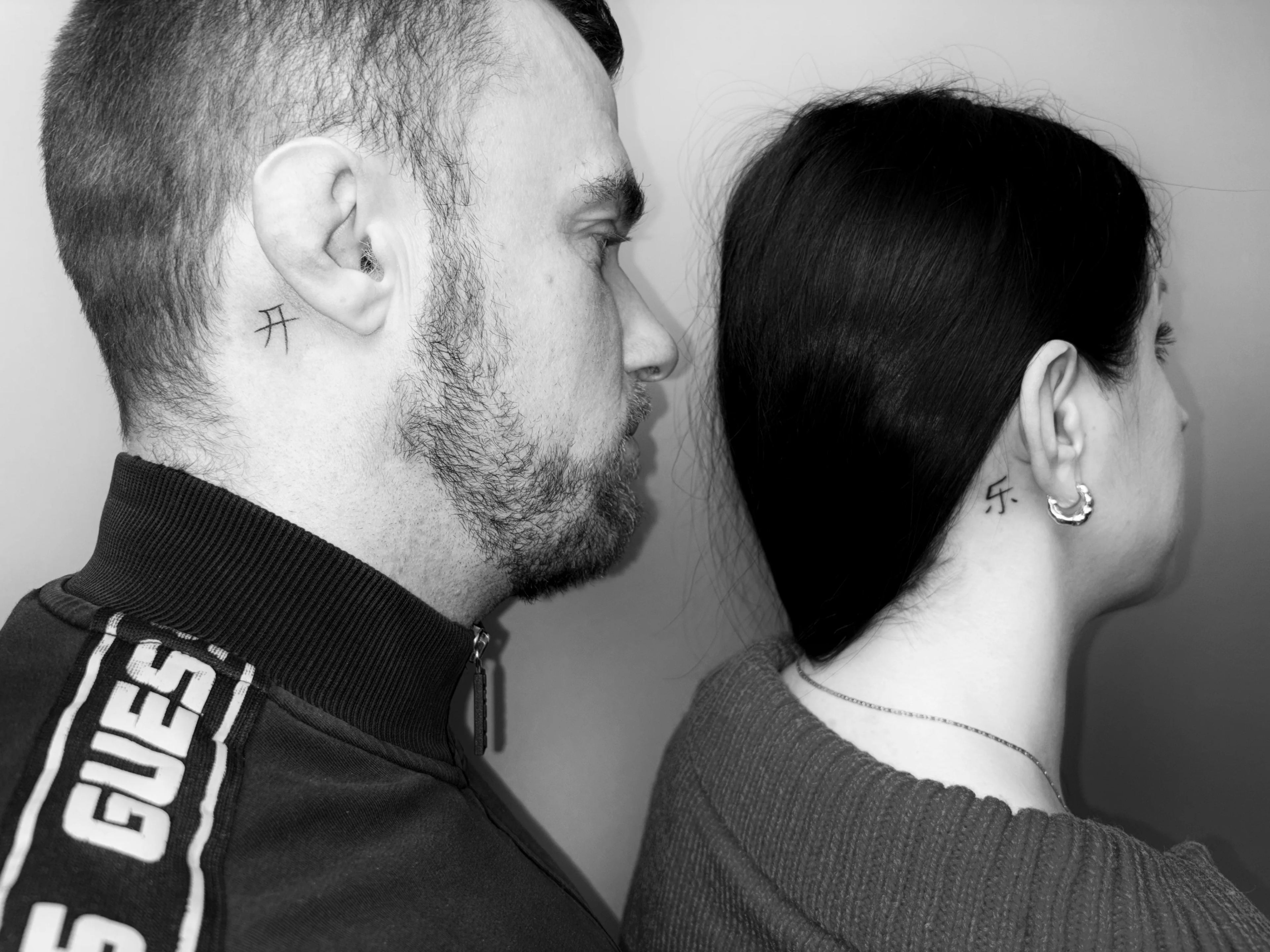
Choose minimalism when one clean line says it all — a first tattoo, a shared motif with someone close, a symbol you've carried in your head for years.
Small doesn't mean instant or free — even a tiny motif is designed and priced honestly, and we'll advise against micro details that would blur with time.
It is usually the shortest and gentlest kind of session — the discomfort lasts from a dozen to several dozen minutes and most people rate it as easy to bear. A lot depends on the spot: ribs or an ankle are more sensitive than the forearm.
We price small pieces individually — the cost depends on the size, detail and placement. The studio has a minimum rate that covers sterile, single-use equipment and full station preparation. You will get the exact figure after sending your idea through the form.
A well-placed thin line holds for years. The keys are the artist technique, the right spot on the body (we avoid hands and feet) and sun protection after healing. If needed, a line is easy to refresh in a short session.
Yes — a short session, fast healing and a discreet form make it the most common first choice. Read our guide on preparing for a first tattoo too, and we will clear up any doubts at the consultation.
Of course — inspiration is welcome. We do not copy someone elses work one to one, but based on it we will prepare an original design in a similar spirit, fitted to your body.
It depends on the typeface: the finer and more ornate the font, the larger the inscription has to be. We usually recommend a letter height from about 5 mm for simple typefaces. We will fine-tune the specifics to your chosen typography at the consultation.
Yes — one of the perks of a modest form. A small motif is easy to build into a larger piece, surround with botany or geometry, and if plans change, a small surface is the simplest possible cover-up. Minimalism leaves every door open.
Send your idea through the form — a description and an approximate placement are enough. We will reply with a quote and a date; for small forms the waiting time tends to be the shortest in the studio, and the consultation is often combined with a same-day session.
On the surface usually 5–10 days; full skin rebuilding takes the standard 3–4 weeks. Thanks to the small area and thin line it is the gentlest healing in tattooing — usually without much flaking and with minimal discomfort.
We use it cautiously and warn honestly: white pigment is the least predictable — it can yellow or vanish with time, and the effect depends heavily on skin tone. We usually propose it as an accent, not a standalone piece; at the consultation we will show healed examples.
Yes — a small colour accent can be very effective: a red heart, a blue wave, a single coloured flower. One rule applies: at a small scale the colour must be saturated and contrasty, because pastels lose legibility fastest in miniature. At the consultation we will advise whether your motif plays better in black or with an accent.
Absolutely — two or three little pieces often close in one visit, which is also more convenient price-wise than separate sessions. It is worth listing all the ideas in the form at once: we will plan the order, the placement and the consistency of lines between motifs.
The safest zones are areas covered even by summer office wear: the upper arm, shoulder blade, ribs, hip or ankle under a sock. The forearm and wrist hide under a shirt sleeve but can show in summer — if discretion is the priority, mention it at the consultation and we will match the placement to your dress code.
It positively befriends it — a thin line on the wrist or finger plays along with a watch and rings like an extra, permanent element of the composition. Designing a motif in those areas we take the jewellery into account: show us at the consultation what you wear daily.

Gothic Ornaments & Cathedral
Justyna Góra • Tattoo Artist • Permanent Makeup
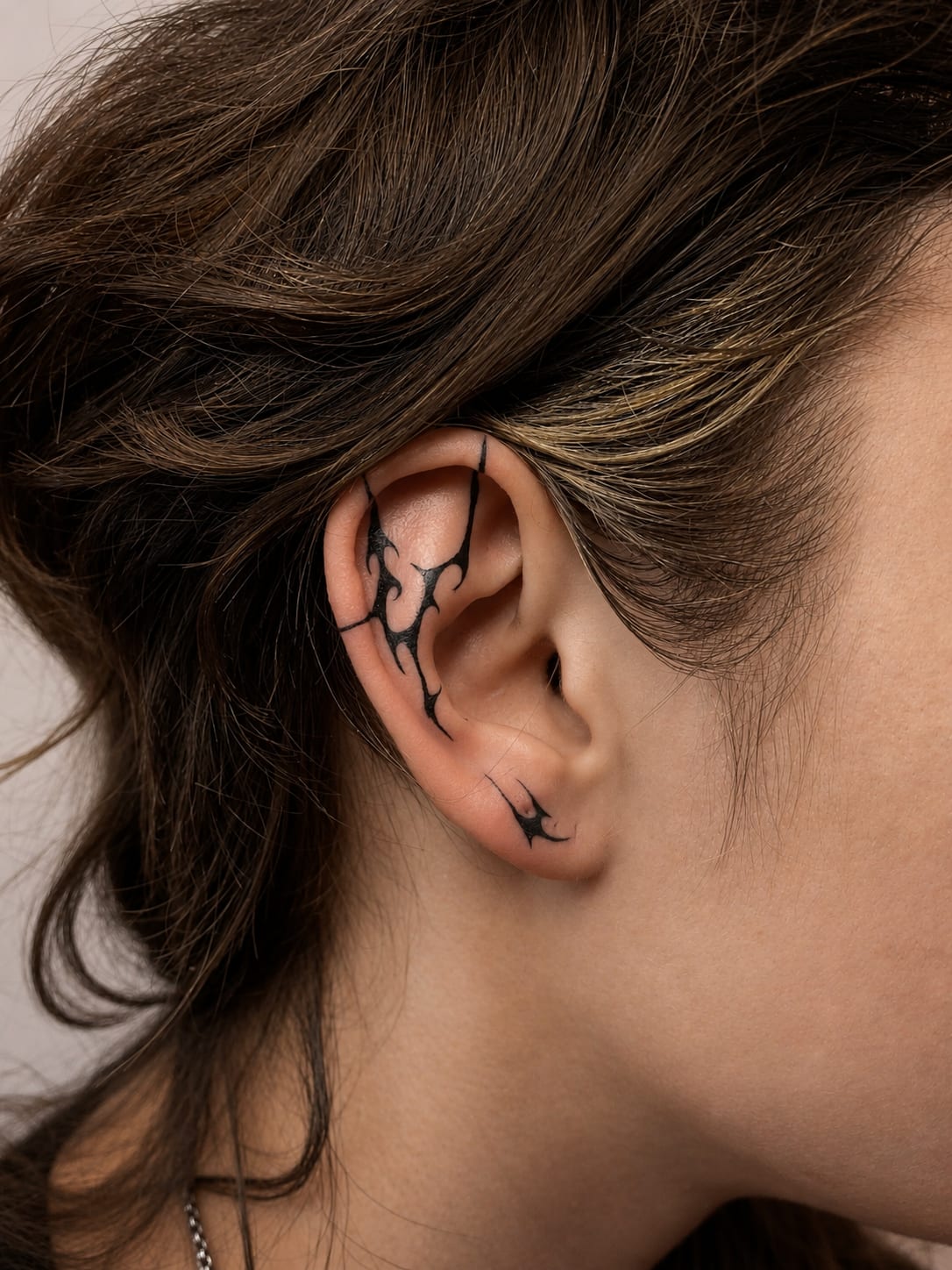
Sharp ear contours
Dominika Doroszkiewicz • Technokracja • Tattoo Artist
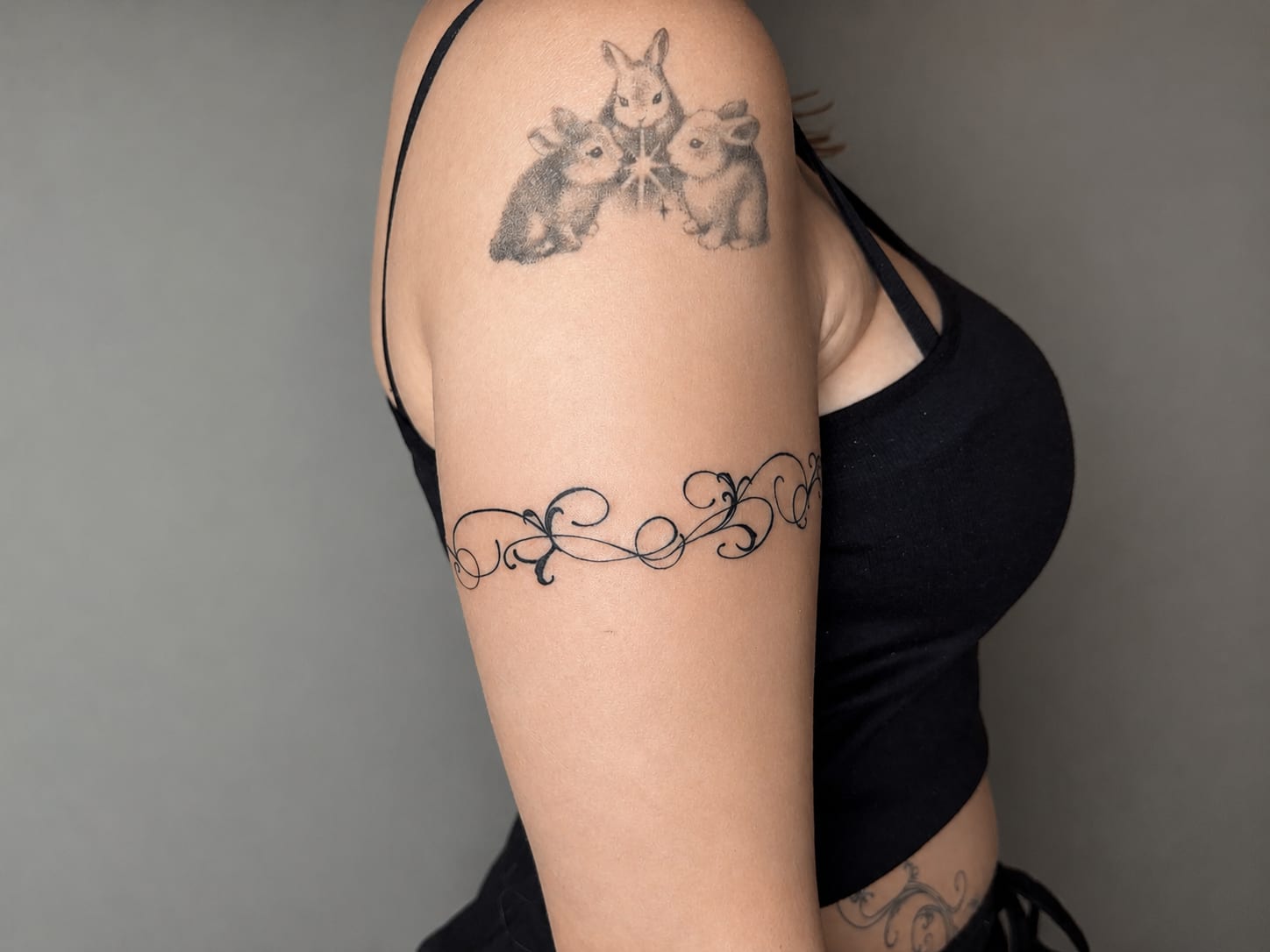
Bunnies & Flourish Band
Justyna Góra • Tattoo Artist • Permanent Makeup
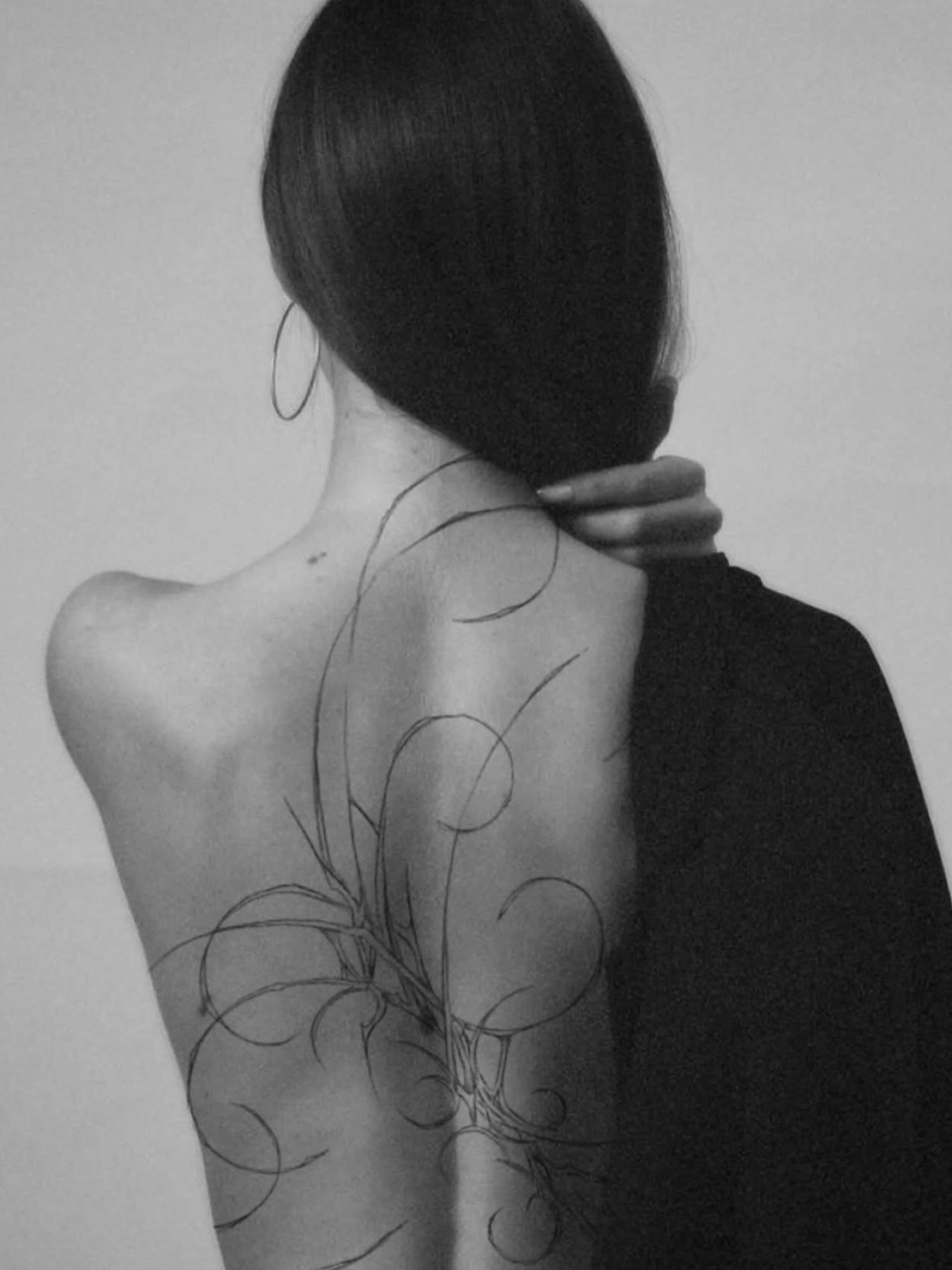
Organic grass swirls
Mira Paul • Sacred__kid • Tattoo Artist
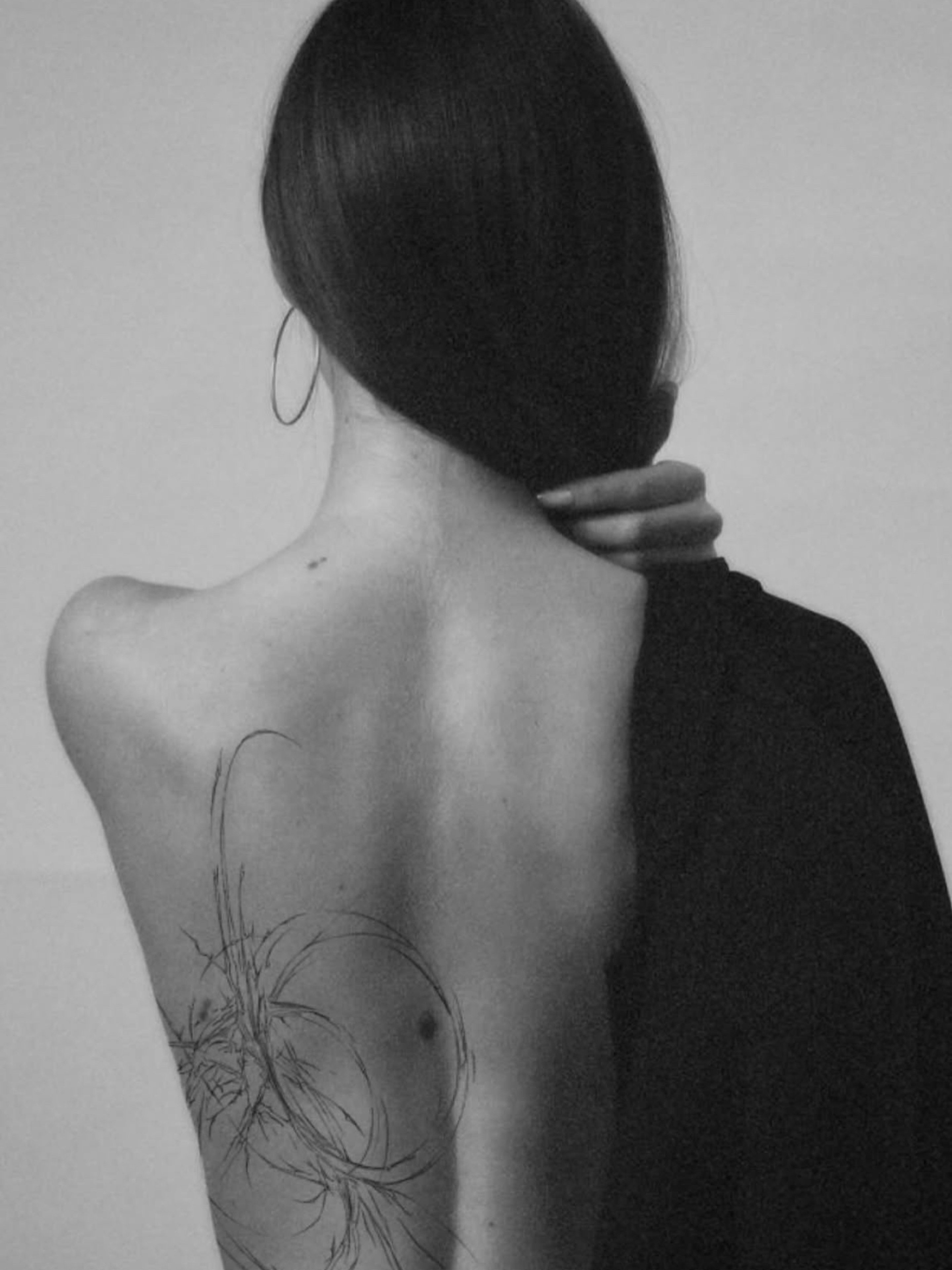
Abstract circles and lines
Mira Paul • Sacred__kid • Tattoo Artist

Dotwork Roses for the Hand
Justyna Góra • Tattoo Artist • Permanent Makeup
Indicative ranges — every piece is quoted individually after a free consultation.
Minimalist tattoo
300 PLN
~75 €
A single small motif in a thin line, with no shading or fill — one symbol, a date or a short word. The shortest session on our list.
Get your quoteSmall design
from 400 PLN
~100 €
Small motifs, lettering and single elements with detail or light shading — usually one short session.
Get your quoteMedium project
500–1000 PLN
~125–250 €
Hand-sized compositions: fine line, ornaments, lettering with graphics, smaller shaded motifs.
Get your quoteLarge project
1000–2000 PLN
~250–500 €
Detailed designs on the forearm, calf or back — more detail, often longer or multi-stage work.
Get your quoteSleeves and large pieces
individual quote
Sleeves, large compositions and multi-session projects are billed per session across several appointments.
Get your quoteThe ranges are indicative. The final, binding price is set after the consultation and once the design is approved.
Our artists’ portfolio is the best test of whether a style fits your skin and idea. Filter by style, body placement or tags.
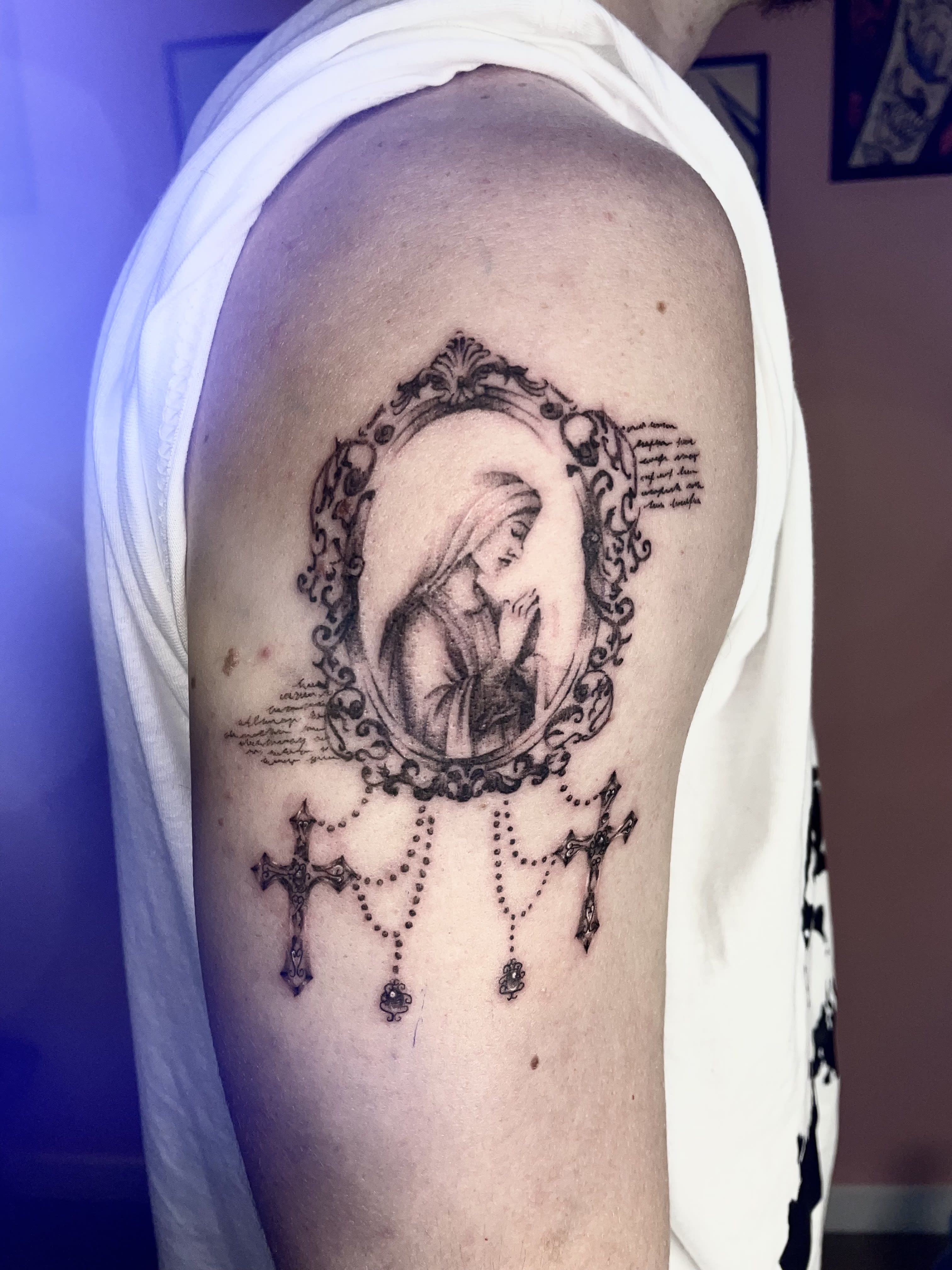

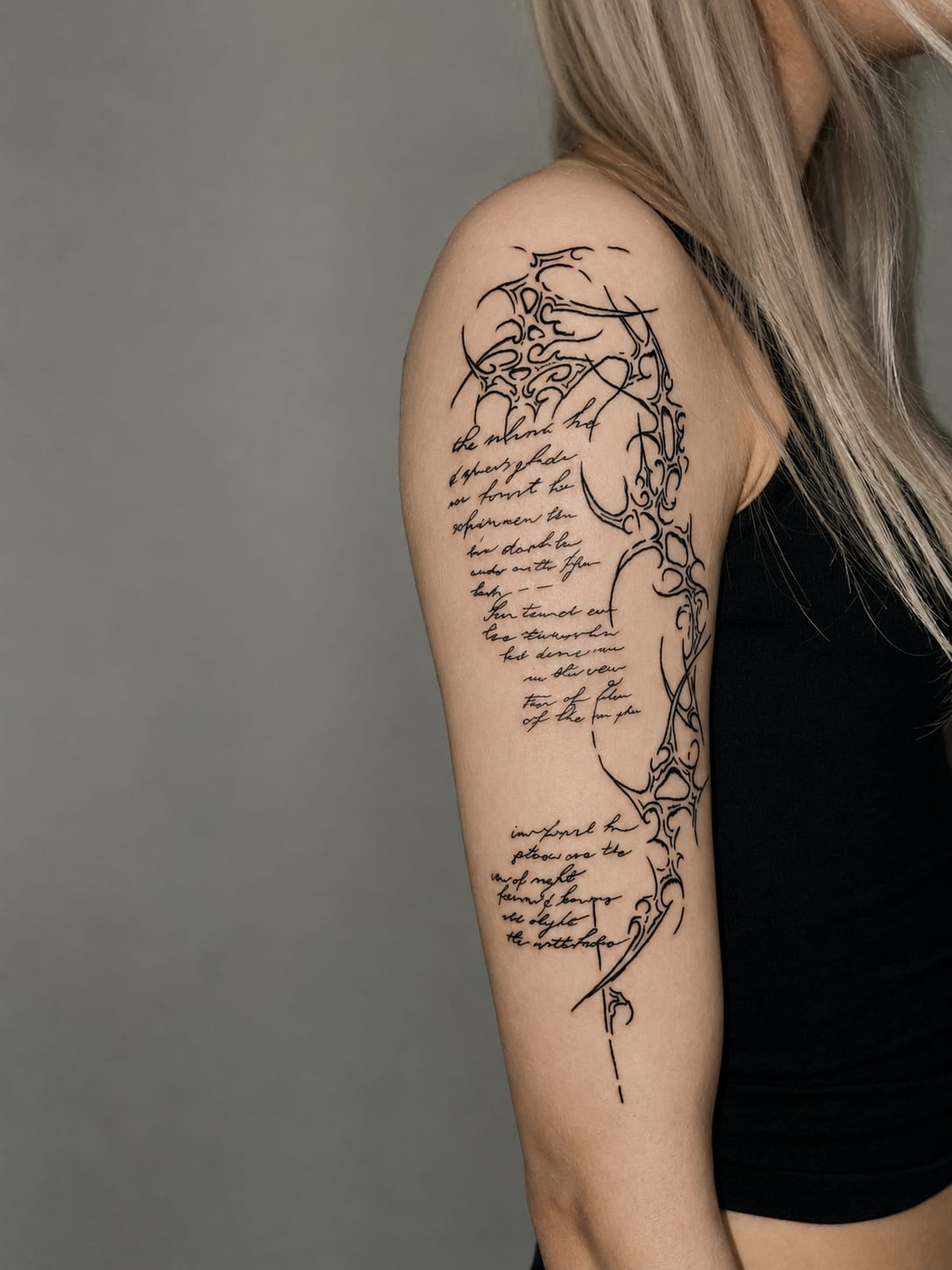
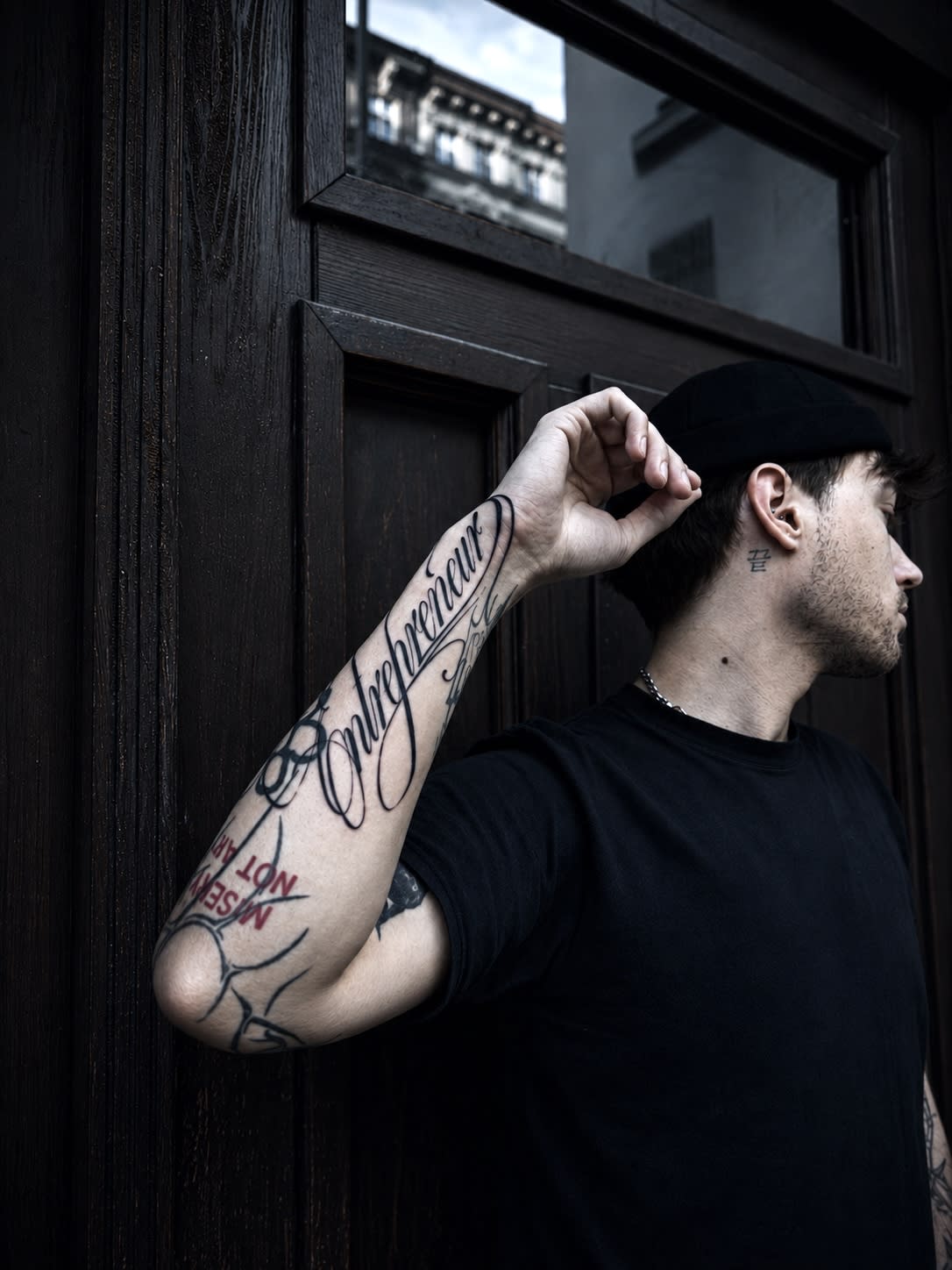
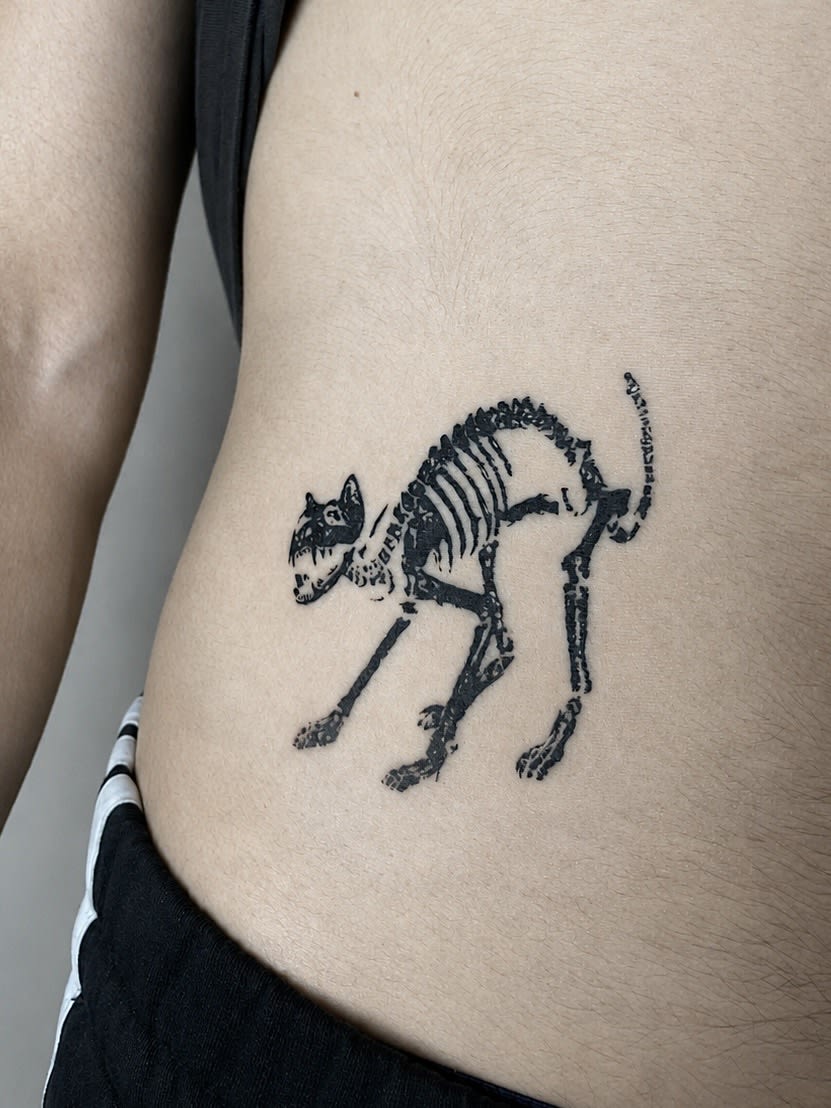

Each artist has their own specialities — see profiles and portfolios, or describe your idea in the form and we’ll match the right person.
The techniques in this gallery have their own pages — motifs, healing, prices and healed examples.
We cover old or unloved tattoos with a new design. See before-and-after transformations straight from our studio.
Practical guides by our artists — pain, aftercare and preparation. No myths, no scare stories.
Original projects waiting for an owner — each with a price and a suggested size.
The questions that matter most
Describe it in the form — we’ll suggest a style, an artist and the nearest date. The consultation and quote are free.