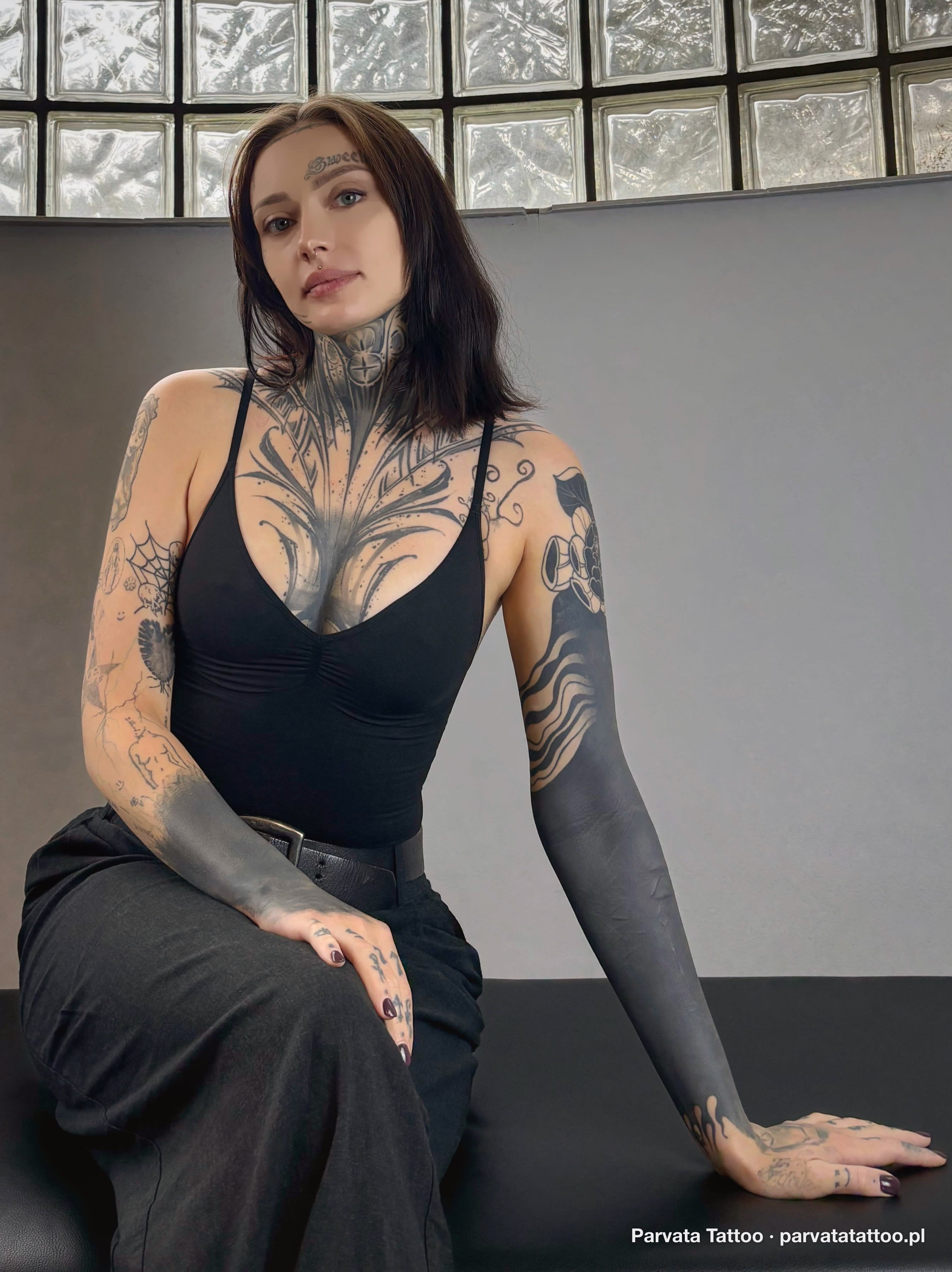





Cover-up — a second life for your tattoo
We cover old or unloved tattoos with a new design. See before-and-after transformations straight from our studio.
Tattoo styles
Thin, spiked black work where the sigil meets cyberpunk. We draw every piece from scratch — it should mean something of yours, not look like someone else's screenshot.

Cybersigilism is the youngest style we tattoo — it appeared around 2020 and is still taking shape. It fuses the sigil, a symbol charged with personal intent, with cyberpunk aesthetics: thin black line work, spikes, sharp breaks, compositions that branch like a nervous system or a printed circuit. Our portfolio holds 19 pieces in this vein and three of our artists work in it. This page says plainly how such a design is built, how long it takes, what it costs in Wrocław and how a thin line behaves years later — the questions a social-media trend never answers.
The name has two halves and both are honest about the style. “Cyber” is the visual layer: technology, circuitry, machine skeletons, Y2K aesthetics. “Sigilism” is the practice of making sigils — marks their author charges with a specific intent, then wears.
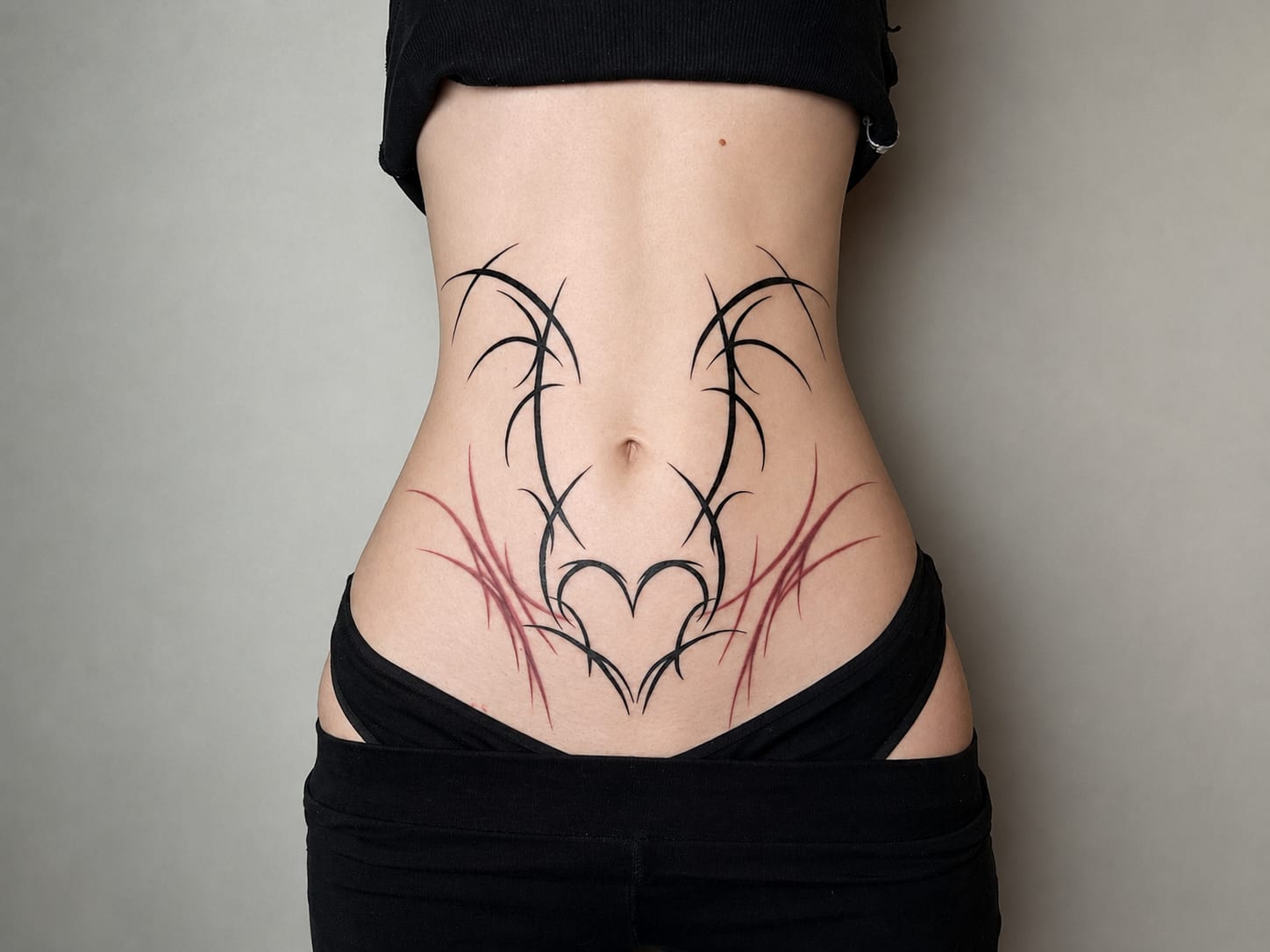
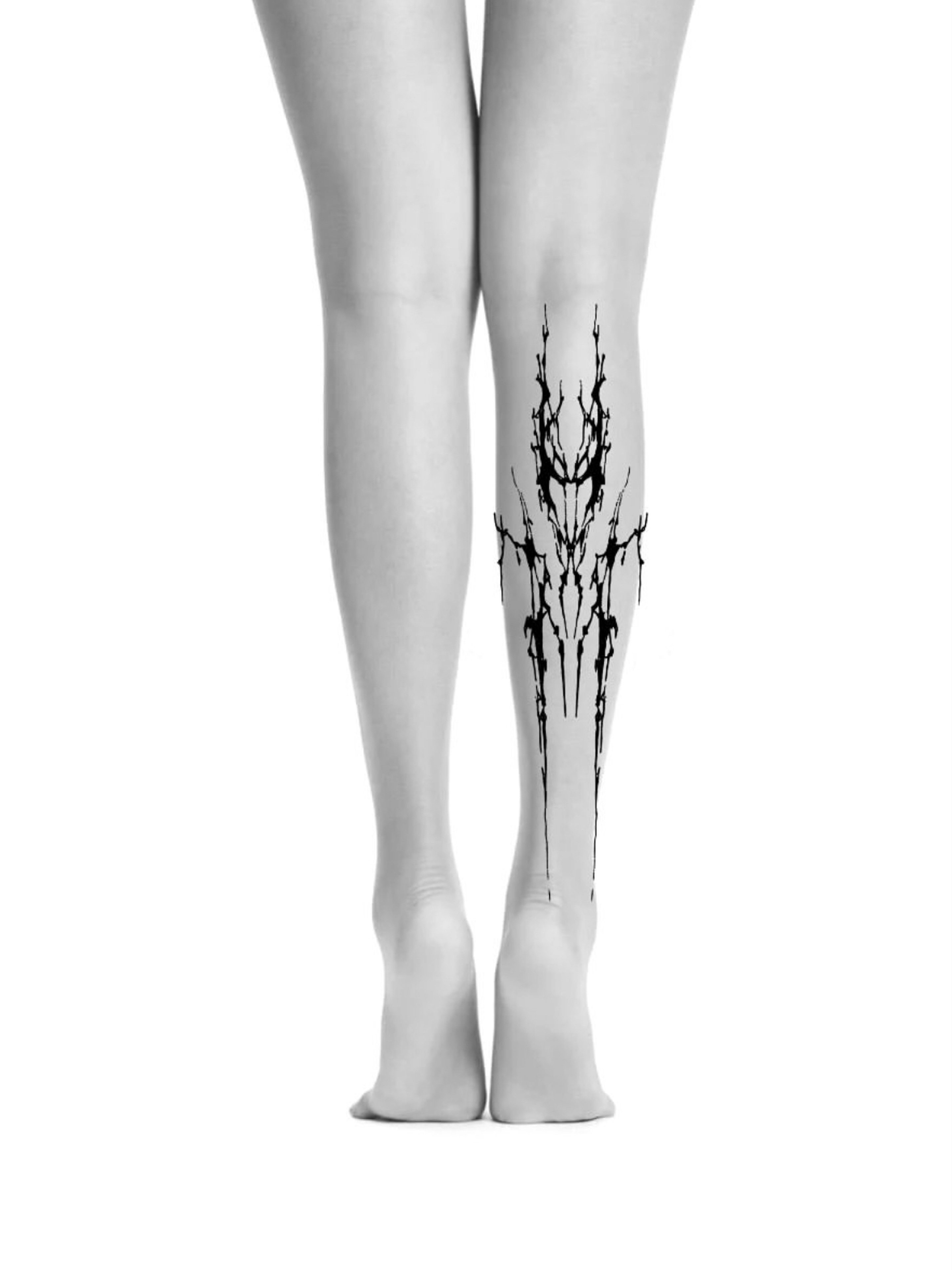
In practice cybersigilism reads as a sharp, spiked drawing in thin black: barbs, branches, needle-fine endings. It sits closer to an organic structure than to symmetrical geometry — a good cybersigil flows along the body rather than sitting on it like a sticker.
For some people it is simply strong graphic work. For others it carries a meaning that nobody else needs to read. We take both motivations equally seriously, because both end in the same place: a design that has to hold up on skin for years.
Cybersigilism came out of the internet around 2020 and 2021. Instagram and TikTok carried it, and its roots are mixed: 1990s tribal, Y2K graphic design, record sleeves, occult symbolism and early cyberpunk imagery.
The artists credited with the style were the first to fuse those elements into one visual language, and their work now circulates online as the reference for what a cybersigil looks like. That shared ancestry is why people confuse it with neotribal — same lineage, different line work.
Being a young style has one practical consequence worth knowing before a session: nobody has twenty years of evidence on how these pieces look after decades. What we do have is knowledge of how thin black ages — and we are straight about that further down.

Tribal builds form from thick, solid black with soft edges — mass that carries the shape. Neotribal revisits that mass with modern freedom of composition. Cybersigilism goes the other way: instead of mass it gives you a web of thin lines with sharp, tapering ends.
Blackwork is the broader term — everything we do in black, from dense fill to ornament. Cybersigilism lives inside it as one specific aesthetic, which is why we often combine them in a single piece: a dense base plus spiked branches.
What separates it from geometric work is the absence of rigour. A geometric tattoo relies on compass, ruler, symmetry and a repeatable module. A cybersigil may be asymmetric and may grow to one side — it should look like something that sprouted, not something ruled onto paper.
We start with a conversation about what it should mean. You do not need a finished symbol — a theme is enough: a turning point, protection, a particular person, a decision. From that we build the core of the sigil, then wrap the cyber layer around it.
The second step is anatomy. We draw for a specific placement, because a cybersigil lives by direction: the barbs have to run along the muscle or the bone, otherwise the composition starts fighting the body. That is why the design follows the placement decision, not the other way round.
You see the design before the session and you can correct it. We do not copy other artists' sigils from the internet — not only because of copyright, but because a sigil borrowed from somebody else's intent is just a pretty pattern. Your version should be yours.
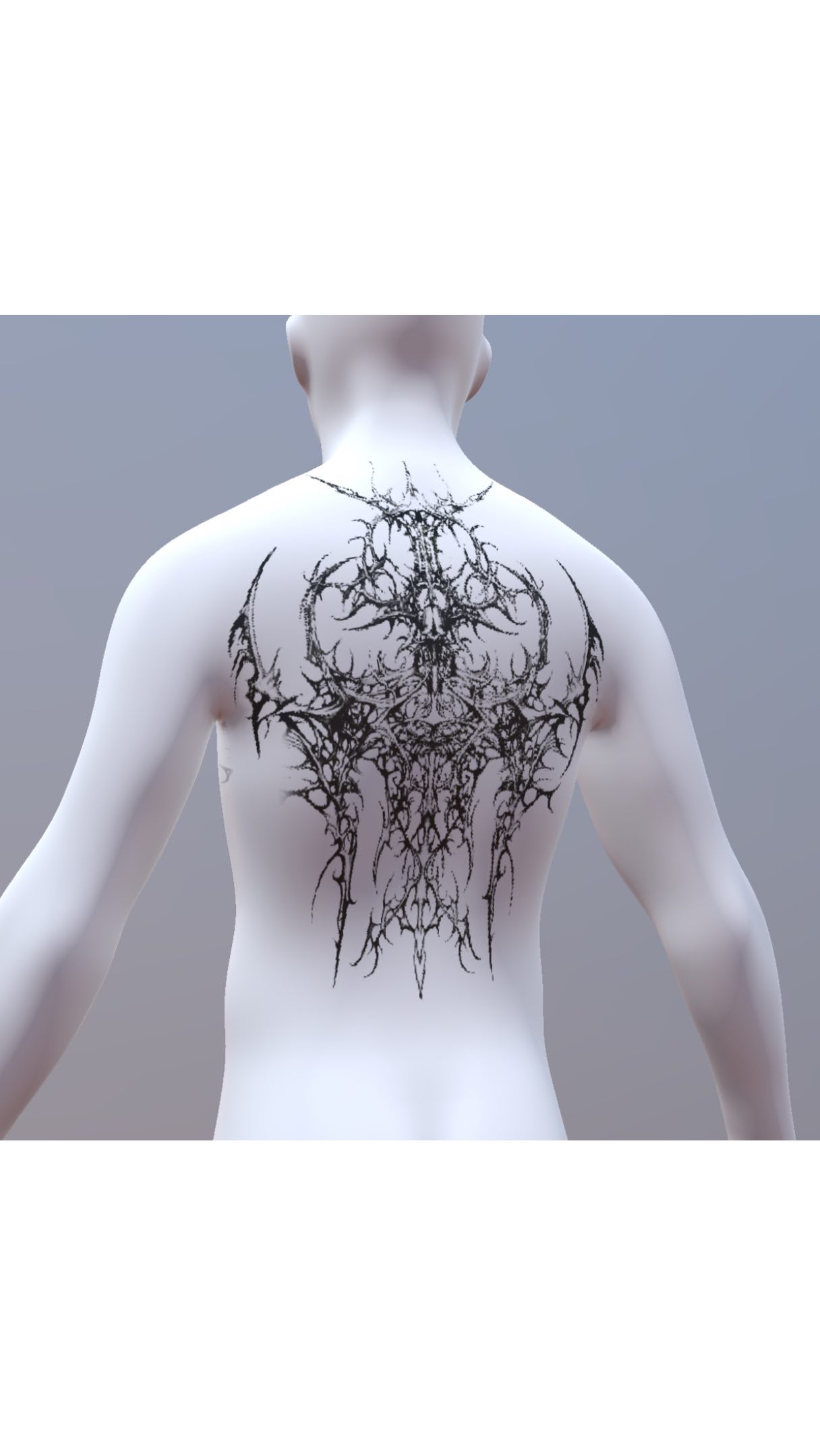
Thin black does not forgive. In dense fill a small irregularity disappears into the mass; in a cybersigil every tremor stays visible, because the line is a fraction of a millimetre wide and travels in long arcs with nowhere to hide a correction.
The second difficulty is the taper. Barbs must narrow to nothing, which means the artist controls depth and speed at the same time. Too little pigment and the line vanishes while healing; too much and it spreads under the skin.
The third is spacing. Lines packed too tightly merge into a patch over the years. So we design with room to breathe: what looks generously spaced on paper still shows clean gaps two years later.
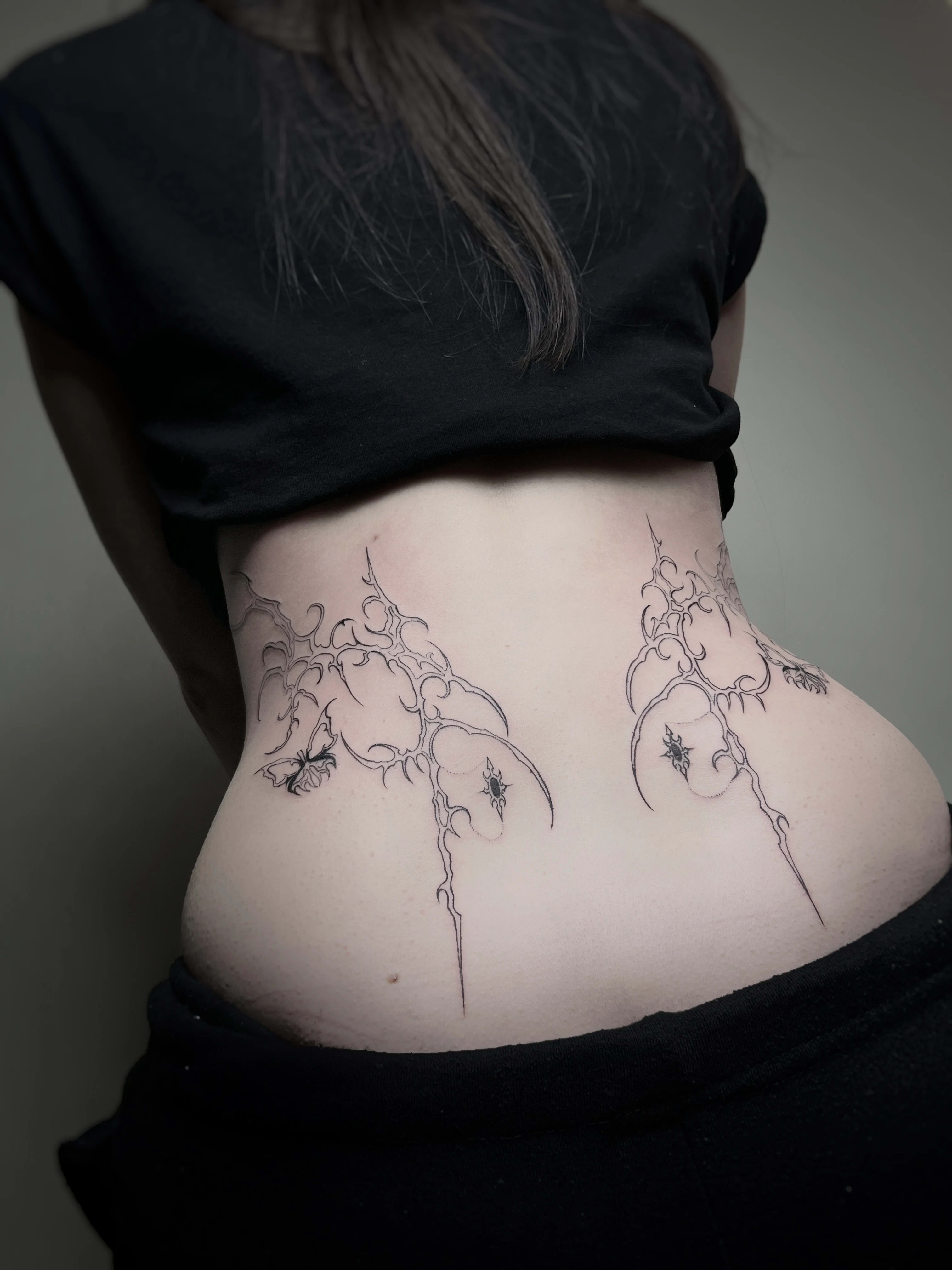
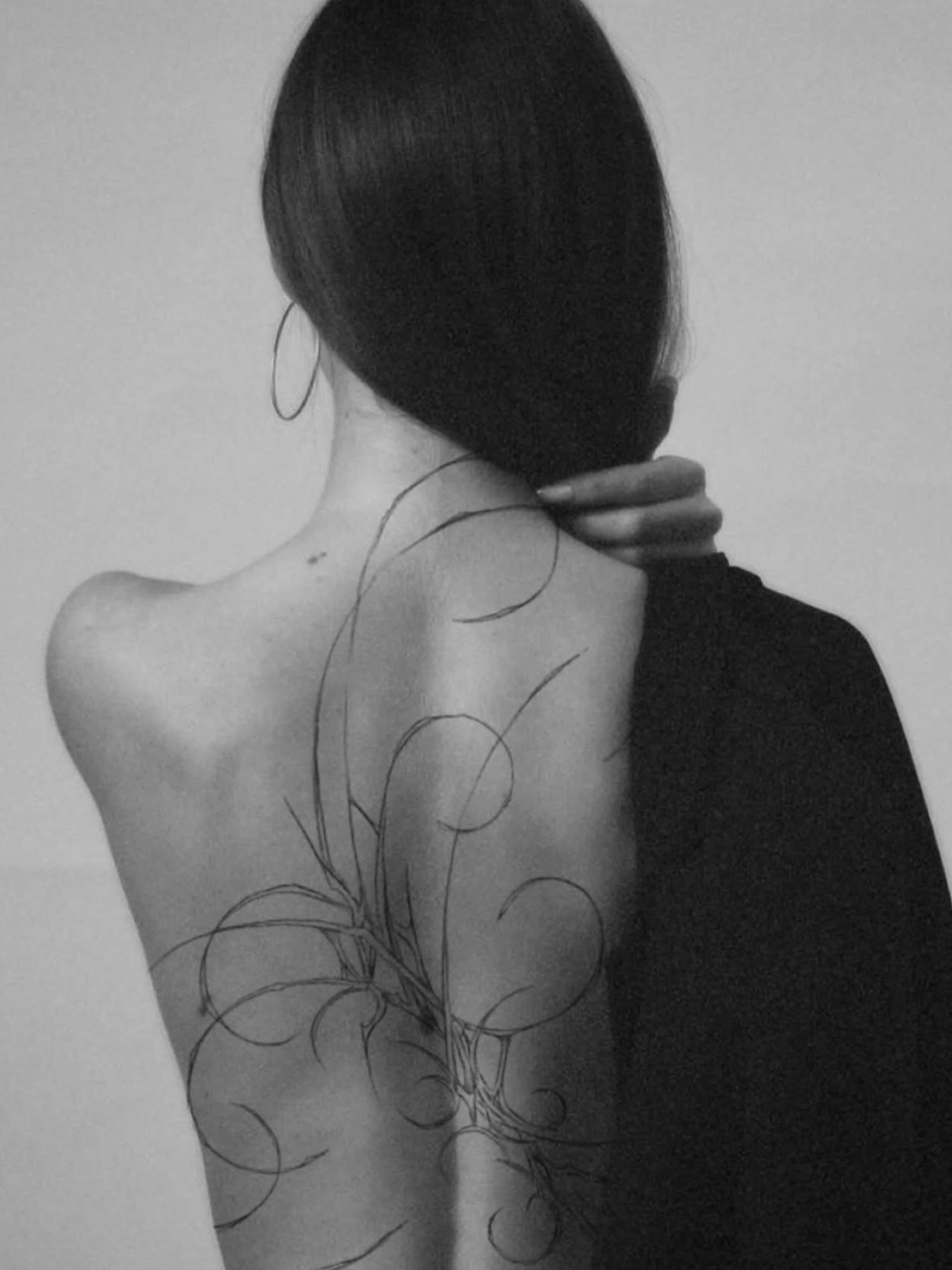
It works best on long, gently convex surfaces the line can flow across: the spine, the forearm, the outer upper arm, the calf, the shoulder blade. There the composition has room to branch and does not break across curves.
High-visibility placements — collarbone, neck, sternum — look excellent, but they are a deliberate choice: those areas show above a T-shirt and are more demanding during the session.
We advise against fingers, palms and feet. The skin renews itself most aggressively there and thin lines take that worst — a touch-up would not be a one-off exception but a regular necessity. We say so at the consultation, before you pay anything.
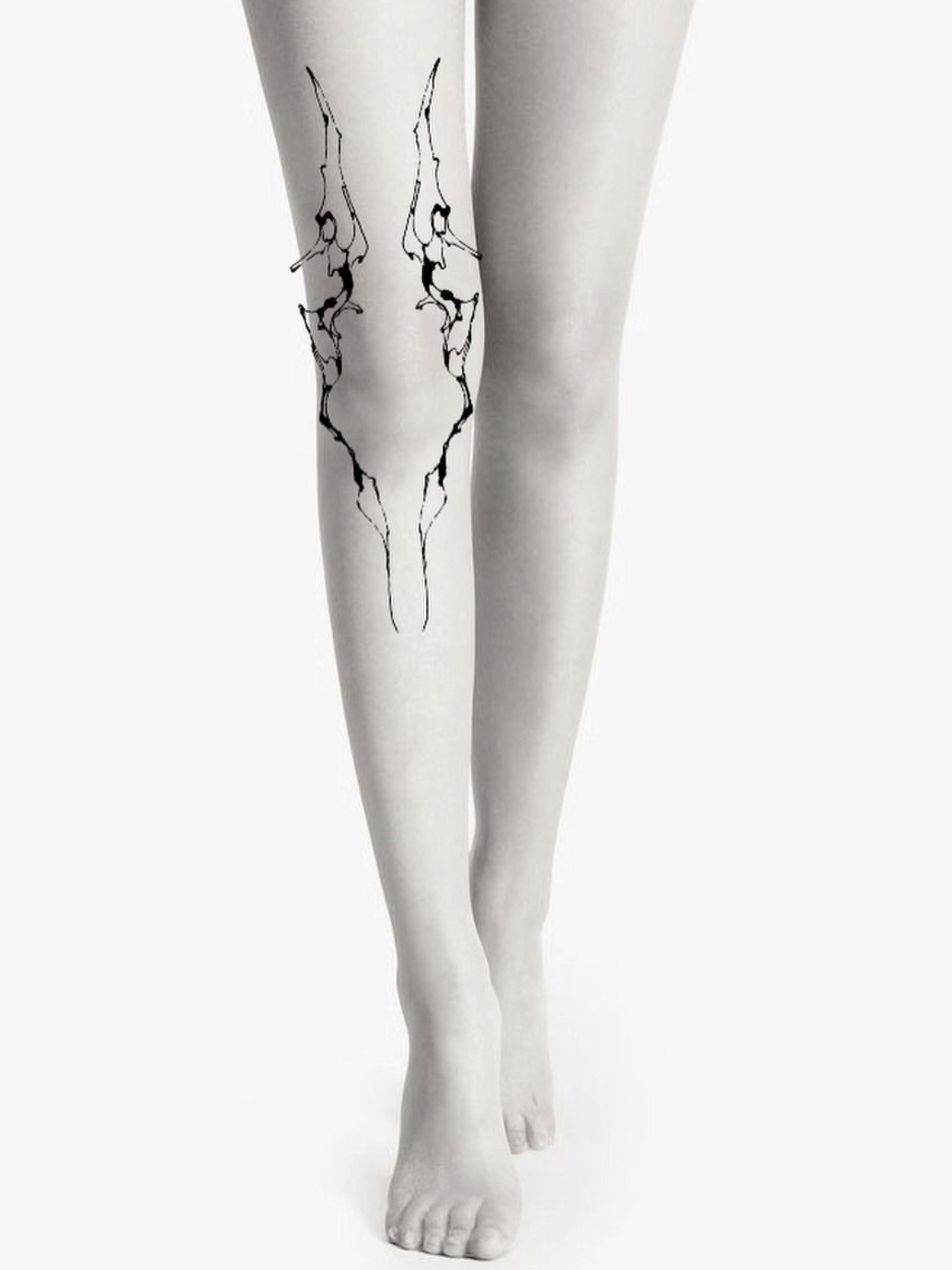
Pain depends mostly on placement. The forearm, upper arm and calf are milder; ribs, sternum, neck and the inner arm are noticeably more demanding, because the skin is thinner there and closer to bone.
Cybersigilism has one advantage: it does not require long, monotonous filling. Instead of hours of steady shading there are shorter passes of thin line, so a session is often less tiring than blackwork over a similar area.
A typical small composition is one session of two to three hours. A spine from neck to lower back, or a large back piece, is usually a project across several appointments that we plan together at the consultation.
We publish ranges, because you deserve to know the order of magnitude before you visit. Small designs start from 400 PLN. Palm-sized compositions are usually 500–1000 PLN. Large pieces run 1000–2000 PLN.
Sleeves, full backs and multi-session projects are quoted individually once we have seen the design, because the price follows real working time rather than size alone. A dense web of thin lines on a small area can take longer than a bigger, simpler form.
The price includes the custom design, single-use materials and a check-up once healed. The binding figure comes after a free consultation — the ranges on our price list are indicative and never replace a quote for a specific design.
A thin line carries less pigment than a thick one by definition, so it reacts to time faster. After a few years it loses edge definition and the finest barb endings may retreat slightly. That is not poor workmanship, it is the physics of skin.
The biggest enemy is the sun: UV breaks pigment down, and it — not the passing of time — accounts for most fading. Sunscreen after healing makes a real difference; it is the cheapest thing you can do for this tattoo.
So we design for a decade rather than for the photo taken a week after the session: minimum spacing between lines, deliberate line weights, less micro-detail where the skin moves. Your first touch-up after healing is free.
For the first days you wear a second skin dressing, then you wash the piece with lukewarm water and apply a thin layer of the recommended cream. The outer skin regenerates in 2–4 weeks; deeper layers need up to two months.
With thin lines two things are especially costly: picking scabs and dry skin. One pulls pigment out of the stroke, the other makes the line heal unevenly. During that time skip pools, saunas and direct sun.
You get the full aftercare guide from us in writing after the session, and you can message us at any stage of healing. Once healed, we invite you in for a free check-up at the studio.
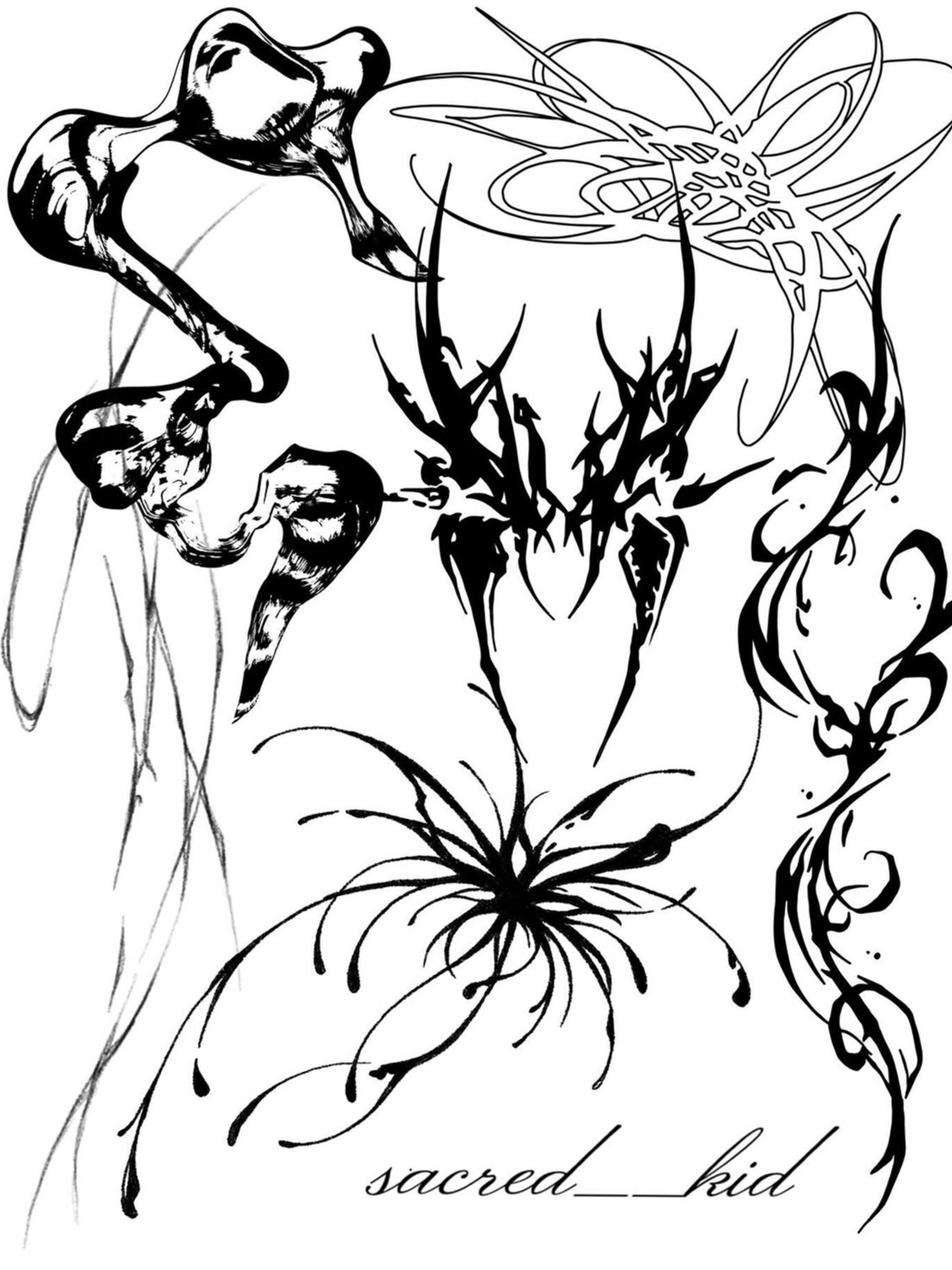
We draw four families of form most often. Barbs and thorns — sharp growths radiating from one point, good on the spine and forearm. Wings and machine ribs — symmetrical arrangements that read like a skeleton or an exoskeleton.
The third family is vines and webs: lines wrapping a limb, flowing one into another, excellent for a sleeve or a calf. The fourth is a single sigil as a mark: a compact, palm-sized form where the whole meaning sits in one symbol.
Hearts, blades and chimeras also come up — motifs from the Y2K borderland. We redraw each of them for your body: the same family of forms needs different density and proportion on a forearm than on a back.
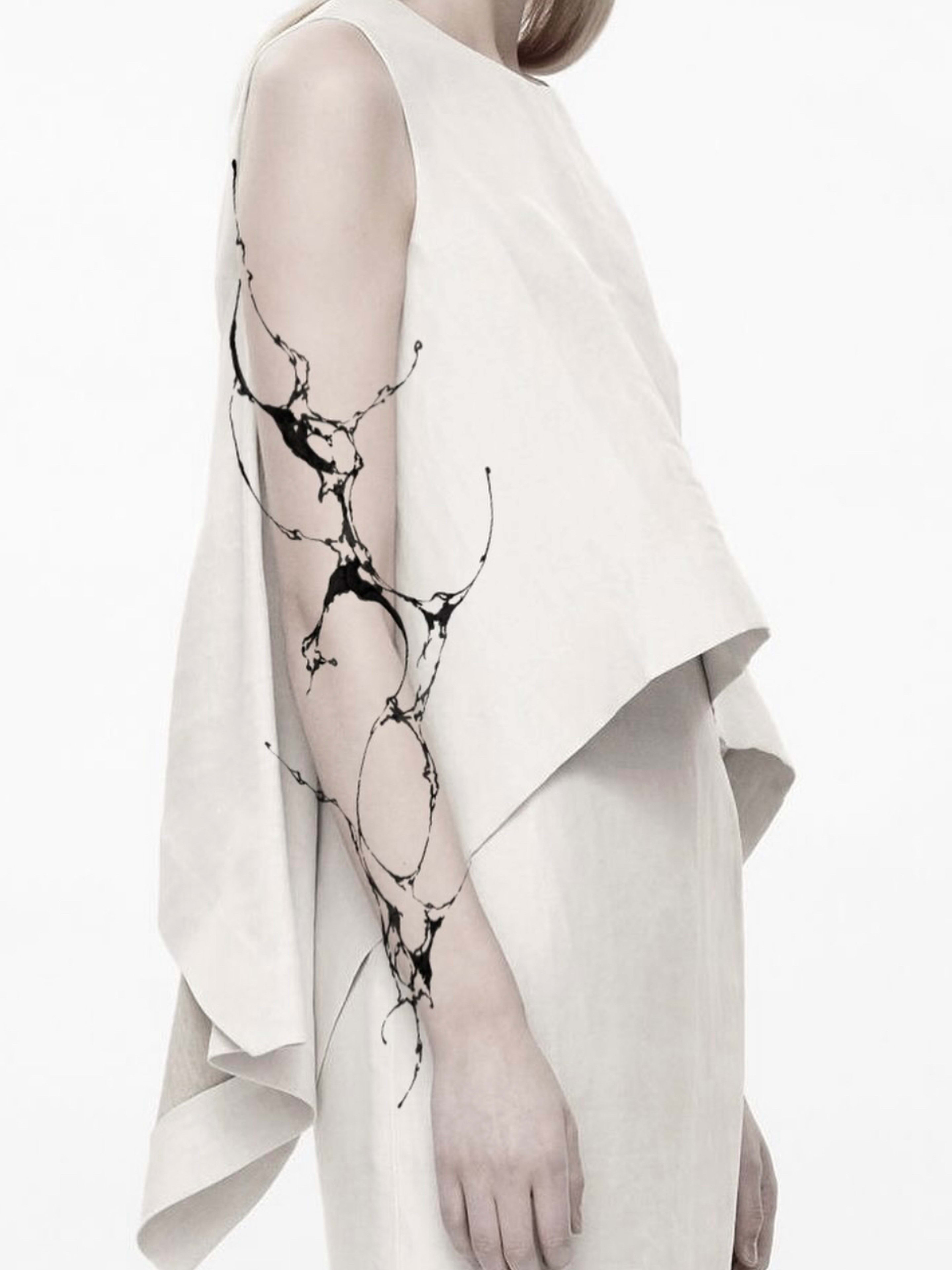
Cybersigilism has been in fashion for a few years and that is a real risk worth thinking about before a session. We will not argue that fashion does not exist — we would rather tell you what separates a design that will date from one that will hold.
The pieces that hold are the ones with their own meaning: a sigil built around your intent does not stop working when a hashtag stops trending. What dates is a copy — a design lifted from somebody else's profile because “this is what people wear now”.
Practically: the less your design depends on a specific fashion for shapes and the more on your story and your anatomy, the lower the risk. We will say the same at the consultation, even when it means a smaller piece than you planned.
Sleep and eat before you come — a blood-sugar dip during a long thin-line session shows up faster than during filling, because the work asks you to stay still. Bring something to drink and a snack.
Do not drink alcohol the day before: it thins the blood, and with a fine line excess blood and plasma literally push pigment out of the stroke. Coffee in reasonable amounts is fine.
Moisturise the skin for a few days beforehand and do not tan the area we are tattooing. Dress so you can expose the spot without stripping to your underwear — with a spine or ribs piece that is about your comfort for several hours.
A thin line on its own covers nothing — the old design will still show through. But cybersigilism combines well with a dense black base: we build blackwork mass where coverage is needed and lead the eye away with the spiked web.
Cover-ups are one of our specialities, so we will tell you plainly whether your old tattoo can be covered in this style or needs a different strategy. That assessment needs a photo — you can send one through the form.
We do not promise a “quick” cover-up in a single session. A dense base plus clean thin line over the same area is usually two stages, with healing in between.

Four of our artists work in this vein and the portfolio holds 19 pieces tagged as cybersigilism — Mira has done the most, Justyna is right behind her, with Dominika completing the group.
Each of them draws a slightly different line: from flowing, organic forms to sharper, more technical arrangements. At the consultation we match the artist to how your design should look, not to whoever has a free slot.
Everything in the gallery is ours. That matters in a style which lives online mostly as a pile of other people's screenshots: we show what actually came out of this studio, both fresh and healed.
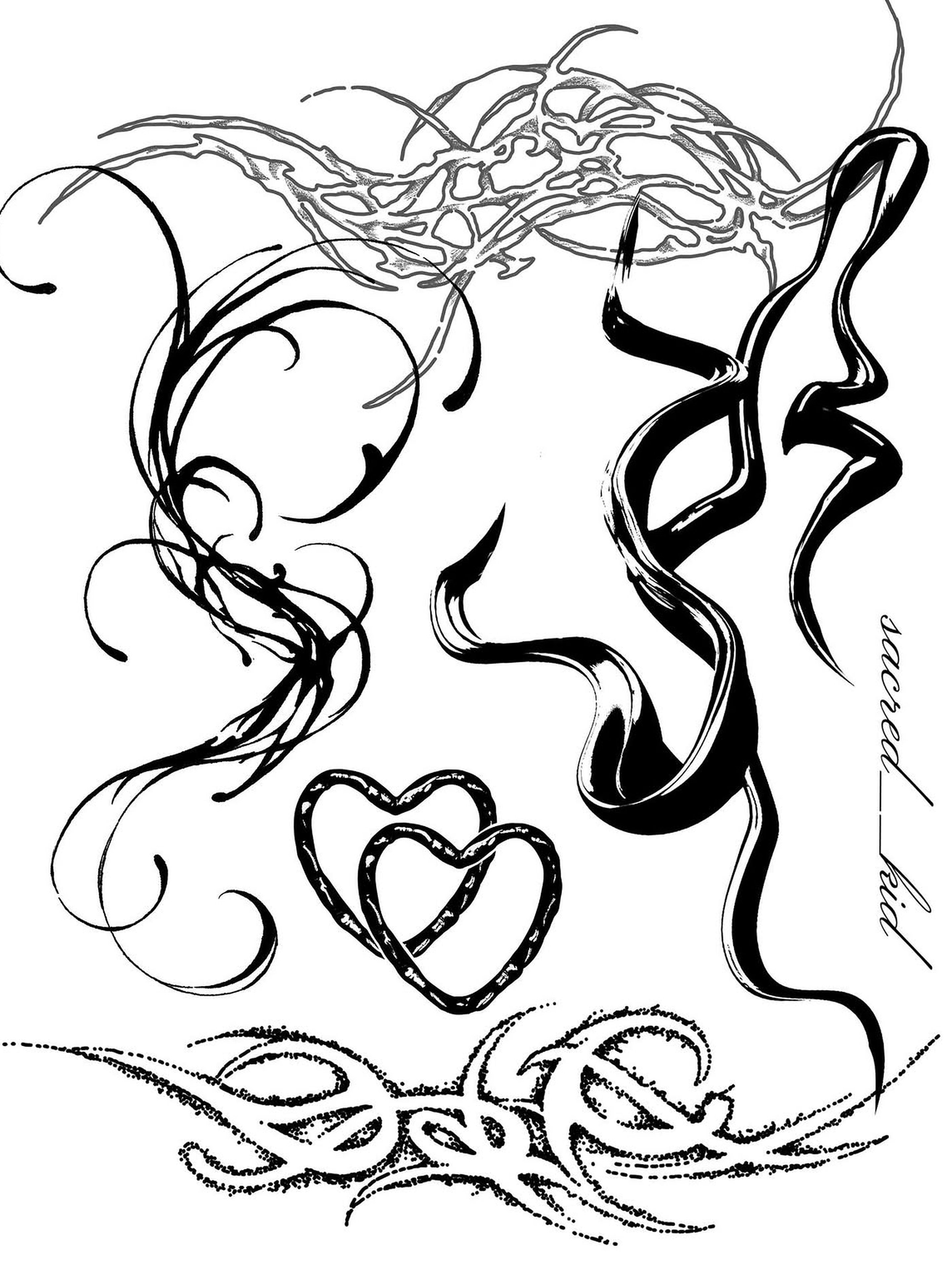
We keep our own flash designs in this vein — finished compositions we tattoo only once. It is a good route if you like the aesthetic but have no intent of your own to lock into a symbol.
A custom design is drawn from scratch around your story and your body. It takes longer, because it needs a conversation and a sketch, but it gives you a piece nobody else wears.
Flash prices are known upfront; a custom piece is quoted after the consultation. The same artist handles both, and both come with the same free check-up once healed.
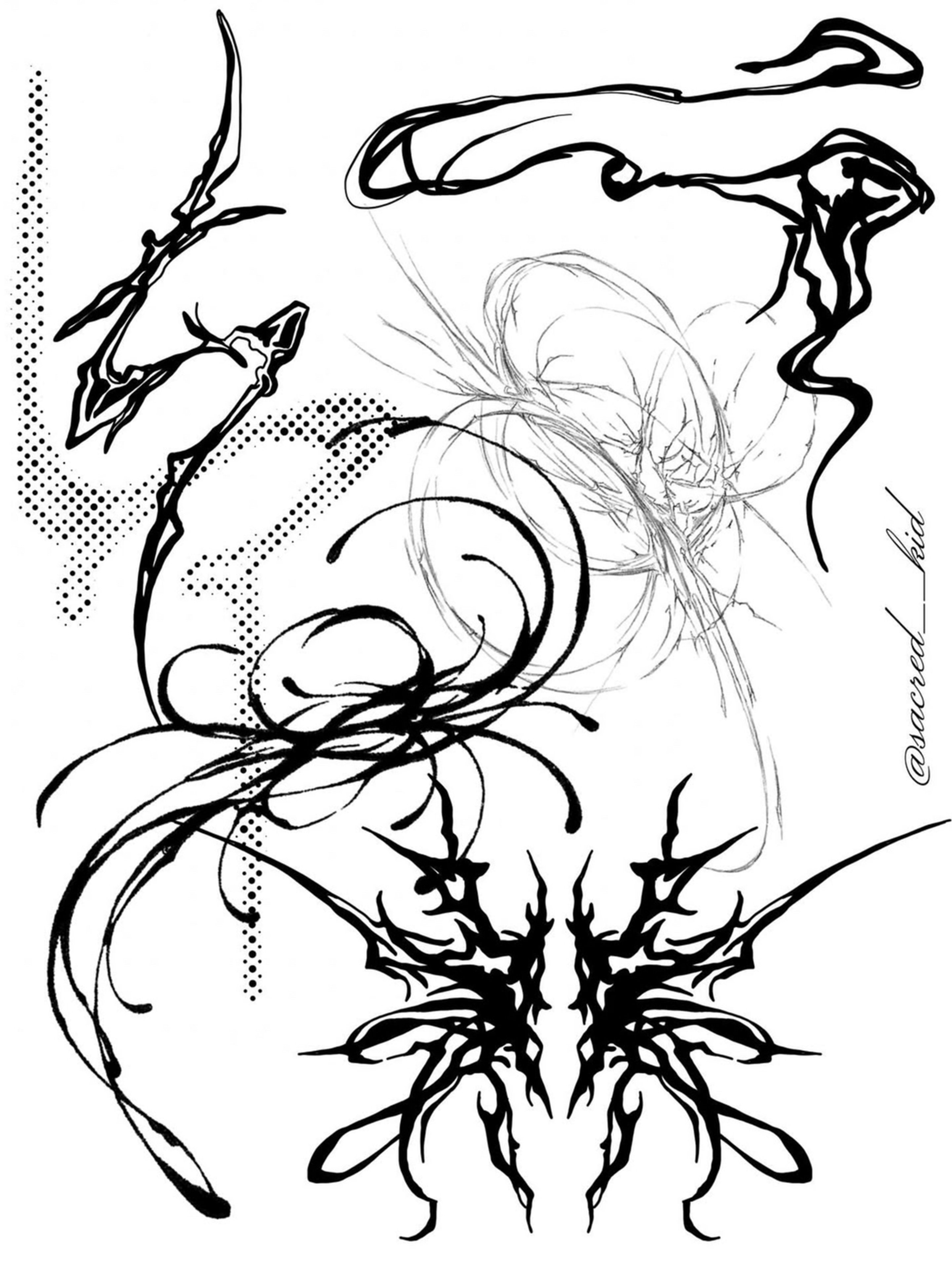
We will not copy another artist's design one to one, even if you bring the screenshot. We will make our own composition in the same spirit — otherwise we would be selling you somebody else's work.
We will not squeeze a dense web of barbs into three centimetres. Thin lines need spacing so they do not merge into a patch over the years, so at too small a scale we will tell you how much room the design actually needs.
We will not promise the tattoo will look identical in ten years. We will tell you which parts of the design will take time best and which will want a refresh — and plan the piece so it ages with dignity.
The studio is in the Psie Pole district, at ul. Poświęcka 17/40, and works strictly by appointment — which means no queue, no rush, and your session is your time.
The simplest route is to describe the idea in the form: the theme, roughly where on the body and what size, plus references if you have them. We reply within 24 hours and propose a date for a free consultation.
At the consultation we settle the design, the number of sessions and the binding price. The conversation costs nothing, and if you conclude afterwards that this is not your style — fine, at least you know what you want.
Choose cybersigilism when you want bold, modern graphic work in thin black line — or a symbol meant to stand for something of yours. It sits well on the spine, forearm and calf; we draw every piece from scratch for your body.
We will not copy someone else's sigil one to one, and we will not cram a dense web of spikes into three centimetres — thin line needs breathing room or it bleeds into a smudge over the years. Nor do we promise the finest tips will survive a decade without a touch-up.
Tribal buduje formę grubą, zwartą czernią o miękkich krawędziach. Cybersigilism robi odwrotnie: prowadzi sieć cienkich linii z ostrymi, zwężającymi się zakończeniami. Wspólny jest rodowód, różny sposób prowadzenia kreski i gęstość pigmentu.
Nie musi. Część klientów wybiera go jako mocną grafikę, część zamyka w nim konkretną intencję — przełom, ochronę, osobę. Obie drogi są u nas równoważne; pytamy o to na konsultacji, żeby wiedzieć, jak budować kompozycję.
Na długich, lekko wypukłych powierzchniach, po których linia może płynąć: kręgosłup, przedramię, zewnętrzna strona ramienia, łydka, łopatka. Odradzamy palce, wnętrze dłoni i stopy — tam cienka linia blaknie najszybciej.
Małe wzory od 400 zł, średnie kompozycje wielkości dłoni zwykle 500–1000 zł, duże prace 1000–2000 zł. Rękawy i projekty wielosesyjne wyceniamy indywidualnie. Wiążącą cenę podajemy po bezpłatnej konsultacji.
Mała kompozycja to zwykle dwie–trzy godziny. Kręgosłup od karku do lędźwi albo duże plecy to projekt na kilka sesji, których harmonogram ustalamy na konsultacji, zależnie od gęstości wzoru i tempa gojenia.
Reagują na czas szybciej niż gruba czerń, bo mają mniej pigmentu — po latach tracą ostrość krawędzi. Największą różnicę robi filtr SPF po wygojeniu. Projektujemy z odstępami, żeby wzór został czytelny, a pierwsza poprawka jest bezpłatna.
Sama cienka linia starego tatuażu nie przykryje. Łączymy więc gęstą czarną bazę z kolczastą siecią — cover-up to nasza specjalizacja. Przyślij zdjęcie w formularzu, ocenimy bez zobowiązań, czy da się to zrobić w tym nurcie.
Możesz przynieść go jako inspirację i chętnie ją omówimy. Nie skopiujemy jednak cudzej pracy 1:1 — zrobimy własną kompozycję w tym samym duchu, dopasowaną do Twojego miejsca na ciele i do Twojej intencji.
Tak, przy rozsądnej skali. Sesja jest krótsza niż przy dużym wypełnieniu, a wzór można zaplanować w miejscu o łagodniejszym bólu, na przykład na przedramieniu. Na konsultacji omawiamy przygotowanie, gojenie i realny czas pracy.
Czterech artystów ma prace w tym nurcie — najwięcej Mira, następnie Justyna, uzupełnia Dominika. W portfolio jest 19 realizacji oznaczonych jako cybersigilism. Artystę dobieramy do charakteru wzoru na konsultacji.
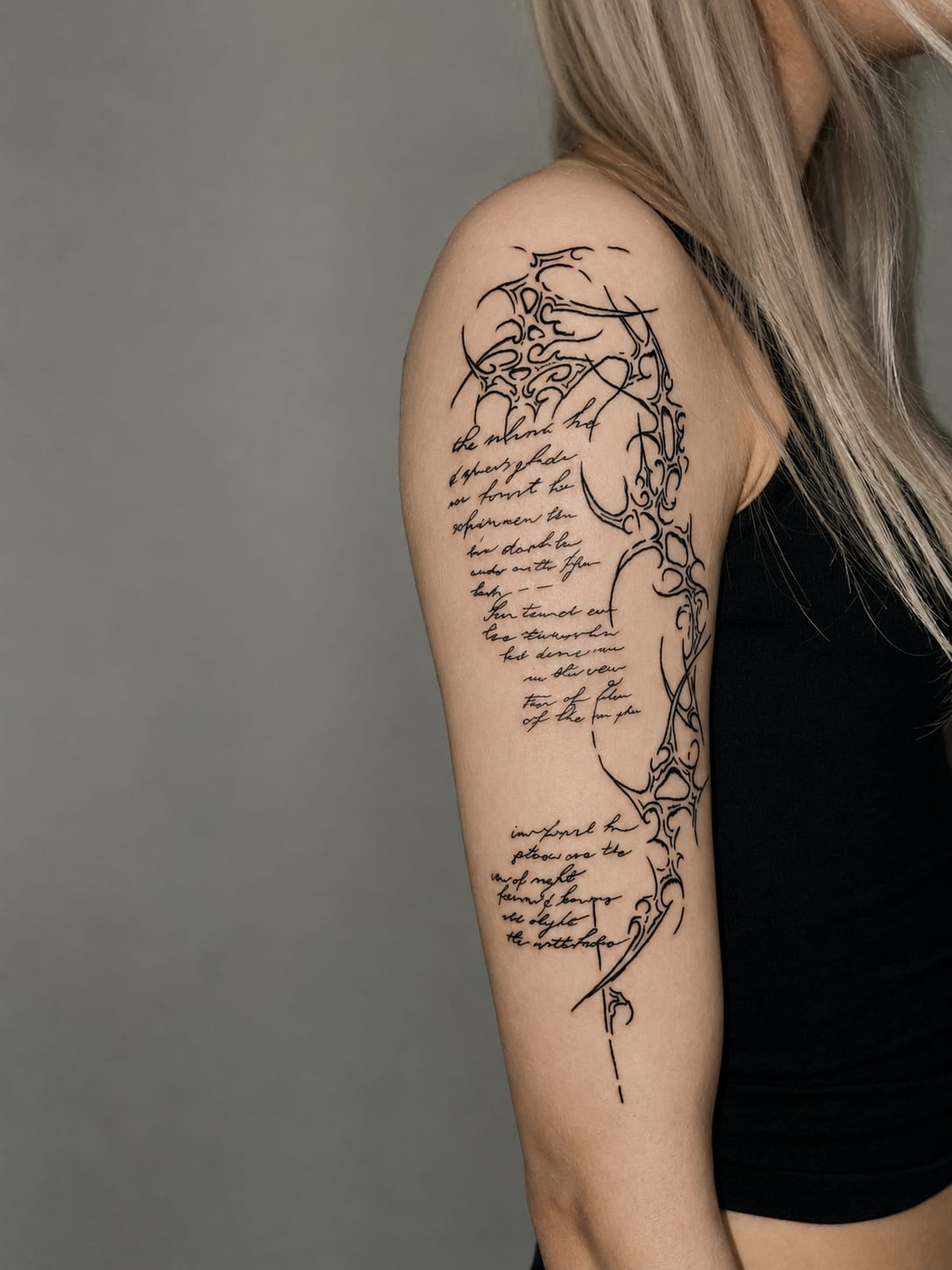
Ciphers of organic calligraphy
Dominika Doroszkiewicz • Technokracja • Tattoo Artist
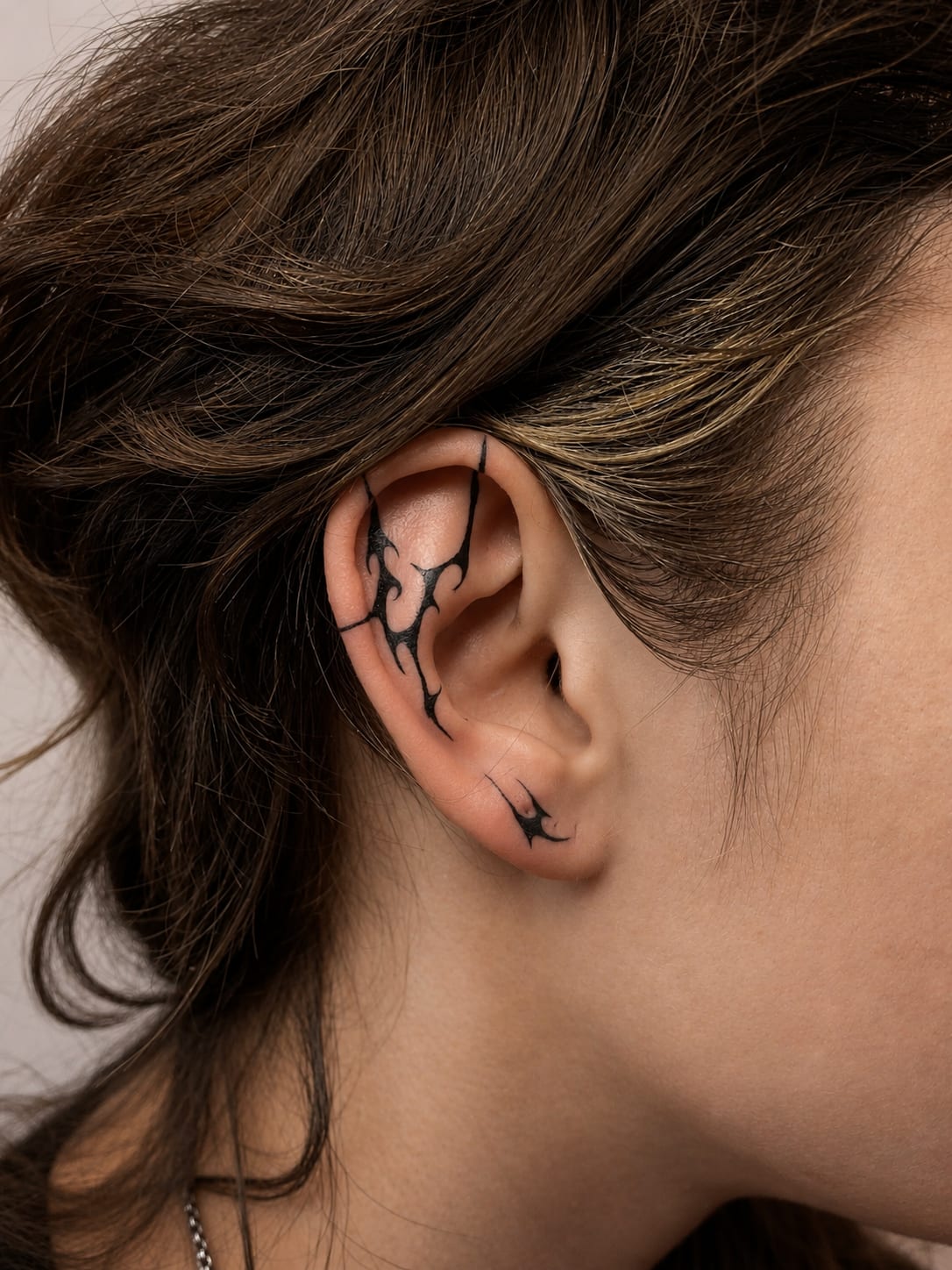
Sharp ear contours
Dominika Doroszkiewicz • Technokracja • Tattoo Artist
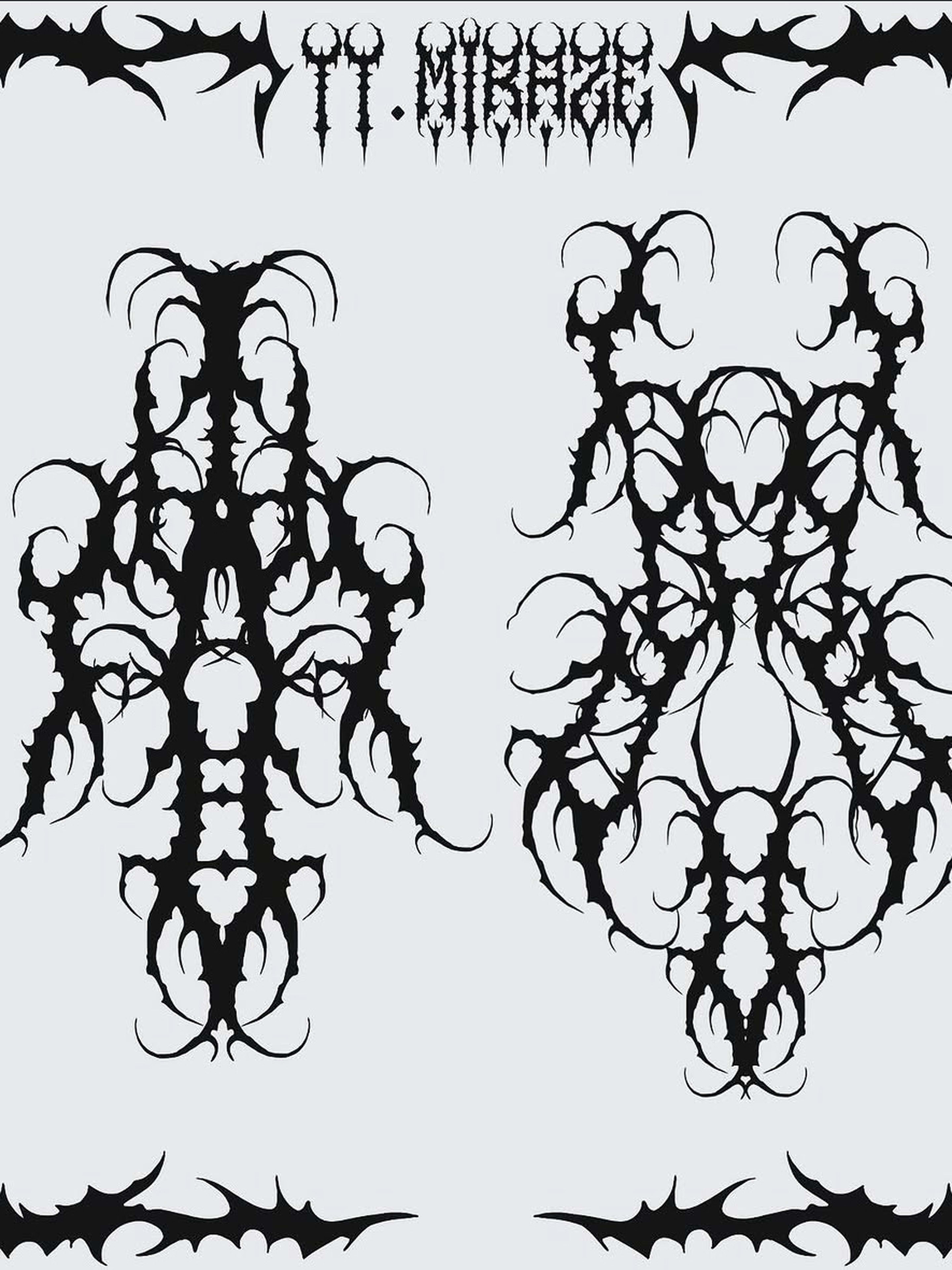
Aggressive cybersigilism forms
Mira Paul • Sacred__kid • Tattoo Artist
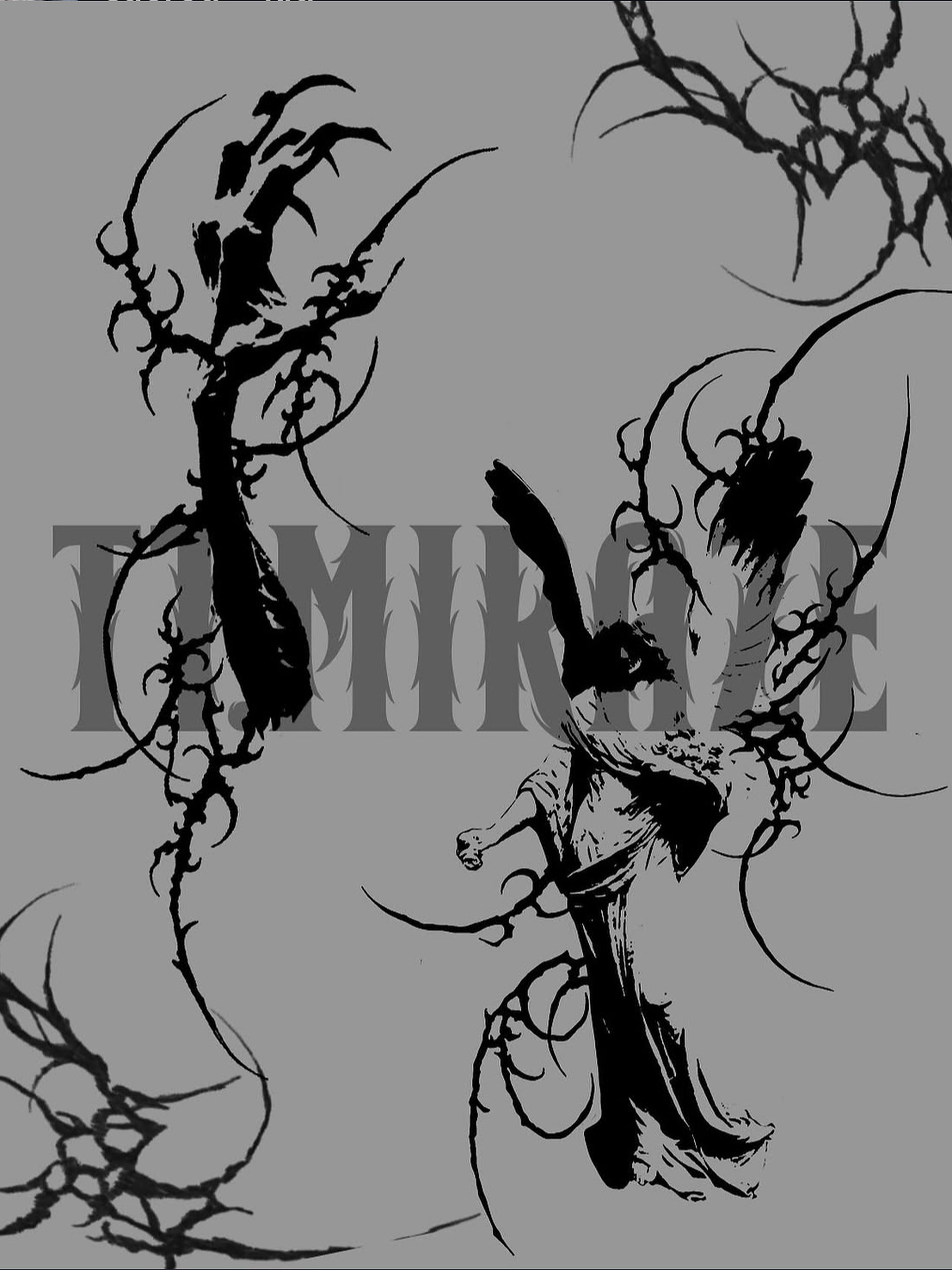
Dark sigils and silhouette
Mira Paul • Sacred__kid • Tattoo Artist
Abstract forms and sigils
Mira Paul • Sacred__kid • Tattoo Artist
Liquid cybersigil forms
Mira Paul • Sacred__kid • Tattoo Artist
Indicative ranges — every piece is quoted individually after a free consultation.
Minimalist tattoo
300 PLN
~75 €
A single small motif in a thin line, with no shading or fill — one symbol, a date or a short word. The shortest session on our list.
Get your quoteSmall design
from 400 PLN
~100 €
Small motifs, lettering and single elements with detail or light shading — usually one short session.
Get your quoteMedium project
500–1000 PLN
~125–250 €
Hand-sized compositions: fine line, ornaments, lettering with graphics, smaller shaded motifs.
Get your quoteLarge project
1000–2000 PLN
~250–500 €
Detailed designs on the forearm, calf or back — more detail, often longer or multi-stage work.
Get your quoteSleeves and large pieces
individual quote
Sleeves, large compositions and multi-session projects are billed per session across several appointments.
Get your quoteThe ranges are indicative. The final, binding price is set after the consultation and once the design is approved.
Our artists’ portfolio is the best test of whether a style fits your skin and idea. Filter by style, body placement or tags.
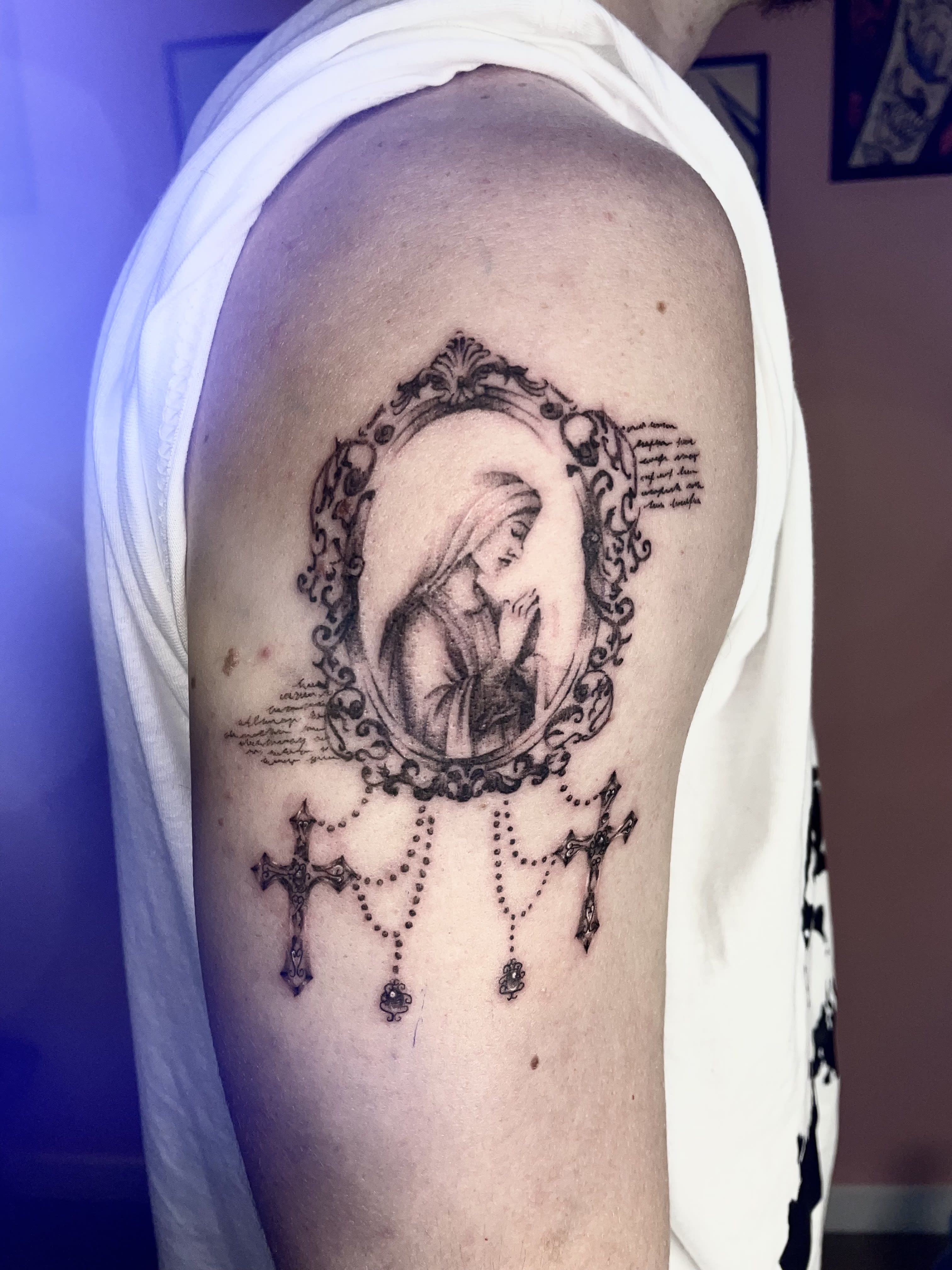

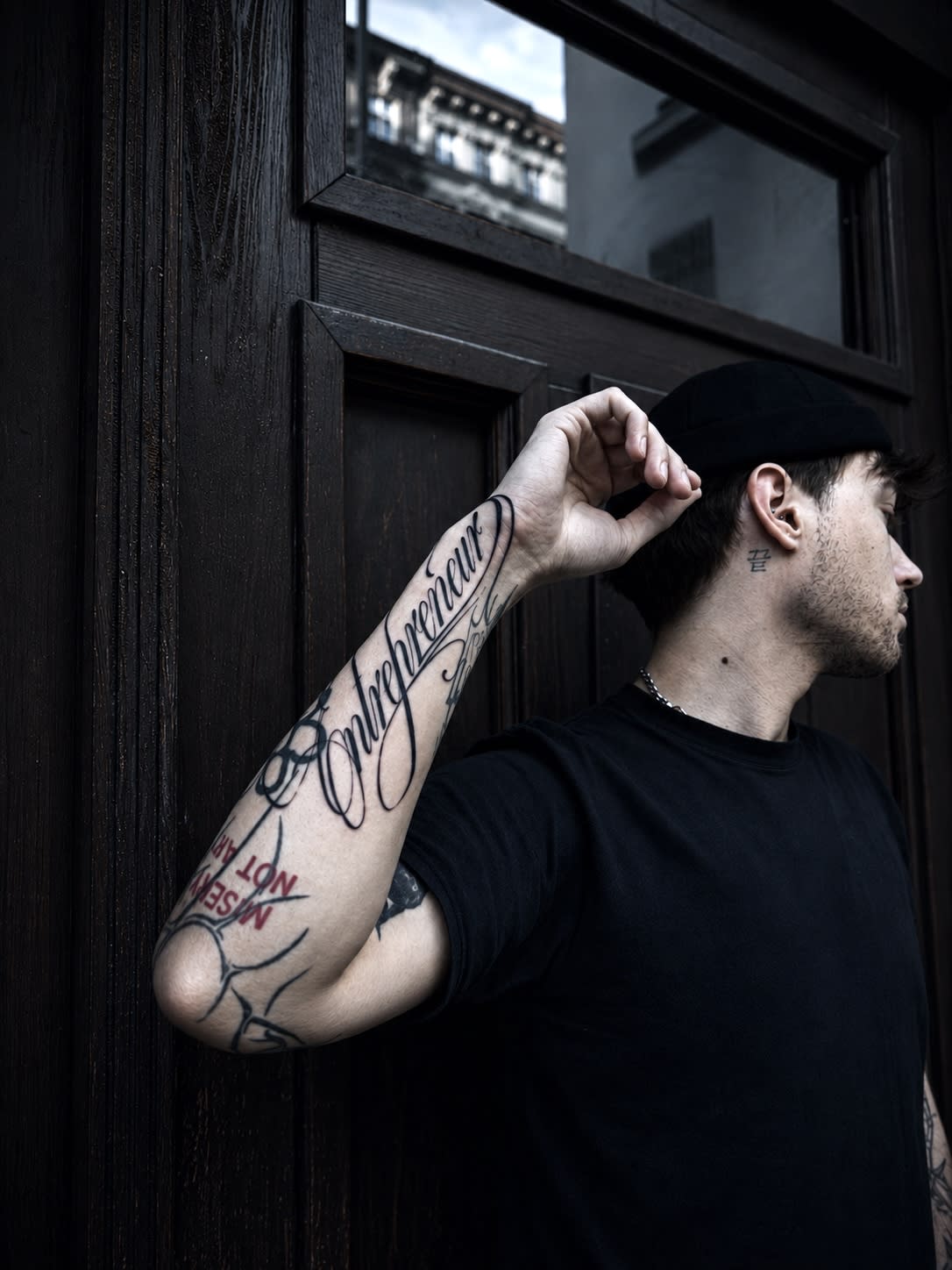
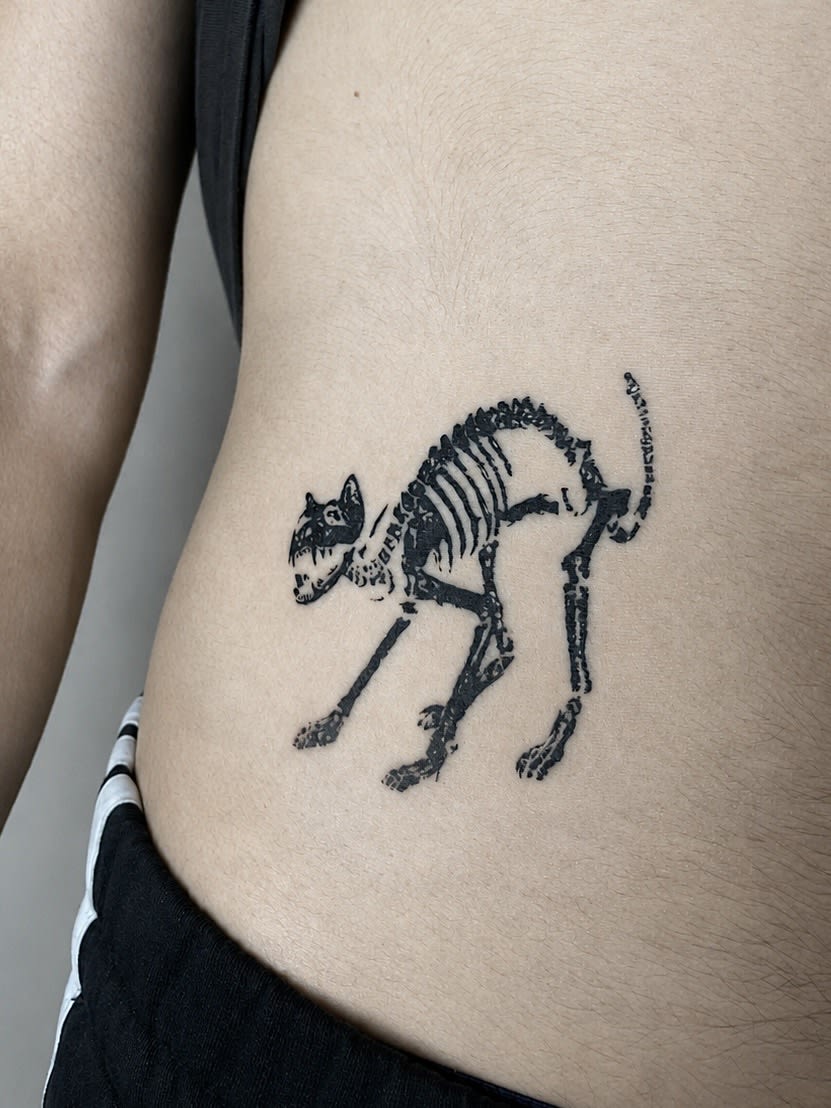

Each artist has their own specialities — see profiles and portfolios, or describe your idea in the form and we’ll match the right person.
The techniques in this gallery have their own pages — motifs, healing, prices and healed examples.
We cover old or unloved tattoos with a new design. See before-and-after transformations straight from our studio.
Practical guides by our artists — pain, aftercare and preparation. No myths, no scare stories.

Original projects waiting for an owner — each with a price and a suggested size.
The questions that matter most
Describe it in the form — we’ll suggest a style, an artist and the nearest date. The consultation and quote are free.