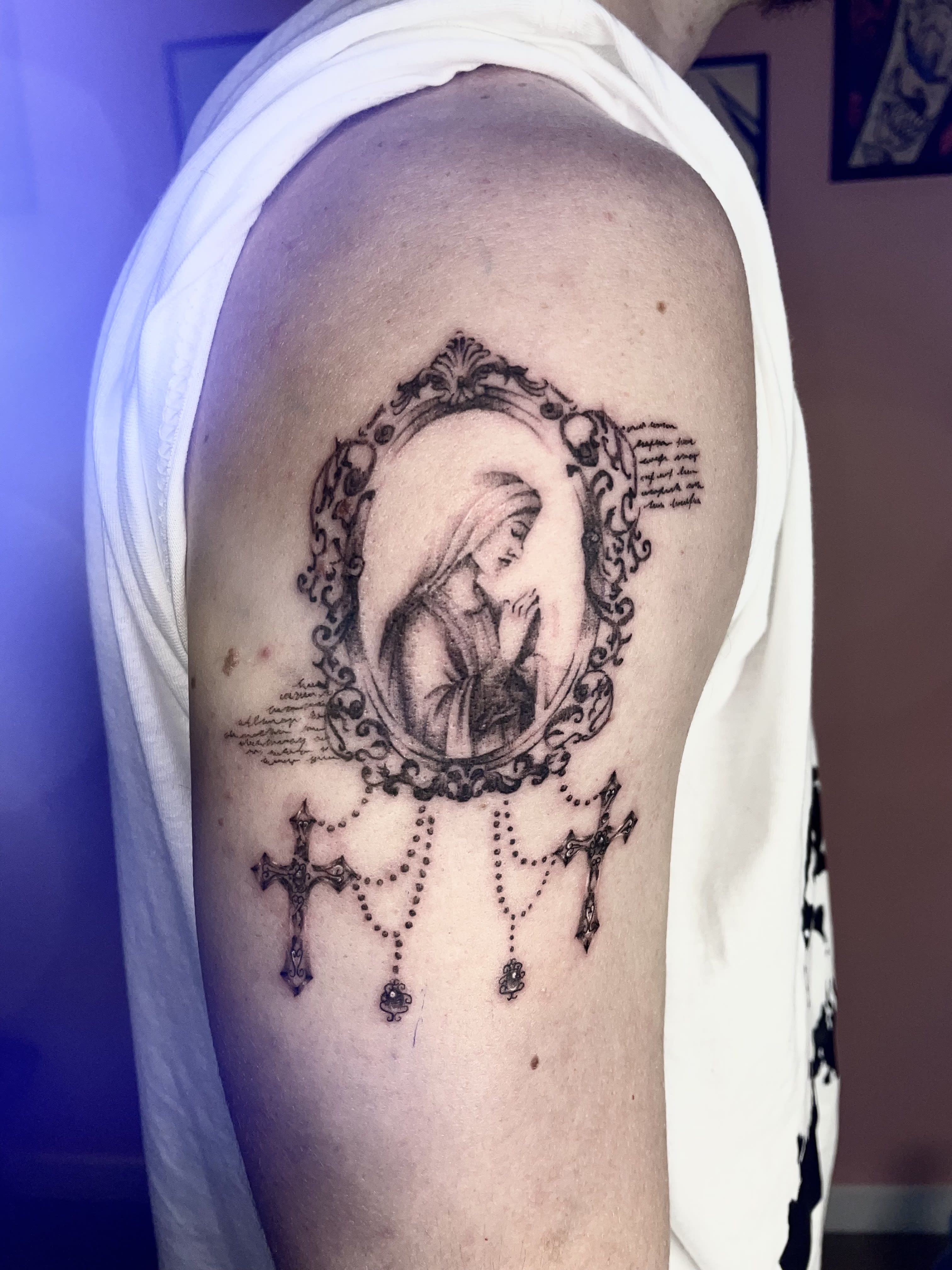
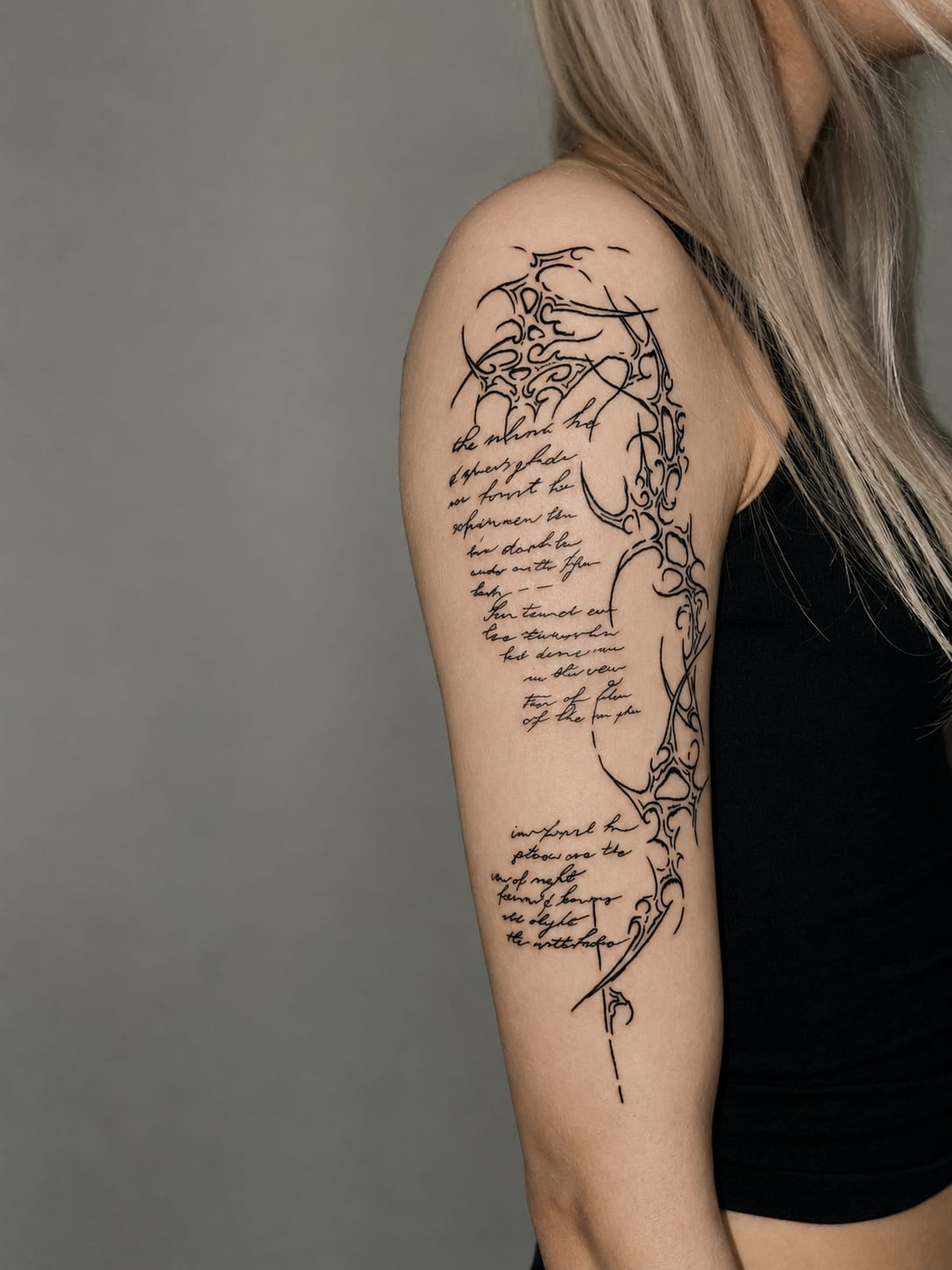
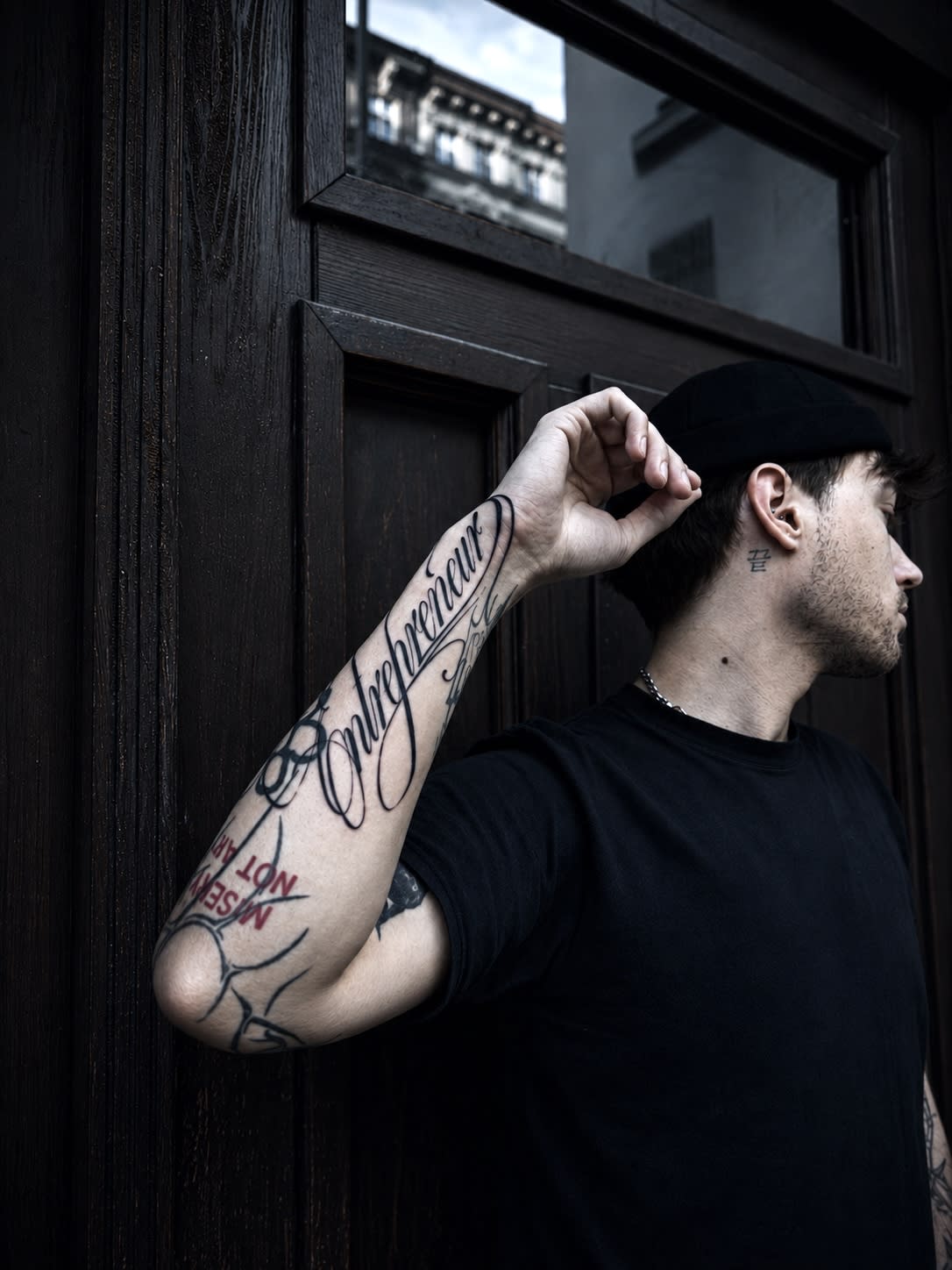
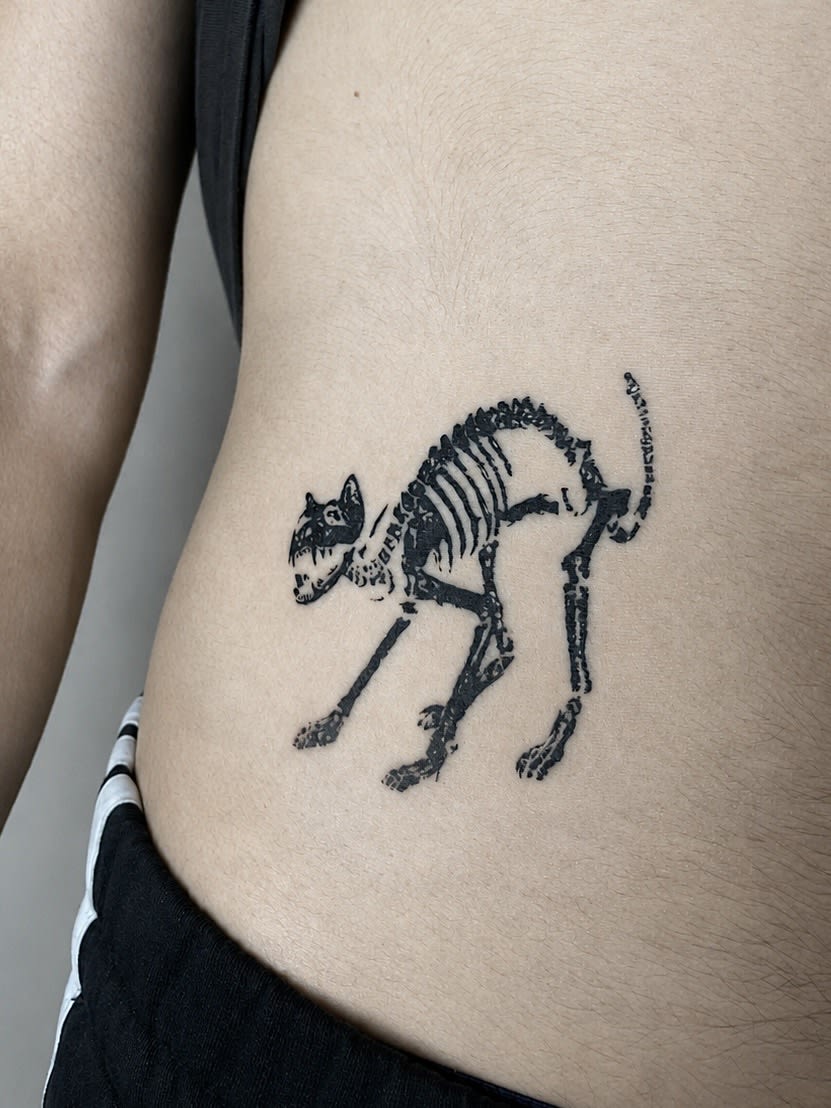
How to choose a tattoo style you'll love for years — a guide to the style multiverse
Picking the design feels like the most important decision before a tattoo — but it isn't. The same motif can be a delicate whisper in fineline, a graphic manifesto in blackwork or a painterly explosion in watercolour. It is the style that decides how your story will sound on skin for the decades ahead. The problem: there is a whole multiverse of styles, and Pinterest shows them all at once. It is easy to fall in love with ten things at the same time and end up with a moodboard that looks like an explosion in an inspiration factory. This guide brings order: first a rapid map of every style we work in at our Wrocław studio, then five steps that lead from “I like everything” to “this is mine”. At the end — the mistakes worth avoiding and answers to the questions we hear most often at consultations.
Why style matters more than the design
Imagine the same song played by a symphony orchestra, a punk band and a festival DJ. The melody is identical — the experience completely different. That is exactly how style works in tattooing: a rose in realism is a photograph from a garden, in blackwork — a gothic sign, in fineline — a memory sketched with a pen.
Style also defines the practical side of a tattoo: how the piece ages, how long the session takes, what aftercare looks like and at what size the motif makes sense. A hairline stroke needs different conditions than a saturated fill; colour negotiates with the sun differently than black.
That is why our consultations start not with “what do you want to have” but with “how do you want it to sound”. The answer to the second question usually finds the answer to the first on its own — and that is precisely the question this guide will walk you through.
The style map in 90 seconds — a cheat sheet with links
Here is our whole universe in a nutshell. Every style has its own in-depth page with a gallery of work and a full guide — tap a name to jump straight to it:
Step 1: Gather evidence — a moodboard that tells the truth
Before you decide anything, collect — without censorship. Save every piece that stops you: from Pinterest, Instagram, our portfolio. For a week or two do not judge, just collect. This is the “signal-catching” phase.
Then do what every good detective does: look for a pattern in the evidence. Open your collection and count honestly — how many pieces are black, how many colour? How much delicate linework, how much solid fill? Your moodboard knows more about you than you do; the heart’s algorithm made its choice long ago, we merely read it out.
A pro tip from consultations: pay attention not to the motifs but to the recurring traits. If your collection holds a wolf, a clock and a rose, but all in dense black — that is not three ideas, that is one clear choice of style.
A filtered moodboard like this (10–15 pieces instead of 200) is the best material you can bring to a consultation. It saves an hour of talking and puts us on the right track immediately.
Step 2: Black or colour — the first big decision
This is the most important fork on the map. Black — blackwork, fineline, dotwork, black-and-grey realism — is like a well-tailored suit: timeless, stable, certain. It ages the slowest of all the options and suits every skin tone without exception.
Colour is a different kind of energy: watercolour can turn skin into canvas, new school shouts with comic-book joy, and neo-traditional palettes carry the elegance of old posters. The price: more layers per session, more discipline with SPF, and an honest talk about which hues will play well with your skin tone.
You do not have to choose like it’s a religion. The third road — black with a single accent of colour — is often the best of both worlds: graphic stability plus one signal that catches the eye. A green eye in a grey dog portrait does more than a whole rainbow.
A simple test: think of your wardrobe and your flat. Monochrome and raw materials? Probably black. Colourful posters, plants and fairy lights? Colour will find you on its own.
Step 3: Detail or synthesis — how much story can skin carry
The second axis runs from maximum detail to maximum synthesis. At one end live realism and micro realism: every hair, every highlight, photography on skin. At the other — minimalism and lettering: one line, one word, a whole story in three centimetres.
Detail has its demands: it needs size (micro detail at too small a scale blurs together over time), longer sessions and an artist who specialises in exactly this. Synthesis demands something else — flawlessness, because with three lines every millimetre is in plain sight.
Between the poles lives everything else: dotwork builds detail out of grain, botanical work joins the precision of an engraving with lightness, ornamental turns detail into rhythm. It is a spectrum, not a set of drawers — and you can wander it deliberately.
A helper question: do you want people to step closer (“wow, how is that made?”) or to read it from afar (“I know what that means”)? The first leads to detail, the second to synthesis.
Step 4: Placement writes half the script
Style and placement are a duet — one without the other makes decisions blindly. An elongated forearm all but asks for botanical sprigs, lettering and vertical compositions. A rounded shoulder loves ornaments, tribals and everything that can flow around a muscle. The back is a stage for large realism and symmetrical mandalas.
It works the other way too: some styles set conditions for placements. Fineline lives longest on stable skin (forearm, collarbone, calf), and micro detail dislikes hands and fingers, which rub pigment away like an eraser. Bold blackwork, on the other hand, will manage almost anywhere.
There is a third player: visibility. A tattoo on your forearm will join you in every conversation; one on your ribs — only when you decide. When choosing a style, it is worth thinking right away whether the piece is to be a daily companion or a private secret.
On our site you will find separate guides to placements — forearm, back or shoulder tattoos — with real work from each of them. Good follow-up reading after this step.
Step 5: The decade test — will you still love it in 2036
The last filter is brutally simple: imagine this style on your skin ten years from now. Not the design — the style. Trends come and go like seasons of a show that was meant to end after the third and drags on to the ninth. The style you choose stays with you regardless of what happens to be fashionable.
The good news: the styles we offer have already passed their decade test. Blackwork has been worn for thousands of years, botanical work draws on atlases centuries old, realism and lettering only gain from technique. You are choosing among classics — the only question is which classic is yours.
A practical exercise: go back to your moodboard and check the dates. If the pieces you love are five to eight years old and still impressive — that is your style. If they all come from the last three months of a single TikTok trend — give yourself another month.
And remember: “for years” does not mean “forever unchanged”. A good style can be extended — plants added to the herbarium, rings to the mandala, motifs to the patchwork. You are choosing not a picture but a language in which you will keep writing new chapters.
The choice checklist — tick off before your consultation
The five steps in tick-off form. If you can check everything, you are as ready as anyone has ever been:
0/7 ticked off — your progress is saved in this browser
The most common mistakes when choosing a style
These scenarios come back at consultations so often that we know them by heart — here is the list that will spare you the most common plot twists:
- Choosing the design before the style — rose first, style later. That is the order reversed: language first, then the sentence.
- Falling in love with a fresh piece from Instagram — every tattoo looks spectacular on session day. Ask for photos of healed work — we are happy to show ours.
- Micro detail at micro size — a photorealistic portrait “but tiny, on the wrist”. The physics of skin is relentless; we will tell you honestly how many centimetres your idea needs.
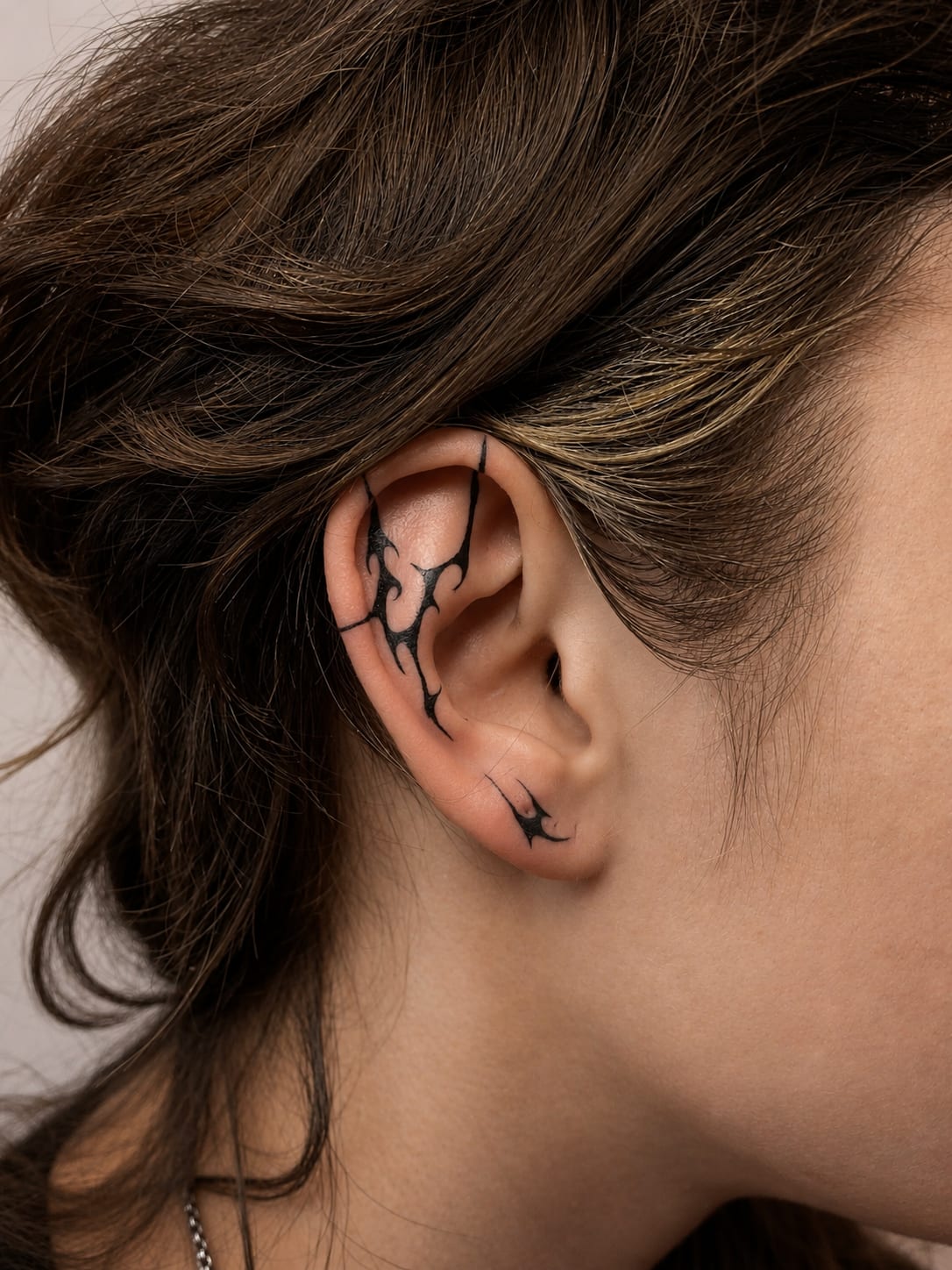
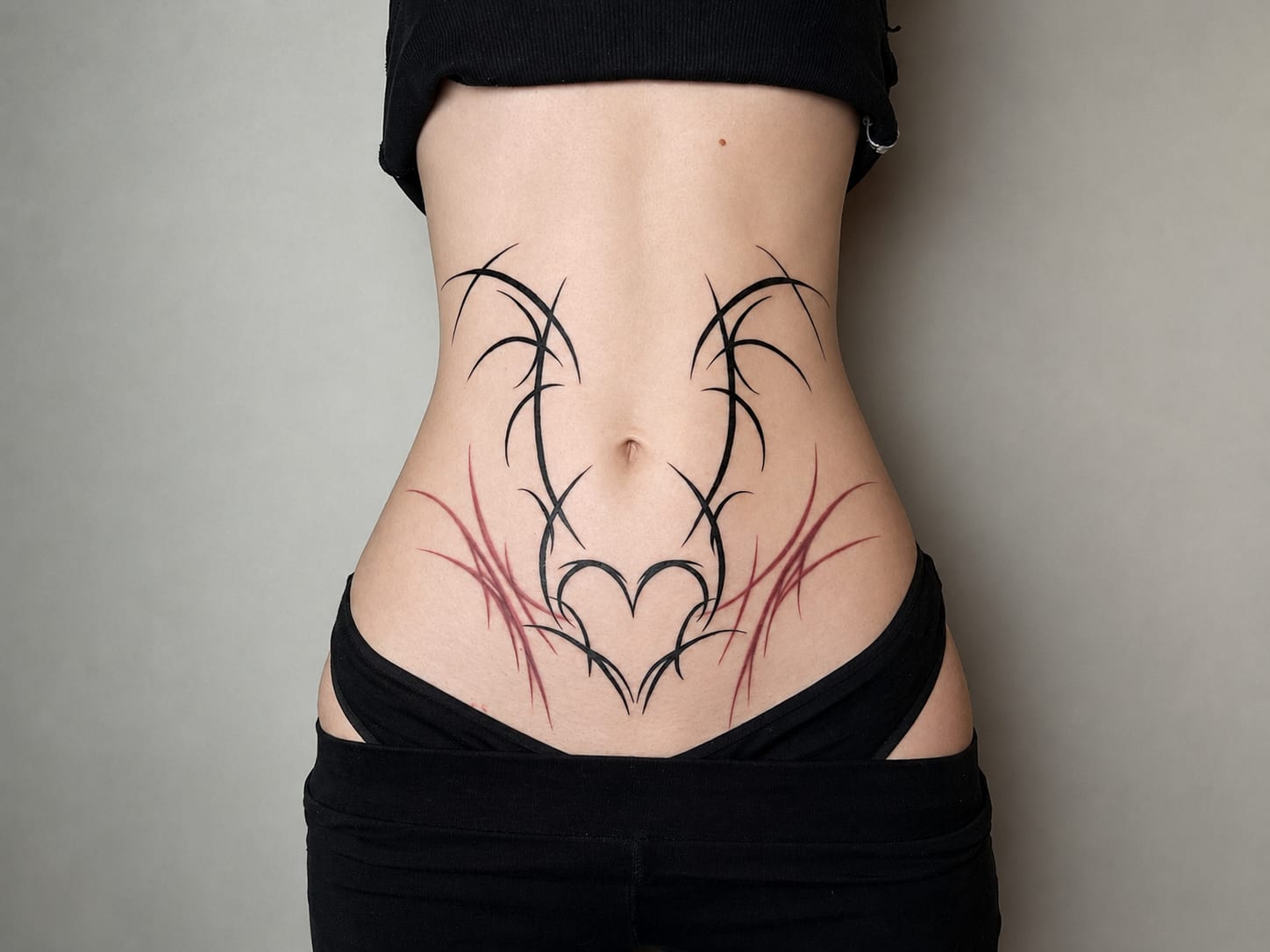
- Choosing a style to match the current trend — cybersigilism is brilliant if you feel it, not because the algorithm showed it to you five times.
- Copying someone’s work one-to-one — a good artist will design something in the same spirit but tailored to you. A copy is always a worse version of the original.
- Skipping the consultation — half an hour of conversation can save years of wearing a compromise.
Styles for a first tattoo — safe ways into the game
If this is your first time, a few styles have a naturally low entry threshold. Minimalism — a short session, a discreet effect, easy to extend. Fineline — delicacy and elegance without a half-sleeve declaration. Botanical — a timeless motif that grows with you. Lettering — you bring the meaning, we give it form.
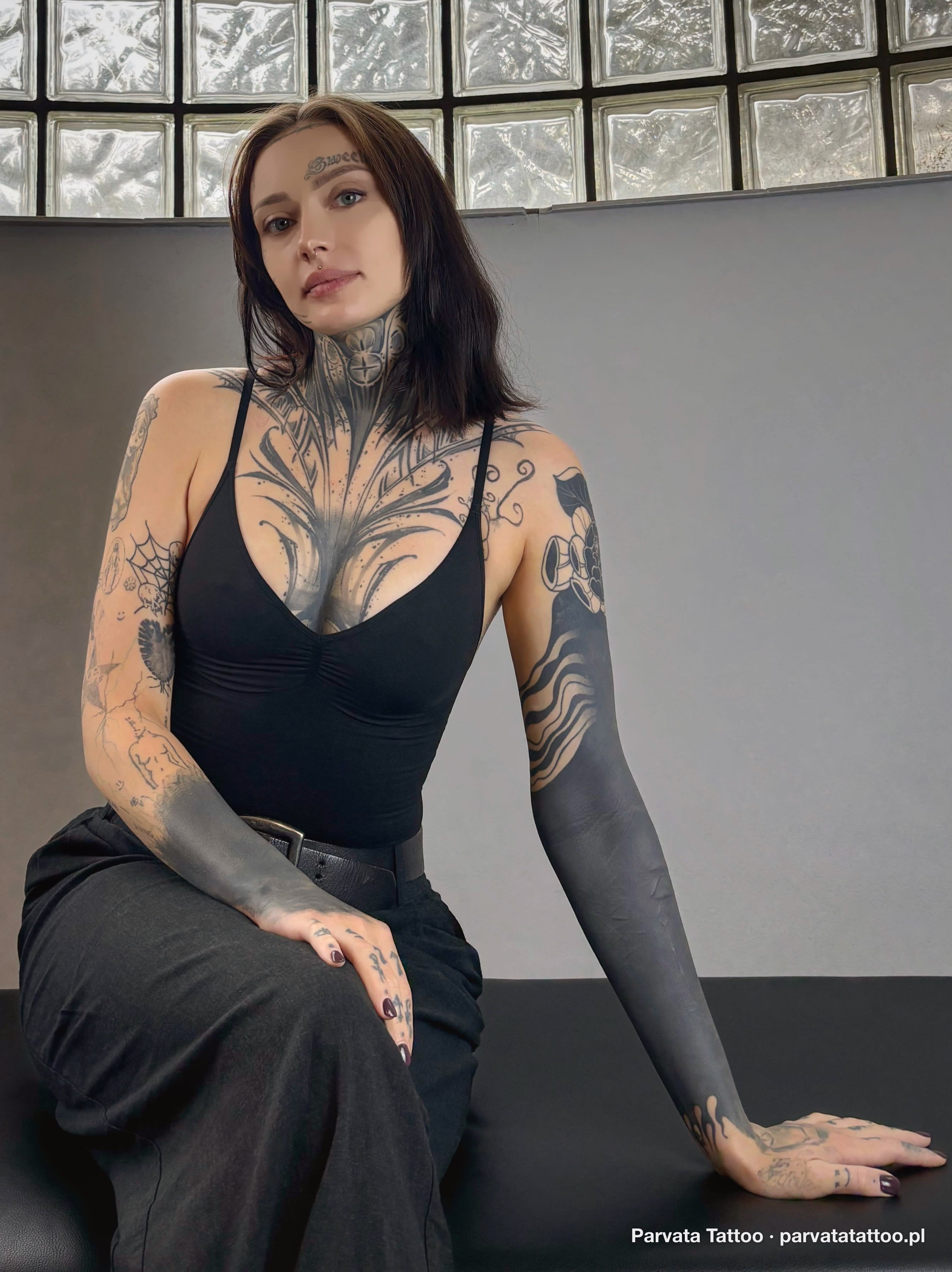
That does not mean a first tattoo cannot be big. Some of our clients start straight away with a full blackwork sleeve and never regret it — because the decision was considered, not brave for show. Size is a matter of certainty, not seniority.
Whatever you choose, you get the full kit from us at the start: a design to approve, an honest talk about pain and aftercare, a second-skin dressing and a contact for every question. A first time has the right to be calm.
More about the debut itself — from preparation to healing — is in our separate guide to a first tattoo.
Style versus budget and time — the economics of the choice
Style is also a practical decision, so let us talk like adults: different languages cost differently. The general rule is simple — you pay for hours of focused work, and those grow with surface area, fills and the number of layers.
The quickest to execute are usually minimalism, lettering and small fineline: one short session, a predictable result. The middle of the field is botanical work, ornamental and medium pieces in black. The marathons are realism, dense dotwork, large colour and extensive blackwork — here it is not just size that counts but the methodical building of the effect, pass after pass.
Time works after the session too: colour asks for more discipline with SPF, fills heal longer than single lines, and micro detail likes a check-up visit. Choosing a style, you are also choosing your aftercare calendar.
We lay out the concrete ranges one section below, and you will learn the exact price of your idea after a free consultation. Spoiler: good work in a humbler style always beats mediocre work in a spectacular one. A budget is better invested in quality than in scale.
What it costs — real ranges instead of reading tea leaves
Since the choice of style affects the price, it is only fair to show numbers. Here are our public ranges — the same ones you will find in the price list: a minimalist tattoo from 300 zł, small designs from 400 zł, medium palm-sized pieces 500–1000 zł, large works 1000–2000 zł, and sleeves and multi-session projects billed per session — 1800 zł a session.
How does that map onto styles? Minimalism, lettering and small fineline usually sit in the lower ranges — one short session. Botanical, ornamental or a medium blackwork are the middle of the field. Realism, dense colour and extensive fills reach the upper regions, because you are buying hours of methodical, layered work.
The price always contains the same things: a design made for you, a sterile single-use setup, the artist’s time and aftercare support. That is why an identical motif can cost differently in different styles — you pay for the language, not the picture.
You will get a concrete quote for your idea after a free consultation — no guessing and no surprises at the end. And if the budget and the dream drift apart, we will propose the smarter variant rather than a cheaper version of the same: smaller but polished always beats bigger but average.
How to read an artist’s portfolio — a crash course
Once the style is chosen, the second hunt begins: for the person who thinks in that language every day. A portfolio is their CV — but you need to know how to read it.
First: look for consistency, not single hits. One brilliant piece can be a lucky shot; ten coherent pieces in your style are proof of craft. Second: look for healed work. A fresh tattoo in a session photo always looks spectacular — the truth about technique lives in pieces a year on.
Third: look at the details of your style. With fineline — whether the lines hold an even weight along their whole length. With realism — whether the portraits’ eyes are alive. With blackwork — whether the fills are even as glass. With lettering — whether the spaces between letters breathe.
In our team every artist has a page with their portfolio and specialisations — you can browse them before the consultation, or simply describe your idea to us and we will suggest the hand that fits your choice.
How we help you choose — a no-obligation consultation
You can also simply… bring this whole guide to us. A free consultation at the studio at ul. Poświęcka 17/40 is exactly this conversation: we look at your moodboard, ask the five-step questions and tell you honestly which style will carry your idea — and which promises more than skin can keep.
We also match you with an artist: everyone on our team has their specialisations and a portfolio you can browse on the artist pages. Choosing a style is often choosing the person who thinks in that style daily.
The consultation commits you to nothing — sometimes it ends with a design and a date, sometimes with homework: “gather more inspiration in this direction”. Both outcomes are good; bad decisions are not made in a hurry.
You will find the form at the bottom of the page. Write what excites you — even if for now it is only “something with black, not sure what”. That is exactly what we are here for.
The multiverse is on your side — a word for the road
To finish, something we tell everyone stuck in analysis: there is no wrong choice between good styles. There is only a choice more or less yours. Every language on this map has survived the test of time — they differ in how they sound, not in whether they work.
Decision paralysis usually comes from the pressure that a tattoo must be “perfect”. Meanwhile the best pieces our clients wear did not come from perfect plans but from an honest conversation: what I love, how I live, what I want to feel looking at my own arm ten years from now.
You have a moodboard and a hunch? That is enough. The rest — style, artist, design, date — we assemble together at a free consultation. The worst that can happen is a good conversation about tattoos.
And if after all this you still love three styles at once — good news: skin is large and life is long. Many of our clients started with one choice and ended up with a considered collection. The multiverse does not demand picking a single timeline forever.
Frequently asked questions
Yes — the most interesting pieces often happen where languages meet: fineline with dotwork, realism with ornamental, black with a single watercolour accent. There is one condition: the styles must share a logic of composition rather than be glued together by force. In practice, combining starts with deciding which style leads and which one merely comments — two equal voices in one piece usually shout each other down. What works well: a shared line weight (delicate stroke plus dot grain), a shared temperature (black with one colour, not five) and a single clear centre of gravity in the composition. What ages badly is a collision of two dense, dominant styles — say full realism with heavy tribal on the same surface, where neither has room to breathe. At a free consultation we show combinations that have proven themselves over years and say honestly when two ideas are better off as two separate tattoos.
That is exactly the worry answered by two tools from this guide: the decade test and the curated moodboard. Both filter seasonal crushes from real choices — if the pieces you love are several years old and still impress you, the risk of boredom is small. There is also a second, more practical answer: a well-chosen style gets extended, not boring. The herbarium gains new plants, the patchwork new motifs, the mandala another ring, the lettering — new words that have become important in the meantime. You are choosing a language, not a single sentence, so the story can grow with you for years. And if your whole taste truly changed one day: the styles on this map are classics that tolerate new neighbours well, and as a last resort there is always a cover-up — which we design so that the new piece makes sense in its own right, not merely as a patch over the old one.
No — and distrust of the declaration “I do everything” is a healthy reflex. Every style has its own technique that takes years to learn: fineline demands surgical control of a single thin line, realism — patient building of tonal transitions layer by layer, dotwork — the discipline of thousands of dots at even density, lettering — a typographer’s eye for the light between letters. That is why good artists specialise in two or three related languages, and the truly outstanding often in one. With us it works in a simple order: first the idea and the style, then the person — we match the artist to the style, not the other way round. You will find each team member’s portfolio and specialisations on the artist pages, so you can check who thinks in your language before you even write. Or simply describe your idea in the form and we will suggest the hand that fits it best.
For a week or two, save everything that stops you — from Pinterest, Instagram, our portfolio — without judging and without censorship. Then curate: keep the 10–15 pieces you genuinely return to and delete the rest. Do not look for a ready design to copy; look for recurring traits. Count honestly: how many pieces are black, how many colour? How much delicate line, how much solid fill? Which emotions keep returning — calm, energy, darkness, tenderness? Those answers are a ready diagnosis of your style, even if you do not yet know its name. Bring the set on your phone — it does not need to be tidy, we will ask the right questions. A filtered moodboard like this tells us more about you than an hour of conversation and lets us jump straight to specifics: style, size, placement and price. It is the best half hour of preparation you can invest before a tattoo.
Yes — if there is a reason, we will say it directly and with justification, because we prefer one uncomfortable conversation before the session to a compromise you would wear for years. The most common scenario is the physics of skin: detail too fine at too small a size, which will blur together with time, or a placement that will grind a delicate piece away — hands and fingers can be merciless to thin lines. Sometimes the chosen style simply cannot carry the idea: a portrait full of emotion locked into three centimetres, or misty watercolour where a legible sign is needed. When we advise against something, we always propose a variant that keeps your intent and survives decades: a larger scale, a more stable placement or a style of kindred character. The decision remains yours — we supply knowledge, not prohibitions. That is what the free consultation is for: so these conversations happen before the needle, not after.
Nothing — consultations at our studio are free and non-binding, whether you arrive with a finished idea or only a hunch like “something with black”. On the spot we look at your moodboard, go through the questions from this guide, match the style and the artist, agree a realistic size and placement and give you a concrete quote. You leave with a plan — and you decide about the date after the meeting, not during it, with no pressure. The design itself is included in the price of the tattoo, so you do not pay separately for the artwork. If you decide on a date, it is reserved with a deposit which is credited in full against the price at the session — nothing is lost. In other words: the first conversation costs nothing, and everything you pay later is part of the tattoo’s price, known before anything begins.
Easiest through the form on our site: describe the idea — it can be vague, “something botanical on the forearm” is entirely enough — attach inspirations and mark your preferred timing. We usually reply within one working day with a proposed meeting at the studio at ul. Poświęcka 17/40 in Wrocław’s Psie Pole district. If Instagram is more comfortable, write to us there — it leads to exactly the same conversation. We work by appointment only, Monday to Saturday, so contacting us in advance is necessary — but thanks to that, a consultation is a calm conversation over coffee, not a queue at a counter. Bring your moodboard on your phone and a list of questions; we will lead the rest. If you already have an artist in mind, mention it in the message and we will book you directly with that person. The consultation is free and commits you to nothing — the worst that can happen is a good conversation about tattoos.
Black wins this ranking: blackwork, ornamental and black-and-grey realism age the most stably, because black pigment is the most resistant to time and sun, and bold graphic forms carry a natural reserve for the softening of lines that reaches every piece over the years. Just off the podium are dotwork — grain graciously hides small changes — and lettering, provided the letters were given proper size and light between characters. Colour and micro detail also hold up for years, but they ask for more: discipline with SPF, sensible scale and a placement that does not wear pigment away. Durability is not only about style anyway — it is also the placement (the stable skin of a forearm versus busy hands), aftercare in the first weeks and sun protection in the years after. We save the good news for last: every style on our map, matched sensibly to placement and size, is designed precisely to pass the decade test.
They can — given a common denominator, and there are several to choose from: a similar line weight, the same temperature (black next to black, colour next to colour), a recurring motif, or thoughtful placement on the body with some breathing room between pieces. Skin is not a gallery with a single room — different styles can coexist like different genres on one playlist if a mood connects them. What breaks coherence most easily is accident: pieces added without a plan, too close together, of wildly different density. So when planning a second tattoo, bring a photo of the first — we will design the new one so the collection looks like intent, not coincidence. Many of our clients build whole patchwork collections this way, joining fineline, botanical and lettering into one considered whole. And if older pieces already clash, at a consultation we will advise how a new one can visually stitch them together.