


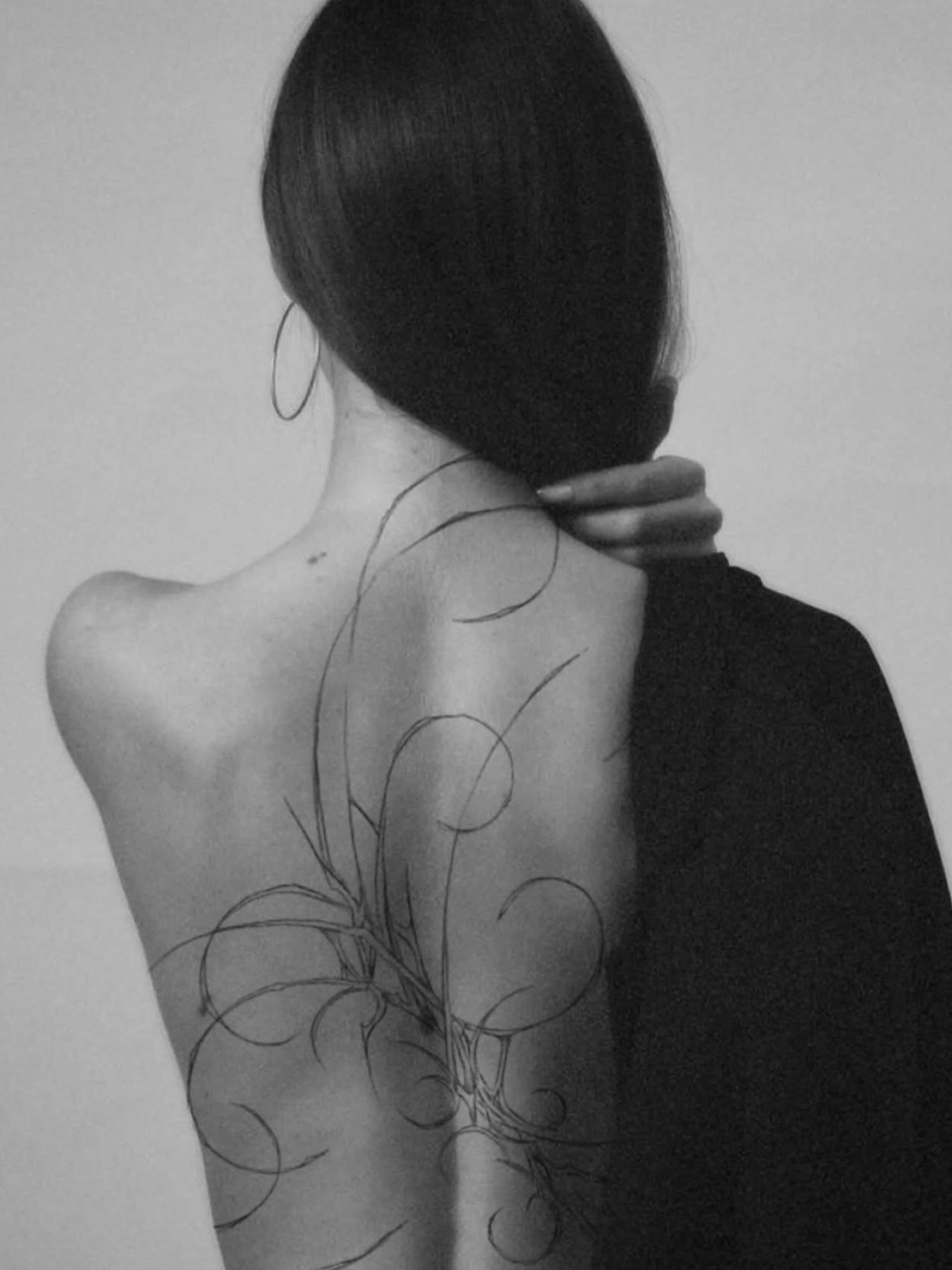
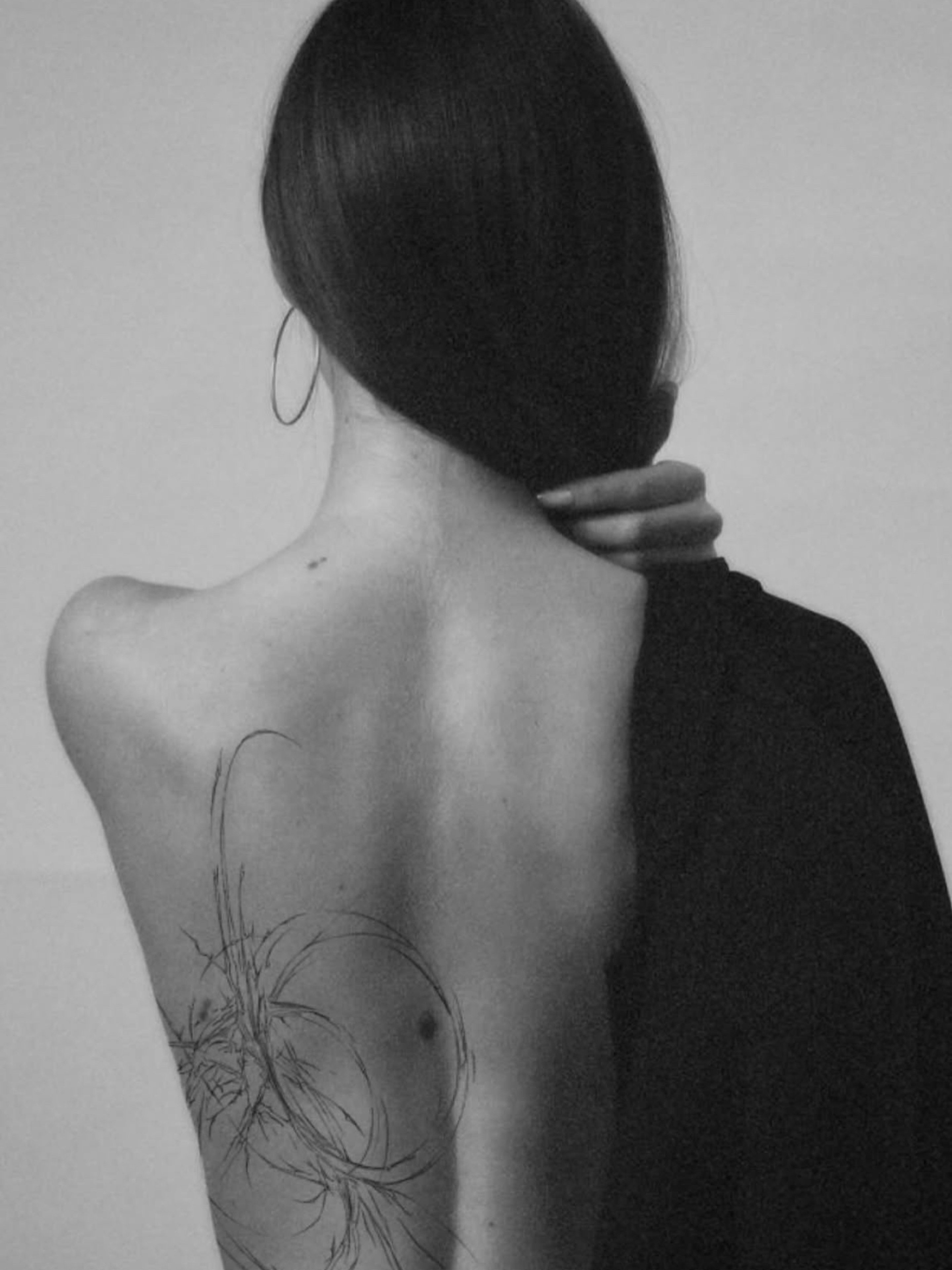


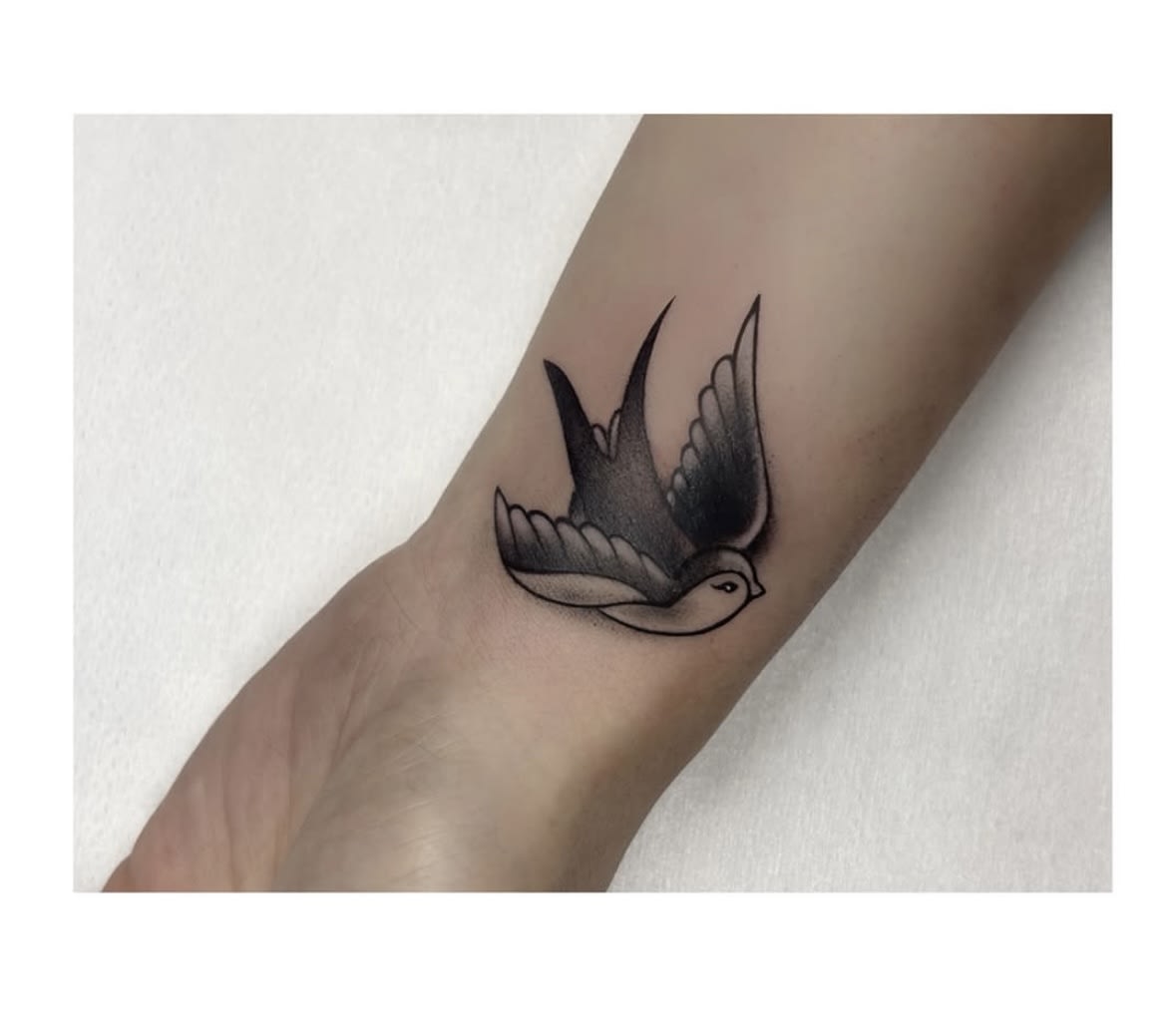
Cover-up — a second life for your tattoo
We cover old or unloved tattoos with a new design. See before-and-after transformations straight from our studio.
Tattoo styles
Realistic tattoos are photographic fidelity of detail: portraits, animals, nature and 3D compositions. See how realism is created at our studio in Wrocław.

Realism is one of the most demanding techniques in tattooing — the goal is to reproduce a subject as if it were a photograph transferred onto skin. Instead of outlines, you work with light and shadow, smooth tonal transitions and micro-detail, so that a portrait, an animal's eye or a fold of fabric looks alive.
At our studio in Wrocław we do realism both in black and grey and in colour. Every project starts with a good reference — the better the source photo, the better the tattoo. On this page you'll find everything worth knowing before booking a realistic tattoo: who this style is for, which motifs work best, what the process looks like and how to care for the result over the years.
Further down you will find a full guide to realism: which motifs come out best, black and grey or colour, how to prepare the reference and yourself for a long session, what it costs — and answers to the questions we hear most often.
A realistic tattoo reproduces reality without the stylised outlines known from old school or neo-traditional designs. Instead of a thick line, you work with gradients: from deep black, through dozens of shades of grey, to bare skin that plays the role of light. It's the contrast and the fluidity of the transitions that decide whether a piece looks like a photograph.
You'll recognise good realism by three things: correct anatomy and proportions (especially in portraits), soft tonal transitions with no visible patches, and thoughtful contrast that won't disappear after healing. It's worth looking at an artist's healed work, not just fresh photos — realism proves itself after months.

Realism offers enormous thematic freedom, but some motifs are chosen particularly often and age particularly well on the skin:
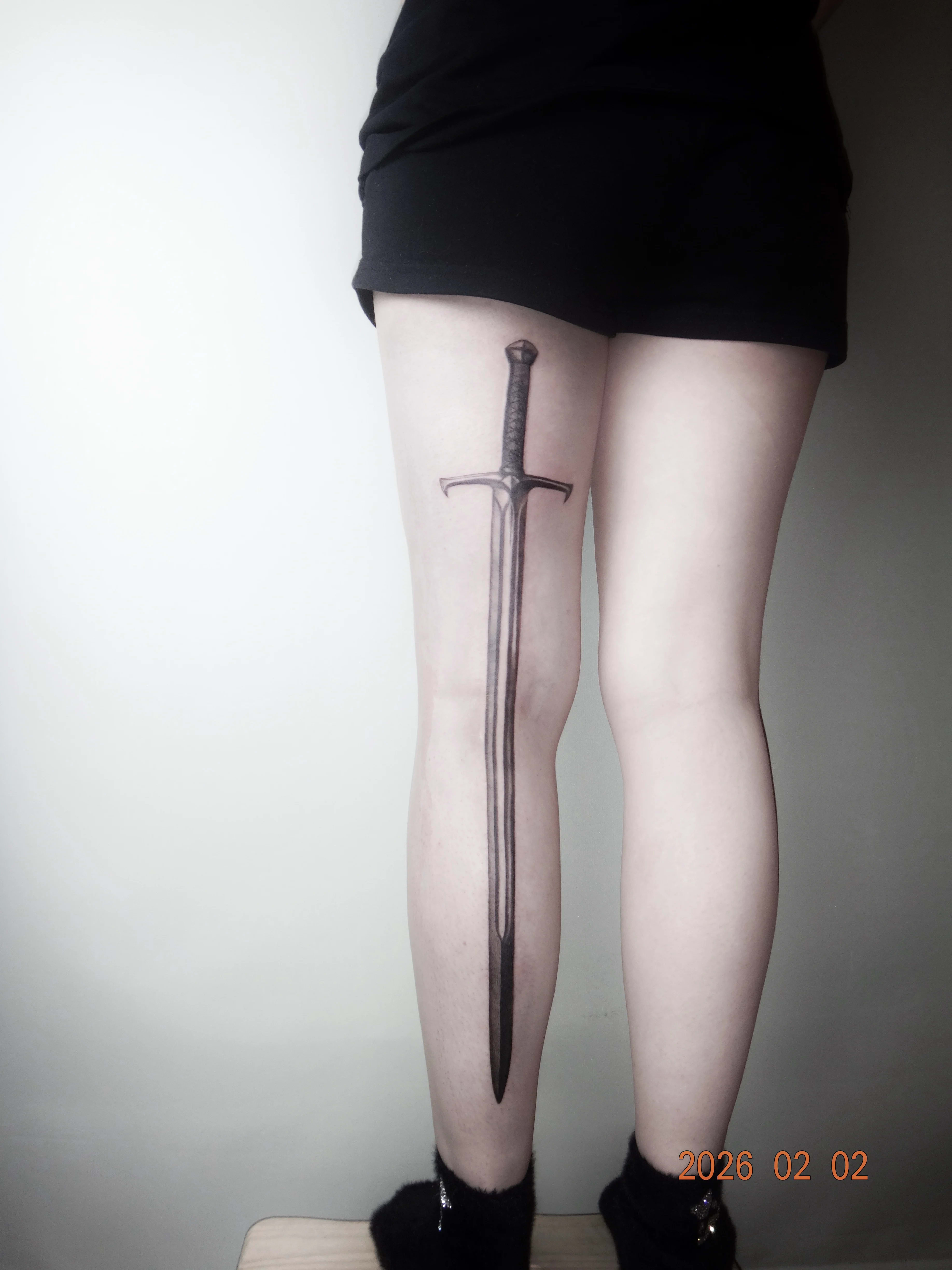
Black and grey realism is more timeless: it relies solely on black diluted to grey, so it ages more slowly and is easier to refresh. It's the most common choice for portraits and large compositions on the forearm, arm or chest.
Colour realism makes a huge impression — especially in nature and pop-culture motifs — but it demands more: the skin has to take pigment well, and the tattoo must be consistently protected from the sun, because colours fade faster than black. At the consultation we'll advise which version will work better with your skin tone and placement.

Realism needs space. Small, dense details blur over time, so the minimum sensible size for a portrait is roughly the size of a hand — and the larger the piece, the more room there is for detail and the better it withstands the passing years.
The best placements are flat, stable areas: forearm, arm (great for a realistic sleeve), chest, shoulder blade, thigh and calf. In realism we avoid areas that move a lot and are exposed to friction — fingers, the inside of the hand, feet — because detail blurs there quickly.
It all starts with a consultation and a reference. For portraits, a sharp, high-resolution photo with clear lighting on the face is crucial — 80% of the result depends on it. The artist prepares a design and a composition fitted to the anatomy of the chosen area.
A realism session usually takes longer than with other styles, because shading is layered, precise work. We split larger pieces into several sessions with breaks that let the skin recover. We work with sterile, single-use equipment and high-grade pigments.
More than any other style, realism lives on contrast — and contrast is killed fastest by the sun. Apply SPF 50 cream to a healed tattoo every time you expose it to light, and heal a fresh one according to our recommendations: a thin layer of ointment, breathable clothing, no pool or sauna during healing.
Well-moisturised skin means a longer life for tonal transitions. Years later, realism can be refreshed — a good artist will restore the depth of black and the contrast without redoing the whole piece. You'll find a detailed guide in our article on fresh tattoo aftercare.

Realism is a specialisation, not an add-on — it requires an artist who works with light and shadow every day. On our team you'll find artists who specialise in realistic detail, and you can view their healed work in the portfolio on this page and on-site at the studio.
You'll find the studio in the Psie Pole district of Wrocław, at ul. Poświęcka 17/40. The consultation is free and with no obligation: you bring an idea and references, we advise on size, placement and technique, and we present the quote individually — it depends on the scale and complexity of the project.
Realism is among the higher-priced styles, and it is worth understanding why: the photographic effect is built from hundreds of layers of chiaroscuro laid patiently, hour after hour. The first factor is the motif's complexity — a portrait with a background is a different block of work than a single eye or hand.
Size works untypically in realism: work that is too small can be more expensive per effect, because cramming detail into a tight frame lengthens the work and shortens the tattoo's life. Sometimes we advise a larger format — not for a bigger bill, but for a better investment. The colour version adds up to a third of the working time compared to black and grey.
Large pieces are planned in stages with a clear schedule — you know upfront how many sessions and at what intervals. Rough ranges are in our Pricing; specifics after we see the references at a free consultation.

The first story is portraitists of memory: people who want to carry the face of a loved one, a child or a pet — not a symbol, not initials, but the real face with its expression and gaze. Realism is the only style that can render likeness fully, and these commissions are its heart.
The second story is lovers of film, music and characters: a frame from a beloved movie, a portrait of an artist who shaped their sensibility. The third is seekers of illusion: people fascinated by the technique itself — biomechanics, realistic textures, three-dimensional trompe l'oeil that fool the eye.
The common denominator is demanding: realism needs a good reference, a sensible size and trust in the process. In return it gives an effect nobody walks past indifferently. If your phone holds a photo you would like to carry on skin — send it through the form; we will honestly assess what can be drawn from it.
Myth one: „realism turns into a grey blot after a few years”. What deteriorates is realism made without an ageing plan: detail packed tighter than skin can hold, contrast built on transitions too subtle. Good realism is designed with a margin — stronger contrast and thought-out tonal spacing let the work soften gracefully instead of dissolving into fog.
Myth two: „a portrait always comes out a little different from the photo”. Likeness is not a lottery but craft: it follows from the quality of the reference and the artist's portrait experience. That is why we insist so stubbornly on sharp, well-lit photos.
Myth three: „realism hurts the most of all styles”. Technique does not change the pain threshold — placement and session length do. Realistic shading can even feel gentler than outlining; the challenge is the time spent over one area, which is why longer sessions are broken up and split.
A realistic motif rarely ends as a lonely island — more often it becomes the heart of a bigger story. The classic pairing is realism with a soft black-and-grey background: smoke, clouds, fabric or water build a scene where the portrait plays the lead and the composition gains the depth of a film frame.
The second proven direction is realism with geometry and ornament: a photographic eye inside a mandala, a portrait framed by sharp graphic forms — one of the strongest effects in modern tattooing (more on our Ornamental and Blackwork pages). The third path is a realistic sleeve built over years: successive motifs joined by a shared background into a coherent, cinematic narrative.
If you already have tattoos and want to add a realistic element — bring photos to the consultation. We will design it to enter the existing arrangement like a shot in a well-edited film.
Realism is a style of long sessions, so preparing the body makes a bigger difference here than anywhere else. A week before: regular moisturising of the working area and no heavy sunbathing — we do not work on sunburnt skin. The day before: proper sleep, plenty of water, no alcohol.
On the day, eat a solid meal and bring snacks — blood sugar during four hours of work decides comfort more than the technique itself. Dress comfortably and in layers: a body held still cools down faster.
Prepare your head too: realism grows slowly and in stages, and mid-session the work looks like a construction site — shadows without details, patches without sense. That is normal; the image clicks together only near the end. We take regular breaks — for stretching, water and the artist's fresh eye: tired eyes do not see tonal values, and realism is entirely a game of values.

Choose realism when you want to carry a specific image on your skin — a portrait, an animal, a film still. We work from good references and build depth with light, not outline.
We will not make good realism from a blurry photo or at postage-stamp size — detail needs a reference and space. We will assess honestly whether your image will hold up.
The technique itself doesn't hurt more — pain depends mainly on the placement and the session length. Realism does require longer work over one area (layered shading), so sessions can run longer. The work can always be split into stages.
A small motif, like an eye or a single flower, is usually one session. A palm-sized portrait — one longer session or two. Large compositions and sleeves are done in a cycle of several sessions spread over weeks, so the skin has time to heal.
We advise against very small realism — micro-detail merges over time and the work loses readability. The minimum sensible size is around palm-sized; with portraits, the bigger, the better for the effect's durability.
Sharp, high-resolution, with a well-lit face and a natural expression. Avoid heavily filtered photos and low-quality scans. The better the reference, the more faithful the portrait — we're happy to assess the photo at a consultation.
Properly executed and protected from the sun, black-and-grey realism holds its contrast for years. The colour version needs more SPF discipline. After years the piece can be refreshed, restoring the depth of the shadows without reworking the whole.
Fill in the booking form on our website and describe the idea, attaching references. We'll get in touch, match you with an artist specialising in realism and set a date for a free consultation at our studio in Wrocław.
Yes — these are the most common and most personal realism commissions. We need a sharp, well-lit photo with a natural expression; at the consultation we'll honestly assess whether the reference can carry a portrait and suggest a crop and size at which the likeness will survive decades.
Yes — bigger compositions naturally grow in a cycle of sessions every three to four weeks, and realistic sleeves can be built motif by motif over years. What matters is planning the whole at the start: then every stage has its place in the composition.
Often even better — fur, eyes and distinctive markings give realism a rewarding playground, and pet portraits are among our most frequent commissions. The key, as always, is the reference: a sharp photo at muzzle level in daylight.
Yes — with realism, always. You'll see the prepared crop with composition corrections applied, and together we'll decide the final size and placement. Only the approved design goes on your skin; with portraits there's no room for surprises.
It's one of the best spots: a stable, well-visible surface with a size ideal for a portrait or a single motif. The inner side offers a smooth canvas for faces and eyes, the outer side carries larger compositions well. A big share of our realistic work is made right there.
Yes, we do it often: a portrait with a name and dates, a pet with a dedication, a film still with a quote. We design the script as part of the composition — the typeface and letter size work with the piece's tonal values instead of competing with the portrait's detail. More about the letters themselves on our Lettering page.
Often yes. We can partially reconstruct old photographs — lift the contrast, recover tonal values, combine a reference from two shots. We'll honestly assess how much detail can be recovered and what size the piece needs to carry it; sometimes a narrower but faithful crop beats a wide, guessed one.
One artist leads the piece from the reference to the final session — consistency of hand is crucial in realism. The whole studio provides support, from preparing the reference to aftercare, so you get a single author with a full team behind them.

All-seeing eye in star
Emilia Adamska • Emaliart • Tattoo Artist

Eclectic nostalgic set
Justyna Góra • Tattoo Artist • Permanent Makeup
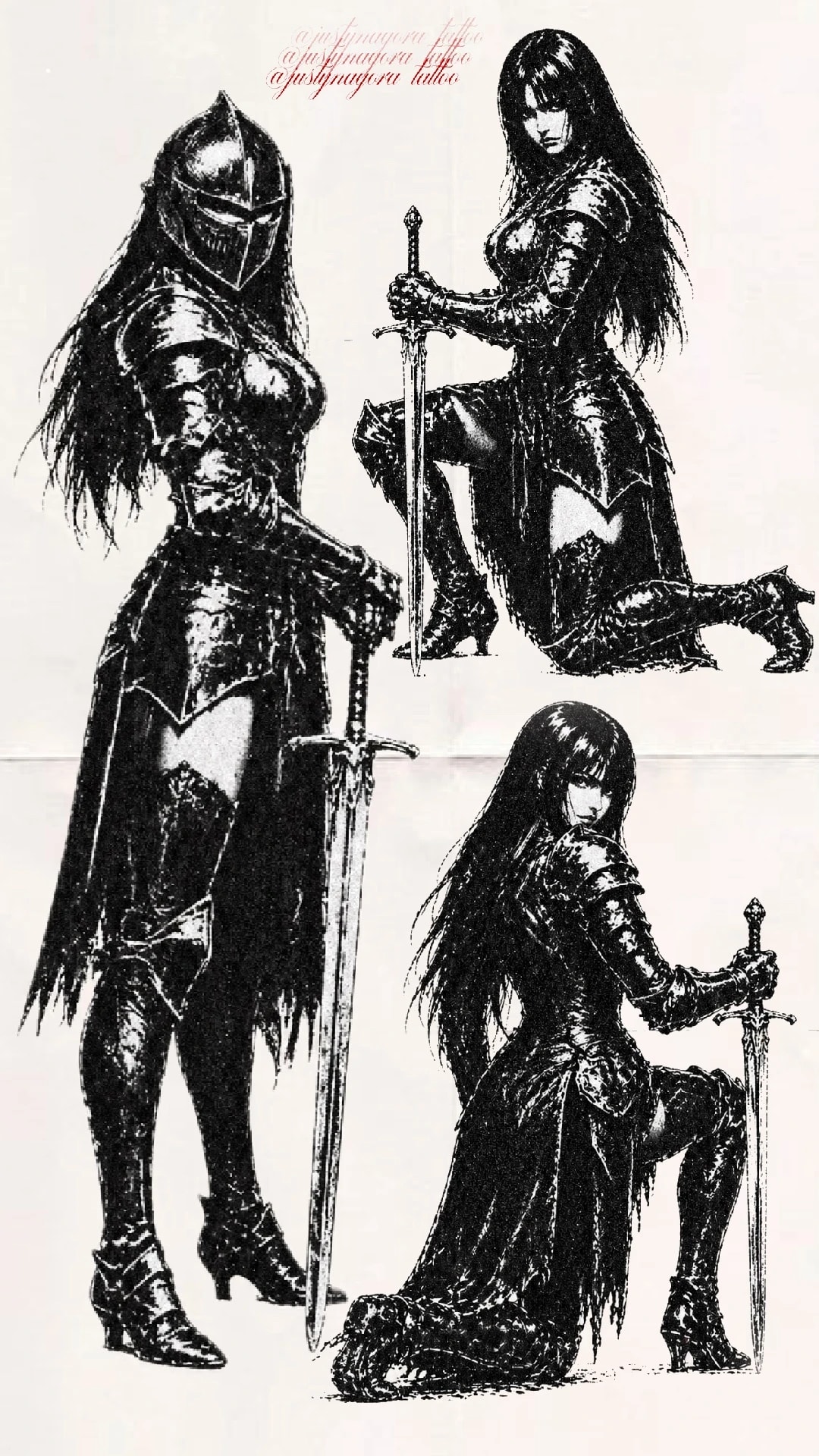
Dark Armor Warriors
Justyna Góra • Tattoo Artist • Permanent Makeup
Classic knightly longsword
Justyna Góra • Tattoo Artist • Permanent Makeup

Black Lace Heart
Justyna Góra • Tattoo Artist • Permanent Makeup
Indicative ranges — every piece is quoted individually after a free consultation.
Minimalist tattoo
300 PLN
~75 €
A single small motif in a thin line, with no shading or fill — one symbol, a date or a short word. The shortest session on our list.
Get your quoteSmall design
from 400 PLN
~100 €
Small motifs, lettering and single elements with detail or light shading — usually one short session.
Get your quoteMedium project
500–1000 PLN
~125–250 €
Hand-sized compositions: fine line, ornaments, lettering with graphics, smaller shaded motifs.
Get your quoteLarge project
1000–2000 PLN
~250–500 €
Detailed designs on the forearm, calf or back — more detail, often longer or multi-stage work.
Get your quoteSleeves and large pieces
individual quote
Sleeves, large compositions and multi-session projects are billed per session across several appointments.
Get your quoteThe ranges are indicative. The final, binding price is set after the consultation and once the design is approved.
Our artists’ portfolio is the best test of whether a style fits your skin and idea. Filter by style, body placement or tags.
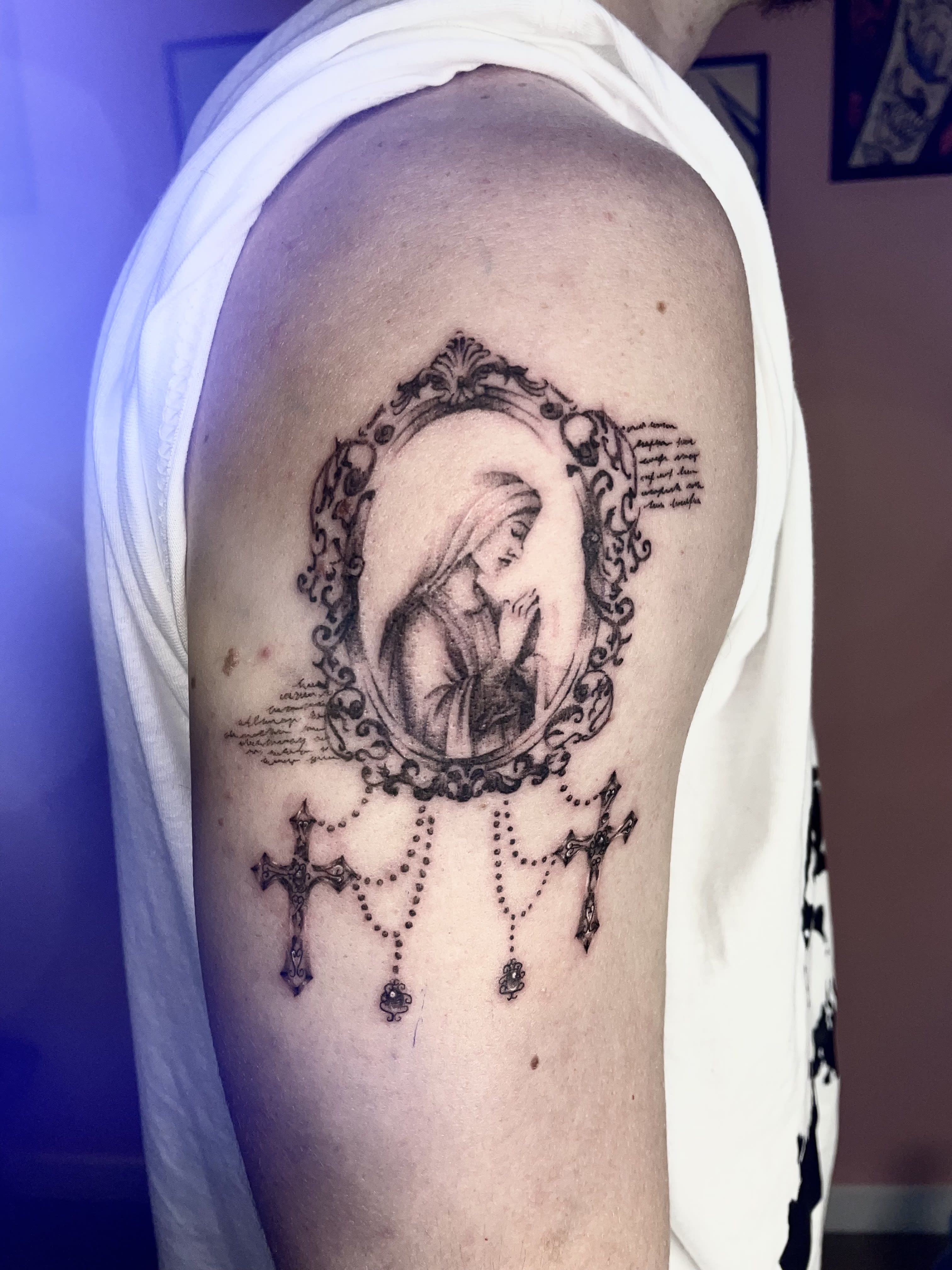
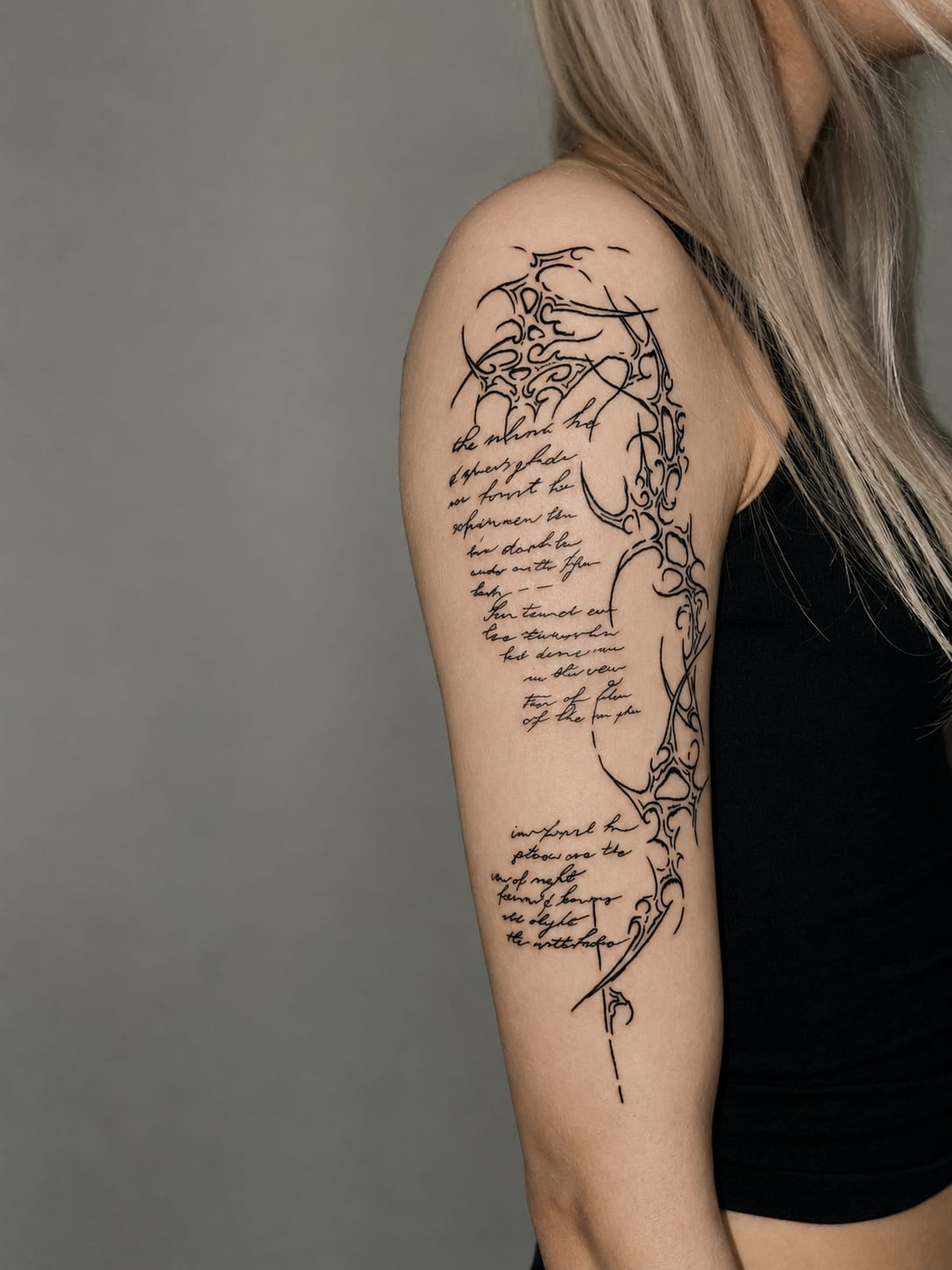
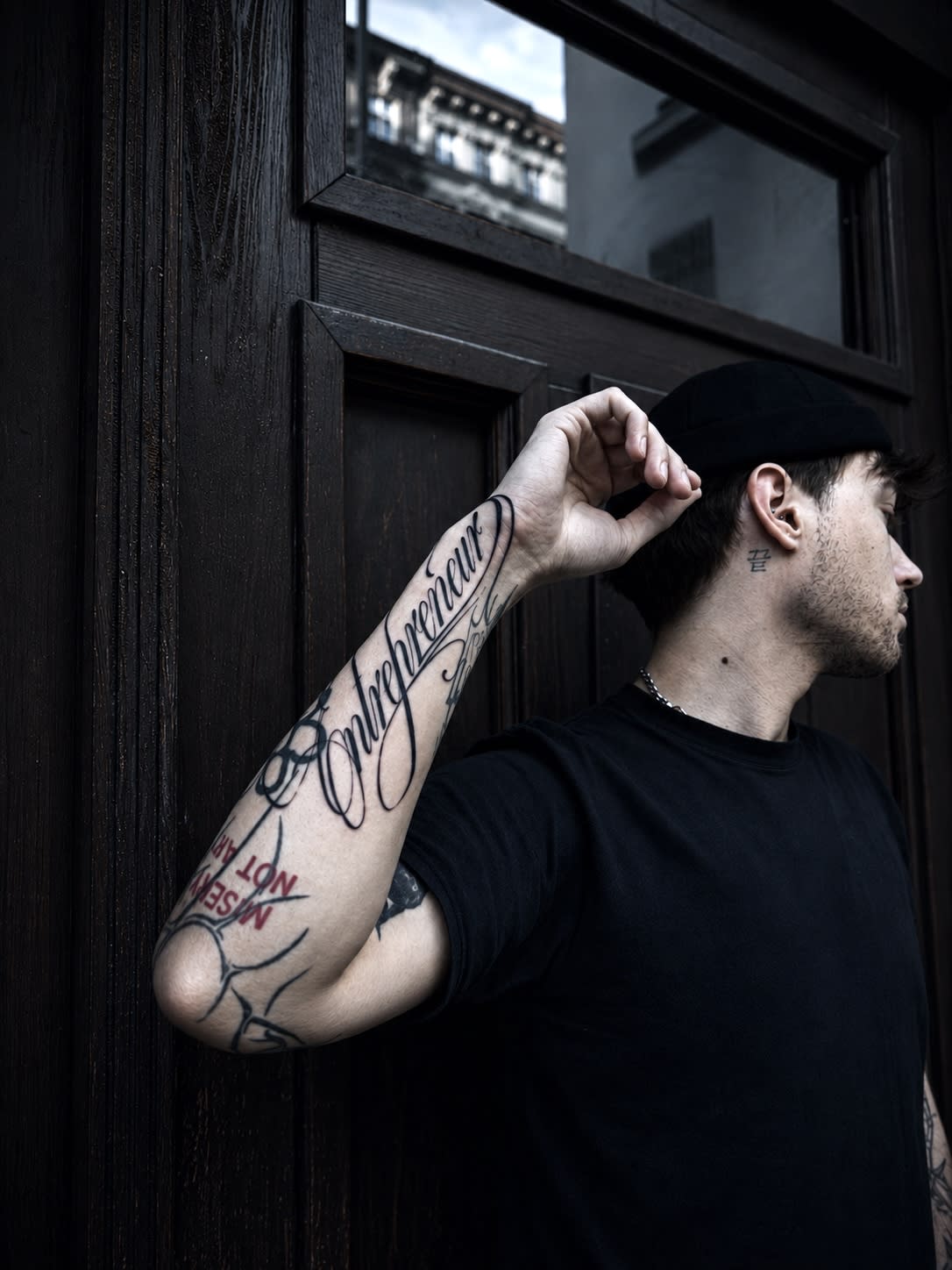

Each artist has their own specialities — see profiles and portfolios, or describe your idea in the form and we’ll match the right person.
The techniques in this gallery have their own pages — motifs, healing, prices and healed examples.
We cover old or unloved tattoos with a new design. See before-and-after transformations straight from our studio.
Practical guides by our artists — pain, aftercare and preparation. No myths, no scare stories.

Original projects waiting for an owner — each with a price and a suggested size.

The questions that matter most
Describe it in the form — we’ll suggest a style, an artist and the nearest date. The consultation and quote are free.