Women’s Tattoos — Designs, Placements and a Style That Stays With You
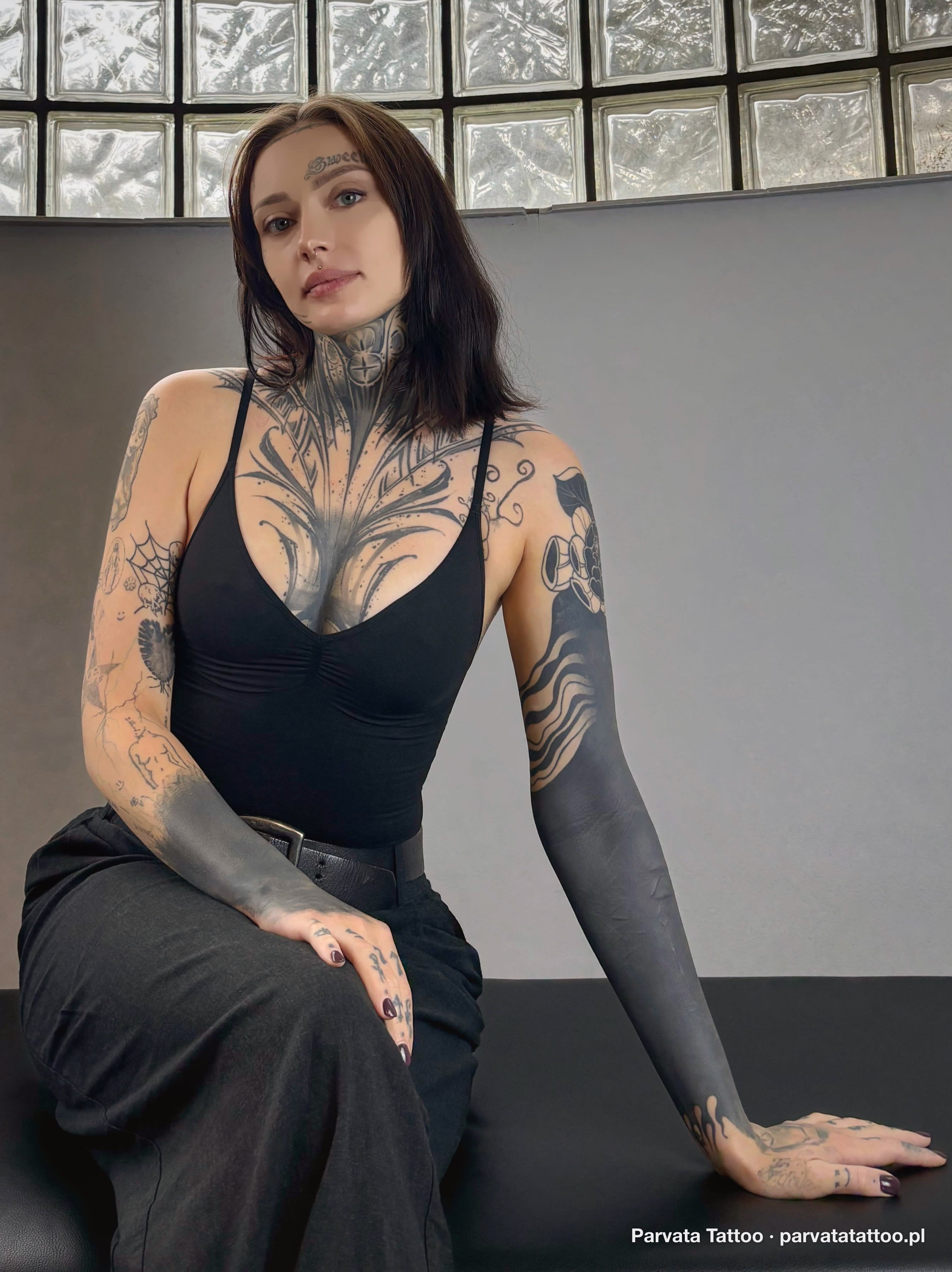
Most guides to women’s ink begin and end with a list of “10 cute motifs”. We’ll start differently: with what women actually ask in our studio. Will a delicate line survive the years? Ribs — do they really hurt that much? Can you tattoo over stretch marks? How does this fit with pregnancy, cosmetics, work? This guide collects the answers we give at consultations every day — from choosing style and placement, through symbolism, to real prices and aftercare. We write from the position of a studio where women’s projects fill most of the calendar: from microscopic lettering to backs built over with botany. And one note, the same we make in the men’s guide: “women’s” is a search label, not a definition. We know women wearing heavy blackwork and men with a sprig of lavender on the forearm. Skin has no gender — it has anatomy, and a good design respects exactly that.
Fineline — why the thin stroke rules women’s projects
If the past decade has a signature in women’s designs, it’s fineline: a single precise line thin as a hair, minimal fills, maximum elegance. It’s a style that looks like jewellery — which is exactly why women who value discretion fell for it.
Honesty demands adding what galleries keep quiet: the thin stroke is a demanding technique. A single-needle line forgives no hand tremor, and with time — physiology is relentless — it softens slightly. A well-designed fineline accounts for that from the start: proper composition density, minimal spacing between lines, placements where skin moves least.
Practically it means one thing: in this convention, choosing an experienced hand matters more than in any other. Browsing a portfolio, look for photos of healed work — fresh fineline always looks perfect; the truth is told by skin a year on.
Botany — from a lavender sprig to a back full of peonies
Plant motifs are the roomiest chapter of women’s projects. The scale stretches from a three-centimetre sprig on the wrist to vines winding around a whole arm — and botany works at every scale, because nature designs compositions that flow with the body all by itself.
The symbolism can be personal: the peony carries prosperity and softness, lavender calm, the fern rebirth, the sunflower loyalty to light. Just as often the choice is purely aesthetic — and that’s fine too; a flower doesn’t have to mean anything to be yours.
Craft-wise, botany likes two roads. The first is clean, illustrative linework with delicate whip shading — timeless and very resistant to the years. The second is fuller, painterly fills with colour. We do both; at the consultation we’ll show you the same flower in each convention, because the difference can be surprising.
Butterflies, birds and other wings — transformation without cliché
The butterfly is a victim of its own popularity: copied so many times from the same stencils that it’s easy to forget how strong a symbol it is. Transformation, a new beginning, lightness after a hard time — women often choose it after major life changes, and that is a beautiful reason.
The way to a butterfly without cliché? A custom design instead of a stencil. Wings with ornamental fill, a butterfly in duet with a flower, delicate dotwork instead of full colour, asymmetry instead of mirror symmetry. Same symbol, different class entirely.
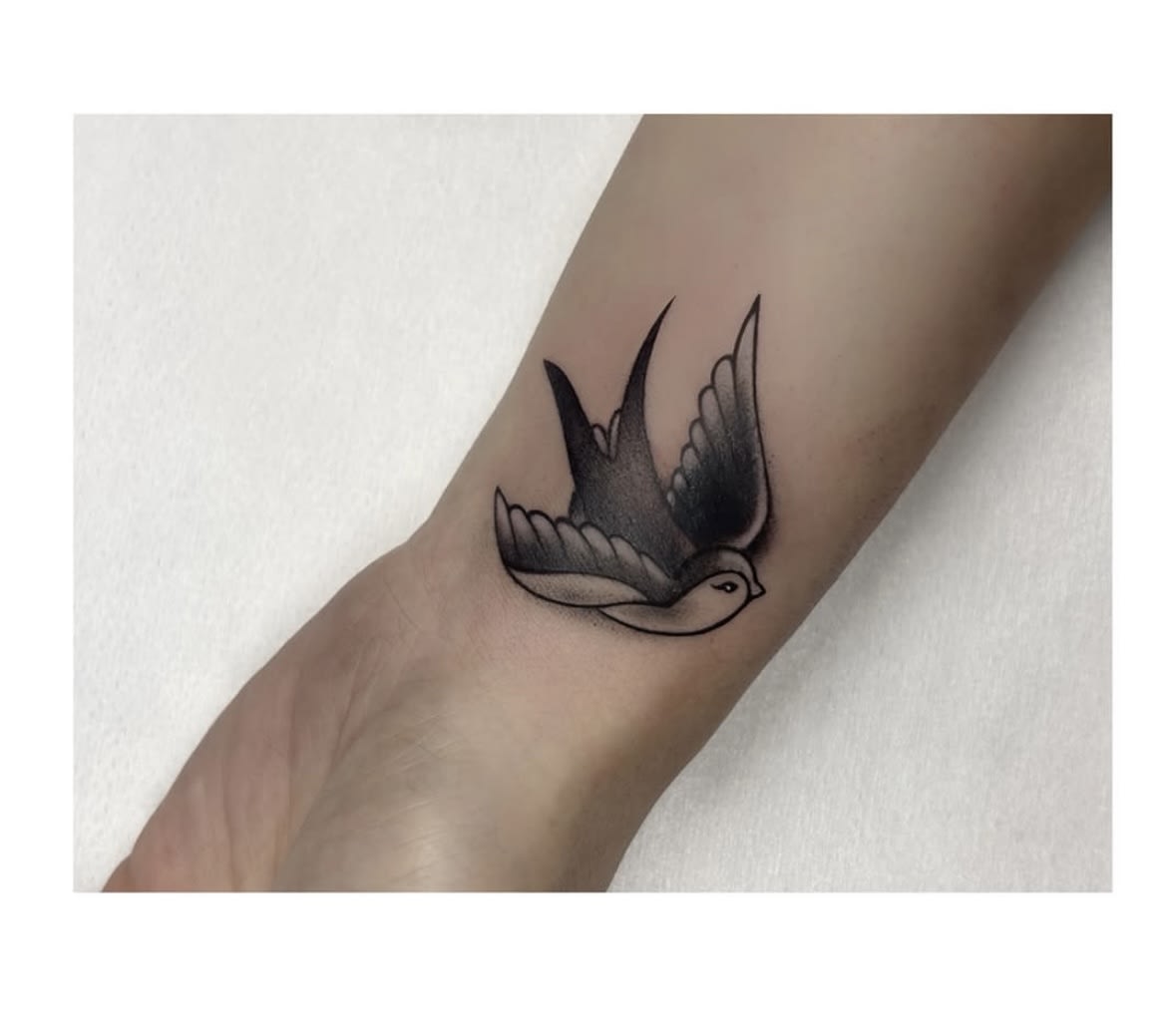
Birds carry kindred energy — freedom, independence, journey. Swallows always return home (hence their sailor history), cranes join longevity with fidelity, and small bird silhouettes in flight arrange into subtle compositions on a collarbone or forearm that read like a whisper, not a shout.
Ornament, mandala, henna — geometry in a feminine key
Ornamental work answers women for whom botany is too literal and geometry too cold. Lace-like patterns inspired by henna, mandalas built layer by layer, ornaments recalling jewellery — this convention joins precision with softness in a way no other achieves.
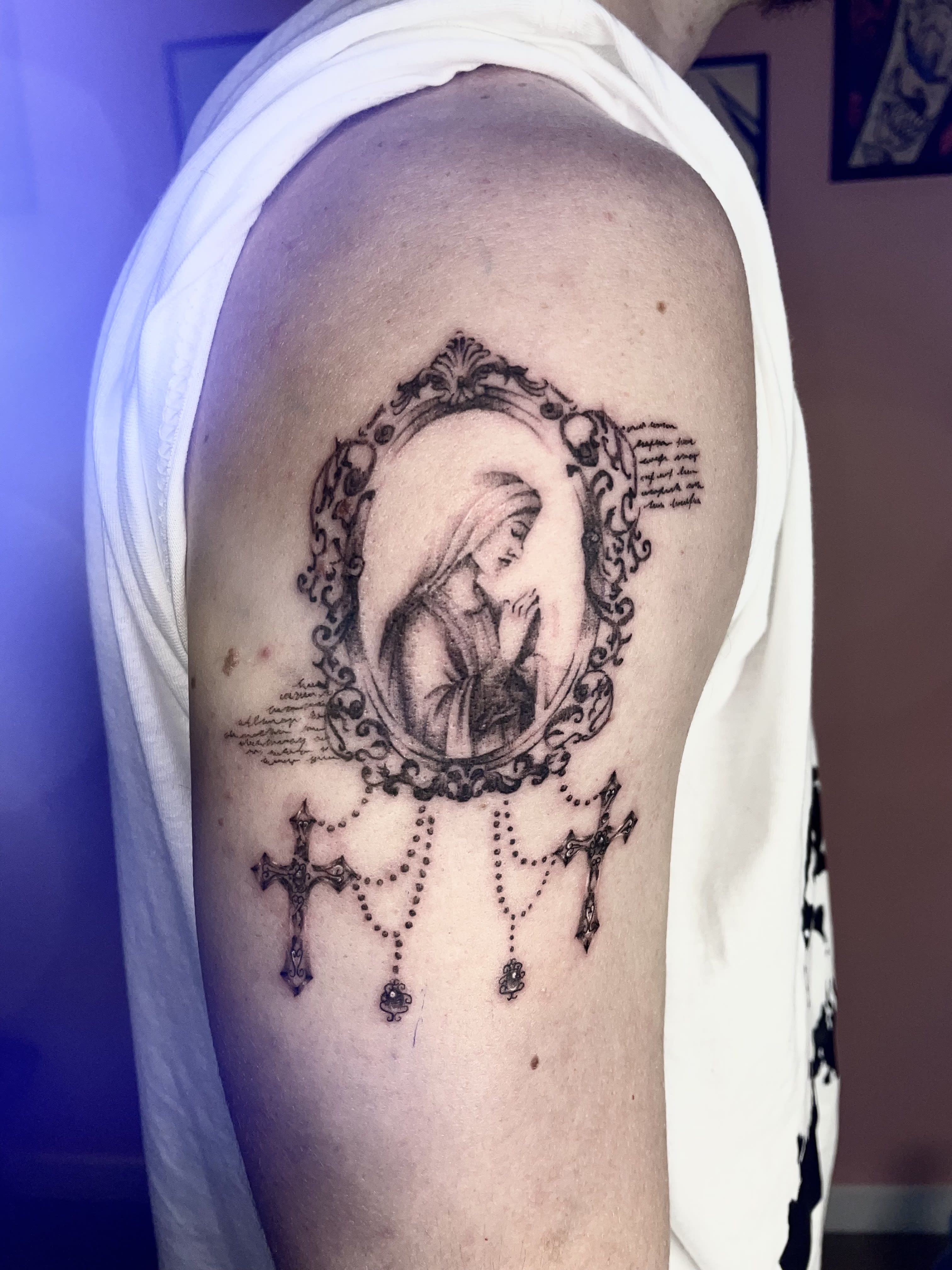
The mandala adds symbolic depth: a diagram of harmony, centre, wholeness. Tattooed on the sternum, nape or forearm it works as a personal focal point. “Jewellery” ornaments — bracelets on the forearm, pendants below the collarbone, lace on the thigh — play with the body like well-chosen jewellery, except you don’t take them off at night.
The technical heart of this convention is dotwork: shading with thousands of points instead of grey washes. It gives an engraving-like effect, ages superbly and pairs beautifully with delicate outline. Our artists combine these techniques daily — browse the ornament and dotwork portfolios to see the difference on healed work.
Watercolour — colour that flows on skin
Watercolour is the most painterly convention: patches of colour spilled like paint on wet paper, often in duet with a clean thin line that keeps the composition in check. The effect is striking — the work looks as if someone transferred a page of a watercolour sketchbook onto skin.
An honest talk about watercolour must include a word on longevity. Soft, pastel patches without outline fade faster than saturated, contoured fills — that’s pigment physics, not poor execution. So we build good watercolour projects on a skeleton: a clear line carries the form, colour carries the emotion. That duet ages with dignity.
Watercolour also loves specific subjects: flowers, birds, butterflies, abstract splashes accenting another graphic. If you dream of colour but fear the “heaviness” of traditional fills — this is your convention.
Lettering, quotes, dates — the words you wear
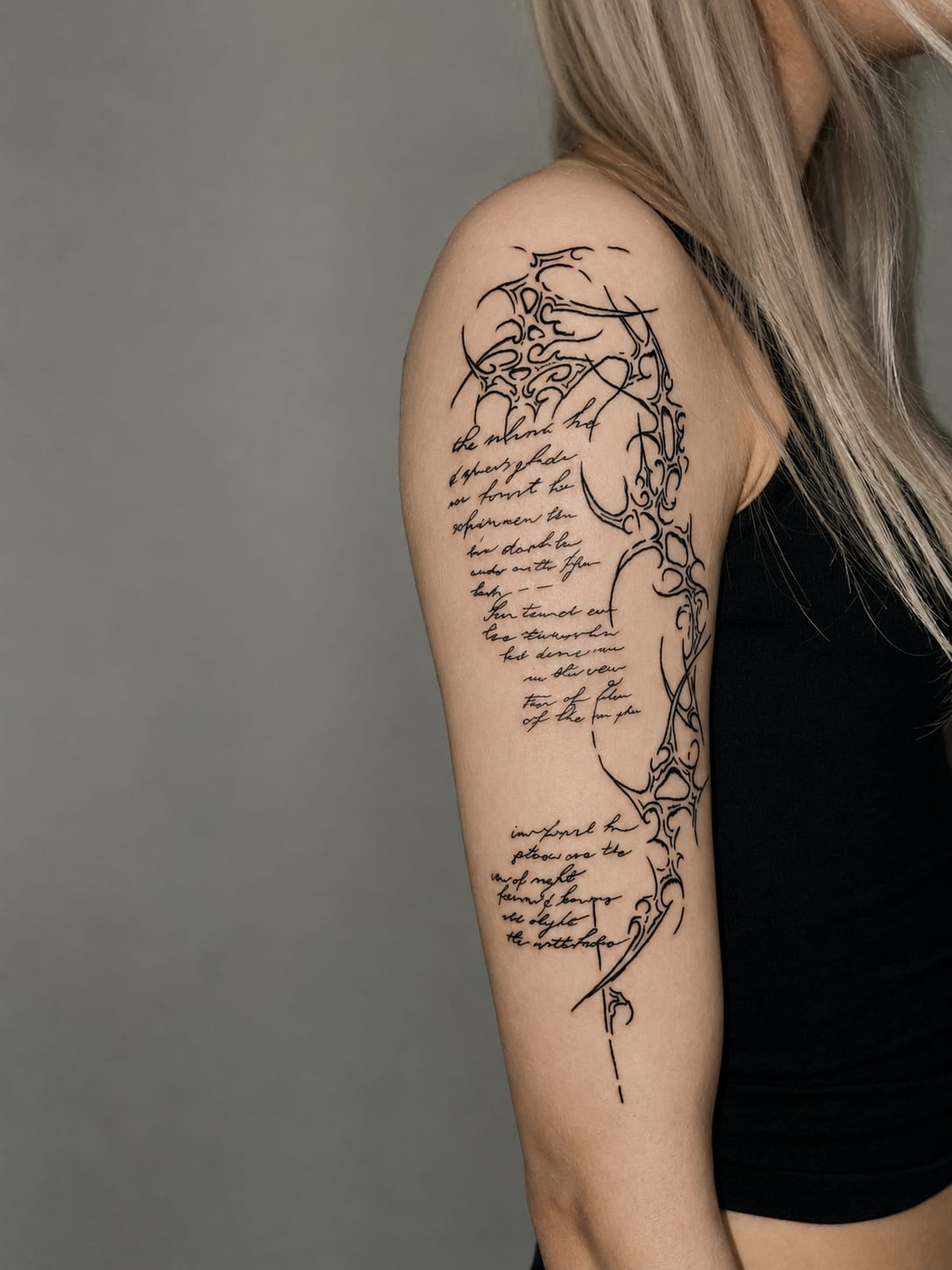
A small piece of lettering is the most common first tattoo for women: a child’s name, a date, an anchor word, a phrase in Latin or Italian. The strength lies in intimacy — it’s a message from you to you, which the world sees only when you allow it.
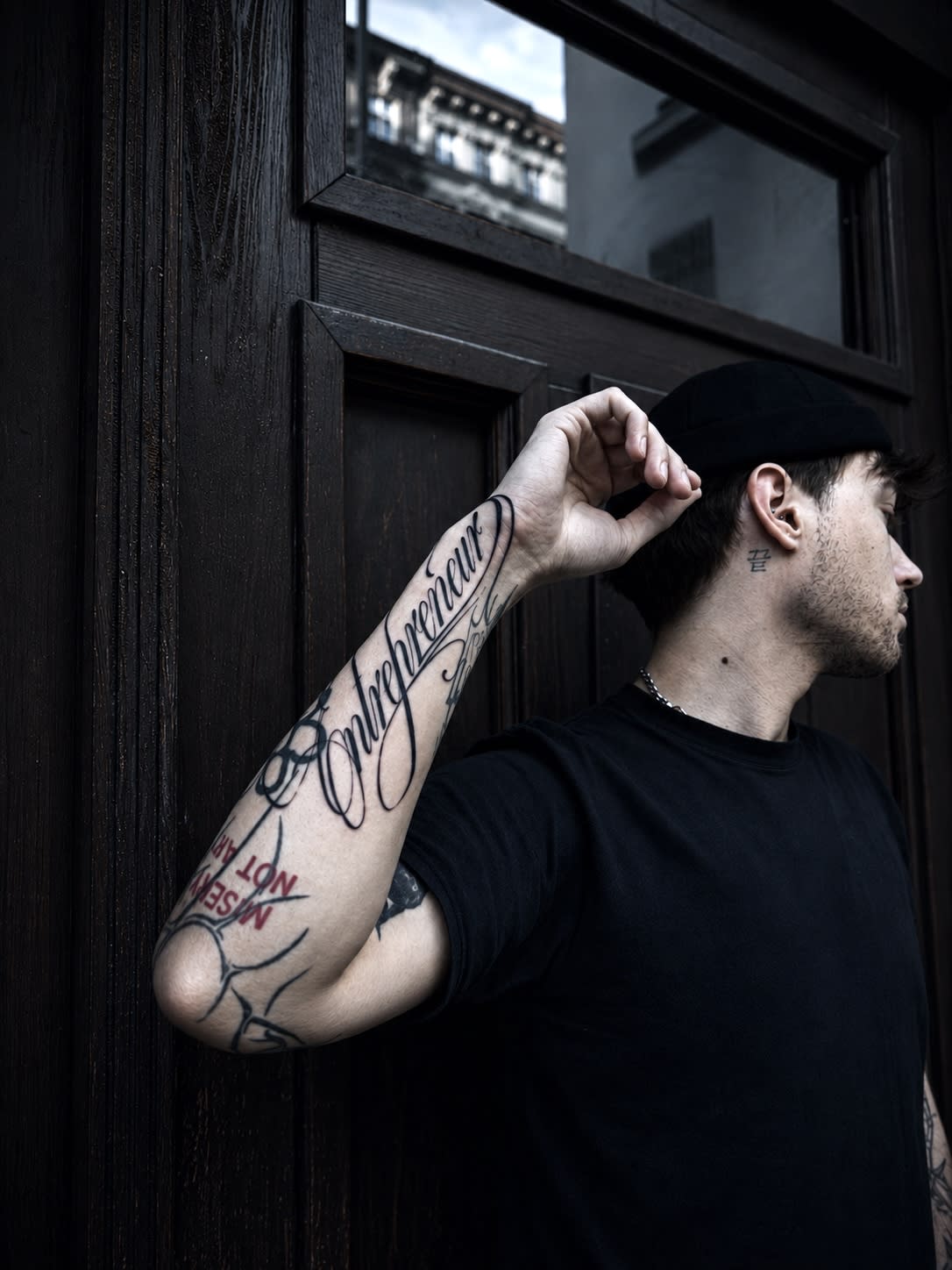
The craft has iron rules here, covered at length in our lettering guide: letters at least 8–10 mm tall if they’re to stay legible over the years; open typefaces instead of dense flourishes at small sizes; double verification of spelling in foreign languages — we check sources, Latin and Japanese included.
Placements that love words: the inner forearm (you read your line every day), the collarbone (an elegant line of text along the bone), the ribs (the most intimate option) and the nape (a word visible only with hair up). Each has a different “volume” — match it to how private your phrase is.
Micro tattoos — the whole truth about pieces smaller than a coin
A tiny heart behind the ear, a star on a finger, a three-millimetre symbol on the wrist: micro tattoos are charming and Instagram loves them. So do we — provided we have an honest conversation about what happens to them over the years.
Physiology: pigment in skin spreads slightly, always. In a palm-sized piece it’s invisible; in a coin-sized piece every line creeps toward its neighbour. So a micro design must be radically simple — a symbol, an initial, an outline. A miniature stuffed with detail is a label with an expiry date.
Fingers and hands add a second difficulty: skin renews fastest there, so small pieces can need refreshing after a year or two. We say this openly at the consultation — and often propose a compromise: the same symbol a centimetre larger, in a spot with more stable skin. Still discreet, but with a horizon of decades rather than seasons.
Wrist and around it — the discreet classic
The wrist has been the most popular women’s spot for a first design for years — deservedly. You see your symbol daily, you show it to the world only when you choose, and the pain is mild to moderate (gentler on the outer side, sharper right at the bone and on the inner side).
Compositionally the wrist likes three layouts: a small symbol at the bone, horizontal lettering along the natural lines, and a delicate “bracelet” — a wrapping motif. The last needs thought, as fully closing the ring can be temperamental in healing; we more often design open bands.
The back of the hand and the fingers we leave to the committed: these are zones of the fastest skin turnover and frequent touch-ups. If you dream of something there, let’s talk — sometimes a better home for the same idea turns out to be the side of the hand, or precisely the wrist.
Collarbone and nape — lines that accent, not cover
The collarbone is probably the most photogenic women’s placement: the natural, elegant line of the bone guides the composition by itself. A sprig of cherry blossom, small lettering, birds in flight — designs along the collarbone play with a neckline like a necklace, revealed and hidden by the rhythm of your wardrobe.
Pain can be distinct here — the bone lies shallow — but the pieces are usually small, so sessions are short. The payoff is among the most appreciated: this is the placement clients point at asking “will it sit like that on me too?”. It will — provided the design is drawn on your body, not copied from someone else’s photo.
The nape works similarly, only more privately: the design lives under your hair and reveals itself when it’s pinned up. Small symbols, a moon, a single flower — the nape likes compact, axial forms. One practical note: it’s a zone easy to forget when applying sunscreen in summer, and the sun hits hard there. An SPF habit will add years to the piece’s life.
Ribs and the underboob space — intimate, with character
We won’t sugar-coat it: the ribs are among the most demanding placements for pain. Skin sits right on bone, and breathing moves the whole surface during a session. And yet it’s exactly the ribs women choose for their most personal projects — because it’s an entirely private space, known only to the one who wears it and those she allows to see.
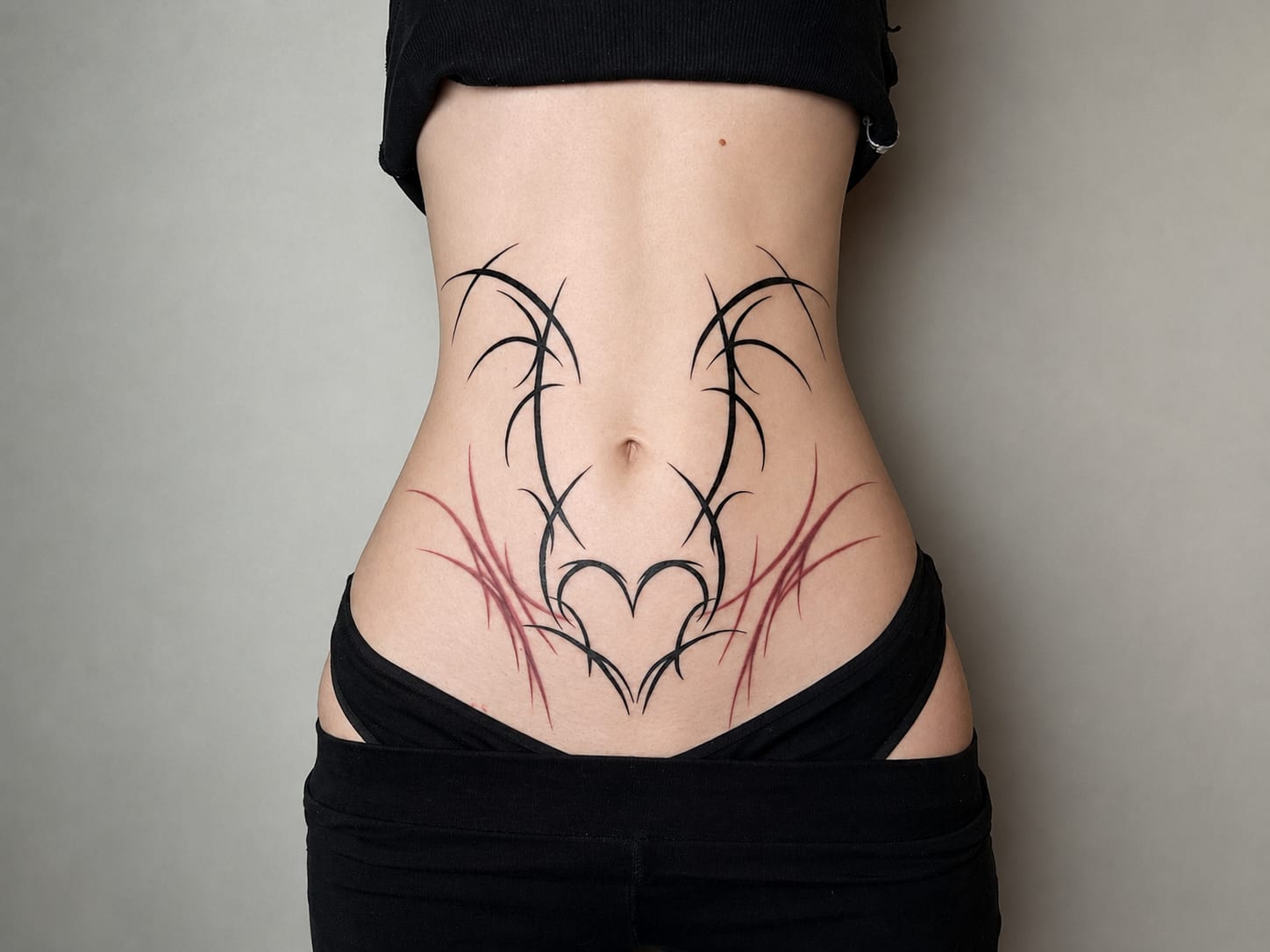
Compositionally the ribs are rewarding: the long, gently curved plane takes vertical lettering, sprigs guided along the arc, ornaments descending from the bust line toward the waist. The underboob — a composition under the bust line — is a growing genre of its own: symmetrical ornaments and mandalas arranging into a kind of lace underpinning. We design them in full respect of anatomy, so lines work with the natural shape rather than against it.
Session practice: shorter sittings, breathing breaks, good communication. Many clients split larger rib projects into two visits — and that’s wisdom, not weakness.
Thigh and hip — large format, private edition
The thigh is the women’s answer to the men’s forearm, only with more surface and full discretion: on a normal day nobody knows; in an evening dress, everyone you choose does. That has made the thigh the natural home of large, ambitious compositions — peonies with ornament, an owl in flight, a lace garter band, animal portraits.
The outer thigh and hip additionally cooperate with the body’s movement: a composition guided along the hip’s arc “flows” with every step. It’s also a low-pain zone — muscular, far from bone — so good for a first encounter with a longer session.
One thing we discuss with thigh projects: body changes. Moderate weight swings don’t affect a well-designed piece, but with a major transformation planned (or pregnancy on the horizon — see below) we choose the composition and exact placement with a safety margin.
Back and spine — from a subtle line to a garden across the shoulder blades
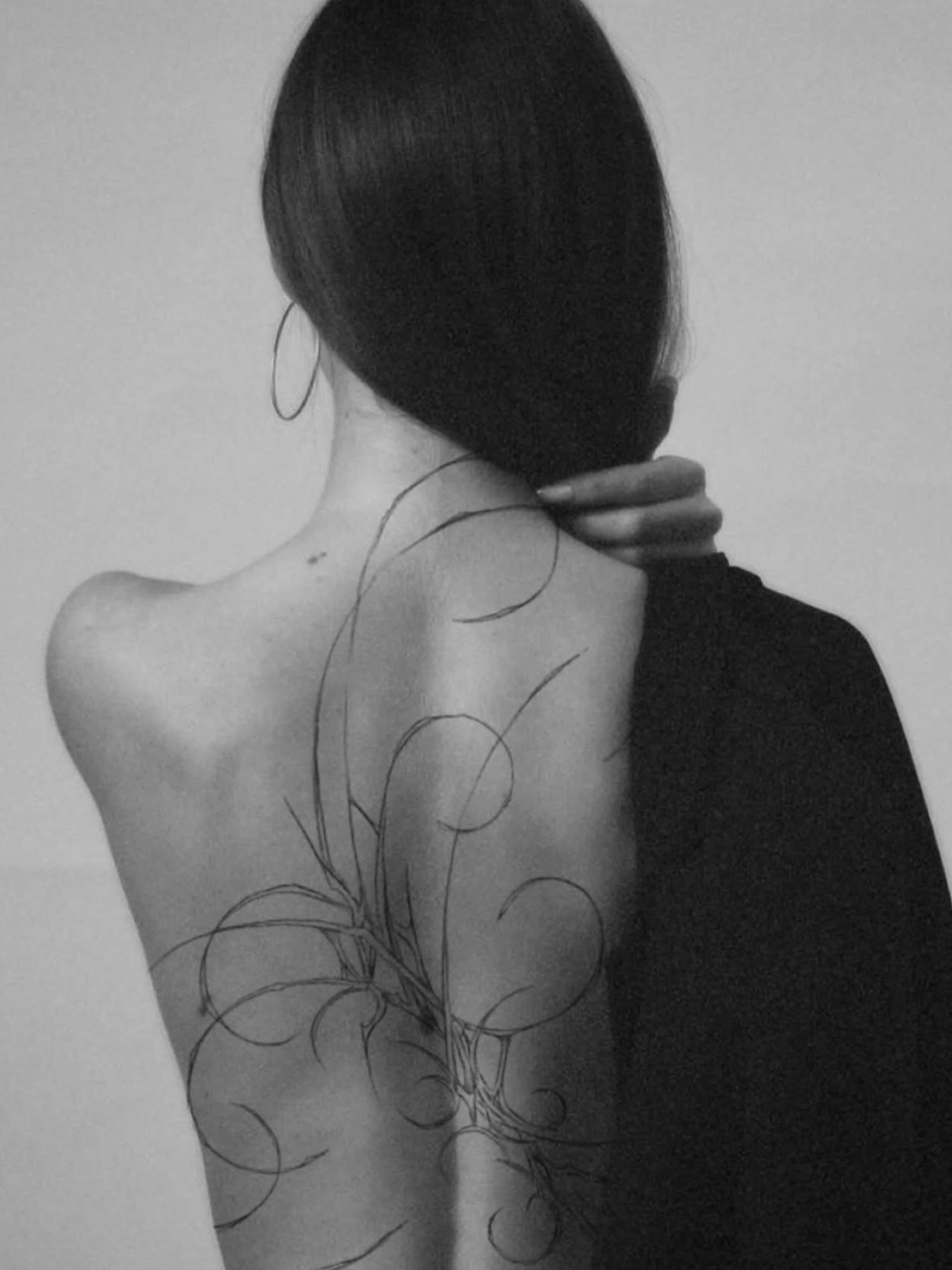
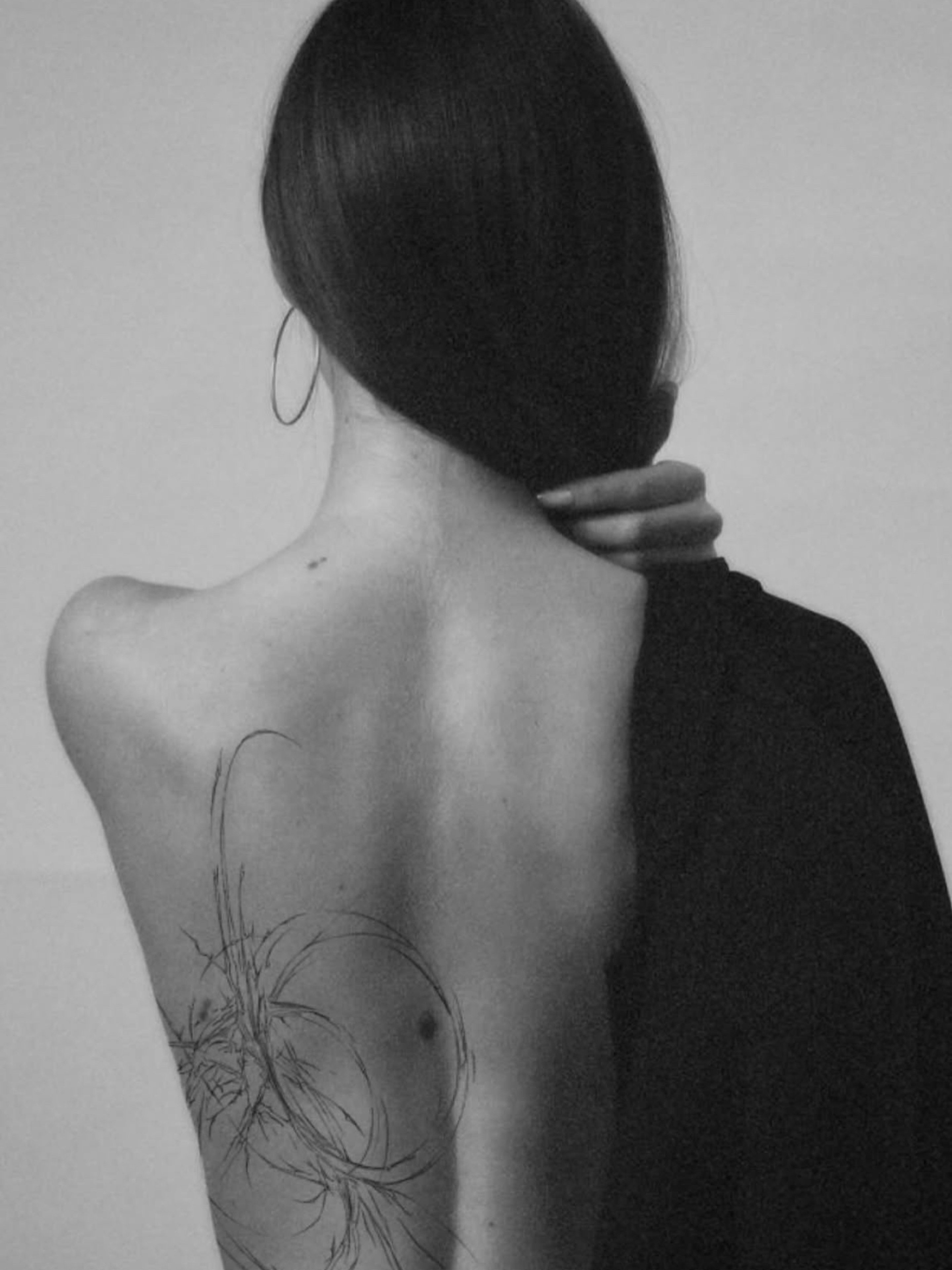
The spine line seduces minimalists: a single vertical composition — a chain of symbols, a vine, lettering — running down the centre of the back looks spectacular in any open-backed cut. Honestly: the very centre, right over bone, can be sharp; guiding the composition slightly off-axis is gentler.
The shoulder blade is an ideal frame for closed compositions: a flower, a mandala, a bird — the piece lives its own life, revealed by a strap or a summer dress. Skin is stable here, pain moderate, and the design easily extends later toward the arm or the other blade.
A full back — a botanical garden, a grand ornamental composition — is a multi-session project and among the most spectacular work leaving our studio. If you carry such an idea, come talk even if the work would start in a year: a good plan for the whole means the first element lands exactly where it should.
Ankle and foot — lightness with one asterisk
A small sprig above the ankle, a chain of symbols, a flower descending onto the instep: this area has natural charm and summer lightness. Sandals and dresses show it off by themselves, and in winter the design disappears under clothing for half a year — a rhythm many women love.
The asterisk concerns the foot itself: skin on the instep and toes works inside shoes constantly, so pigment chips there faster than anywhere else, and healing in closed-shoe season can be tiresome. The ankle and the area above it are far more stable — which is why we usually steer projects exactly there.
A practical calendar: work in this area is best planned from autumn to spring, when the foot rests from sandals and sun, and healing proceeds calmly under a soft sock.
The symbolism of women’s motifs — a cheat sheet without the mysticism
The moon — intuition, cyclicality, feminine energy; the crescent is a minimalist favourite. The sun — joy and vitality, often paired with the moon as two sides of a nature. Stars — direction and dreams. The wave — the element, changeability, roots by the sea.
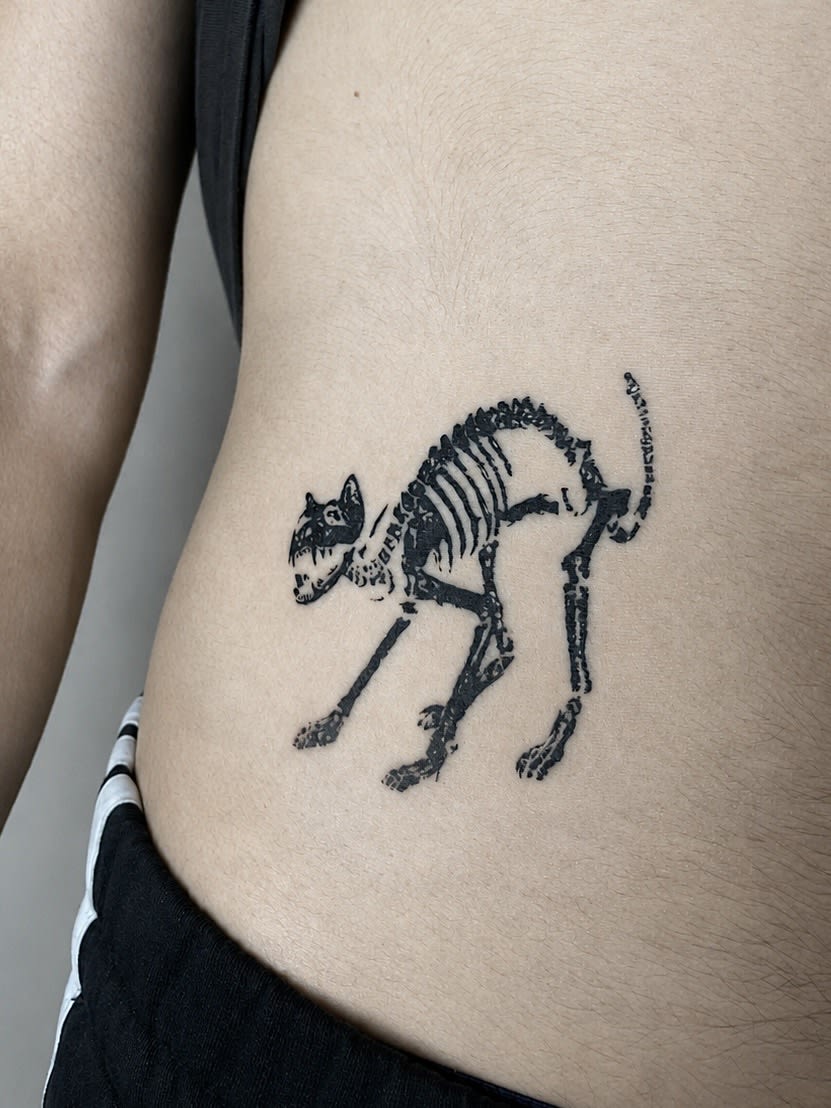
Snakes, against first associations, carry transformation and wisdom in women’s projects — the snake sheds its skin as we close chapters. The moth is the butterfly’s nocturnal sister: metamorphosis in a more mysterious key. The cat — independence; a dog’s paw — loyalty to one who left or stays; the crane — longevity and devotion.
And finally the most personal symbols: children’s birth dates, coordinates of places, ECG lines, a mother’s handwriting transferred from a note. Here symbolism needs no dictionary — only good execution. One tip: verify meanings at the source, not on Pinterest; some “universal” symbols carry meanings in specific cultures you may not want to wear.
Tattooing over scars and stretch marks — what’s truly possible
We hear this question weekly, so here’s the detailed answer. Yes — most scars and stretch marks can be tattooed over, with conditions. The scar must be fully mature: at least a year old, lightened and flat. Fresh, red, raised ones we don’t touch — the skin is still working.
The craft is cooperation with the scar, not war: scar tissue takes pigment differently (sometimes weaker, sometimes stronger), so we design so that key lines avoid the most altered fragments while fills and textures integrate the scar into the composition. Botany and ornament perform superbly — organic forms camouflage irregularities naturally.
Stretch marks — after pregnancy, after weight changes — we treat similarly: mature, lightened marks can be composed into a design that shifts attention from skin texture to the graphic. We cover this at length in a separate article on tattooing over scars; at the consultation we assess your actual skin and say honestly what we’ll achieve and what we won’t promise.
Pregnancy, breastfeeding and baby plans — a safety calendar
Rule one, non-negotiable: we don’t tattoo during pregnancy. Not because pigment “reaches the baby” — because a session is a controlled trauma and stress for the body, and even minimal risk isn’t worth taking. Any responsible studio will tell you the same.
Breastfeeding: we recommend waiting until it ends. Formally the risk is negligible, but an infection or stronger skin reaction would require medication that complicates lactation. A few months of patience is a low price for peace of mind.
Planning a baby within a year or two while dreaming of work on the stomach, hips or under the bust? Let’s talk order: those zones change most in pregnancy, so it’s sometimes wiser to start with a forearm or shoulder blade and leave the stomach project for “after”. Good news: mature post-pregnancy stretch marks can later be composed in beautifully — see the section above.
Permanent makeup — the tattoo’s sister, a different craft
Speaking of women’s projects, PMU can’t be skipped. Permanent eyebrow makeup is technically the tattoo’s cousin — pigment, needle, skin — but plays by its own rules: shallower application, pigments designed to fade, results measured in years rather than decades.
At Parvata, powder brows are done by a certified PMU artist — the same precision of craft we know from tattooing, brought to the most exposed part of the face. The result is a soft, powdered shade instead of a stripey “sticker”; details and galleries live on our permanent makeup page.
Why mention it in a design guide? Because clients often combine visits: a skin project consultation and brows with one trusted team, in one place. If you’re considering both — say so; we’ll arrange the calendar so the healings don’t interfere.
How we work at Parvata — from idea to design on skin
We start with a free consultation — with a crystallised idea or a completely hazy one; both are fine. We talk placement, scale, style and budget, look at references and, importantly, your anatomy: the same peony runs differently along a shoulder blade than along the ribs.
We draw the design for you and show it before the session — you have the right to revisions, so use it; we’d rather polish a sketch than tattoo a compromise. We also match the artist to the convention: fineline, botany, ornament, watercolour, realism — each of us has a specialisation, and it shows in the portfolios.
The session happens in sterile conditions, by appointment only — no random audience behind your back. You leave with a dressing, simple aftercare instructions and the artist’s contact; the first touch-up after healing, if needed, is free. And once the piece heals, we’re happy to see it at a check-up — that’s our proud moment too.
Prices of women’s projects in Wrocław — concretely
The same honest ranges we give everyone: a small design — a sprig, lettering, a symbol — starts at 400 zł. A mid-scale project, say a botanical composition on the forearm or an ornament on the shoulder blade, usually runs 500–1000 zł. Large work — thigh, ribs with a developed composition, a section of the back — most often lands within 1000–2000 zł per session; the largest projects we split into stages.
Price is driven by scale, detail density and placement — work on ribs or fingers takes more time for the same area than on a thigh. Always included: a custom design drawn for you, a session in sterile conditions and the post-heal touch-up.
The advice we repeat from the men’s guide, because it’s universal: one considered project instead of three accidental ones. The same investment, incomparable result.
Pain from a woman’s perspective — the map and the myths
Let’s start by retiring a myth: research and our practice agree that women handle sessions at least as well as men — and long sittings often better. Pain threshold is individual, not gendered.
The map for the most popular women’s placements: wrist — mild to moderate; collarbone — distinct but brief; ribs and sternum — strong (plan shorter sessions); thigh and shoulder blade — mild, even comfortable; ankle — moderate, sharper right at the bone; spine — distinct on the axis, gentler beside it.
What genuinely helps: sleep, a meal before the session, hydration, loose clothing and — no joke — breathing. On longer work we schedule breaks, and on ribs we pace to your breath. Avoid booking right before or during your period if you know your pain threshold drops then — it’s a common and completely reasonable request.
Healing versus cosmetics, makeup and daily routine
The full aftercare protocol lives in a separate guide; here’s the version with the questions women ask us. Makeup: on the tattoo itself and its immediate area — no, until the skin closes (2–3 weeks). Foundation or powder is a bacteria colony from sponge and brush; wait until the epidermis rebuilds.
Skincare: while healing, fresh work gets only what we recommend — gentle washing and a thin layer of healing cream. Acids, retinol, peels, self-tanners and scented lotions steer well clear of the area; after full healing you return to your routine without limits, with one exception: strong acids and retinol applied directly to the design for years can accelerate fading, so dose them wisely.
Hair removal: shaving the area only after the skin fully closes; waxing and laser on a tattooed fragment — consult us and the clinic first, laser can damage pigment. And the habit for life: SPF 30–50 on exposed work in summer. It’s the cheapest treatment that keeps your design young.
What to avoid — the women’s edition of the mistakes list
Copying Pinterest work one to one — the same motif drawn for your body beats a print-off every time. Micro tattoos stuffed with detail — see the miniatures section; small must mean simple. Seasonal trends — today’s viral design is tomorrow’s vintage label.
Partners’ names early in a relationship — children’s and parents’ names are a different category; those are forever. Symbols from cultures whose meaning you haven’t verified at the source. “Cheap and fast” promotions — fixing savings costs more than doing it right the first time, and a good share of our cover-ups are exactly such stories.
And one positive tip instead of a ban: collect inspirations, but bring a story to the consultation too — what this design should mean, remind, close. From stories come projects you love more after years, not less.
Cover-ups, women’s edition — a second chance for old designs
The butterfly from your eighteenth birthday faded to a bluish smudge; hip stars from the era everyone wore them; a name that stopped being yours. Women’s cover-ups have their own character: the old pieces are usually small, so the room for manoeuvre is bigger than with men’s half-arm tribals.
There are three strategies. Covering — the new design absorbs the old, using its dark areas; botany and ornament handle this superbly. Extension — the old design stays but becomes an element of a larger composition that strips it of visual weight. And refreshing — if the work is good, just tired, we re-strike outlines and even out colour.
You’ll find the before-and-after gallery on our cover-up page. One promise: you won’t hear us judge the old work. Each has its story — we handle the next chapter.
A first design at 30, 40, 50 — the best moment is your moment
If you’re reading this thinking “I’m probably too old for this” — you’re not, and our calendar proves it daily. Debutantes 35+, 45+ and increasingly 55+ are a constant, growing share of clients. The motivations can be beautiful: closing a chapter, honouring a victory over illness, a gift to yourself after years of postponing.
Mature skin tattoos well — it just asks for small craft adjustments: slightly slower work, sometimes gentler shading. In return, decisions made after forty have statistically the longest “happiness period”: consciously chosen motifs practically never end up on cover-up lists.
A practical note for women past fifty: if skin is thinner and dry, prepare it — two weeks of solid moisturising before the session genuinely improves pigment uptake. The rest is on us.
2026 trends in women’s projects — what we see in the calendar
Botany holds the lead but changes character: fewer single sprigs, more developed asymmetrical compositions — flowers in duet with ornament, vines designed for a specific body part. “Heavy botany” is growing too: flowers in full, contrasty blackwork instead of a delicate line.
The second clear current is ornament inspired by jewellery and henna — garters, bracelets, underbust compositions. Third: colour returns in watercolour and pastel form after years of pure black dominance. And fourth, the most interesting: narrative projects — compositions joining several symbols of a personal story into one flowing whole, instead of scattered miniatures.
Our trend advice stays the same as in the men’s guide: a trend is inspiration, not instruction. A design chosen because it means something beats a design chosen because you saw it everywhere — every single time.
Design versus wardrobe and jewellery — planning in harmony with your style
A rarely raised but practical thread: work on skin will coexist daily with what you wear. A collarbone composition enters dialogue with necklaces — delicate graphic plus delicate chain is a duet; two heavy things at once start competing. A bracelet ornament on the forearm is worth designing so a watch doesn’t cut it in half.
Likewise with clothes: if your wardrobe is mostly office classics, a design ending above the shirt-sleeve line gives you full control over who sees it and when. If you live in strappy dresses — the shoulder blade and collarbone will be part of nearly every outfit, so the composition should be ready for that.
We ask about these things directly at the consultation, because a good design accounts for the life it will be worn in. It’s another reason we draw for the specific person: the same sprig can be designed “for jewellery” or “instead of jewellery” — and those are two different projects.
Session day through a client’s eyes — step by step, no surprises
You arrive at the booked hour — there’s no waiting room full of strangers here, because we work by appointment only. We start with a fitting: the printed design at scale goes against your body, we check the mirror, adjust the position a centimetre up or down. It’s your last chance for changes, so use it — moving a sketch costs a minute; moving the design later isn’t possible.
Then preparation: disinfection, shaving the area with a single-use razor, applying the stencil. The station is sterile, needles single-use and opened in front of you — you have the right to ask, and a good studio never takes offence. The session runs at your rhythm: a break for water, stretching your legs or simply a breath is always one word away.
Afterwards — a photo for documentation (published only with consent), a dressing, an aftercare walkthrough and the artist’s contact for questions. The whole process is predictable and calm; most clients say the same thing after their first session: “I stressed completely unnecessarily.”
Frequently asked questions
Our calendar is led by botany — from delicate fineline sprigs to developed floral compositions — with ornament and small lettering right behind. We advise filtering fashions through your own story though: a design that means something to you never goes out of style.
A small design starts at 400 zł with us, a mid-scale project runs 500–1000 zł, a large composition (thigh, ribs, a section of the back) — 1000–2000 zł per session. A custom design and a free post-heal touch-up are included.
Gentlest are the thigh, shoulder blade and outer forearm — that’s where we steer most debutantes. The collarbone, ribs, sternum and areas near bone are sharper. Pain is individual, but the map is proven across thousands of sessions.
A well-designed one — no. The keys are an experienced hand, proper composition density and a placement with stable skin. A thin line naturally softens a little over the years, which is why we avoid cramming detail and avoid tattooing it on hands or feet.
Yes, if they’re mature — lightened, flat, at least a year old. We then design so the graphic cooperates with the skin’s structure: organic botanical motifs and ornament camouflage irregularities superbly. Fresh, red scars we don’t tattoo.
During pregnancy — no, a rule without exceptions. While breastfeeding we recommend waiting until it ends: the risk is negligible, but a potential infection would require medication complicating lactation. We’re happy to plan the project in advance for “after”.
On the design itself and right beside it — after the skin fully closes, usually 2–3 weeks. Until then no foundation, acids, retinol or self-tanner in that area. Makeup on the rest of your face and body — unrestricted from day one.
A great one. Debutantes 35+ and 45+ are a constant part of our clientele, and maturely made decisions practically never end up covered later. Mature skin tattoos well; just moisturise thoroughly for two weeks before the session.